
lovethailand home >North Travel Attractions >Phayao Travel Attractions >Dok Kham Tai >Don Si Chum > Wat Boon Rueang (Dok Phrao)
TL;DR: Wat Boon Rueang (Dok Phrao) is located at Moo 9, Don Si Chum Subdistrict, Dok Kham Tai District, Phayao Province, open Daily, hours 08.00 – 17.00.
Wat Boon Rueang (Dok Phrao)
Open Days: Daily
Opening Hours: 08.00 – 17.00
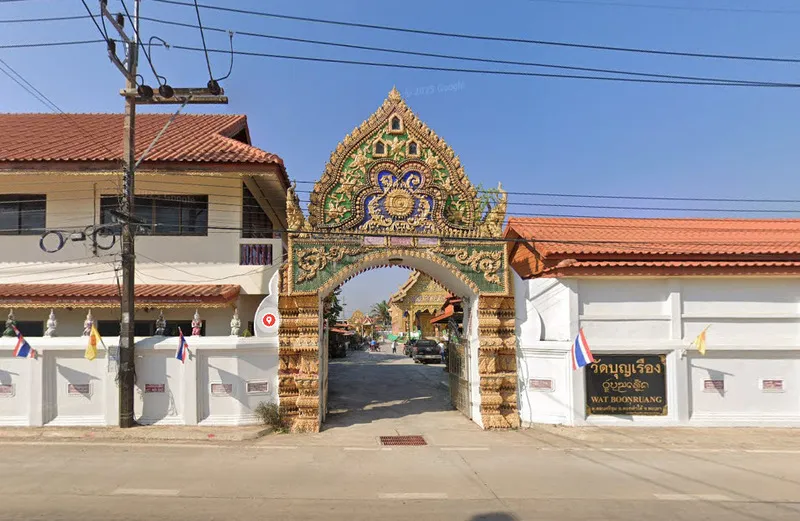
Wat Bun Rueang (Dok Phrao) is located in Moo 9, Don Si Chum Subdistrict, Dok Kham Tai District, Phayao Province. It is an old community temple with a long local history and a deep connection with the people of Don Si Chum. The temple was established in 1893 through the faith of Thao Bun Rueang, who donated more than 5 rai of land for the construction of the temple. Khru Ba Tui became the first abbot and played an important role in laying the foundation of the temple during its early years. Today, Wat Bun Rueang remains a spiritual center for local merit-making, Buddhist ceremonies, cultural activities, and community life.
For travelers visiting Dok Kham Tai, Wat Bun Rueang (Dok Phrao) offers a quiet and meaningful view of a local Buddhist temple in Phayao. It is not a temple defined by large-scale tourism or crowded sightseeing, but by its relationship with the community. Visitors can stop to pay respect, make merit, rest the mind, and learn about the story of a temple that began with donated land, local faith, and the dedication of early monks and villagers. The temple is especially suitable for travelers who want to understand Phayao through local communities rather than only through major landmarks.
The history of Wat Bun Rueang begins with Thao Bun Rueang, a devout supporter of Buddhism who donated a plot of land of more than 5 rai for the establishment of the temple. In northern Thai communities, the donation of land for a temple is a highly meaningful act of merit because it creates a sacred space for generations of people to use for worship, learning, and community gathering. The founding of this temple therefore reflects not only personal faith, but also a long-term commitment to the spiritual well-being of the village.
Khru Ba Tui, the first abbot of the temple, was a central figure in the early development of Wat Bun Rueang. As the first monastic leader, he helped establish the religious foundation of the temple and guided the community during its early formation. In 1896, Khru Ba Tui left the temple, and his later whereabouts became a story remembered within the community. Although this event remains a local mystery, the temple continued to grow and maintain its Buddhist role through later generations.
The name “Wat Bun Rueang (Dok Phrao)” preserves both the memory of a person and the character of a place. The name Bun Rueang honors Thao Bun Rueang, the donor of the temple land. The name Dok Phrao refers to the local area and recalls a landscape where coconut palms were once common. In this way, the temple name acts like a small historical record. It connects the donor, the village, the natural surroundings, and the identity of the community in a single name.
Over many decades, Wat Bun Rueang has served not only as a place for religious ceremonies, but also as a center for community activities. It supports cultural traditions, merit-making events, moral education, and youth development. Like many community temples in northern Thailand, it helps maintain social relationships among villagers. People come here not only to pray, but also to meet, cooperate, prepare festivals, support temple maintenance, and pass local customs to younger generations.
Wat Bun Rueang is a community Buddhist temple in Don Si Chum Subdistrict, Dok Kham Tai District. It is a local temple where monks reside and where people continue to practice Buddhism in everyday life. The current abbot is Phra Khru Wichan Thammawiphach. The presence of resident monks allows the temple to maintain daily religious functions, support local ceremonies, and serve as a spiritual refuge for the surrounding community.
The atmosphere of the temple is calm and suitable for worship, meditation, and quiet reflection. Visitors will find the character of a living village temple rather than a commercialized attraction. This is part of its charm. The temple’s value lies in the way it continues to serve ordinary people through merit-making, Buddhist teaching, annual festivals, and community care. It is a place where faith is practical, continuous, and closely connected with local life.
On important Buddhist days such as Makha Bucha, Visakha Bucha, Asalha Bucha, Buddhist Lent, the end of Buddhist Lent, and regular Buddhist holy days, local people come to the temple to make offerings, listen to Dhamma teachings, and take part in religious practice. These activities show how Buddhism remains part of the social rhythm of the community. The temple provides a place where people can express faith, generosity, gratitude, and moral commitment.
Kathin and Pha Pa merit-making events are also important for a community temple like Wat Bun Rueang. These events allow villagers and supporters to contribute to the maintenance of the temple and the needs of the monastic community. They also bring people together in cooperation. Preparing food, arranging offerings, welcoming visitors, and helping with temple activities all strengthen the bond between the temple and the village.
During Songkran, temples in northern Thailand often become centers for merit-making, Buddha image bathing, family gathering, and paying respect to elders. Wat Bun Rueang plays this type of role for the local community. The temple becomes a place where people renew good intentions, remember ancestors, and begin the traditional New Year with acts of merit. For visitors, this period can reveal the living relationship between temple, family, and community.
Wat Bun Rueang is also interesting because its story includes several strong local memory points: Thao Bun Rueang’s land donation, Khru Ba Tui as the first abbot, the name Dok Phrao, and the temple’s continuing role in Don Si Chum. These details give the temple a human dimension. Its history is not only a list of dates, but a story of people, faith, memory, and the community’s effort to preserve a Buddhist center over time.
For cultural travelers, a visit to Wat Bun Rueang can be combined with other places in Dok Kham Tai District. Nearby sites include Wat Bun Koet, Wat Si Chum, the local Lanna museum in Dok Kham Tai, Wat Phra That Chom Sin, Kwan Phayao, and Wat Si Khom Kham. This route allows travelers to see Phayao beyond the provincial capital by exploring local temples, food, community life, and district-level cultural heritage.
Visitors should take time to explore the temple quietly. Begin by paying respect and making merit, then walk around the temple grounds with attention to the community setting. The value of this temple is found in its long local history and its continuing social role. A slow visit helps travelers understand why a small community temple can be as meaningful as a more famous attraction.
Getting There to Wat Bun Rueang (Dok Phrao) is convenient by private car, motorcycle, or local hired transport. From Phayao city, travel toward Dok Kham Tai District, then continue to Don Si Chum Subdistrict and Moo 9. The temple is located within the community area. Visitors using public transport can first travel to Dok Kham Tai town and then continue by local vehicle to the temple.
The temple can be included in a one-day route around Dok Kham Tai. Travelers may begin with Wat Bun Rueang, continue to local restaurants in Dok Kham Tai, visit cultural or temple sites nearby, and then extend the trip toward Phayao city or Wat Phra That Chom Sin. A private vehicle is the most flexible option because nearby attractions are spread across different parts of the district.
The best time to visit is in the morning or late afternoon, when the weather is more comfortable and the temple atmosphere is peaceful. Visitors who want to see local merit-making should consider Buddhist holy days or annual festivals. Those who prefer quiet reflection may find ordinary weekdays more suitable.
Visitors should dress modestly when entering the temple. Clothing should cover shoulders and knees. Speak quietly, avoid disturbing monks or local people who are making merit, and photograph respectfully. Because Wat Bun Rueang is an active community temple, respectful behavior helps preserve the dignity of the place and supports a positive relationship between visitors and residents.
Wat Bun Rueang (Dok Phrao) is therefore a meaningful temple for anyone interested in the local Buddhist life of Dok Kham Tai. Its importance comes from the faith of Thao Bun Rueang, the early role of Khru Ba Tui, the memory preserved in the name Dok Phrao, and its continuing function as a spiritual center for Don Si Chum. For travelers who want to experience Phayao through local stories and community temples, this temple is a worthwhile stop.
| Name | Wat Bun Rueang (Dok Phrao) |
| Location | Moo 9, Don Si Chum Subdistrict, Dok Kham Tai District, Phayao Province |
| Address | 48 Moo 9, Don Si Chum Subdistrict, Dok Kham Tai District, Phayao 56120, Thailand |
| Highlights | Old community temple established in 1893, spiritual center of Don Si Chum, peaceful temple atmosphere, local Buddhist activities, and a history connected with Thao Bun Rueang and Khru Ba Tui |
| History | Established in 1893 through the faith of Thao Bun Rueang, who donated more than 5 rai of land for the temple. Khru Ba Tui served as the first abbot. |
| Name Origin | The name Bun Rueang honors the land donor, Thao Bun Rueang, while Dok Phrao reflects the local area and its earlier landscape associated with coconut palms. |
| Distinctive Features | A peaceful community temple suitable for merit-making, Buddhist worship, meditation, and learning about the local history of Don Si Chum |
| Cultural Importance | Community center for Buddhist ceremonies, local traditions, cultural activities, and moral education for children and youth in the area |
| Travel Information | From Phayao city, travel toward Dok Kham Tai District, then continue to Don Si Chum Subdistrict and Moo 9. The temple is accessible by private car, motorcycle, or local hired transport. |
| Current Status | Active community Buddhist temple and spiritual center of Don Si Chum Subdistrict |
| Open Days | Daily |
| Opening Hours | 08.00 – 17.00 |
| Facilities | Temple courtyard, worship area, merit-making space, meditation-friendly atmosphere, community parking area, and restaurants in Dok Kham Tai District |
| Main Areas / Zones | Worship area, temple courtyard, religious activity buildings, merit-making area, and surrounding community space |
| Abbot / Caretaker | Phra Khru Wichan Thammawiphach |
| Main Contact Number | 054-418-293 |
| Nearby Tourist Attractions | 1. Wat Bun Koet, about 6 km 2. Wat Si Chum, Sawang Arom Subdistrict, about 8 km 3. Local Lanna Museum, Dok Kham Tai Municipality, about 10 km 4. Wat Phra That Chom Sin, about 22 km 5. Kwan Phayao, about 26 km 6. Wat Si Khom Kham, about 28 km |
| Nearby Restaurants | 1. Khao Soi Him Kong, about 7 km, Tel. 089-010-1686 2. Krua Rim Nam Dok Kham Tai, about 8 km 3. An Charoen Noodle, Dok Kham Tai, about 9 km 4. Sathan Arroy Dok Kham Tai, about 10 km 5. Van Drip Caffeine Doi Chang Coffee, about 10 km |
| Nearby Accommodations | 1. VC Hotel Dok Kham Tai Phayao, about 9 km, Tel. 054-418-888, 095-453-2692 2. Resort Ban Suan Dok Kham Tai Phayao, about 10 km, Tel. 080-352-6105 3. Phurimon Resort, about 15 km 4. Green Hill Hotel Phayao, about 27 km 5. Accommodations In Phayao City, about 27 km |
Frequently Asked Questions (FAQ)
Q: Where is Wat Bun Rueang (Dok Phrao) located?
A: Wat Bun Rueang (Dok Phrao) is located at 48 Moo 9, Don Si Chum Subdistrict, Dok Kham Tai District, Phayao Province.
Q: When was Wat Bun Rueang (Dok Phrao) established?
A: The temple was established in 1893 after Thao Bun Rueang donated more than 5 rai of land for its construction.
Q: Who was the first abbot of Wat Bun Rueang (Dok Phrao)?
A: Khru Ba Tui was the first abbot and played an important role in developing the temple during its early years.
Q: What is the origin of the temple’s name?
A: The name Bun Rueang honors Thao Bun Rueang, the land donor, while Dok Phrao reflects the local area where coconut palms were once common.
Q: What are the opening hours of Wat Bun Rueang (Dok Phrao)?
A: The temple is open daily from 08.00 to 17.00.
Q: Why is Wat Bun Rueang important to the community?
A: It is a spiritual center for Don Si Chum, supporting Buddhist ceremonies, merit-making, cultural traditions, and moral education for local youth.
Q: What nearby attractions can be visited with Wat Bun Rueang?
A: Nearby attractions include Wat Bun Koet, Wat Si Chum, the Local Lanna Museum in Dok Kham Tai, Wat Phra That Chom Sin, Kwan Phayao, and Wat Si Khom Kham.
Q: Is there a contact number for Wat Bun Rueang?
A: The main contact number is 054-418-293.
 Category: ●Places of Worship
 Group: ●Temple
Last Update : 1 MonthAgo
 Last Update : 1 MonthAgo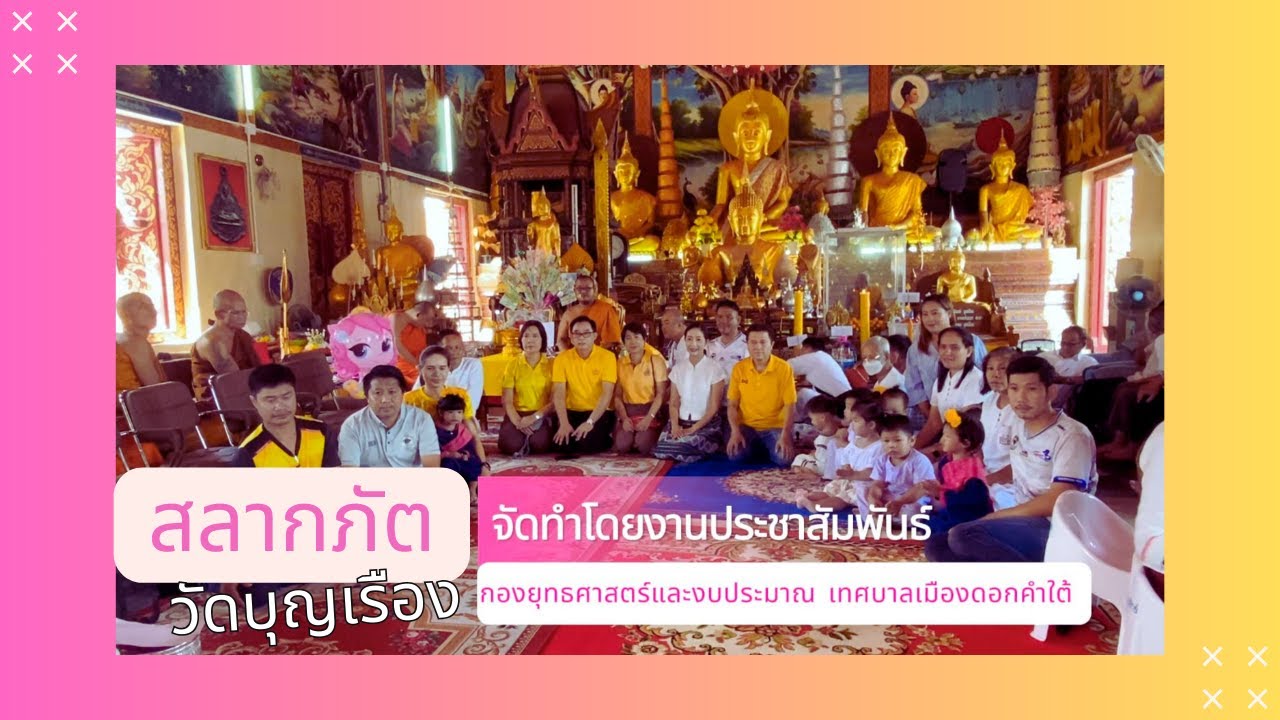
 Click to Access the Navigation Map GPS
Wat Boon Rueang (Dok Phrao) Map
Recommend

 Art, Culture and Heritage
 Historical Sites and Monuments(4)
 Landmarks and Memorials(4)
 Art, Craft Centres, Tradition(1)
 Museums(2)
Temple(39)
Museums(2)
Temple(39)
 Other Sacred Sites(5)
 Research and Development
 Royal Project(1)
 Suburban Living
 Village, Community(2)
 Local Market(4)
 Nature and Wildlife
 National Parks and Marine Reserves(6)
 Mountain (Doi)(2)
 Dam, Reservoir, Lake(11)
 Waterfalls(8)
 Caves(5)
 River, Canal(3)
 Other natural attractions(5)


