
lovethailand home >North Travel Attractions >Phayao Travel Attractions >Chun >Phra That Khing Kaeng > Pa Yai Khian Ngam
TL;DR: Pa Yai Khian Ngam is located at Phrathat Khing Kaeng Subdistrict, Chun District, Phayao Province, open Daily, hours 08.00 – 17.00.
Pa Yai Khian Ngam
Open Days: Daily
Opening Hours: 08.00 – 17.00
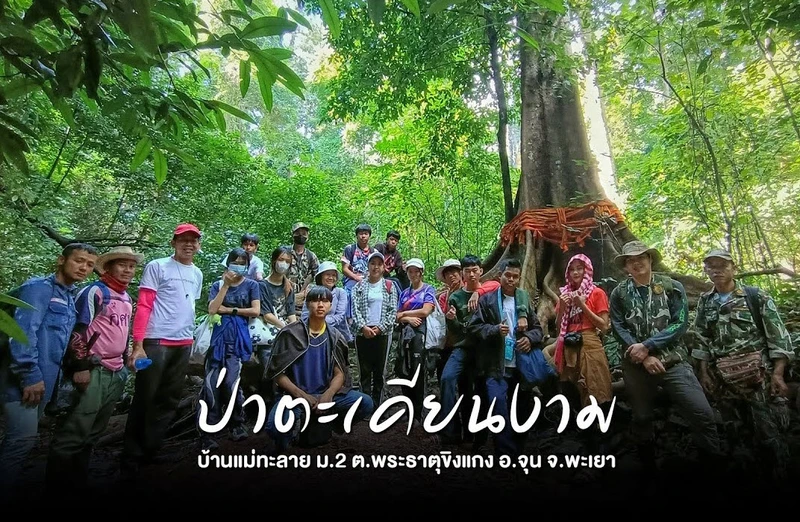
Pa Yai Khian Ngam in Phayao Province, also known as Pa Takhian Ngam, is a natural conservation forest in Chun District, Phayao Province. The site is best known for its impressive group of large takhian thong trees, or golden ironwood trees, many of which rise high above the forest floor and have massive trunks that require about 5 – 6 people to encircle. Visitors reach the forest by walking along a nature trail of about 2 km, making this destination suitable for travelers who enjoy peaceful forest scenery, large old trees, native plants, and a quiet natural atmosphere away from crowded tourist routes.
Pa Yai Khian Ngam is located in the area of Phrathat Khing Kaeng Subdistrict, Chun District, Phayao Province, and is closely connected with Ban Mae Thalai and the Mae Thalai Reservoir area, also known locally as Wang Matcha. This is not a commercial-style tourist attraction with large buildings or entertainment facilities. Its value lies in the natural forest itself, the shade of towering trees, the earthy scent of the woodland, the quiet rhythm of the walking trail, and the feeling of entering a living landscape that has been preserved by the local community.
The most remarkable feature of Pa Yai Khian Ngam is the concentration of large takhian thong trees within the same natural area. Takhian thong is a tall hardwood tree with a straight trunk and strong timber. In Thai natural landscapes, large takhian trees are often associated with mature forest ecosystems because they take a long time to grow and require suitable environmental conditions. Seeing many large takhian trees together gives visitors a direct sense of the richness of this forest and the long natural process that shaped it.
The size of the trees is one of the main reasons travelers remember this place. Some trunks are so large that several people are needed to wrap their arms around them. Standing beneath these trees, visitors can clearly see how a single mature tree provides shade, supports smaller plants, helps retain soil moisture, creates habitat for small animals and insects, and contributes to the balance of the forest ecosystem. For nature lovers, this is not simply a place to take photos with big trees; it is a chance to understand the importance of old-growth trees through direct experience.
The walking route of about 2 km is an important part of the visit. It allows travelers to gradually move from the community and reservoir area into the deeper shade of the forest. The distance is long enough to create a meaningful nature experience but still manageable for visitors with general walking ability. Since the route passes through a natural environment, visitors should wear suitable shoes, bring drinking water, allow enough time, and walk carefully, especially during or after the rainy season when the ground may be slippery.
The atmosphere inside Pa Yai Khian Ngam is cool, shaded, and calm. The forest canopy filters the sunlight, while the forest floor is covered with leaves, roots, small plants, and natural textures that change with the seasons. Along the trail, visitors may notice different layers of vegetation, from tall trees and shrubs to vines and ground plants. This variety gives the forest a sense of depth and helps travelers understand that a healthy forest is not made up of one type of tree alone, but of many living elements that depend on one another.
From an ecological perspective, Pa Yai Khian Ngam is more than a scenic attraction. It functions as a natural learning site and a conservation area at community level. The forest helps preserve moisture, reduce soil erosion, support biodiversity, and maintain a natural environment for plants and small wildlife. The large takhian trees form the visual identity of the area, while the surrounding plant species complete the ecological structure of the forest. This makes the site suitable for families, students, conservation groups, photographers, and travelers interested in quiet, educational nature trips.
The name “Pa Yai Khian Ngam” reflects the character of the site directly. “Pa Yai” means a large or significant forest, while “Khian Ngam” refers to the beautiful takhian trees that dominate the area. The name is simple but accurate, because visitors understand it as soon as they walk into the forest and see the massive golden ironwood trees standing among other native plants. The identity of the place is therefore inseparable from the trees themselves.
This forest is also closely tied to local community life in Phrathat Khing Kaeng Subdistrict. Natural forests in rural areas do not exist separately from the people around them. They depend on local awareness, community care, subdistrict administration, and forestry-related agencies. The fact that the area still has large trees and a walking route for visitors shows that the forest has been used and cared for carefully. Travelers should respect local guidelines, avoid cutting or collecting plants, never leave rubbish behind, and refrain from activities that may disturb the forest or nearby communities.
Pa Yai Khian Ngam is especially suitable for slow travel. Visitors do not need to rush through the trail or treat the forest as only a quick check-in spot. The best way to experience this place is to slow down, listen to the sounds of the forest, observe the shapes of trunks and leaves, notice the changing light under the canopy, and allow the quiet atmosphere to become part of the journey. In this sense, Pa Yai Khian Ngam adds a deeper natural dimension to a trip in Phayao, a province often known for Kwan Phayao, temples, mountain views, and local culture.
The best time to visit is generally in the morning or late afternoon, when the temperature is more comfortable and the light is softer. Morning visits are suitable for travelers who want a relaxed walk and enough time to observe the forest. Late afternoon visits can work well for those combining the forest with nearby attractions in Chun District. Visitors should avoid entering the trail during heavy rain or immediately after strong rainfall, as the ground may become muddy or slippery. Careful timing helps make the visit safer and more enjoyable.
For photography, Pa Yai Khian Ngam offers a different kind of beauty from temples, viewpoints, or urban attractions. The contrast between human scale and the massive takhian trunks creates powerful images. The shaded trail, the filtered sunlight, and the details of bark, leaves, and forest floor textures all help tell the story of the woodland. Visitors should take photographs responsibly by avoiding any action that damages trees, disturbs plants, or affects the forest environment.
The forest can also serve as an outdoor classroom. Children and young learners can observe how large trees grow, how leaf litter returns nutrients to the soil, how shade affects humidity, and how different plants occupy different layers of the forest. Learning in a real environment gives a stronger impression than reading about nature only from books. This makes Pa Yai Khian Ngam valuable not only as a tourist destination but also as a local learning resource for ecology and conservation.
Within the wider tourism picture of Phayao, Pa Yai Khian Ngam helps show another side of the province. Phayao is not only a destination of lakes, temples, ancient sites, and mountain scenery. It also has quiet community-based natural attractions where visitors can experience a slower and more local atmosphere. Traveling to Chun District and Phrathat Khing Kaeng Subdistrict allows visitors to see how forests, reservoirs, temples, villages, and local ways of life are connected.
Nearby areas can be included in the same travel route. Mae Thalai Reservoir or Wang Matcha is located close to the entrance area and can be used as an easy landmark before continuing toward the forest trail. Pha Sa Tok is another natural attraction in Phrathat Khing Kaeng Subdistrict, while Wat Phrathat Khing Kaeng is an important religious site in the area. Travelers can also connect the trip with other places in Chun District, making the visit more complete by combining nature, community scenery, and local culture in one itinerary.
Visitors should prepare properly before entering the forest. Comfortable clothing is recommended, along with shoes suitable for walking on natural ground. A hat can help during exposed sections, and drinking water is essential because the walking distance is long enough to require basic preparation. Travelers should also bring a small bag to carry their own rubbish out of the area. Those traveling with children or older adults should walk at a suitable pace, take breaks when needed, and avoid rushing through the trail.
Good forest etiquette is important at Pa Yai Khian Ngam. This is a conservation-oriented natural attraction, not a city park designed for every type of recreational activity. Visitors should keep their voices at a reasonable level, avoid playing loud music, never climb the trees, avoid breaking branches or collecting forest materials, and never leave food waste behind. Small actions like these help protect the forest ecosystem and ensure that the large takhian trees remain part of the local landscape for future generations.
In Thai culture, takhian trees are often connected with respect, imagination, and local beliefs. At Pa Yai Khian Ngam, however, the most important way to respect the trees is to treat them as living natural heritage. Visitors can admire their size, take photographs, and enjoy the peaceful atmosphere without disturbing the trees or removing anything from the forest. This kind of respectful travel gives the site deeper meaning and turns the visit into more than a simple sightseeing stop.
Getting There is easiest by private car. Travelers can use Chun District and Phrathat Khing Kaeng Subdistrict as the main route, then continue toward Ban Mae Thalai. Mae Thalai Reservoir or Wang Matcha is a useful nearby landmark before entering the walking route to Pa Yai Khian Ngam. Visitors using local transport should arrange pickup and return details in advance, as community-based natural attractions may not have regular public transport available throughout the day.
After arriving near Mae Thalai Reservoir or Wang Matcha, visitors continue on foot for about 2 km to reach the forest area. This trail is suitable for those who want a real forest-walking experience rather than a roadside viewpoint. The walk should be started in the morning or when the weather is not too hot. Travelers in small groups should inform companions or local contacts about their walking plan. Walking at a steady pace and staying aware of the route will make the visit safer and more rewarding.
A half-day trip can begin at Mae Thalai Reservoir or Wang Matcha, continue along the walking route to Pa Yai Khian Ngam, and then return for lunch in Chun District or visit Wat Phrathat Khing Kaeng. With more time, travelers can add Pha Sa Tok or other nearby community attractions. This kind of route is ideal for visitors who enjoy nature and want to understand the local area rather than stopping at only one location.
The charm of Pa Yai Khian Ngam lies in its simplicity. The forest does not try to impress visitors with artificial structures or elaborate facilities. Instead, it lets the trees, the trail, and the natural atmosphere tell the story. Travelers who appreciate quiet places, natural shade, and unpolished local landscapes will find the site memorable. Walking beneath large takhian thong trees and seeing the variety of native plants helps visitors realize how meaningful even a community-level forest can be.
Pa Yai Khian Ngam is therefore one of the natural attractions in Phayao that suits travelers looking for calm, shade, and genuine contact with nature. Its large takhian thong trees symbolize the richness of the forest, while the 2 km walking trail gives visitors time to experience the place gradually. The shaded atmosphere is a reward for those who slow down, and the variety of plants shows how many forms of life coexist in a single woodland. With proper preparation and respectful behavior, this forest can become one of the most peaceful and meaningful parts of a trip to Phayao.
For travelers searching for nature-based attractions in Phayao, Pa Yai Khian Ngam deserves a place in the itinerary. It is especially suitable for those interested in community forests, large trees, conservation travel, and quiet walking routes. Visitors should come with realistic expectations, focusing on nature rather than commercial facilities. When approached with care and respect, Pa Yai Khian Ngam offers a rewarding experience of rest, learning, and appreciation for a forest preserved by the local community.
| Name | Pa Yai Khian Ngam or Pa Takhian Ngam |
| Location | Phrathat Khing Kaeng Subdistrict, Chun District, Phayao Province |
| Address | Moo 2, Ban Mae Thalai, Phrathat Khing Kaeng Subdistrict, Chun District, Phayao Province 56150, Thailand |
| Highlights | A natural forest with many large takhian thong trees, some with trunks requiring about 5 – 6 people to encircle, and a walking trail of about 2 km. |
| Distinctive Features | A conservation-oriented natural forest with a shaded atmosphere, diverse native plants, and a quiet trail suitable for nature study. |
| Name Origin | The name reflects the large natural forest and the beautiful takhian trees that form the identity of the area. |
| Travel Information | Travel from Phayao town toward Chun District, continue to Phrathat Khing Kaeng Subdistrict and Ban Mae Thalai, using Mae Thalai Reservoir or Wang Matcha as a nearby landmark before walking about 2 km into the forest. |
| Current Status | Open as a community-based natural conservation attraction. |
| Open Days | Daily |
| Opening Hours | 08.00 – 17.00 |
| Facilities | Nature walking trail, resting area near Mae Thalai Reservoir or Wang Matcha, and a community-based natural learning area. |
| Main Areas / Zones | Takhian thong forest area, walking trail, natural woodland zone, and the area near Mae Thalai Reservoir or Wang Matcha. |
| Caretaker | Phrathat Khing Kaeng Subdistrict Administrative Organization and Pong Forest Protection and Development Unit, which covers Pong and Chun districts, with Mr. Niwat Mangmee listed as unit chief. |
| Main Contact Number | Phrathat Khing Kaeng Subdistrict Administrative Organization, Tel. 0-5407-9864 |
| Official Website / Official Page | Phrathat Khing Kaeng Subdistrict Administrative Organization |
| Nearby Tourist Attractions | 1. Mae Thalai Reservoir or Wang Matcha, about 1 km 2. Pha Sa Tok, about 4 km 3. Wat Phrathat Khing Kaeng, about 7 km 4. Dok Thong Kwao Road, Chun District, about 9 km 5. Fish Breeding and Conservation Area in front of the temple, about 18 km |
| Nearby Restaurants | 1. Lang Ma Se Restaurant, Huai Khao Kam Subdistrict, about 10 km, Tel. 080-880-7969 2. Baan Suan Ai Oun, Chun Branch, about 13 km, Tel. 092-279-3978, 086-013-5054 3. Krua Fa Tawan, Ban Wiang Lo, about 18 km, Tel. 063-628-2548 4. Palms Coffee Chun, about 13 km 5. Pad Thai Violin, Chun District, about 13 km 6. Baan Him Huai, Chun District, about 13 km |
| Nearby Accommodations | 1. Wang Nam Cham Resort, Huai Khao Kam Subdistrict, Chun District, about 12 km, Tel. 089-954-8584 2. Baan Suan Homestay, Chun District, about 13 km, Tel. 081-021-1502, 080-135-6076, 081-032-3156 3. Freestyle Hotel Chun, about 13 km 4. Huean Oui Dee, about 14 km 5. Magic Mountain Camp, about 22 km 6. Chiang Kham Grand Villa, about 31 km |
Frequently Asked Questions (FAQ)
Q: Where is Pa Yai Khian Ngam located?
A: Pa Yai Khian Ngam is located in Phrathat Khing Kaeng Subdistrict, Chun District, Phayao Province, near Ban Mae Thalai and the Mae Thalai Reservoir or Wang Matcha area.
Q: What is Pa Yai Khian Ngam famous for?
A: It is famous for its natural forest atmosphere and many large takhian thong trees, some of which have trunks requiring about 5 – 6 people to encircle.
Q: How far is the walking trail into the forest?
A: The walking trail into Pa Yai Khian Ngam is about 2 km. Visitors should wear suitable walking shoes and bring drinking water.
Q: Is Pa Yai Khian Ngam open every day?
A: Yes. Pa Yai Khian Ngam is open daily from 08.00 to 17.00.
Q: Who is this destination suitable for?
A: It is suitable for travelers who enjoy nature, community forests, large trees, quiet walking trails, and conservation-focused tourism.
Q: What should visitors prepare before going?
A: Visitors should prepare comfortable walking shoes, drinking water, a hat, a personal rubbish bag, and avoid walking during heavy rain or when the trail is slippery.
Q: Are there nearby attractions to visit on the same trip?
A: Yes. Nearby places include Mae Thalai Reservoir or Wang Matcha, Pha Sa Tok, Wat Phrathat Khing Kaeng, Dok Thong Kwao Road, and the fish breeding and conservation area in front of the temple.
Q: How should visitors behave inside the forest?
A: Visitors should stay on the trail, avoid cutting or collecting plants, keep the area clean, avoid loud noise, and respect the forest ecosystem.
 Category: ●Nature and Wildlife
 Group: ●Other natural attractions
Last Update : 2 WeekAgo
 Last Update : 2 WeekAgo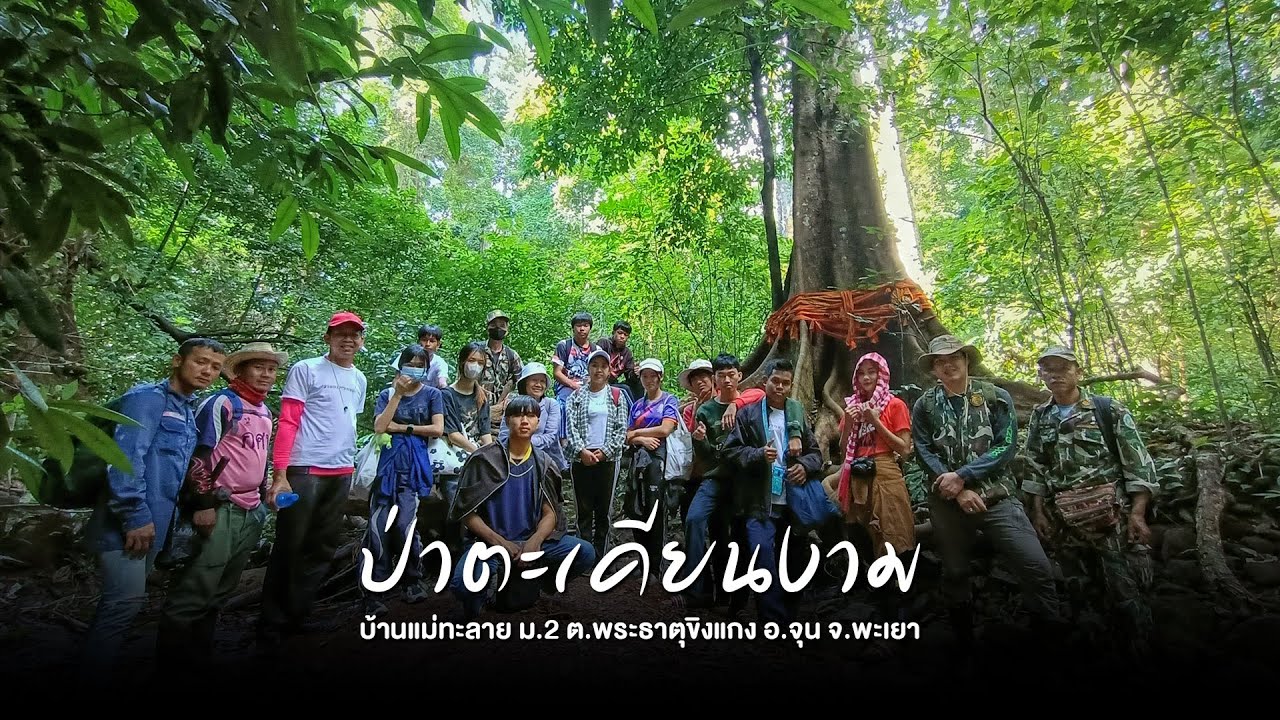
 Click to Access the Navigation Map GPS
Pa Yai Khian Ngam Map
Recommend
 Art, Culture and Heritage
 Historical Sites and Monuments(4)
 Landmarks and Memorials(4)
 Art, Craft Centres, Tradition(1)
 Museums(2)
 Places of Worship
 Temple(39)
 Other religious and spiritural sites(5)
 Research and Development
 Royal Project(1)
 Suburban Living
 Village, Community(2)
 Local Market(4)
 National Parks and Marine Reserves(6)
 Mountain (Doi)(2)
 Dam, Reservoir, Lake(11)
 Waterfalls(8)
 Caves(5)
 River, Canal(3)
Other natural attractions(5)
River, Canal(3)
Other natural attractions(5)


