
lovethailand home >North Travel Attractions >Phayao Travel Attractions >Chun >Hong Hin > Phra That Khiri Si Wiang Lo
TL;DR: Phra That Khiri Si Wiang Lo is located at Hong Hin Subdistrict, Chun District, Phayao Province, open Daily, hours Daytime Visits Recommended.

Phra That Khiri Si Wiang Lo
Open Days: Daily
Opening Hours: Daytime Visits Recommended
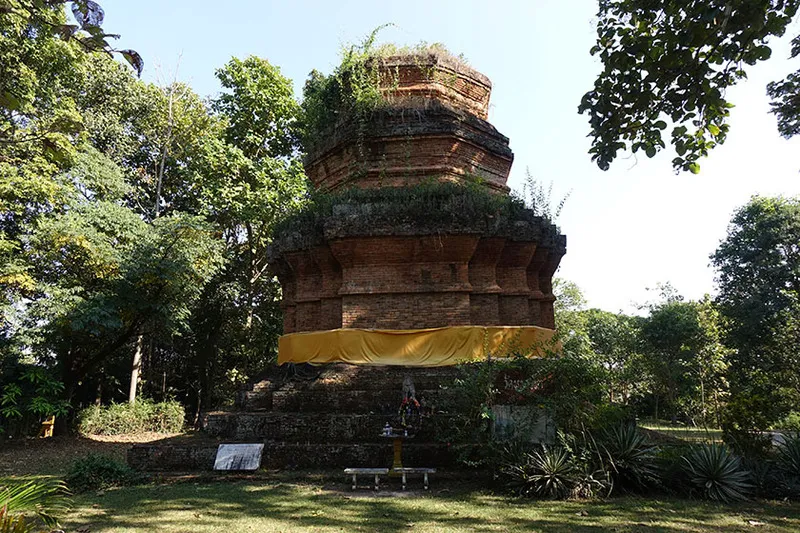
Phra That Khiri Si Wiang Lo in Phayao Province, formerly known as Phra That Nong Ha, is an important ancient monument located outside the old city of Wiang Lo in Hong Hin Subdistrict, Chun District, Phayao Province. The site is distinguished by its Lanna-style principal stupa with an octagonal bell-shaped body, standing on the western side of Wiang Lo near the foothill area locally associated with Doi Chik Chong. This ancient stupa is significant as a Buddhist archaeological site, a historical learning destination, and a visible trace of the long-standing Buddhist culture that once flourished in this part of northern Thailand.
Phra That Khiri Si Wiang Lo is especially suitable for travelers interested in Lanna history, ancient cities, Buddhist architecture, and cultural routes in Phayao. It is not merely a place for paying respect to an old stupa; it is also a site that helps visitors understand Wiang Lo as a large ancient settlement with communities, temples, religious routes, and cultural links connected to the Ing River basin. Visitors who come here will experience a quiet and simple atmosphere while learning about an archaeological site that still preserves important elements of Lanna art and architecture.
The site was originally part of Wat Phra That Nong Ha, a large ancient temple located outside Wiang Lo on the western side, approximately 350–370 meters from the ancient city gate area. The former name “Nong Ha” reflects the old local landscape and memory of the temple site, while the present name “Phra That Khiri Si Wiang Lo” emphasizes both its foothill setting and its association with the ancient city of Wiang Lo. The word “Khiri” refers to a mountain or hill, while “Si Wiang Lo” conveys the auspicious identity of Wiang Lo. Together, the name presents the image of a sacred stupa standing near an ancient city in a landscape shaped by faith, geography, and memory.
Wiang Lo is one of the important ancient cities of Phayao Province. It lies in the area of Lo and Hong Hin subdistricts in Chun District, with the Ing River running through the old settlement. This riverine setting made Wiang Lo suitable for habitation, agriculture, transportation, and the growth of an ancient urban community. In the past, many temples were distributed both inside and outside the city area, showing that Buddhism played a central role in the social and cultural life of Wiang Lo. Phra That Khiri Si Wiang Lo is therefore one of the key pieces of evidence that connects religion, urban development, and community life in the history of this region.
The ancient city of Wiang Lo is notable as a large settlement in the Ing River basin, with traces of city walls, moats, abandoned temples, archaeological remains, and cultural materials. The layout of the city relates closely to the Ing River and the surrounding landscape, making it clear that Wiang Lo was not a small isolated settlement, but a complex ancient urban area with water management, community planning, and religious spaces. When Phra That Khiri Si Wiang Lo is considered together with other archaeological sites in the area, it becomes part of a broader cultural landscape that is important for understanding the history of Phayao and the Lanna region.
The architectural form of Phra That Khiri Si Wiang Lo clearly reflects Lanna craftsmanship. The base begins with a square plan, built with recessed tiers, lotus mouldings, and supporting courses before rising into an octagonal bell-shaped body. The octagonal bell form is one of the most interesting features of this stupa because it shows a distinctive Lanna architectural style that developed around the 20th–21st Buddhist centuries. Its design can be related to other important Lanna stupas in Phayao, Chiang Saen, Chiang Rai, and other ancient settlements in the northern region.
Archaeological work at Phra That Khiri Si Wiang Lo was carried out systematically in 1996 by an archaeological unit under the Fine Arts Department. This work revealed the principal stupa, traces of a viharn, and several types of archaeological materials, including pottery fragments from Lanna kiln sources such as Wiang Kalong or Wang Nuea in Lampang Province, Phan or Pong Daeng kilns in Chiang Rai Province, Phayao kiln sources, and fragments of Chinese ceramics from the Ming Dynasty. These findings confirm that the site was once connected to networks of production, use, trade, and cultural exchange across the Lanna region and beyond.
The ceramic evidence found at the site is especially important for interpreting the past of Phra That Khiri Si Wiang Lo. Pottery and ceramics were not only everyday objects; they also represent economic systems, trade routes, cultural contact, and the material culture of past communities. The discovery of ceramics from several kiln sources shows that Wiang Lo was not isolated. It was connected to pottery-producing communities in Lanna and to wider exchange networks. The presence of Chinese Ming ceramics further reflects long-distance cultural and trade connections that reached this region in earlier periods.
The importance of Phra That Khiri Si Wiang Lo is not limited to the stupa itself. Its location on a sloping foothill outside the ancient city adds another layer of meaning. This setting corresponds to temple patterns related to both community-based monastic life and forest-oriented religious practice. The site stands close enough to the old city to remain connected with the community, yet far enough to create a quiet atmosphere suitable for religious practice. Around Wiang Lo, several ancient temples are located along foothills and elevated areas, showing that sacred sites were selected in relation to landscape, belief, and the spatial organization of the community.
To the east of the principal stupa are traces of a viharn, an important element of an ancient Buddhist temple. Although only archaeological remains survive today, the discovery of stone alignments, scattered bricks, brick wall traces, and metal nails helps visitors imagine the former structure. The viharn was likely used for Buddhist ceremonies, listening to sermons, and gathering as a community. Some parts may have been wooden, with a tiled roof. The position of the viharn in front of the stupa reflects a typical Lanna temple layout, where visitors entered from the front, passed through the ceremonial hall, and visually connected with the sacred stupa behind it.
The layout of Phra That Khiri Si Wiang Lo reflects the relationship between Buddhist sacred space and cosmological ideas. The principal stupa served as the spiritual center, symbolizing the Buddha and the Dhamma, while the viharn functioned as the place for ritual activities, teaching, and community gathering. When these elements are aligned, they create a sacred sequence from the outer space to the ceremonial area and finally to the stupa. Walking through the site is therefore not simply a visit to old brick remains; it is a way of reading the religious landscape of a Lanna community from the past.
The octagonal bell-shaped body of the stupa is a feature worth observing carefully. Its form gives the monument a strong and balanced appearance while differentiating it from a more common round-bell stupa. The octagonal plan changes the appearance of the stupa depending on the viewer’s position. As visitors walk around the monument, the lines of the base, recessed tiers, and bell body respond differently to light and shadow. This is part of the charm of Lanna craftsmanship, where faith, proportion, and the surrounding landscape work together.
Although the stupa has passed through centuries of weathering, damage, and restoration, its value remains strong. In many ways, the passage of time makes the site even more meaningful because it shows the importance of conserving ancient monuments as shared cultural heritage. Phra That Khiri Si Wiang Lo is not located in a crowded commercial tourist zone, yet it has high historical value. It is ideal for travelers who prefer quiet visits, careful observation, reading on-site information, studying architectural details, and connecting the history of Wiang Lo with the real landscape in front of them.
The atmosphere around Phra That Khiri Si Wiang Lo is calm and simple. Unlike large urban temples that receive many visitors, this site offers the feeling of an ancient monument in a rural community. Open space, trees, and foothill scenery form the background of the stupa. This quiet setting makes the site suitable for paying respect, walking through an archaeological area, taking documentary-style photographs, and learning about local history. Visitors should not rush through the site; its details and landscape are best appreciated slowly.
For those interested in Lanna history, Phra That Khiri Si Wiang Lo helps expand the understanding of Phayao beyond the present-day city center. Wiang Lo is associated with the historical area known locally in connection with Phan Na Lo and the broader development of Lanna-period settlements. When the stupa is considered together with more than 50 ancient temple remains in the Wiang Lo area, it becomes clear that this was once a living city with monks, artisans, villagers, rulers, and a strong Buddhist foundation that supported community life for a long period of time.
Phra That Khiri Si Wiang Lo also reflects the role of temples in ancient society. A temple was not only a place for ritual; it was a center of knowledge, art, craftsmanship, collective memory, and local identity. Building a major stupa required labor, technical skill, materials, and cooperation from many people. The presence of such a monument therefore shows that the ancient community of Wiang Lo had both the capacity and the faith needed to create a large Buddhist structure. This makes the site an important testimony to the spiritual and social strength of the community.
The former name “Wat Phra That Nong Ha” carries local geographical and cultural charm. Many temple names in Lanna are related to natural features such as ponds, streams, hills, fortified settlements, and forests. The term “Nong Ha” may reflect an earlier landscape associated with water or a local geographical feature. The present name “Phra That Khiri Si Wiang Lo” gives the site a clearer identity as a sacred stupa associated with the ancient city. Both names are worth remembering: the former preserves local memory, while the present name helps visitors connect the site more easily with Wiang Lo.
From a cultural tourism perspective, Phra That Khiri Si Wiang Lo can be combined with other nearby sites such as Wiang Lo Ancient City, Wat Si Ping Mueang, Wiang Lo Museum, Wat Phra That Khing Kaeng, and natural attractions in Chun District. This route allows travelers to experience history, religion, community life, and the landscape of eastern Phayao in one trip. For visitors interested in Lanna ancient cities, the Wiang Lo route deserves at least half a day so that each location can be visited without rushing.
Wat Si Ping Mueang is one of the best places to visit after Phra That Khiri Si Wiang Lo. It is an important temple within the Wiang Lo historical area and remains connected to the present-day community. The area also relates to Wiang Lo Museum, which helps explain the broader history of the ancient city. If visitors begin at Phra That Khiri Si Wiang Lo and continue to Wat Si Ping Mueang, they can better understand the relationship between temples outside the ancient city, temples within the city, and the community that has carried the memory of Wiang Lo into the present.
Wiang Lo Museum, located in the Wat Si Ping Mueang area, can make the trip more meaningful. It helps present information and archaeological objects related to Wiang Lo. Travelers interested in pottery fragments, sandstone Buddha images, bronze Buddha images, and evidence from abandoned temples can gain a broader understanding of the context surrounding Phra That Khiri Si Wiang Lo. Visiting the stupa together with the museum changes the experience from simply photographing an attractive site into a more systematic learning journey through local history.
Phra That Khiri Si Wiang Lo is suitable for many types of visitors. Elderly travelers and families can come to pay respect and enjoy the peaceful surroundings. Students and history enthusiasts can use the site as a field-learning destination. Photographers can capture Lanna architecture and the foothill landscape. Travelers who enjoy community-based tourism can continue to nearby restaurants, accommodations, and cultural attractions in Chun and Chiang Kham districts. The site is especially rewarding for those who prefer meaningful cultural travel over crowded attractions.
Visitors should treat Phra That Khiri Si Wiang Lo with the same respect as any temple or archaeological site. Dress politely, do not climb on the stupa, do not touch or move bricks, stones, or ancient fragments, avoid littering, and keep noise to a respectful level. The site is both an ancient monument and a place of local faith. Responsible travel is therefore not only about reaching the destination, but also about helping preserve it for future generations.
The best time to visit is during the daytime, especially in the morning or late afternoon. Natural light makes it easier to see the architectural details of the stupa, and the temperature is usually more comfortable than at midday. Since there is no specific official opening-hour announcement for this particular monument, daytime visits are the most practical and safest option. During the rainy season, visitors should check road conditions and wear suitable shoes for an outdoor site. The cool season offers pleasant weather and is a good time to combine this visit with other attractions in Chun District.
Getting There is most convenient by private car or rental car. From Phayao city, drive toward Chun District and continue into Hong Hin Subdistrict and the Wiang Lo historical area. The distance from Phayao city is suitable for a day trip. Travelers coming from Chiang Kham or Pong District can also connect to Chun District by road. It is advisable to use a navigation map together with local signs, as some ancient monuments are located within community areas and smaller local roads.
Travelers without a private vehicle should plan in advance. It is possible to travel by public or local transport to Chun District and then continue by local hire vehicle to Wiang Lo and Phra That Khiri Si Wiang Lo. However, public transport may not be as convenient as private travel, especially for those who wish to visit several sites in one day, such as Wat Si Ping Mueang, Wiang Lo Museum, Wat Phra That Khing Kaeng, and local restaurants. Renting a car or hiring a local vehicle is a better option for travelers who want to cover the cultural route efficiently.
Those who want to photograph the site should prepare a wide-angle lens or a phone camera suitable for outdoor photography. The stupa stands in an open area with a natural backdrop, allowing several interesting compositions. The front view shows the relationship between the viharn traces and the stupa on the same axis. Side views reveal the octagonal bell-shaped body, while wider angles capture the foothill setting. Photography should be done without entering or damaging sensitive archaeological areas.
As a learning destination, Phra That Khiri Si Wiang Lo is an excellent example of how to read an archaeological site at different levels. The first level is the architectural form of the stupa. The second is the temple layout and the relationship between the stupa and the viharn. The third is the site’s location in relation to the ancient city, moat, Ing River, and surrounding hills. When all these levels are considered together, visitors can understand that this place is not just an old stupa, but a historical record of a city, a temple, a community, and the cultural landscape of Phayao.
Phra That Khiri Si Wiang Lo also connects the past with the present. Although the original temple no longer functions like an active community temple with resident monks, the site remains meaningful to local people as an ancient sacred monument and a historical place. The continued recognition of the site by local communities, local authorities, and cultural heritage agencies ensures that it remains part of Phayao’s cultural map rather than being forgotten over time.
In terms of caretaking, Phra That Khiri Si Wiang Lo should be understood as an ancient monument located in the area of a former temple. No confirmed information identifies it as an active temple with a current resident abbot. Its care is therefore best understood as a shared responsibility among heritage authorities, local administrative bodies, and the surrounding community. The Fine Arts Department plays an important role in archaeological information, excavation, and conservation, while local organizations and residents help maintain the environment and promote the site as a local learning resource.
Compared with major tourist attractions, Phra That Khiri Si Wiang Lo has limited facilities. Visitors should prepare drinking water, a hat, an umbrella, or sun protection, and use restroom facilities or buy necessary items in nearby communities before entering the site. Visiting this kind of archaeological place is different from visiting a city temple because travelers must rely more on their own preparation. In return, they gain a quiet, authentic experience and the chance to encounter an ancient monument without heavy crowds.
For nearby meals, visitors can choose local restaurants in Chun District after visiting the site. Krua Fa Tawan Ban Wiang Lo is located in the Ban Wiang Lo area and is convenient for the same route. Other options around Chun and nearby communities include Hom Hug Cafe and Restaurant, Tam Saep Chun, Baan Suan Ai Oon Chun Branch, and local cafes. Choosing local restaurants supports the community economy and adds more depth to the trip.
Accommodations near Phra That Khiri Si Wiang Lo are available in both Chun District and Chiang Kham District. Travelers who wish to stay closer to Chun can consider local homestays and resorts such as Baan Suan Homestay Chun, Wang Nam Cham Resort, or Baan Phuean Cafe and Homestay in Huai Yang Kham. Those who prefer a larger hotel can stay in Chiang Kham, such as Chiang Kham Grand Villa, and drive back to explore Wiang Lo during the day. Accommodation should be selected based on the overall travel plan, distance, and convenience for each group.
A one-day itinerary can begin from Phayao city in the morning. Drive toward Chun District, visit Phra That Khiri Si Wiang Lo first, and spend around 30–60 minutes walking, observing, and taking photographs. Continue to Wat Si Ping Mueang and Wiang Lo Museum to understand the broader context of the ancient city. Have lunch at a local restaurant in Ban Wiang Lo or Chun District, then continue in the afternoon to Wat Phra That Khing Kaeng or nearby natural attractions before returning to Phayao city. This itinerary suits travelers who enjoy history, culture, and slow-paced exploration.
For a 2-day, 1-night trip, travelers can extend the route to Chiang Kham or Pong District. Phra That Khiri Si Wiang Lo can serve as the starting point for a historical route through Wiang Lo, followed by an overnight stay in Chun or Chiang Kham. The next day can include more temples, nature sites, community areas, and local food. Staying overnight helps reduce travel pressure and allows visitors to enjoy morning or late-afternoon light, which is better for photography and outdoor exploration.
From a conservation perspective, Phra That Khiri Si Wiang Lo should be promoted primarily as a learning-oriented heritage site rather than as a crowded mass-tourism attraction. Its main value lies in its ancient monument character, quiet atmosphere, and relationship with the old city landscape. Better information signs, careful walking paths, waste management, and accurate visitor information can improve the experience without harming the original atmosphere. Travelers also play an important role in preserving this balance through respectful and careful behavior.
Phra That Khiri Si Wiang Lo is therefore much more than an old stupa. It is a gateway to understanding Wiang Lo, an ancient city along the Ing River that played an important role in the history of the Lanna region. The site brings together Lanna architecture, archaeology, landscape, Buddhist faith, and community memory in one place. Visitors who come here gain not only a peaceful travel experience, but also a deeper connection with the historical identity of Phayao.
For travelers looking for a different side of Phayao beyond the well-known lakeside and city temples, Phra That Khiri Si Wiang Lo is a meaningful destination to include in the itinerary. It shows that Phayao’s heritage is not limited to its city center; important historical sites are scattered throughout its districts, waiting for visitors who are willing to slow down, observe carefully, and appreciate the value of local history.
| Name | Phra That Khiri Si Wiang Lo, also known as Phra That Nong Ha |
| Location | Hong Hin Subdistrict, Chun District, Phayao Province |
| Address | Wiang Lo Ancient Site Area, Hong Hin Subdistrict, Chun District, Phayao 56150, Thailand |
| Coordinates | Approximately 19.4506 latitude, 100.0761 longitude |
| Highlights | Lanna-style principal stupa with an octagonal bell-shaped body, located outside Wiang Lo on the western side near the foothill of Doi Chik Chong |
| History / Period | Believed to date to the Lanna period around the 20th–21st Buddhist centuries and associated with the ancient city of Wiang Lo, which is more than 900 years old |
| Name Origin | Formerly called Phra That Nong Ha after Wat Phra That Nong Ha; the current name emphasizes its foothill location and connection with the ancient city of Wiang Lo |
| Distinctive Features | Square base, lotus mouldings, octagonal bell-shaped body, and traces of a viharn to the east of the principal stupa |
| Key Evidence | Principal stupa, viharn remains, brick alignments, metal nails, Lanna pottery fragments, and Chinese Ming Dynasty ceramic fragments |
| Travel Information | Most convenient by private car or rental car from Phayao city toward Chun District, then into Hong Hin Subdistrict and the Wiang Lo ancient site area; use navigation together with local signs |
| Current Status | An important ancient monument in the Wiang Lo area, open as an outdoor archaeological site |
| Open Days | Daily |
| Opening Hours | Daytime Visits Recommended |
| Fees | No admission fee announcement found |
| Facilities | Outdoor archaeological site suitable for walking, photography, and historical study; visitors should prepare drinking water, a hat, or an umbrella for sun protection |
| Main Areas / Zones | Principal stupa, viharn remains, brick base alignments, foothill area of Doi Chik Chong, and the broader Wiang Lo ancient city landscape |
| Caretaker / Related Agencies | Former temple archaeological site; no confirmed information identifies it as an active temple with a current resident abbot. Related heritage and conservation information is associated with the Fine Arts Department, local authorities, and the surrounding community |
| Official / Reliable Sources | Fine Arts Department, 7th Regional Office of Fine Arts Chiang Mai; Tourism Authority of Thailand; ONEP Cultural Environment Database |
| Nearby Tourist Attractions | 1. Wiang Lo Ancient City, about 1 km 2. Wat Si Ping Mueang, about 2 km 3. Wiang Lo Museum at Wat Si Ping Mueang, about 2 km 4. Wat Phra That Khing Kaeng, about 13 km 5. Wiang Lo Wildlife Sanctuary, about 18 km 6. Wat Phra That Sam Duang, Huai Yang Kham Subdistrict, about 20 km |
| Nearby Restaurants | 1. Krua Fa Tawan Ban Wiang Lo, about 2 km, Tel. 063-628-2548 2. Hom Hug Cafe and Restaurant, about 15 km, Tel. 096-289-4629, 062-659-2642 3. Tam Saep Chun, about 15 km, Tel. 093-342-6680, 084-343-9835 4. Baan Suan Ai Oon Chun Branch, about 18 km, Tel. 092-279-3978, 086-013-5054 5. Palms Coffee Chun, about 15 km |
| Nearby Accommodations | 1. Baan Suan Homestay Chun, about 13 km, Tel. 081-021-1502, 080-135-6076, 081-032-3156 2. Wang Nam Cham Resort, about 17 km, Tel. 089-954-8584 3. Baan Phuean Cafe and Homestay, about 20 km 4. Freestyle Hotel Chun, about 12 km 5. Huean Ui Dee, about 12 km 6. Chiang Kham Grand Villa, about 22 km, Tel. 084-811-5585, 054-415-899 |
Frequently Asked Questions (FAQ)
Q: Where is Phra That Khiri Si Wiang Lo located?
A: Phra That Khiri Si Wiang Lo, also known as Phra That Nong Ha, is located in Hong Hin Subdistrict, Chun District, Phayao Province, outside the western side of the ancient city of Wiang Lo.
Q: Why is Phra That Khiri Si Wiang Lo important?
A: It is an important Lanna archaeological site that reflects the historical importance of Wiang Lo, featuring a principal stupa with an octagonal bell-shaped body and archaeological evidence connected to Lanna cultural networks.
Q: How old is Phra That Khiri Si Wiang Lo?
A: The site is associated with the ancient city of Wiang Lo, which is more than 900 years old. The principal stupa is believed to date to the Lanna period around the 20th–21st Buddhist centuries.
Q: When is the best time to visit Phra That Khiri Si Wiang Lo?
A: Daytime visits are recommended, especially in the morning or late afternoon, when the light is suitable for viewing architectural details and the weather is more comfortable.
Q: Is there an admission fee for Phra That Khiri Si Wiang Lo?
A: No admission fee announcement was found. Visitors should prepare for an outdoor archaeological site and help keep the area clean.
Q: Does Phra That Khiri Si Wiang Lo have a current abbot?
A: No confirmed information identifies it as an active temple with a current resident abbot. It is best understood as an ancient monument of a former temple, with heritage-related care connected to the Fine Arts Department, local authorities, and the community.
Q: What nearby attractions can be visited with Phra That Khiri Si Wiang Lo?
A: Nearby attractions include Wiang Lo Ancient City, Wat Si Ping Mueang, Wiang Lo Museum, Wat Phra That Khing Kaeng, Wiang Lo Wildlife Sanctuary, and Wat Phra That Sam Duang.
Q: What is the easiest way to get to Phra That Khiri Si Wiang Lo?
A: The easiest way is by private car or rental car from Phayao city toward Chun District, then into Hong Hin Subdistrict and the Wiang Lo ancient site area. Using a navigation map together with local signs is recommended.
 Category: ●Places of Worship
 Group: ●Other Sacred Sites
Last Update : 4 MonthAgo
 Last Update : 4 MonthAgo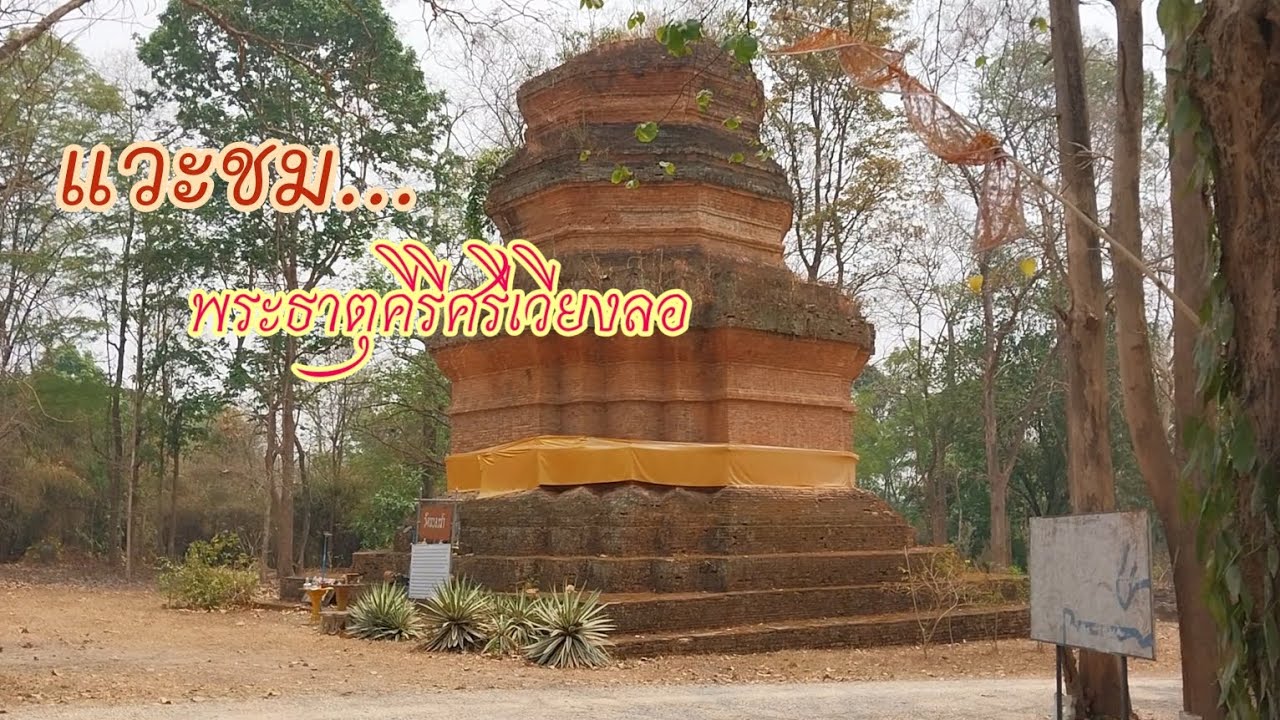
 Click to Access the Navigation Map GPS
Phra That Khiri Si Wiang Lo Map
Recommend

 Art, Culture and Heritage
 Historical Sites and Monuments(4)
 Landmarks and Memorials(4)
 Art, Craft Centres, Tradition(1)
 Museums(2)
 Temple(39)
Other Sacred Sites(5)
Temple(39)
Other Sacred Sites(5)
 Research and Development
 Royal Project(1)
 Suburban Living
 Village, Community(2)
 Local Market(4)
 Nature and Wildlife
 National Parks and Marine Reserves(6)
 Mountain (Doi)(2)
 Dam, Reservoir, Lake(11)
 Waterfalls(8)
 Caves(5)
 River, Canal(3)
 Other natural attractions(5)


