
lovethailand home >North Travel Attractions >Phayao Travel Attractions >Chun >Hong Hin > Phra That Hong Hin
TL;DR: Phra That Hong Hin is located at Ban Sak Lo, Hong Hin Subdistrict, Chun District, Phayao Province, open Daily, hours Open During Temple Hours.
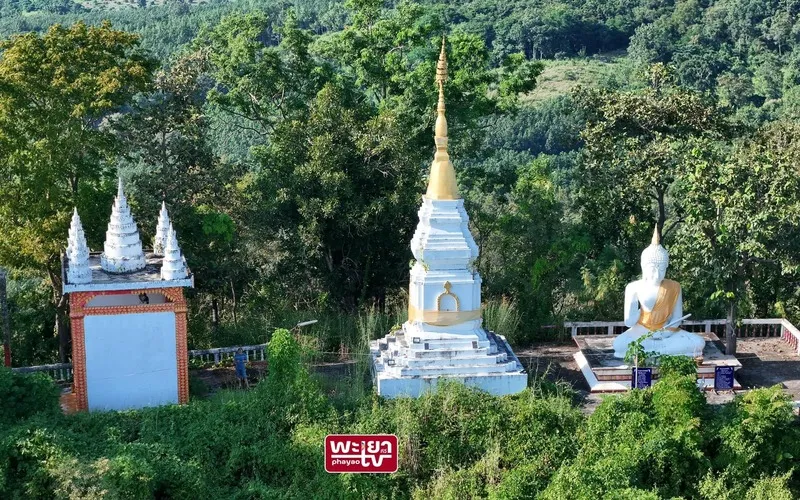
Phra That Hong Hin
Open Days: Daily
Opening Hours: Open During Temple Hours
Phra That Hong Hin in Phayao Province is an important sacred site in Ban Sak Lo, Hong Hin Subdistrict, Chun District. It is closely linked with the legend of Chao Hong Hin Bodhisattva, the ancient city of Wiang Lo, Doi Phu Ruea, and a naturally formed stone once believed to resemble a swan. The site combines Buddhist faith, local legend, archaeology, sacred landscape, and community memory, making it a meaningful destination for travelers interested in northern Thai culture beyond mainstream attractions.
Phra That Hong Hin is located in Ban Sak Lo, Hong Hin Subdistrict, Chun District, Phayao Province. It is regarded as an old sacred stupa and a spiritual landmark of the Hong Hin community. The site is not only a place of worship, but also a cultural landscape where stories of an ancient ruler, sacred stone, local faith, and the historical region of Wiang Lo are woven together. Visitors who come here encounter not just a religious monument, but a living tradition preserved through local memory.
The legend of Phra That Hong Hin centers on Chao Hong Hin Bodhisattva, a ruler said to have descended from Benares and later associated with the area known as Wiang Lo. The story places Hong Hin within a cultural world connected with ancient northern cities and the artistic influence of Chiang Saen. Local tradition links the stupa, Buddha images, and sacred forms in the area with styles related to Chiang Saen art, helping visitors understand the broader Lanna context of this place.
According to the legend, Chao Hong Hin was a righteous ruler of Wiang Lo and was honored with the title “Bodhisattva.” This belief gives Phra That Hong Hin a deeper spiritual meaning. The site is not only sacred because of the stupa, but also because it is associated with virtue, compassion, and the memory of a ruler revered by the local community. In Lanna culture, such legends help transform mountains, stones, and villages into meaningful sacred landscapes.
Local elders tell of a stone on Doi Ruea that once had the clear shape of a swan. It was said to have a head, tail, and wings, resembling a real swan. Over time, this stone became central to the belief in Chao Hong Hin Bodhisattva. The natural form of the stone, combined with the local legend, made it a sacred symbol of the community. This is one reason why the name Hong Hin, or “stone swan,” remains deeply meaningful to local people.
In 1907, Phra Khru Maha No Kaeo and Phra Khru Ba Aphichai built a stupa on this hill, intending to enshrine and cover the swan-shaped stone in order to enhance the sacredness of the site. During the construction, parts of the stone form were altered, including the wings, head, and tail, so that the stupa could be built over it. This episode became an important part of the legend, showing the complex relationship between older sacred beliefs, natural forms, and later Buddhist architecture.
Afterward, the area experienced drought and seasonal irregularity. Local tradition also tells of a thunderstorm in which lightning struck the stupa, causing it to crack and collapse. What remained was an ordinary-looking stone, no longer showing the original wings, head, and tail. The story continues that after the collapse, the community returned to peace and well-being. This makes the stone not merely a geological feature, but a symbol of sacred balance between people, nature, and spiritual forces.
In 1989, Phra Anan Buddhdhammo from Wat Phra That Saeng Kaeo Mongkhon in Dok Kham Tai District, Phayao Province, built a monument to Chao Pho Hong Hin Bodhisattva on the eastern side of the site. He also created images of Chao Hong Hin and an elderly woman riding on the back of the swan near the original stone. These additions helped turn oral tradition into visible cultural memory, allowing later generations to pay respect to the sacred site and remember the older legend.
Phra That Hong Hin therefore has many layers of meaning. It is a Buddhist stupa and local temple site. It is also a place tied to the archaeology and history of Wiang Lo, a sacred landscape connected with Doi Ruea, and a community memory site built around the legend of Chao Hong Hin Bodhisattva. These layers make the site much richer than a simple hilltop attraction. It is a place where religion, folklore, history, and landscape meet.
Ban Sak Lo and Hong Hin Subdistrict are part of the wider middle Ing River basin, an area associated with the ancient city of Wiang Lo. Many archaeological remains, old temple sites, stupas, and Buddha images have been found in the region. Visiting Phra That Hong Hin can therefore be combined with learning about Wiang Lo and the historical development of Chun District. For travelers interested in local history, this area offers one of Phayao’s most rewarding cultural routes.
Doi Phu Ruea, connected with the Hong Hin legend, is also important in terms of cultural geography. The name refers to a mountain whose form resembles an overturned flat-bottomed boat. Local people gave meaning to this landscape by linking it with the stone swan and the story of Chao Hong Hin. This reflects the way communities interpret natural forms and transform them into places of memory, worship, and identity.
Visitors to Phra That Hong Hin should take time to pay respect calmly and observe the site carefully. Important points include the stupa, the original stone form, the monument to Chao Hong Hin Bodhisattva, the image of the swan, and the surrounding views. The value of the place is not always expressed through grand architecture. Much of its meaning lies in local storytelling, sacred memory, and the relationship between the site and the surrounding landscape.
The journey up to the site is part of the experience. Since the sacred area is located on elevated ground, visitors should wear comfortable shoes, bring drinking water, and be careful during the rainy season. The hilltop atmosphere is quiet and reflective. It is especially suitable for travelers who appreciate sacred sites in natural settings and do not want a rushed or crowded tourist experience.
Phra That Hong Hin should be visited with respect. The site is a sacred place for the local community, not merely a scenic viewpoint. Visitors should speak quietly, avoid climbing on sacred stones or old structures, refrain from touching objects unnecessarily, and keep the area clean. Respectful behavior helps preserve the dignity of the site and supports community-based cultural conservation.
As a place of worship, Phra That Hong Hin is connected with local merit-making, paying respect to the stupa, and reverence for Chao Hong Hin Bodhisattva. The act of ascending to a sacred hill has symbolic meaning in northern Thai culture. It represents a movement from ordinary life toward a higher spiritual space. For local people, this journey also strengthens the connection between the community and its sacred heritage.
In terms of travel, Phra That Hong Hin is ideal for those interested in old temples, local legends, archaeological landscapes, and the Wiang Lo cultural route. It is not a mainstream attraction built around commercial tourism. Instead, it offers a quieter and more thoughtful experience, where visitors can listen to the landscape, consider the legend, and see how local people preserve their identity through sacred places.
Nearby cultural sites include Wiang Lo, Phra That Khiri Si Wiang Lo or Phra That Nong Ha, Wat Phra Chao Khao Kat, Wat Phra That Thung Ku Thong, and communities along the Ing River. Combining these places into one route helps visitors understand how Phra That Hong Hin fits into the larger historical landscape of Chun District. Each site adds another layer to the story of faith, settlement, and Lanna culture in Phayao.
Getting There is most convenient by private car. Travelers can drive to Chun District in Phayao Province, then continue to Hong Hin Subdistrict and Ban Sak Lo. Ban Sak Lo can be used as the main reference point for navigation. From there, visitors continue toward the hill area associated with Doi Ruea and Phra That Hong Hin. Since the route includes local roads and hill access, checking the map before departure is recommended.
Travelers coming from Mueang Phayao should allow enough time, especially if planning to visit several cultural sites in the Wiang Lo area. Phra That Hong Hin is best experienced slowly, not as a quick roadside stop. Time should be allowed for worship, walking, viewing the landscape, and understanding the legend before continuing to nearby historical sites.
Morning visits offer fresh air and soft light, making the site pleasant for worship and photography. Late afternoon can also be beautiful, especially when the light falls across the fields and hills around the area. Visitors should avoid descending from the hill too late if they are unfamiliar with the route. Safety and respect for the local setting should come before rushing to complete an itinerary.
From a conservation perspective, Phra That Hong Hin should be treated as a local cultural heritage site. Sacred stones, monuments, and old structures carry the memory of many generations. Visitors should avoid touching, scratching, moving, or damaging any part of the site. Keeping the area clean and following local guidance are simple but important ways to help preserve the site.
Phra That Hong Hin is also valuable as a learning site. It can help students, researchers, and cultural travelers understand local legends, Bodhisattva beliefs, Chiang Saen-related art, Wiang Lo history, Doi Phu Ruea, and the cultural geography of the Ing River basin. The site shows how community memory can preserve history through storytelling and sacred landscapes.
For photography, important subjects include the stupa area, the monument to Chao Hong Hin Bodhisattva, the remaining stone form, the swan-related images, the route up the hill, and the surrounding view. Photos should be taken respectfully and without disturbing worshippers. Posing in inappropriate ways around sacred objects should be avoided.
The charm of Phra That Hong Hin lies in the fact that it reveals a deeper side of Phayao. Beyond Phayao Lake and the better-known city temples, the province contains ancient communities, local legends, archaeological sites, and sacred hills. Chun District, with Wiang Lo and Hong Hin, is especially rich in this kind of heritage. Visiting the site helps travelers understand Phayao as a province of layered history and living traditions.
Visitors should approach the legend with respect. Some parts of the story belong to oral tradition, but oral traditions are valuable cultural heritage. They preserve how a community understands its place, remembers its past, and transmits identity to future generations. Listening to the legend of Hong Hin is therefore an essential part of visiting the site.
Overall, Phra That Hong Hin is a meaningful destination for travelers who want to pay respect to a sacred stupa, learn about Chao Hong Hin Bodhisattva, see the landscape of Doi Ruea, and understand the cultural world of Wiang Lo in Phayao Province. With its stupa, sacred stone, monument, local legend, and views over the surrounding area, the site offers a quiet but memorable cultural experience for those willing to travel beyond the usual routes.
| Name | Phra That Hong Hin |
| Location | Ban Sak Lo, Hong Hin Subdistrict, Chun District, Phayao Province |
| Coordinates | 19.52437, 100.10018 |
| Highlights | Old sacred stupa on Doi Ruea, legend of Chao Hong Hin Bodhisattva, original swan-shaped stone, monument to Chao Pho Hong Hin, and views over Hong Hin and Wiang Lo landscapes |
| History | Associated with the legend of Chao Hong Hin Bodhisattva, Wiang Lo, and Chiang Saen-related art; a stupa was built over the stone in 1907, and a monument to Chao Pho Hong Hin Bodhisattva was built in 1989 |
| Key Evidence | Phra That Hong Hin, the remaining sacred stone, Chao Pho Hong Hin Bodhisattva monument, images of Chao Hong Hin and an elderly woman riding the swan |
| Name Origin | Derived from the legend of a swan-shaped stone on Doi Ruea, revered as a symbol of Chao Hong Hin Bodhisattva |
| Distinctive Features | A local Buddhist temple and sacred community site on elevated ground, suitable for worship, local legend study, Wiang Lo cultural exploration, and scenic viewing |
| Traditions / Main Activities | Paying respect to Phra That Hong Hin, worshipping Chao Hong Hin Bodhisattva, Buddhist merit-making, and local faith activities of the Hong Hin community |
| Travel Information | Best reached by private car via Chun District, continuing to Hong Hin Subdistrict and Ban Sak Lo, then proceeding to the Doi Ruea and Phra That Hong Hin area |
| Current Status | A local Buddhist temple and sacred site for the Hong Hin community in Chun District, Phayao Province |
| Open Days | Daily |
| Opening Hours | Open During Temple Hours |
| Facilities | Worship area, viewpoint area, hill access route, and local temple grounds |
| Main Areas / Zones | Phra That Hong Hin, original sacred stone, Chao Pho Hong Hin Bodhisattva monument, images of Chao Hong Hin and the elderly woman riding the swan, viewpoint area, and hilltop worship space |
| Abbot / Caretaker | Phra Athikan Panyawat Chutinaro |
| Official Website / Official Page | Wat Phra That Hong Hin, Hong Hin Subdistrict, Chun District, Phayao Province |
| Nearby Tourist Attractions | 1. Wiang Lo, about 5 km 2. Phra That Khiri Si Wiang Lo / Phra That Nong Ha, about 5 km 3. Wat Phra Chao Khao Kat, about 6 km 4. Wat Phra That Thung Ku Thong, about 7 km 5. Ing River And Wiang Lo Community, about 8 km 6. Wat Phra That Sop Waen, about 28 km 7. Wat Nantaram, about 30 km |
| Nearby Restaurants | 1. Khrua Fa Tawan, Ban Wiang Lo, about 7 km, Tel. 096-651-4232 2. Baan Suan Ai Un, Chun Branch, about 13 km, Tel. 092-279-3978, 086-013-5054 3. Tam Zab Chun, about 16 km, Tel. 093-342-6680, 084-343-9835 4. Fa Rung Chun, about 16 km, Tel. 065-006-9914 5. Laeng Ma Se, about 18 km, Tel. 080-880-7969 6. Palms Coffee Chun, about 18 km |
| Nearby Accommodations | 1. Ko Phai Resort, Hong Hin Subdistrict, about 8 km, Tel. 087-838-8750 2. Freestyle Chun Hotel, about 16 km, Tel. 095-778-4732 3. Wang Nam Cham Resort, about 16 km, Tel. 089-954-8584 4. Huen Uidee, about 17 km, Tel. 089-537-8990 5. Baan Suan Homestay Chun, about 18 km, Tel. 081-021-1502, 080-135-6076, 081-032-3156 6. Chiang Kham Grand Villa, about 30 km, Tel. 084-811-5585 |
Frequently Asked Questions (FAQ)
Q: Where is Phra That Hong Hin located?
A: Phra That Hong Hin is located in Ban Sak Lo, Hong Hin Subdistrict, Chun District, Phayao Province. It is a sacred site linked with the Hong Hin community and the Wiang Lo cultural landscape.
Q: Why is Phra That Hong Hin important?
A: It is an old sacred stupa connected with the legend of Chao Hong Hin Bodhisattva, the swan-shaped stone, Doi Ruea, and the cultural memory of the Wiang Lo area.
Q: What is the legend of Chao Hong Hin Bodhisattva?
A: Local tradition tells of Chao Hong Hin as a righteous ruler of Wiang Lo who was revered as a Bodhisattva, with the swan-shaped stone on Doi Ruea serving as a sacred symbol of the legend.
Q: How is Phra That Hong Hin related to Wiang Lo?
A: The site is located in Hong Hin Subdistrict, Chun District, an area closely connected with the historical and cultural landscape of Wiang Lo in the middle Ing River basin.
Q: Who is the caretaker of Wat Phra That Hong Hin?
A: The abbot of Wat Phra That Hong Hin is Phra Athikan Panyawat Chutinaro.
Q: How can visitors get to Phra That Hong Hin?
A: Visitors can travel by private car to Chun District, continue to Hong Hin Subdistrict and Ban Sak Lo, then proceed toward the Doi Ruea and Phra That Hong Hin area.
Q: What type of traveler is Phra That Hong Hin suitable for?
A: It is suitable for travelers interested in sacred stupas, local legends, Wiang Lo archaeology, hilltop views, and community-based cultural travel in Chun District.
Q: What nearby attractions can be visited with Phra That Hong Hin?
A: Nearby attractions include Wiang Lo, Phra That Khiri Si Wiang Lo, Wat Phra Chao Khao Kat, Wat Phra That Thung Ku Thong, the Ing River community area, Wat Phra That Sop Waen, and Wat Nantaram.
 Category: ●Places of Worship
 Group: ●Other Sacred Sites
Last Update : 4 MonthAgo
 Last Update : 4 MonthAgo
 Click to Access the Navigation Map GPS
Phra That Hong Hin Map
Recommend

 Art, Culture and Heritage
 Historical Sites and Monuments(4)
 Landmarks and Memorials(4)
 Art, Craft Centres, Tradition(1)
 Museums(2)
 Temple(39)
Other Sacred Sites(5)
Temple(39)
Other Sacred Sites(5)
 Research and Development
 Royal Project(1)
 Suburban Living
 Village, Community(2)
 Local Market(4)
 Nature and Wildlife
 National Parks and Marine Reserves(6)
 Mountain (Doi)(2)
 Dam, Reservoir, Lake(11)
 Waterfalls(8)
 Caves(5)
 River, Canal(3)
 Other natural attractions(5)


