
lovethailand home >North Travel Attractions >Phayao Travel Attractions >Muang Phayao >Mae Ka > Tham Luang (Tham Hua Mee Cave)
TL;DR: Tham Luang (Tham Hua Mee Cave), Phayao attractions : Nature and Wildlife, Caves.
Tham Luang (Tham Hua Mee Cave)
Open Days: No official opening days specified; visitors should contact local authorities before traveling
Opening Hours: No official opening hours specified; daytime visits with a local guide are recommended
Tham Luang (Tham Hua Mee Cave) in Phayao Province is a large natural cave located deep in the forest of Mae Ka Subdistrict, Mueang Phayao District. The cave is associated with Moo 18, Ban Mae Tam or Ban Mae Tam Noi, and is known for its spacious interior and beautiful stalagmites and stalactites. The distance from the road to the cave is about 15 km, making it a destination that requires careful planning, local guidance, and proper preparation rather than a casual roadside stop.
This cave offers a different kind of travel experience from the better-known attractions of Phayao, such as Kwan Phayao, temples, and mountain viewpoints. Tham Luang (Tham Hua Mee Cave) is more remote, quieter, and closely connected with forest terrain. It is suitable for travelers who are interested in natural caves, limestone formations, forest environments, and responsible exploration.
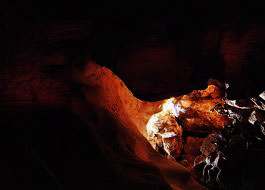
The main appeal of Tham Luang (Tham Hua Mee Cave) is its large cave chamber hidden in a deep forest setting. Inside the cave, visitors can find natural rock formations created over a long period by water, limestone, minerals, darkness, and time. Stalagmites rise from the cave floor, while stalactites hang from the ceiling, forming shapes that cannot be recreated by human hands. This slow natural process is one of the reasons caves should be treated with great care.
A large cave has a very different atmosphere from waterfalls or open viewpoints. It is darker, cooler, more humid, and more enclosed. Visitors entering Tham Luang (Tham Hua Mee Cave) should therefore treat it as a sensitive natural environment. It is not a place to enter carelessly, walk alone, touch formations, leave trash, or explore narrow passages without local knowledge. Cave environments recover very slowly once damaged.
Ban Mae Tam and Ban Mae Tam Noi in Mae Ka Subdistrict are communities connected with forest, hills, and natural watercourses. The presence of Tham Luang (Tham Hua Mee Cave) shows that Mae Ka is not only an area near the University of Phayao and main roads, but also a subdistrict with deeper natural landscapes. Visiting the cave allows travelers to see another side of Mueang Phayao District, where urban, educational, community, and forest environments coexist.
The name “Tham Luang” suggests a large or important cave, while “Tham Hua Mee” gives the cave a distinctive local identity. The word “Mee,” meaning bear in Thai, evokes images of forest, mountains, wildlife, and local stories. Even without adding unverified legends, the name itself reflects the cave’s atmosphere as a remote natural place hidden among forested terrain.
Before visiting, travelers should understand that Tham Luang (Tham Hua Mee Cave) is not a fully developed commercial cave attraction with standard lighting, paved walkways, complete signboards, or staff stationed at every point. Visitors should contact Mae Ka Subdistrict Municipality, local community leaders, or residents of Ban Mae Tam Noi before entering the area. Traveling with someone who knows the route is strongly recommended because the cave is located deep in the forest.
Visitors should bring proper cave equipment, especially a strong flashlight or headlamp, spare batteries, and backup lighting. A mobile phone flashlight should not be the only source of light because it may not be bright enough and can drain the battery quickly. Cave floors can be damp, slippery, uneven, or covered with loose stones, so visitors should wear closed shoes with good grip rather than sandals or smooth-soled footwear.
Weather is an important factor. Heavy rain or continuous rainfall can make forest routes unsafe, increase water levels in streams, and make the ground slippery. Visitors should avoid entering the cave during or after heavy rain. Since the cave is about 15 km from the road, the trip should be planned only when the weather is clear and there is enough time to return before dark.
Tham Luang (Tham Hua Mee Cave) is best suited for prepared nature travelers, not visitors looking for full facilities. Those interested in cave photography, limestone formations, and forest exploration may find the site rewarding. However, photography should be done without touching stalagmites or stalactites, disturbing cave wildlife, or entering unsafe passages. The safest and most respectful way to enjoy a cave is to observe carefully and avoid altering anything inside.
Caves are special ecosystems. They may support insects, bats, and small organisms adapted to darkness and humidity. Loud noises, strong lights, trash, smoke, and unnecessary disturbance can affect these living systems. Visitors should therefore keep their voices low, avoid shining lights directly at wildlife for long periods, and take all waste back out of the cave.
The stalagmites and stalactites inside the cave are fragile natural resources. They take a very long time to form. Touching, breaking, climbing, writing on, or removing pieces of rock can cause permanent damage. Visitors should admire the formations visually and keep a safe distance. Responsible cave travel means leaving the cave exactly as it was found.
Geographically, Tham Luang (Tham Hua Mee Cave) adds depth to the natural attractions of Phayao Province. Phayao is often associated with its lake, temples, and mountain scenery, but it also has caves and forest areas that reveal a different side of the province. The presence of a large cave in Mae Ka Subdistrict allows travelers to build a more diverse itinerary that includes caves, forest, community areas, and major city attractions.
Getting There should begin from Mueang Phayao or the University of Phayao area, then continue into Mae Ka Subdistrict and Ban Mae Tam Noi, Moo 18. From there, travelers enter the natural route toward the cave. The distance from the road to the cave is about 15 km. Because the route leads into deep forest, visitors should ask local residents or Mae Ka Subdistrict Municipality for updated directions and should travel with a local guide.
Visitors traveling by private car should check the vehicle condition, carry enough fuel, and save maps in advance. Mobile signal may be unstable in forested areas. Before entering the route, it is wise to inform local contacts of the travel plan and expected return time. This makes the trip safer, especially for a remote cave environment.
Travelers using public transportation can first reach Mueang Phayao or the University of Phayao area, then arrange local transport or a hired vehicle to Mae Ka and Ban Mae Tam Noi. Since the cave is not located along a frequent public transport route, return transportation should be arranged in advance. Visitors should not enter the forest route without a clear plan for returning.
The best time to begin the trip is in the morning. This allows enough time to travel in, explore carefully, and return before late afternoon. Entering the route late in the day is not recommended because forest areas become dark quickly and the cave environment is already low-light. If rain is forecast or the sky is dark, the visit should be postponed.
Recommended items include a main flashlight, backup light, spare batteries, non-slip closed shoes, comfortable clothing, light gloves, drinking water, snacks, personal medicine, a small first-aid kit, a personal trash bag, and a fully charged phone. During the rainy season, visitors should also bring a raincoat and waterproof bags for electronic devices.
Visitors should never enter the cave alone. The risks include unclear paths, darkness, slippery floors, uneven surfaces, wildlife, and changing weather conditions. A small group with a local guide is a much safer choice. At least one person should know the route and safe zones, and someone outside the trip should know the expected return time.
For cave photography, visitors should use light carefully and avoid moving natural objects. Beautiful formations can be photographed from safe positions without touching them. The best cave photographs are those that respect both safety and nature, not those taken from dangerous or damaging positions.
Tham Luang (Tham Hua Mee Cave) is also useful as a natural learning site. It can inspire interest in limestone caves, mineral deposition, groundwater movement, cave humidity, and cave ecosystems. Students and nature enthusiasts can learn from the site without collecting samples, digging, writing, or changing the cave environment in any way.
From a community tourism perspective, the cave can help draw attention to Mae Ka and Ban Mae Tam Noi beyond the main travel routes of Phayao. With careful management, it can be connected with local food, accommodation near the University of Phayao, and major attractions in Mueang Phayao. However, the cave should not be overdeveloped in a way that destroys its deep-forest identity and quiet natural character.
Nearby attractions that can be combined with the trip include the University of Phayao, Ang Luang in the university area, Wat Analayo Thipphayaram, Wat Pa Analayo, Kwan Phayao, Wat Si Khom Kham, and Wat Phra That Chom Thong. This route allows travelers to experience forest nature, cave exploration, local community areas, and important Phayao landmarks in one itinerary.
For a one-day trip, travelers should start early, contact local people in advance, visit the cave area in the morning, and return before late afternoon. After the cave trip, visitors can have a meal in Mae Ka or near the University of Phayao, then continue to Kwan Phayao or nearby temples in the evening.
For a two-day trip, staying in Mae Ka or Mueang Phayao makes the schedule more flexible. The first day can focus on the cave and natural areas of Mae Ka, while the second day can include Kwan Phayao, Wat Si Khom Kham, Wat Phra That Chom Thong, and local restaurants. This reduces travel pressure and allows safer timing for the cave visit.
Tham Luang (Tham Hua Mee Cave) is not suitable for every traveler. Young children, elderly visitors, people with walking difficulties, those uncomfortable in darkness, or travelers who do not want to enter forest routes should consider their readiness carefully. For visitors with the right preparation, physical condition, and respect for nature, the cave offers a memorable experience that is different from typical Phayao attractions.
The most important rule is to avoid damaging the cave. Visitors should carry out all trash, avoid lighting fires, never write on cave walls, keep noise low, avoid touching animals, avoid touching formations, and avoid sharing unsafe route information in a way that encourages unprepared visitors to enter alone. Cave conservation is the responsibility of every visitor.
Overall, Tham Luang (Tham Hua Mee Cave) is a valuable natural attraction because of its large cave chamber, beautiful stalagmites and stalactites, deep forest setting, and quiet location in Moo 18, Ban Mae Tam, Mae Ka Subdistrict. It should be approached with planning, local guidance, and respect. When visited responsibly, the cave can offer a striking, educational, and memorable experience in another natural dimension of Phayao Province.
| Name | Tham Luang (Tham Hua Mee Cave) |
| Location | Moo 18, Ban Mae Tam / Ban Mae Tam Noi, Mae Ka Subdistrict, Mueang Phayao District, Phayao Province |
| Address | Ban Mae Tam Noi, Moo 18, Mae Ka Subdistrict, Mueang Phayao District, Phayao 56000 |
| Highlights | A large cave deep in the forest, with a spacious interior and beautiful stalagmites and stalactites, suitable for responsible nature exploration |
| Name Origin | “Tham Luang” refers to a large cave, while “Tham Hua Mee” is the local name associated with the cave area in Ban Mae Tam Noi |
| Distinctive Features | Large natural cave in a deep forest area, with stalagmites, stalactites, a wide interior, and a route of about 15 km from the road to the cave |
| Travel Information | Travel from Mueang Phayao or the University of Phayao area to Mae Ka Subdistrict and Ban Mae Tam Noi, Moo 18. Visitors should ask local residents or Mae Ka Subdistrict Municipality for current route conditions and travel with a local guide |
| Current Status | A natural cave attraction in Mae Ka Subdistrict, Mueang Phayao District. Visitors should contact local authorities or the community before entering the cave area |
| Facilities | The cave is located deep in the forest and does not have full tourist facilities. Visitors should bring flashlights, backup lights, non-slip shoes, drinking water, snacks, and a first-aid kit |
| Main Areas / Zones | Cave entrance, cave chamber, stalagmite and stalactite areas, surrounding forest route, and Ban Mae Tam Noi area |
| Caretaker | Mae Ka Subdistrict Municipality and Ban Mae Tam Noi community, Mae Ka Subdistrict, Mueang Phayao District |
| Official Website / Official Page | Mae Ka Subdistrict Municipality Official Facebook Page |
| Nearby Tourist Attractions | 1. University of Phayao, about 18 km 2. Ang Luang, University of Phayao, about 19 km 3. Wat Analayo Thipphayaram / Wat Pa Analayo, about 28 km 4. Kwan Phayao, about 30 km 5. Wat Si Khom Kham, about 31 km 6. Wat Phra That Chom Thong, about 32 km |
| Nearby Restaurants | 1. Krua Siriphat Mae Ka, about 18 km, Tel. 098-226-1555 2. Mandi Seafood, University of Phayao Area, about 19 km, Tel. 098-798-1564 3. Makin Mae Ka, about 19 km, Tel. 088-610-1816 4. Krua Baan Im Aem Delivery Restaurant, about 19 km, Tel. 089-162-4013 5. MR.HANDSOME Cafe, about 20 km, Tel. 086-408-6852 6. Himta Garden Cafe At Phayao, about 25 km, Tel. 097-027-9777 |
| Nearby Accommodations | 1. Prasertsuk Resort Mae Ka, about 18 km, Tel. 091-067-9211, 065-264-1542 2. PM Place Apartment, about 19 km, Tel. 054-466-659, 054-466-288, 054-466-289, 088-263-2414 3. The Nice Room, University of Phayao Area, about 19 km 4. Mae Ka Luang Homestay, about 20 km 5. Garden Home Mae Ka, about 20 km 6. KVI Dormitory Near University of Phayao, about 20 km |
Frequently Asked Questions (FAQ)
Q: Where is Tham Luang (Tham Hua Mee Cave) located?
A: It is located at Moo 18, Ban Mae Tam or Ban Mae Tam Noi, Mae Ka Subdistrict, Mueang Phayao District, Phayao Province.
Q: What makes Tham Luang (Tham Hua Mee Cave) special?
A: It is a large cave deep in the forest, with a spacious interior and beautiful stalagmites and stalactites.
Q: How far is the cave from the road?
A: The distance from the road to the cave is about 15 km, so visitors should prepare carefully and ask local residents for current route information.
Q: Is Tham Luang (Tham Hua Mee Cave) suitable for general tourists?
A: It is suitable for prepared nature travelers who enjoy exploration. It is less suitable for visitors who need full facilities or cannot travel through forest routes.
Q: What should visitors bring to Tham Luang (Tham Hua Mee Cave)?
A: Visitors should bring flashlights, backup lights, non-slip shoes, drinking water, snacks, personal medicine, a first-aid kit, and should travel with a local guide.
Q: Can visitors enter Tham Luang (Tham Hua Mee Cave) alone?
A: No. Entering alone is not recommended because the cave is deep in the forest and may involve unclear routes, darkness, slippery ground, and other natural risks.
Q: When is the best time to visit Tham Luang (Tham Hua Mee Cave)?
A: Visitors should go on a clear day, start in the morning, and avoid heavy rain or late-afternoon entry to ensure enough time to return safely.
Q: What nearby attractions can be visited with Tham Luang (Tham Hua Mee Cave)?
A: Nearby places include the University of Phayao, Ang Luang, Wat Analayo Thipphayaram, Kwan Phayao, Wat Si Khom Kham, and Wat Phra That Chom Thong.
 Category: ●Nature and Wildlife
 Group: ●Caves
Last Update : 2 WeekAgo
 Last Update : 2 WeekAgo
 Click to Access the Navigation Map GPS
Tham Luang (Tham Hua Mee Cave) Map
Recommend
 Art, Culture and Heritage
 Historical Sites and Monuments(4)
 Landmarks and Memorials(4)
 Art, Craft Centres, Tradition(1)
 Museums(2)
 Places of Worship
 Temple(39)
 Other religious and spiritural sites(5)
 Research and Development
 Royal Project(1)
 Suburban Living
 Village, Community(2)
 Local Market(4)
 National Parks and Marine Reserves(6)
 Mountain (Doi)(2)
 Dam, Reservoir, Lake(11)
 Waterfalls(8)
Caves(5)
Waterfalls(8)
Caves(5)
 River, Canal(3)
 Other natural attractions(5)


