
lovethailand home >North Travel Attractions >Phayao Travel Attractions >Muang Phayao >Mae Ka > Wat Mae Ka
TL;DR: Wat Mae Ka is located at Mae Ka Subdistrict, Mueang Phayao District, Phayao Province, open Daily, hours Contact The Temple Directly Before Entering Important Interior Areas And The.
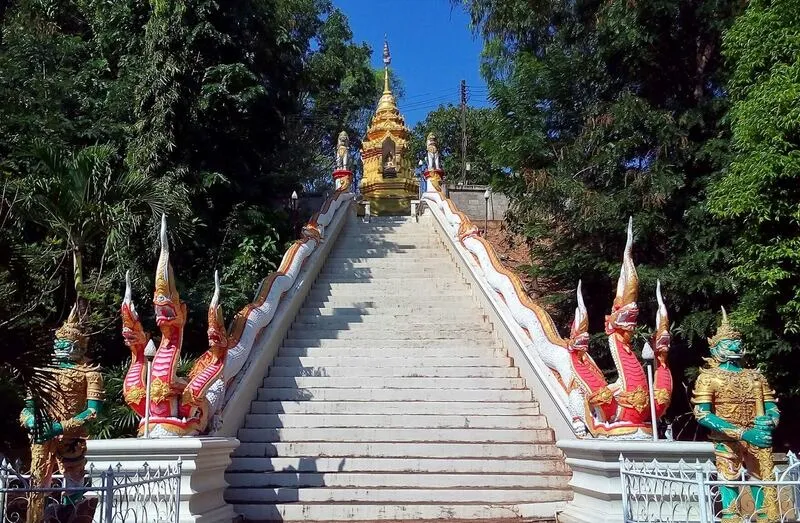
Wat Mae Ka
Open Days: Daily
Opening Hours: Contact The Temple Directly Before Entering Important Interior Areas And The Local Learning Display
Wat Mae Ka Thok Wak in Phayao Province, often referred to simply as Wat Mae Ka, is an important community temple in Mae Ka Subdistrict, Mueang Phayao District. Located along Phahonyothin Road, the temple serves as a spiritual and social center for local residents. It is not a large tourist temple, but it is meaningful because it preserves community faith, Buddhist practice, local memory, and old household objects that reflect the former way of life in Mae Ka.
The temple is located in Mae Ka Subdistrict, an area connected with local communities, Phahonyothin Road, and the University of Phayao. This setting makes the temple easily accessible for residents, students, visitors, and travelers passing through the eastern side of Mueang Phayao. The atmosphere is calm and local, offering a different experience from the more famous temples around Kwan Phayao.
Wat Mae Ka Thok Wak is a Mahanikaya community temple registered as a Buddhist temple in 1927 CE. Its long-standing presence shows how closely the temple has been tied to the Mae Ka community for generations. As a local temple, it has been supported by monks, community leaders, villagers, and devotees who continue to use it for merit-making, sermons, meditation, religious ceremonies, and community gatherings.
One of the most interesting features of Wat Mae Ka Thok Wak is its local wisdom learning display. The temple preserves old items, traditional household objects, tools, and materials related to the former lifestyle of Mae Ka villagers. These objects allow visitors to understand the community through real things once used in daily life. A simple tool, container, or household item can reveal stories about farming, cooking, family life, local work, and religious customs.
The old objects kept at the temple are valuable not only because of their age, but because they are connected with memory. They represent how people lived before modern conveniences became common. For younger generations, the display helps explain the roots of the community. For older residents, it preserves familiar objects from the past. This makes the temple a small community museum as well as a place of worship.
In northern Thai communities, temples have often served as places for preserving manuscripts, ritual objects, old tools, and community knowledge. Wat Mae Ka Thok Wak continues this role by keeping local objects in a religious setting where people still gather. This gives the display a living context. The objects are not separated from community life; they remain inside a temple that local people continue to use.
The temple is also known locally for a respected Buddha image with notably beautiful eyes. This Buddha image is part of the temple’s spiritual identity and remains important to local devotion. Visitors can come to pay respect, make merit, and spend time quietly in the temple grounds. The experience is gentle and local, suitable for those who appreciate small community temples rather than highly commercialized attractions.
Wat Mae Ka Thok Wak also functions as a place for community activities, including activities related to elderly residents and local learning. This role shows that the temple is not limited to formal religious rituals. It is also a social space where people meet, learn, listen to Dhamma, practice morality, and maintain relationships across generations.
On important Buddhist days such as Makha Bucha, Visakha Bucha, Asalha Bucha, Buddhist Lent, and the end of Buddhist Lent, local residents gather at the temple for merit-making, alms giving, sermons, meditation, and religious observances. These annual activities help preserve northern Thai Buddhist traditions and keep the temple active as a center of community faith.
During Buddhist Lent, villagers often come to the temple to offer candles, robes, food, and other necessities to monks. Families may attend together, allowing younger generations to learn temple etiquette and Buddhist values from elders. This continuity of practice is one of the strongest signs that Wat Mae Ka Thok Wak remains a living temple, not merely a historical site.
For cultural travelers, the temple is especially interesting because it reveals the everyday role of Buddhism in a local community. It does not rely on monumental architecture to create meaning. Its value lies in the relationship between monks, villagers, old objects, local memory, and community activities. Visitors who take time to observe slowly will see how faith and everyday life remain connected in Mae Ka.
Visitors should approach the local learning display with care. Old objects should not be touched, moved, or handled without permission. Some items may be fragile or important to the community. Photography should be done respectfully, and visitors should ask monks or caretakers before taking photos in sensitive areas. Respectful behavior helps protect the temple’s local heritage.
The temple can be included in a cultural route through Mae Ka Subdistrict. Nearby temples include Wat Mae Ka Huai Khian, Wat Mae Ka Luang, Wat Mo Kaeng Thong, Wat Dong Phra Chao, and other community temples in the area. This route allows visitors to see different aspects of local Buddhist life in Mae Ka, from active temples to local wisdom displays and community religious spaces.
Getting There is convenient from central Phayao. Travelers can follow Phahonyothin Road toward Mae Ka Subdistrict, the same general route used to reach the University of Phayao. The temple can be reached by private car, motorcycle, local transport, or ride-hailing services. From central Phayao, visitors should allow around 20 to 30 minutes depending on traffic and starting point.
For visitors staying near the University of Phayao, Wat Mae Ka Thok Wak is a convenient cultural stop. It can also be visited while traveling between Mueang Phayao and nearby districts. The temple is suitable for those who want to pay respect, learn about local community objects, and experience a quieter side of Phayao beyond the well-known lakeside attractions.
In summary, Wat Mae Ka Thok Wak, or Wat Mae Ka, is a meaningful community temple in Mae Ka Subdistrict. Its value lies in its role as a center of local faith, its respected Buddha image, its preservation of old objects and community wisdom, and its continuing use as a place for merit-making, meditation, sermons, elderly activities, and community gatherings. A visit here offers a warm and authentic view of local life in Phayao.
| Name | Wat Mae Ka Thok Wak Or Wat Mae Ka |
| Location | Mae Ka Subdistrict, Mueang Phayao District, Phayao Province |
| Address | Phahonyothin Road, Mae Ka Subdistrict, Mueang Phayao District, Phayao Province 56000 |
| Coordinates | 19.07722, 99.92587 |
| Highlights | Community temple of Mae Ka Subdistrict, respected Buddha image, and a local wisdom learning display preserving old household objects, traditional tools, and community items from the past |
| History | A Mahanikaya community temple registered in 1927 CE, with a long-standing role in the religious and social life of Mae Ka Subdistrict |
| Distinctive Features | A quiet local temple closely connected with villagers, suitable for merit-making, Buddhist practice, community learning, and observing old objects from Mae Ka’s past |
| Key Evidence | Buddha image, local wisdom learning display, old household objects, traditional tools, community artifacts, and temple activity areas |
| Tradition / Ritual | Merit-making, alms giving, sermons, meditation, Buddhist Lent activities, Makha Bucha, Visakha Bucha, Asalha Bucha, and community Buddhist events |
| Travel Information | From central Phayao, follow Phahonyothin Road toward Mae Ka Subdistrict, the same general route toward the University of Phayao. Accessible by private car, motorcycle, local transport, or ride-hailing services. |
| Current Status | Open as a local Buddhist temple and spiritual center of Mae Ka community |
| Open Days | Daily |
| Opening Hours | Contact The Temple Directly Before Entering Important Interior Areas And The Local Learning Display |
| Fees | Free Admission |
| Facilities | Worship area, temple hall, local wisdom learning display, community activity area, and parking space according to local site conditions |
| Main Areas / Zones | Worship area, old-object display area, local wisdom learning area, elderly activity area, temple hall, and community merit-making area |
| Abbot / Caretaker | Phra Khru Achawaphimon |
| Nearby Tourist Attractions | 1. Wat Mae Ka Huai Khian, About 2 km 2. Wat Mae Ka Luang, About 3 km 3. Wat Mo Kaeng Thong, About 3 km 4. University Of Phayao, About 4 km 5. Wat Dong Phra Chao, About 5 km 6. Kwan Phayao, About 15 km 7. Wat Si Khom Kham, About 16 km |
| Nearby Restaurants | 1. Restaurant In Front Of Wat Mae Ka Huai Khian, About 2 km 2. Khon Mak Tam 101 Mae Ka, About 3 km, Tel. 063-615-9268 3. MR.HANDSOME Mae Ka, About 3 km, Tel. 086-408-6852 4. Banjop Khanom Jeen Nam Ngiao Phayao Branch, About 4 km 5. Nuea Kaphrao Phrik Haeng Pao Pak Na Mo, About 4 km 6. Tam Zaap 191 University Of Phayao Branch, About 5 km |
| Nearby Accommodations | 1. Mae Ka Luang Homestay, About 3 km, Tel. 062-893-1534 2. Prasert Suk Resort Mae Ka Mueang Phayao, About 4 km, Tel. 091-067-9211, 065-264-1542 3. The Nice Room Phayao, About 5 km 4. SJ Residence Near University Of Phayao, About 5 km 5. Thanathip House, About 5 km 6. The Garden Resort / Sakunkat Ban Phak, About 6 km |
Frequently Asked Questions (FAQ)
Q: Is Wat Mae Ka the same as Wat Mae Ka Thok Wak?
A: In the context of a Mae Ka temple with old objects and a local wisdom learning display, Wat Mae Ka refers to Wat Mae Ka Thok Wak in Mueang Phayao District.
Q: Where is Wat Mae Ka Thok Wak located?
A: The temple is located on Phahonyothin Road in Mae Ka Subdistrict, Mueang Phayao District, Phayao Province.
Q: What is Wat Mae Ka Thok Wak known for?
A: It is known as a community temple, a spiritual center of Mae Ka villagers, and a place preserving old household objects, local tools, and community wisdom from the past.
Q: Is Wat Mae Ka Thok Wak suitable for cultural travelers?
A: Yes. It is suitable for merit-making, temple visiting, learning about local wisdom, and observing the everyday role of Buddhism in a northern Thai community.
Q: Can visitors see the old objects inside the temple every day?
A: The temple is open as a community religious space daily, but visitors should contact the temple before entering important interior areas or the local learning display.
Q: Who is the abbot of Wat Mae Ka Thok Wak?
A: The abbot of Wat Mae Ka Thok Wak is Phra Khru Achawaphimon.
Q: Is the temple close to the University of Phayao?
A: Yes. The temple is in Mae Ka Subdistrict and can be included in a route around the University of Phayao area.
Q: What nearby places can be visited with Wat Mae Ka Thok Wak?
A: Nearby places include Wat Mae Ka Huai Khian, Wat Mae Ka Luang, Wat Mo Kaeng Thong, University of Phayao, Wat Dong Phra Chao, Kwan Phayao, and Wat Si Khom Kham.
 Category: ●Places of Worship
 Group: ●Temple
Last Update : 1 MonthAgo
 Last Update : 1 MonthAgo
 Click to Access the Navigation Map GPS
 Art, Culture and Heritage
 Historical Sites and Monuments(4)
 Landmarks and Memorials(4)
 Art, Craft Centres, Tradition(1)
 Museums(2)
Temple(39)
Museums(2)
Temple(39)
 Other Sacred Sites(5)
 Research and Development
 Royal Project(1)
 Suburban Living
 Village, Community(2)
 Local Market(4)
 Nature and Wildlife
 National Parks and Marine Reserves(6)
 Mountain (Doi)(2)
 Dam, Reservoir, Lake(11)
 Waterfalls(8)
 Caves(5)
 River, Canal(3)
 Other natural attractions(5)


