
lovethailand home >South Travel Attractions >Phatthalung Travel Attractions >Muang Phatthalung >Khuha Sawan > Phra Phuttha Nirokhantrai Chaiwat Chaturathit
TL;DR: Phra Phuttha Nirokhantrai Chaiwat Chaturathit is located at Inside the four-sided pavilion in front of Phatthalung Provincial Hall, between the provincial hall and the provincial court, Khuha Sawan, open Daily, hours 08.30 – 17.00.
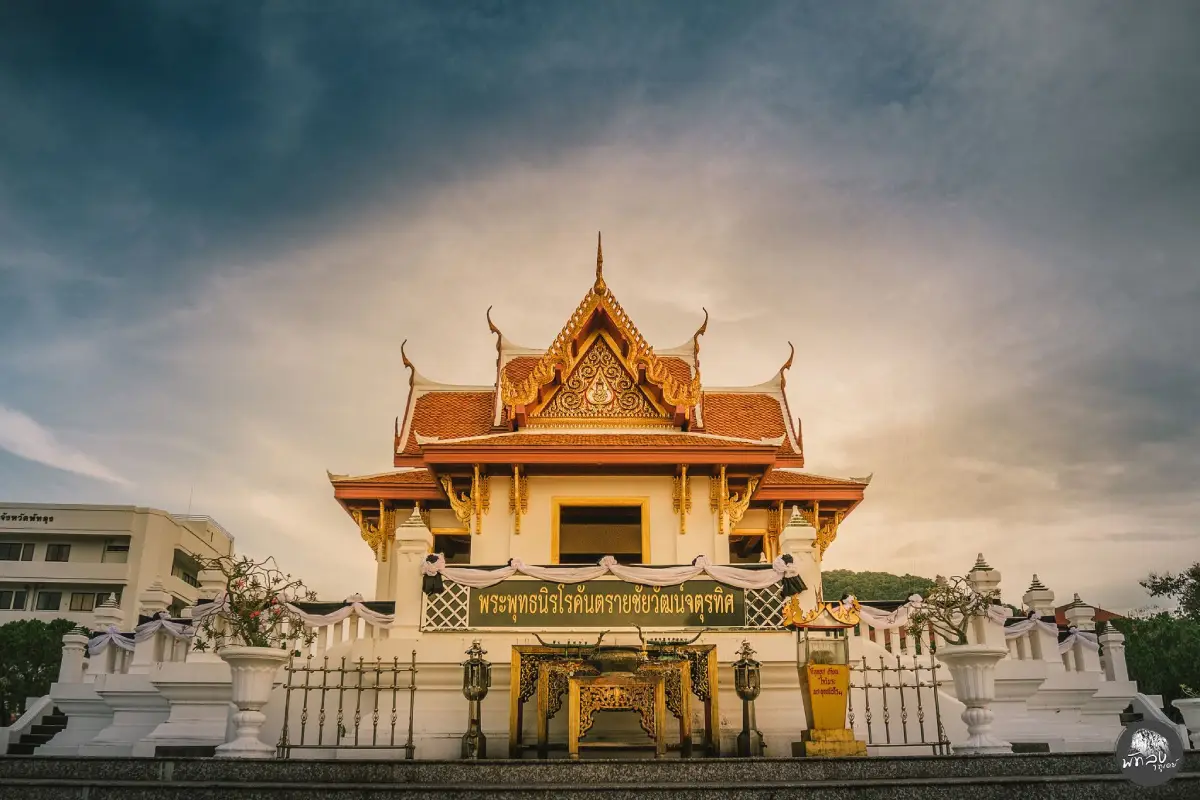
Phra Phuttha Nirokhantrai Chaiwat Chaturathit
Open Days: Daily
Opening Hours: 08.30 – 17.00
Phra Phuttha Nirokhantrai Chaiwat Chaturathit in Phatthalung Province, commonly known as Phra Si Mum Mueang or the Four-Corner Buddha of Phatthalung, is the principal Buddha image of southern Thailand and one of the most important sacred objects of the province. The image is enshrined inside a four-sided Thai pavilion in front of the Phatthalung Provincial Hall, between the provincial hall and the provincial court, in Khuha Sawan Subdistrict, Mueang Phatthalung District. It is one of the most convenient and meaningful places in Phatthalung town for visitors to pay respect before exploring the province.
The Buddha image is a bronze seated image in the meditation posture. It is housed in a white Thai-style pavilion raised above the surrounding plaza. The setting is orderly, open, and dignified because it stands in the main government area of the city. Visitors can walk up the stairs to pay respect, make offerings, and take photographs of the pavilion, with the urban landscape of Phatthalung and the symbolic Khao Ok Thalu mountain visible from nearby viewpoints.
The importance of Phra Phuttha Nirokhantrai Chaiwat Chaturathit lies not only in the beauty of the image and the pavilion, but also in its status as the Buddha image of the South. There are 4 images in this sacred group, each placed in one of the main directions of Thailand: the northern image in Lampang, the southern image in Phatthalung, the eastern image in Saraburi, and the western image in Ratchaburi. This idea is known as Chaturaphuttha Prakan, or the Four Buddha Fortresses, symbolizing sacred protection for the country in all 4 directions.
The name Nirokhantrai carries the meaning of being free from illness and danger, while Chaiwat suggests victory, prosperity, and stability. Chaturathit means the 4 directions. Together, the name expresses a wish for protection, health, safety, success, and peace. For this reason, many people come to pray for safe travel, good health, protection from danger, success in work, and family well-being.
The Buddha image was royally granted to Phatthalung Province by King Rama IX on 24 December 1968. Its location in front of the provincial hall gives it a strong civic meaning, connecting Buddhism, the Thai monarchy, provincial identity, and public faith. For the people of Phatthalung, Phra Si Mum Mueang is not only a sacred image but also a spiritual landmark at the heart of the city.
The history of Phra Phuttha Nirokhantrai is connected with an earlier royal initiative during the reign of King Rama VI. In commemoration of his 15th regnal year and as royal merit dedicated to King Rama II, bronze-gilt seated Buddha images were cast and given the name Phra Phuttha Nirokhantrai. The later concept of Phra Phuttha Nirokhantrai Chaiwat Chaturathit continued this protective symbolism through the placement of sacred Buddha images in the 4 directions of the country, with Phatthalung serving as the southern point.
The site of the image is highly symbolic. It stands between the provincial hall and the provincial court, both central institutions of public life. This makes the shrine easily accessible to civil servants, residents, travelers, students, and visitors who come to the city center. The image functions as a sacred center of the province and a visible reminder of protection, stability, and unity.
The four-sided pavilion reflects the idea of the 4 directions. Its white exterior gives a calm and dignified appearance, while the Thai roof and decorative details emphasize its religious and cultural importance. The open design allows people to approach and see the Buddha image from different directions, reinforcing the meaning of Chaturathit in architectural form.
Visitors often come to pray for health, safety, safe travel, new beginnings, smooth work, and family peace. Because the name of the Buddha image refers directly to freedom from illness and danger, the shrine is especially meaningful for those who are beginning a journey, facing important life decisions, or seeking encouragement before starting something new.
The atmosphere around Phra Si Mum Mueang is different from a temple in a natural setting. This is a sacred site in the middle of a provincial government area. Its calmness is simple, formal, and easy to access. Visitors can make a short stop to pay respect, or spend more time reflecting on the meaning of the image and its role in the civic and spiritual identity of Phatthalung.
Phra Si Mum Mueang also plays an important role in Phatthalung’s annual events. The province organizes the annual celebration of Phra Phuttha Nirokhantrai Chaiwat Chaturathit together with the Red Cross Fair and the “Good Things of Mueang Lung” fair. These events include Buddhist ceremonies, cultural performances, official activities, Red Cross booths, local products, and public participation from communities across the province.
During the annual celebration, the shrine area becomes a center of faith and culture. Activities such as merit-making, ritual offerings, dance performances, and the preparation of ceremonial rice pudding show how strongly the people of Phatthalung remain connected to the Buddha image. The shrine is therefore not only a permanent sacred site, but also the heart of an annual civic and religious tradition.
For travelers, Phra Phuttha Nirokhantrai Chaiwat Chaturathit is an excellent starting point for exploring Phatthalung town. It is located near Wat Khuha Sawan, Khao Ok Thalu, Phatthalung Railway Station, the city market area, restaurants, and several hotels. Visitors can begin the morning by paying respect at the shrine, then continue to Wat Khuha Sawan and Khao Ok Thalu within a short distance.
Wat Khuha Sawan Royal Monastery is one of the most important nearby sites. It is about 1 km from the shrine and is an old temple closely associated with Phatthalung’s history. The temple contains Khuha Sawan Cave, ancient Buddha images, royal inscriptions, and important religious heritage. Visiting both Phra Si Mum Mueang and Wat Khuha Sawan gives travelers a clearer understanding of the spiritual heart of Phatthalung town.
Khao Ok Thalu is another nearby landmark. This limestone mountain has a large natural opening near its upper section and is one of the most recognizable symbols of Phatthalung. It appears in the provincial emblem and is deeply connected with local identity. Travelers with enough time can continue to the mountain area to see the city from another perspective.
The former Governor’s Residence of Phatthalung in Lam Pam Subdistrict is also suitable for visitors interested in history. Located about 6 km from the city center, it consists of traditional Thai houses associated with the former governors of Phatthalung. A route that includes Phra Si Mum Mueang, Wat Khuha Sawan, Khao Ok Thalu, and the old governor’s residence provides a strong introduction to the province’s faith, history, and local identity.
Getting There is very easy because the shrine is located in the center of Phatthalung town. Visitors can drive directly to the Phatthalung Provincial Hall area or use local transport from Phatthalung Railway Station. The distance within the city is short, making the shrine convenient for both day visitors and travelers staying overnight in town.
Travelers arriving from nearby provinces such as Songkhla, Trang, or Nakhon Si Thammarat can enter Phatthalung by main highway and continue to the provincial government center in Khuha Sawan Subdistrict. The shrine can be visited before continuing to Khuan Khanun, Thale Noi, Lam Pam, or the Phatthalung-Trang route.
The best time to visit is in the morning or late afternoon, when the weather is more comfortable and the pavilion is easier to photograph. During the annual celebration and Red Cross Fair, visitors should allow extra travel time because the area around the provincial hall becomes much busier than usual.
Visitors should dress respectfully and behave calmly. Although the shrine is easy to access and located in a public government area, it remains an important sacred site. Visitors should avoid loud behavior, avoid blocking the stairs or worship area, and use incense, candles, or offerings responsibly and neatly.
Photography is possible, but visitors should avoid disturbing those who are praying. Good photo angles include the front staircase, the side fence, and the open plaza in front of the pavilion. From some angles, the pavilion can be photographed with Khao Ok Thalu or nearby government buildings in the background, creating a clear image of Phatthalung’s civic and spiritual identity.
Phra Phuttha Nirokhantrai Chaiwat Chaturathit is suitable for many types of travelers. Pilgrims can pay respect to a major Buddha image of the South, history-oriented visitors can learn about the Four Buddha Fortresses concept, first-time visitors to Phatthalung can begin at the center of the city, and photography lovers can appreciate the elegant pavilion within an open urban setting.
For a half-day itinerary in Phatthalung town, visitors can start at Phra Si Mum Mueang, continue to Wat Khuha Sawan, see Khao Ok Thalu, stop at the railway station and market area, and then travel onward to Lam Pam or the former governor’s residence. With a full day, the route can be extended to Thale Noi, Pak Pra, or Khuan Khanun.
The value of Phra Phuttha Nirokhantrai Chaiwat Chaturathit lies in its role as a spiritual anchor of Phatthalung. It connects Buddhism, the Thai monarchy, local history, and public faith in one place. A visit here is not only a quick stop at a city landmark, but a meaningful way to understand why this Buddha image is regarded as the principal Buddha image of the South and a sacred treasure of Phatthalung.
| Name | Phra Phuttha Nirokhantrai Chaiwat Chaturathit, or Phra Si Mum Mueang Phatthalung |
| Location | Inside the four-sided pavilion in front of Phatthalung Provincial Hall, between the provincial hall and the provincial court, Khuha Sawan Subdistrict, Mueang Phatthalung District, Phatthalung Province |
| Address | Khuha Sawan Subdistrict, Mueang Phatthalung District, Phatthalung Province 93000, Thailand |
| Coordinates | 7.61670, 100.07407 |
| Highlights | Principal Buddha image of southern Thailand, sacred image of Phatthalung, four-sided pavilion, and central shrine in front of the provincial hall |
| History | A bronze seated Buddha image royally granted to Phatthalung Province by King Rama IX on 24 December 1968 |
| Name Origin | Nirokhantrai means freedom from illness and danger, Chaiwat suggests victory and prosperity, and Chaturathit refers to the 4 directions under the Four Buddha Fortresses concept. |
| Distinctive Features | A bronze seated Buddha image in meditation posture enshrined in a white Thai-style four-sided pavilion in the provincial government center. |
| Travel Information | Located in central Phatthalung near the provincial hall, provincial court, railway station, city market area, Wat Khuha Sawan, and Khao Ok Thalu. |
| Current Status | Open as an important sacred site and civic-religious landmark of Phatthalung, with annual celebration events and provincial cultural activities. |
| Open Days | Daily |
| Opening Hours | 08.30 – 17.00 |
| Admission Fee | No admission fee |
| Facilities | Worship area, stairs, photo area, open plaza in front of the provincial hall, and public/government parking areas available according to local access conditions. |
| Main Areas / Zones | Four-sided pavilion, Buddha image, worship plaza, staircase, pavilion terrace, and annual celebration area in front of the provincial hall. |
| Caretaker / Responsible Area | Phatthalung provincial government agencies and related offices in the provincial hall area. |
| Contact Number | Phatthalung Provincial Office Tel. 0-7461-3409 / Phatthalung Public Relations Office Tel. 074-612-404 |
| Traditions / Key Events | Annual celebration of Phra Phuttha Nirokhantrai Chaiwat Chaturathit, Phatthalung Red Cross Fair, and “Good Things of Mueang Lung” fair. |
| Nearby Tourist Attractions | 1. Wat Khuha Sawan Royal Monastery, about 1 km 2. Khao Ok Thalu, about 1 km 3. Phatthalung Railway Station and city market area, about 2 km 4. Former Governor’s Residence of Phatthalung, about 6 km 5. Saen Suk Lam Pam Beach, about 11 km |
| Nearby Restaurants | 1. Khao Kaeng Thale Noi, about 1 km, Tel. 074-617-236 2. Mae Nee BBQ Pork and Made-to-Order Food, about 1 km, Tel. 080-037-5480 3. Krua Im Suk, about 2 km, Tel. 061-491-5214 4. Sor Khao Tom Chong Ko, about 2 km, Tel. 081-959-8605 5. Gorila Town Phatthalung, about 4 km, Tel. 086-969-0555 |
| Nearby Accommodations | 1. Sitthinard Grandview Hotel, about 1 km, Tel. 074-614-194 2. Siva Royal Hotel Phatthalung, about 2 km, Tel. 074-673-999 3. Grand PL Hotel, about 2 km, Tel. 074-615-706 4. The Room Phatthalung, about 3 km, Tel. 074-612-995 5. Chai Khana Thani Hotel, about 3 km, Tel. 074-613-777 |
Frequently Asked Questions (FAQ)
Q: Where is Phra Phuttha Nirokhantrai Chaiwat Chaturathit in Phatthalung located?
A: It is enshrined inside the four-sided pavilion in front of Phatthalung Provincial Hall, between the provincial hall and the provincial court, in Khuha Sawan Subdistrict, Mueang Phatthalung District.
Q: Why is it called Phra Si Mum Mueang?
A: It is part of a set of 4 sacred Buddha images placed in the main directions of Thailand. The image in Phatthalung represents the southern direction.
Q: Why is this Buddha image important?
A: It is the principal Buddha image of southern Thailand, a sacred image of Phatthalung, and a symbol of civic protection under the Four Buddha Fortresses concept.
Q: When was the image royally granted to Phatthalung?
A: King Rama IX royally granted the image to Phatthalung Province on 24 December 1968.
Q: What are the opening hours?
A: The shrine is open daily from 08.30 to 17.00.
Q: Is there an admission fee?
A: No. There is no admission fee, and visitors may make offerings according to their faith.
Q: What nearby places can visitors combine with this shrine?
A: Nearby places include Wat Khuha Sawan Royal Monastery, Khao Ok Thalu, Phatthalung Railway Station and city market area, the former Governor’s Residence of Phatthalung, and Saen Suk Lam Pam Beach.
 Category: ●Places of Worship
 Group: ●Other Sacred Sites
Last Update : 1 MonthAgo
 Last Update : 1 MonthAgo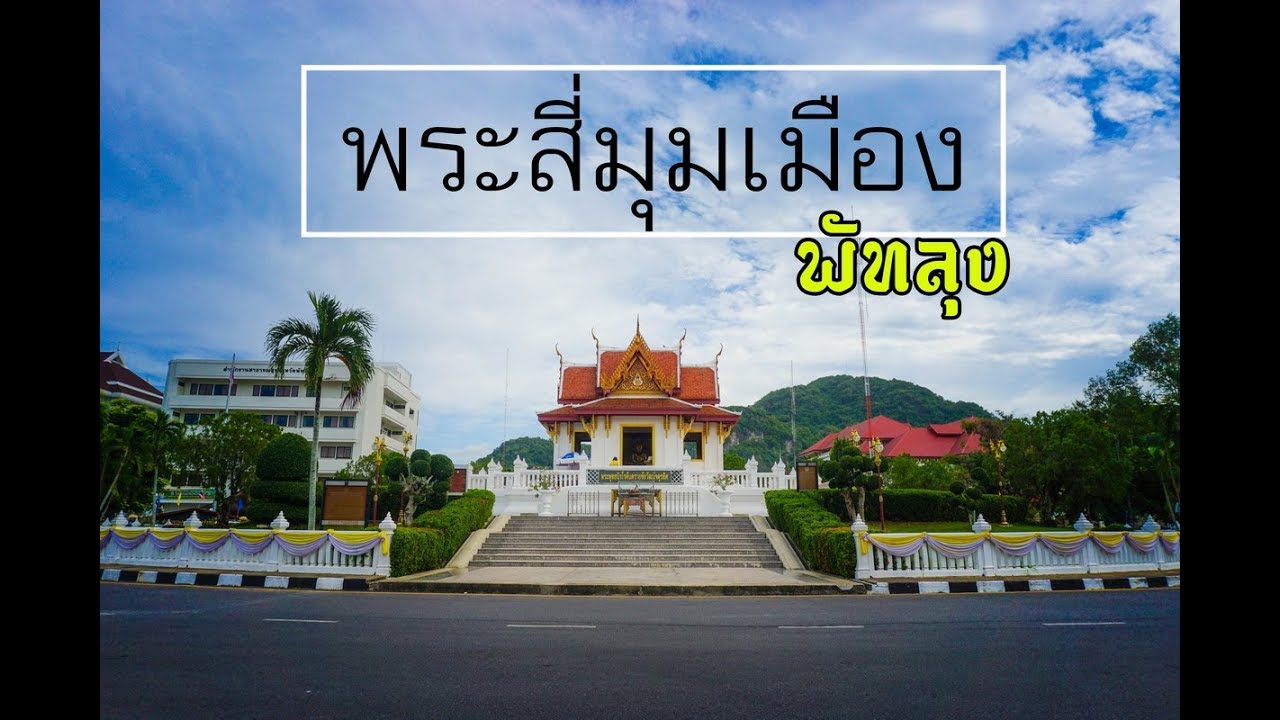
 Click to Access the Navigation Map GPS
Phra Phuttha Nirokhantrai Chaiwat Chaturathit Map
Recommend

 Art, Culture and Heritage
 Historical Sites and Monuments(1)
 Landmarks and Memorials(1)
 Art, Craft Centres, Tradition(6)
 Historic Homes and Cities(1)
 Educational Places
 Educational Gardens, Farm(1)
 Temple(25)
Other Sacred Sites(3)
Temple(25)
Other Sacred Sites(3)
 Research and Development
 Royal Project(2)
 Suburban Living
 Village, Community(3)
 Nature and Wildlife
 National Parks and Marine Reserves(3)
 Mountain (Doi)(4)
 Dam, Reservoir, Lake(7)
 Waterfalls(16)
 Hot Springs(2)
 Caves(12)
 River, Canal(5)
 Bays and Beaches(6)
 Islands(2)
 Other natural attractions(4)
 Entertainment and Agricultural
 Farms, Parks and Ecotourism(4)
 Travel Articles, Recipes
 Travel Review, Food Review(1)


