
lovethailand home >South Travel Attractions >Phang Nga Travel Attractions >Muang Phang Nga >Tham Nam Phut > Sam Cave (Tham Sum)
TL;DR: Sam Cave (Tham Sum) is located at Moo 3, Tham Nam Phut Subdistrict, Mueang Phang Nga District, Phang Nga Province, open Daily, hours 08.00 - 17.00.
Sam Cave (Tham Sum)
Open Days: Daily
Opening Hours: 08.00 - 17.00
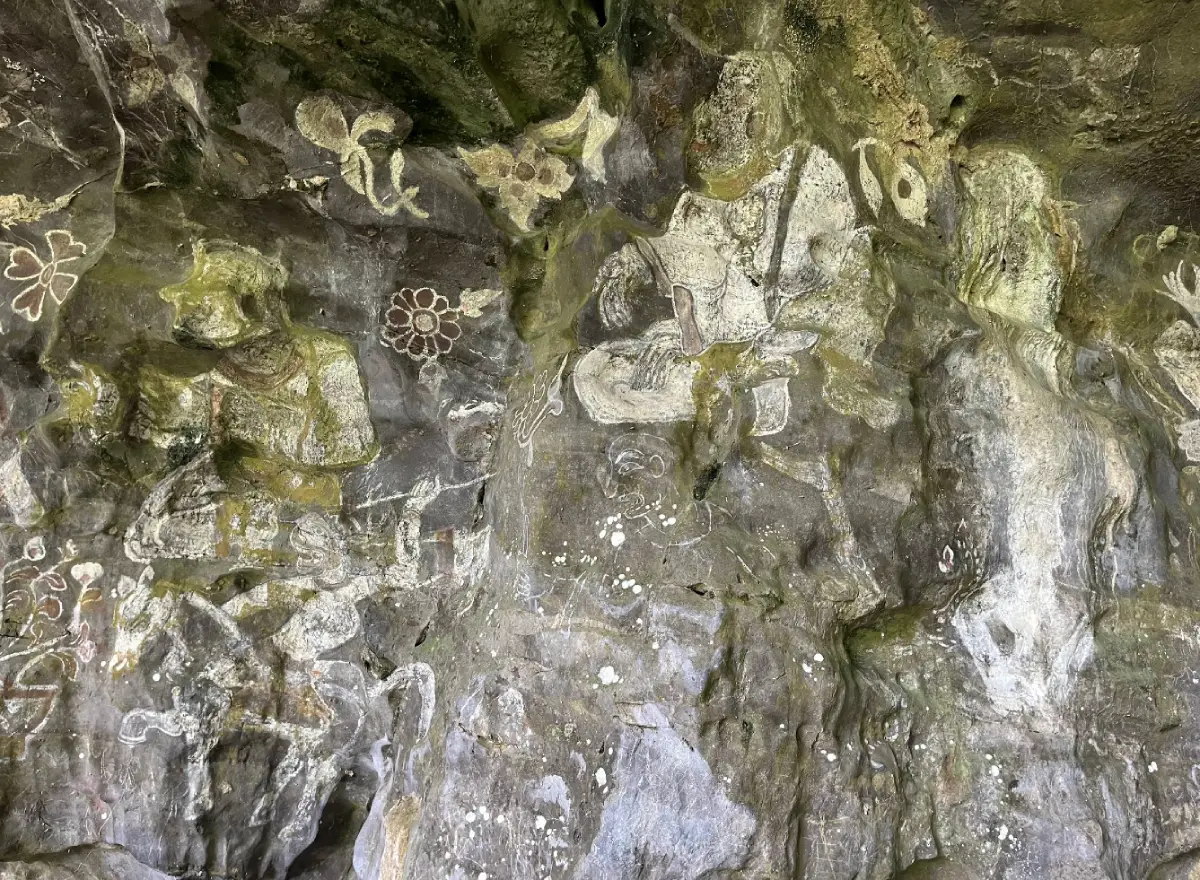
Tham Sam, also known as Tham Sum or Tham Nam Sam, is a registered ancient monument and rock art site in Moo 3, Tham Nam Phut Subdistrict, Mueang Phang Nga District, Phang Nga Province. Its main value lies in the rare early Rattanakosin-era paintings preserved on the natural limestone wall of the cave. Unlike murals usually found in temples, ordination halls, or built religious structures, the paintings at Tham Sam appear in a natural cave and rock-shelter setting. This makes the site especially important for the study of local art, history, belief, and cultural life in old Phang Nga.
For a quick overview, Tham Sam is not an adventure cave like Phung Chang Cave and not a water-focused cave attraction like some other caves in Phang Nga. It is a compact cultural cave site where the main reason to visit is to study ancient paintings on the limestone surface. The paintings use red, white, and black pigments and include human figures, animals, birds, flowers, symbolic faces, and cultural scenes. The Fine Arts Department began surveying the site in 1972, and the cave has since been officially registered as an ancient monument. Visitors should therefore treat the site as fragile heritage rather than a casual photo stop.
Tham Sam is located in Tham Nam Phut Subdistrict, close to Phang Nga town and several other cultural and natural attractions. Nearby places include Tham Nam Phut, Phang Nga City Pillar Shrine, Somdet Phra Srinagarindra Park, Tham Ruesi Sawan, Tham Luk Suea, Phung Chang Cave, Wat Tham Ta Pan, and Sa Nang Manora Forest Park. This makes Tham Sam suitable for a culture-and-nature itinerary focused on Phang Nga town rather than a long-distance beach or island trip.
The significance of Tham Sam comes from the rarity of this type of painting. Early Rattanakosin paintings are usually associated with temples and religious buildings, while Tham Sam preserves paintings in a natural limestone shelter. The location, surface material, pigment survival, and relationship between art and cave landscape make the site unusual. Archaeologists consider Tham Sam one of the important archaeological sites in Thailand because such evidence is rare and the paintings remain sufficiently complete for study.
The paintings at Tham Sam tell stories on several levels. Some images show birds and flowers, suggesting a close relationship with nature. Other images show people, men, women, children, and figures in different gestures or roles. Some figures appear symbolic or supernatural, while others seem connected with everyday life, belief, or cultural practices. Together, these images make the cave valuable not only as an art site, but also as cultural evidence of Phang Nga society in the early Rattanakosin period.
The limited color palette is part of the site’s beauty. Red, white, and black pigments stand out against the natural limestone surface, and the uneven rock gives the paintings a different character from murals painted on flat temple walls. Some parts have faded over time, but important details remain visible. Their survival is likely related to the sheltering effect of the rock overhang, which protected the paintings from some direct sunlight and rain over more than a century.
The dating of the paintings places them within the early Rattanakosin period. The original source information gives the period as B.E. 2394 - 2493, while archaeological interpretation from the Fine Arts Department suggests the reigns of King Rama III to King Rama V. Both frameworks point to the same essential idea: these are not prehistoric paintings, but historical-period artworks connected with a society that had active cultural, economic, and social life in Phang Nga.
Phang Nga during the early Rattanakosin period was shaped by natural resources, coastal routes, tin-mining activity, and contact between different communities along the Andaman coast. The paintings at Tham Sam should therefore not be seen only as decorative images. They are visual evidence that may help visitors think about people, clothing, belief, local imagination, and the relationship between communities and the limestone mountains around the town.
The cave’s location in Tham Nam Phut Subdistrict adds another layer of meaning. The subdistrict is also associated with sacred water, local shrines, stories of Tham Nam Phut, and other cultural sites. Tham Nam Phut emphasizes sacred water and belief, while Tham Sam emphasizes art and historical memory. Together, they show how one small area of Phang Nga can contain both sacred natural water and rare early Rattanakosin rock art.
The site name appears in several forms: Tham Sam, Tham Sum, and Tham Nam Sam. These variations reflect local pronunciation, Thai spelling differences, and the way the name has been recorded by different sources. For practical travel and search purposes, visitors may need to search using more than one name. In English, the site is often referred to as Tham Sam Rock Art or Boran Sathan Tham Sam.
The official registration of Tham Sam as an ancient monument is important for protecting the site. Cave paintings are extremely fragile. Touching the wall, scratching the surface, climbing near the paintings, using strong flash, lighting fires, or changing the cave environment can damage the pigments and rock surface. Registration helps protect the site as cultural heritage and supports cooperation between the Fine Arts Department, cultural agencies, and local authorities in conservation and sustainable cultural tourism.
Visitors should understand that Tham Sam is different from an ordinary viewpoint or casual cave stop. The paintings cannot be recreated if damaged. The correct way to visit is to observe from an appropriate distance, avoid touching the wall, avoid pointing with hard objects, avoid leaning on rock surfaces, and avoid leaving rubbish. Photography should be done with care and without disturbing the site.
Tham Sam is best suited for travelers interested in history, art, archaeology, local culture, and deeper learning about Phang Nga. It does not require strenuous walking or adventure equipment. Instead, it rewards careful observation. Visitors who rush may see only old marks on stone, but those who look carefully will see human memory, artistic intention, local belief, and the presence of a community recorded on a natural limestone wall.
A comfortable visit should allow at least 30 minutes to 1 hour. Those interested in photography, history, or interpretation may spend longer studying the composition, colors, line work, and placement of the paintings. Tham Sam is not a large site, but it contains many details that should be read slowly and respectfully.
Getting There is convenient from Phang Nga town. Travel toward Moo 3, Tham Nam Phut Subdistrict, Mueang Phang Nga District. Useful local reference points include the Tham Nam Phut Subdistrict Administrative Organization office, Phang Nga City Pillar Shrine, and the map name “Boran Sathan Tham Sam.” The site is close to town, and traveling by private car, rental car, or local transport is the easiest option.
Visitors staying in Phang Nga town can place Tham Sam in a morning route with Tham Nam Phut, Phang Nga City Pillar Shrine, and a local lunch stop. In the afternoon, they can continue to Somdet Phra Srinagarindra Park, Tham Ruesi Sawan, Tham Luk Suea, or Phung Chang Cave. With more time, Sa Nang Manora Forest Park or Ao Phang Nga National Park can be added to the same travel plan.
Because Tham Sam is an ancient monument with rock paintings, daytime is the best period to visit. Even if some map services describe it as open around the clock, a cultural cave site should be visited when the area is visible and safe. For general travel planning, 08.00 - 17.00 is the most practical visitor window, especially for those who want to see the paintings clearly without entering the area after dark.
Available travel information indicates free admission. However, free entry does not mean the area can be used without care. Tham Sam is a protected ancient monument, so visitors must still respect heritage laws and conservation practices. The most important rule is simple: do not touch the paintings or the rock surface around them.
The main conservation risk is direct contact. Oils, sweat, dust, and friction from human hands can damage pigments and the limestone surface. Visitors should keep a safe distance, supervise children, avoid pointing with sticks or hard objects, and never climb toward the paintings. These small actions help protect the site for future generations.
Tham Sam is also useful for studying local art in upper southern Thailand. It is not royal court art inside a palace or temple, but a historical painting site in a natural setting. Visitors should look at the energy of the line work, the gestures of people and animals, the use of color on limestone, and the way the rock surface becomes part of the composition. This perspective reveals the cave as both an art site and a cultural document.
As a cultural tourism site, Tham Sam has strong potential because it is close to town, easy to access, historically meaningful, and connected with other nearby attractions. The best visitor experience would combine clear interpretation, conservation rules, and a respectful viewing route. Travelers who understand the meaning of the paintings before entering the site will appreciate it far more than those who arrive without context.
Tham Nam Phut is the most meaningful nearby companion site. It is located in the same subdistrict and is connected with sacred water, Bun Tao Kong Shrine, and local belief. Tham Nam Phut represents sacred water and faith, while Tham Sam represents art and historical memory. Visiting both places gives travelers a better understanding of Tham Nam Phut Subdistrict as a cultural landscape rather than a single attraction.
Phung Chang Cave offers a very different cave experience nearby. It is a guided adventure cave with a year-round stream, canoeing, bamboo rafting, and walking through water. Tham Sam, by contrast, is a quiet rock art site. Visiting both allows travelers to compare two very different roles of caves in Phang Nga: one as a natural adventure route and the other as a cultural archive.
Somdet Phra Srinagarindra Park, Tham Ruesi Sawan, and Tham Luk Suea also fit well into the same route. Tham Ruesi Sawan contains a clear stream, cool air, and limestone formations, while Tham Luk Suea is a smaller companion cave nearby. The park setting offers shade and relaxation after a more focused cultural visit at Tham Sam.
Wat Tham Ta Pan and Sa Nang Manora Forest Park can extend the route further. Wat Tham Ta Pan offers a cave-temple atmosphere and moral-themed sculpture, while Sa Nang Manora Forest Park has shaded forest, streams, and natural pools. Together with Tham Sam, these sites create a complete picture of Phang Nga as a province of caves, water, limestone, forest, and belief.
Food and accommodation are easy to find in Phang Nga town. Nearby dining options include Hink Cafe, Raruen Phang Nga Cafe & Restaurant, Er-Gu Cafe, Phung Chang Kung Kratha, and Five Star Thai Chang. Accommodation options include Pranee Home Phang-nga, Home Phang-Nga Guest House, The Sleep Phang-nga, Thaweesuk Heritage Homestay, Le Erawan Phang Nga Hotel, and Phang Nga Origin Hotel. Staying in town makes it easy to visit Tham Sam and other nearby attractions without a long drive.
Tham Sam is especially suitable for students, teachers, local historians, art lovers, cultural travelers, and anyone interested in responsible heritage tourism. The site can support learning about ancient monument conservation, rock art interpretation, early Rattanakosin visual culture, and the relationship between local communities and limestone landscapes. If interpreted carefully, it becomes an open-air classroom of high cultural value.
In summary, Tham Sam is one of the most important cultural cave sites in Phang Nga Province. Located in Moo 3, Tham Nam Phut Subdistrict, it preserves rare early Rattanakosin-era paintings on a natural limestone wall and has been officially registered as an ancient monument by the Fine Arts Department. Its value is not its size, but its art, pigments, line work, cultural meaning, and survival through time. For travelers willing to look carefully and respectfully, Tham Sam reveals a deeper side of Phang Nga beyond beaches, islands, and viewpoints: the human stories, beliefs, and artistic memory of an old Andaman town.
| Name | Tham Sam / Tham Sum / Tham Nam Sam |
| Location | Moo 3, Tham Nam Phut Subdistrict, Mueang Phang Nga District, Phang Nga Province |
| Address | Tham Nam Phut Subdistrict, Mueang Phang Nga District, Phang Nga 82000, Thailand |
| Coordinates / Plus Code | FG7Q+RGR, Tham Nam Phut, Mueang Phang Nga District, Phang Nga 82000 |
| Highlights | Rare early Rattanakosin-era rock paintings on a natural limestone wall, with figures of people, animals, birds, flowers, and symbolic forms |
| History / Period | An early Rattanakosin art site. Original information gives the period as B.E. 2394 - 2493, while archaeological interpretation places the paintings around the reigns of King Rama III to King Rama V |
| Ancient Monument Status | Registered as an ancient monument by Thailand’s Fine Arts Department and conserved with support from cultural and local authorities |
| Name Origin | The site is known by several names: Tham Sam, Tham Sum, and Tham Nam Sam, all referring to the rock art cave in Tham Nam Phut Subdistrict |
| Distinctive Features | Rare historical-period paintings in a natural cave setting, still complete enough for study and important for understanding early Rattanakosin society in Phang Nga |
| Travel Information | Travel into Mueang Phang Nga District and continue to Moo 3, Tham Nam Phut Subdistrict. Use “Boran Sathan Tham Sam” or the Tham Nam Phut Subdistrict Administrative Organization as local reference points. |
| Current Status | Open as a cultural learning and tourism site, with conservation and development cooperation between the Fine Arts Department, cultural agencies, and local authorities |
| Open Days | Daily |
| Opening Hours | 08.00 - 17.00 |
| Fees | Free Admission |
| Main Areas / Zones | Rock shelter, cave entrance, painted limestone wall, viewing area, and surrounding ancient monument zone |
| Responsible Authorities | Fine Arts Department, Fine Arts Office 12 Nakhon Si Thammarat, Phang Nga Provincial Cultural Office, and Tham Nam Phut Subdistrict Administrative Organization |
| Local Contact Number | Tham Nam Phut Subdistrict Administrative Organization Tel. 076-460-554 |
| Nearby Tourist Attractions | 1. Phang Nga City Pillar Shrine, about 1 km 2. Tham Nam Phut, about 2 km 3. Somdet Phra Srinagarindra Park Phang Nga, about 3 km 4. Tham Ruesi Sawan And Tham Luk Suea, about 3 km 5. Phung Chang Cave, about 4 km 6. Wat Tham Ta Pan, about 5 km 7. Sa Nang Manora Forest Park, about 8 km |
| Nearby Restaurants | 1. Hink Cafe, about 2 km, Tel. 095-041-4040 2. Raruen Phang Nga Cafe & Restaurant, about 3 km, Tel. 089-628-5444 3. Er-Gu Cafe, about 3 km, Tel. 081-084-4141 4. Phung Chang Kung Kratha Phang Nga, about 3 km, Tel. 084-628-0404 5. Five Star Thai Chang, about 3 km, Tel. 096-179-6697 6. CURB CAFE, about 3 km |
| Nearby Accommodations | 1. Pranee Home Phang-nga, about 1 km, Tel. 098-616-9090 2. Home Phang-Nga Guest House, about 2 km, Tel. 081-958-5538 3. The Sleep Phang-nga, about 3 km, Tel. 076-411-828 4. Thaweesuk Heritage Homestay, about 2 km 5. Le Erawan Phang Nga Hotel, about 4 km 6. Phang Nga Origin Hotel, about 4 km |
Frequently Asked Questions (FAQ)
Q: Where is Tham Sam located?
A: Tham Sam is located in Moo 3, Tham Nam Phut Subdistrict, Mueang Phang Nga District, Phang Nga Province. It is a registered ancient monument and rock art cave near Phang Nga town.
Q: Are Tham Sam, Tham Sum, and Tham Nam Sam the same place?
A: Yes. These names refer to the same rock art cave in Tham Nam Phut Subdistrict, Phang Nga.
Q: Why is Tham Sam important?
A: Tham Sam is important because it preserves rare early Rattanakosin-era paintings in a natural cave setting and has been registered as an ancient monument by the Fine Arts Department.
Q: What period do the paintings at Tham Sam belong to?
A: The paintings belong to the early Rattanakosin period. Original information gives the range as B.E. 2394 - 2493, while archaeological interpretation places them around the reigns of King Rama III to King Rama V.
Q: Is there an entrance fee for Tham Sam?
A: Admission is free, but visitors must follow conservation rules because the site is a protected ancient monument.
Q: What should visitors be careful about at Tham Sam?
A: Visitors should not touch the paintings, write on the cave wall, climb near the painted area, leave rubbish, or use strong light carelessly. The paintings are fragile and irreplaceable.
Q: What type of trip is Tham Sam suitable for?
A: It is suitable for cultural, historical, archaeological, art-focused, and educational travel, especially for visitors who want to understand Phang Nga beyond beaches and viewpoints.
Q: What nearby attractions can be visited with Tham Sam?
A: Nearby attractions include Tham Nam Phut, Phang Nga City Pillar Shrine, Somdet Phra Srinagarindra Park, Tham Ruesi Sawan, Tham Luk Suea, Phung Chang Cave, Wat Tham Ta Pan, and Sa Nang Manora Forest Park.
 Category: ●Nature and Wildlife
 Group: ●Caves
Last Update : 5 DayAgo
 Last Update : 5 DayAgo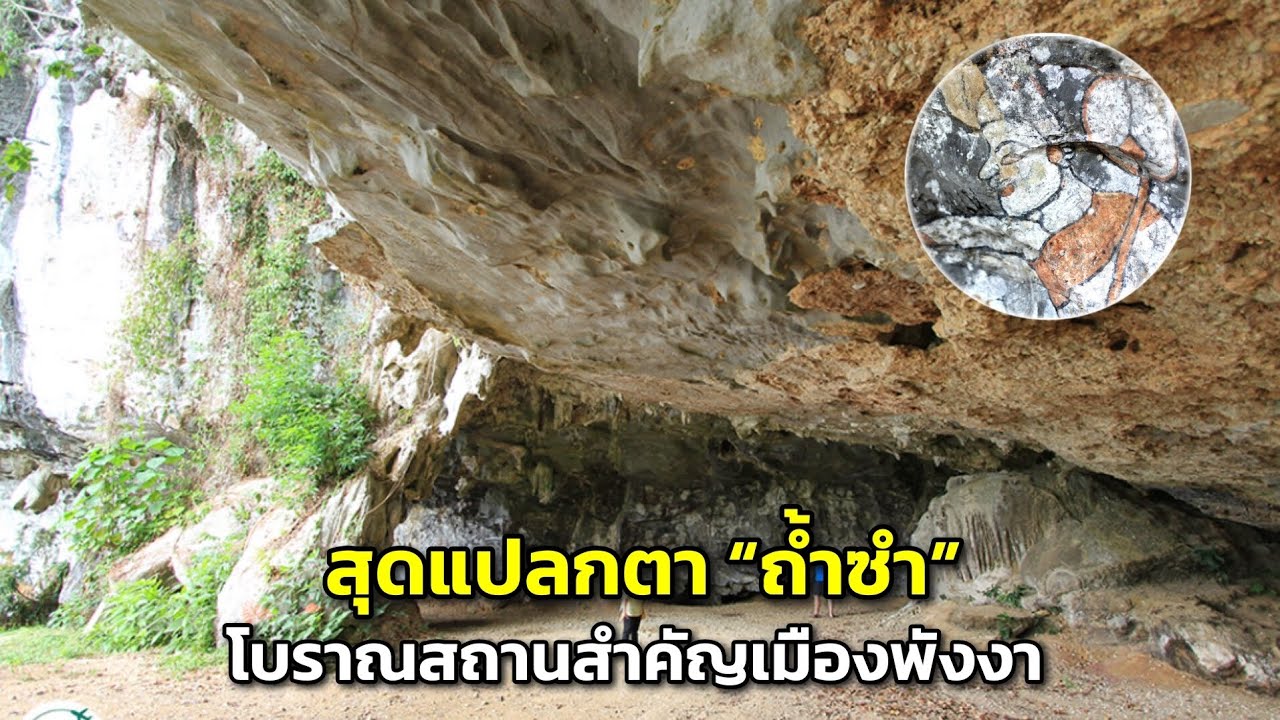
 Click to Access the Navigation Map GPS
Sam Cave (Tham Sum) Map
Recommend

 Art, Culture and Heritage
 Historical Sites and Monuments(2)
 Landmarks and Memorials(6)
 Art, Craft Centres, Tradition(3)
 Places of Worship
 Temple(18)
 Other Sacred Sites(8)
 Suburban Living
 Village, Community(3)
 National Parks and Marine Reserves(12)
 Mountain (Doi)(8)
 Waterfalls(21)
 Hot Springs(2)
Caves(12)
Hot Springs(2)
Caves(12)
 River, Canal(4)
 Bays and Beaches(28)
 Islands(11)
 Other natural attractions(7)
 Entertainment and Agricultural
 Animal camps and shows(2)
 Farms, Parks and Ecotourism(2)
 Outdoor and Adventure Activities(3)
 Travel Articles, Recipes
 Southern Food Menu, Southern Food Recipes(1)


