
lovethailand home >South Travel Attractions >Phang Nga Travel Attractions >Thai Mueang >Lam Kaen > Chulabhorn Underwater Park Conservation Center
TL;DR: Chulabhorn Underwater Park Conservation Center is located at Phang Nga Naval Base, Lam Kaen Subdistrict, Thai Mueang District, Phang Nga Province, open Daily, hours 08.30 – 15.00.

Chulabhorn Underwater Park Conservation Center
Open Days: Daily
Opening Hours: 08.30 – 15.00
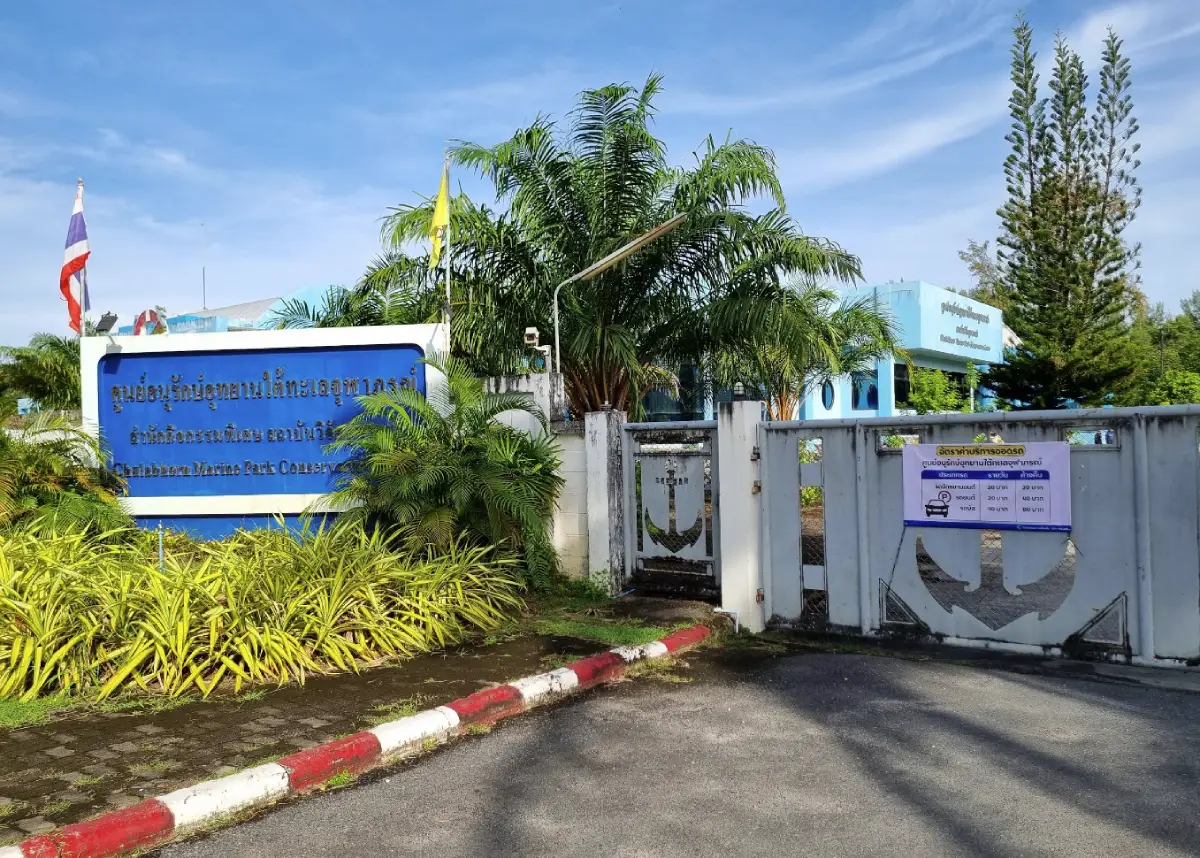
The Chulabhorn Underwater Park Conservation Center is located inside Phang Nga Naval Base in Lam Kaen Subdistrict, Thai Mueang District, Phang Nga Province. It is a marine learning center created under the Chulabhorn 36 Marine Park Project to share knowledge about coral reefs, marine life, Andaman Sea ecosystems, responsible marine tourism, and conservation work related to the Similan Islands, Surin Islands, Ko Bon, and Ko Tachai. Its main features include a two-storey exhibition building, Andaman Sea educational media, a multivision presentation, marine animal displays, a coastal setting near Thap Lamu Pier, and proximity to the Sea Turtle Conservation Center at Phang Nga Naval Base.
The Chulabhorn Underwater Park Conservation Center is an important marine education site in Phang Nga Province. It is located inside Phang Nga Naval Base in Lam Kaen Subdistrict, Thai Mueang District, close to Ban Thap Lamu and Thap Lamu Pier, one of the main gateways to the Andaman Sea. The center is especially useful for travelers who want to understand the sea before visiting islands or joining marine tours. It is suitable for families, students, study groups, divers, snorkelers, and visitors interested in marine conservation because it explains the value of coral reefs, marine animals, coastal ecosystems, and responsible sea travel.
The center stands out because it connects tourism with conservation education. Many travelers go to the sea for scenery, swimming, photography, snorkeling, or diving, but not everyone understands how slowly coral grows, how many marine animals depend on reefs, or how anchors, trampling, litter, touching coral, and feeding fish can damage the ecosystem. The center works as a knowledge gateway before entering the sea. It helps visitors see the Andaman Sea not only as a beautiful destination but also as a living natural system that requires care.
The center is connected with the Chulabhorn 36 Marine Park Project, which began in 1993 in honor of Professor Dr. Her Royal Highness Princess Chulabhorn Krom Phra Srisavangavadhana on the occasion of her 36th birthday anniversary. The project was created to conserve, restore, and prevent damage to marine natural resources on the Andaman coast, especially coral reefs, marine plants, underwater animals, forests, and natural environments around the Similan Islands, Surin Islands, Ko Bon, and Ko Tachai. These areas are among Thailand’s most valuable marine ecosystems and are internationally known for their coral reefs and diving environments.
The Royal Thai Navy established the Chulabhorn Underwater Park Conservation Center inside Phang Nga Naval Base as a central base for project operations and public education. The central conservation center opened on 24 April 1998 under the official name “Chulabhorn Underwater Park Conservation Center.” Its location is practical because it is near Thap Lamu Pier, marine routes, and naval units that can support marine conservation, surveys, training, buoy installation, and operational work at sea.
The center is a two-storey exhibition building presenting the importance of marine natural resources and marine environments. Its content helps visitors understand the Andaman Sea as an ecosystem, including the role of coral reefs, marine organisms, fragile habitats, and correct marine tourism practices. Through exhibitions, images, interpretive media, and multivision presentation, the center makes complex marine science easier to understand for children and general visitors.
The exhibitions explain that the sea is not only a place for recreation. It is an ecosystem where many forms of life depend on each other. Coral reefs provide shelter, food, nursery grounds, and habitat for fish and other marine animals. They also reduce wave energy and support coastal tourism and fishing communities. When reefs are damaged, the impact affects not only divers and tour operators but also local livelihoods, coastal fisheries, and the long-term health of the marine environment.
The Andaman Sea is central to the center’s message. Areas such as the Similan Islands, Surin Islands, Ko Bon, and Ko Tachai are famous for diving, clear water, and coral reefs, but popularity also creates risks. Visitor numbers, tour boats, careless anchoring, reef contact, littering, and lack of awareness can damage fragile marine resources. The Chulabhorn Underwater Park Conservation Center helps visitors understand why marine protected areas need rules and why responsible behavior matters.
The multivision presentation about the Andaman underwater world is one of the center’s useful learning formats. It allows visitors to see coral reefs, fish, marine animals, and underwater scenery without needing to dive. For children or non-divers, this can open a new perspective. It shows that the beauty of the sea is not limited to beaches and blue water; much of its life and complexity exists beneath the surface.
The center also includes displays of fish and marine animals in an underwater-style setting. This makes the visit more engaging, especially for children and young visitors. Observing marine animals closely helps visitors recognize their shapes, colors, and behaviors. When people know more about marine life, they are more likely to understand why conservation rules are necessary.
One reason the center is different from a conventional museum is its real coastal setting. It is not detached from the sea. The surrounding area includes a coastal atmosphere, a public garden area, Thap Lamu Pier, and the nearby Sea Turtle Conservation Center at Phang Nga Naval Base. Visiting the center before or after a sea trip helps connect real travel experience with conservation knowledge. Visitors who have just returned from snorkeling can understand reef information more deeply, while those preparing for an island trip can learn how to behave responsibly before entering the water.
The nearby Sea Turtle Conservation Center at Phang Nga Naval Base is another important learning site. Many visitors combine both centers in one route. The Chulabhorn center gives broader knowledge about underwater resources and coral reefs, while the turtle center focuses on sea turtles, nursing, care, and release. Together, they form a strong marine education route for families and school groups.
The nearby turtle nursing area is associated with species such as green sea turtles, hawksbill turtles, and olive ridley turtles. This helps visitors understand that marine conservation is not only about coral reefs. It also includes large marine animals that need clean beaches, safe nesting areas, healthy feeding grounds, reduced plastic waste, and protection from fishing gear, disturbance, and habitat degradation.
The center’s role goes beyond exhibitions. It is connected with field conservation work such as repairing and installing mooring buoys around coral reefs, coral reef surveys, underwater conservation diving training, and volunteer activities. Mooring buoys are important because boat anchors can damage coral directly. Training and public awareness help reduce reef impacts from tourism and marine activities.
In recent years, the center has also been involved with marine and coastal environmental activities together with related agencies, including beach cleanups, waste separation, mangrove planting, and diving activities to remove waste from reefs and artificial reefs. These activities show that the center remains connected with active conservation work and networks of government agencies, private partners, schools, communities, and volunteer divers.
For travelers, the center is a practical stop before or after visiting Thap Lamu Pier. It is close to the marine gateway for many Andaman trips. A general visit can take about one hour, including the exhibitions, media presentation, and nearby learning areas. Families and school groups may spend more time because children often enjoy observing marine displays and asking questions.
The center does not charge an entrance fee, making it accessible for the public, families, and school groups. However, because it is located inside Phang Nga Naval Base, visitors should dress politely, follow site rules, avoid restricted areas, avoid photographing sensitive areas, and contact the center in advance for group visits or guided learning. Visiting a military area requires respect for rules, safety, and official procedures.
Opening hours are generally 08.30 to 15.00. Visitors planning to stop before a boat trip should arrange time carefully because most island tours depart early in the morning. Those who stay near Thap Lamu or Lam Kaen may find it easier to visit the center before or after a sea itinerary. Travelers returning from a marine trip can also use the center to deepen their understanding of the reefs and marine life they have seen.
Key topics to focus on include the role of coral reefs, correct marine tourism behavior, threats to the Andaman Sea, mooring buoys, sea turtle conservation, marine waste, and the participation of communities and visitors in conservation. These topics are directly connected with small behaviors that every traveler can control: do not step on coral, do not touch marine animals, do not collect shells, do not litter, and do not feed fish.
For school and study groups, the center works well as a field learning site. Its content connects science, environment, geography, marine tourism, conservation, and civic responsibility. Teachers can use the center to link classroom lessons with a real coastal site. Students can see that the Andaman Sea is not just a beautiful image; it is a protected environment that depends on knowledge, rules, and cooperation.
For families, the center can make a Phang Nga trip more meaningful. Children can learn about fish, coral, sea turtles, and marine conservation through exhibitions and displays. Parents can explain plastic reduction, beach cleanliness, and responsible travel in a more practical way. This kind of visit helps build environmental awareness and encourages more careful behavior during future sea trips.
The center is also valuable for divers and snorkelers. Conservation knowledge is directly connected with underwater etiquette. Buoyancy control, fin movement, distance from coral, avoiding contact with marine life, and following site rules all help reduce damage. A visit to the center before a diving or snorkeling trip can turn a scenic experience into a more responsible and informed marine experience.
Getting There is straightforward by road. Use Highway 4, Phet Kasem Road, toward Lam Kaen Subdistrict, Thai Mueang District, Phang Nga Province, then continue to Ban Thap Lamu and Phang Nga Naval Base. The center is located inside the naval base near Thap Lamu Pier. From Phuket, drive across Sarasin Bridge into Phang Nga, then continue through Khok Kloi, Thai Mueang, and Lam Kaen. From Khao Lak, drive south toward Lam Kaen and Thap Lamu. A private car or rental car is the most convenient option because visitors can combine the center with the Sea Turtle Conservation Center, Thap Lamu Pier, South Khao Lak Beach, and Khao Lak-Lam Ru National Park.
The surrounding area has several useful places to visit. Thap Lamu Pier is very close and is a major departure point for Similan Islands trips during the open season. The Sea Turtle Conservation Center nearby is suitable for continued marine learning. South Khao Lak Beach and the Lam Kaen coast are good for relaxed coastal scenery, while Khao Lak-Lam Ru National Park and Wang Kiang Khu Waterfall can add rainforest and stream experiences to the same travel route.
Nearby restaurants include naval-base area restaurants, seafood restaurants near Thap Lamu Pier, local southern Thai restaurants in Lam Kaen, and well-known restaurants on the route toward Khao Lak. Visitors should check opening days and consider booking popular restaurants during high season or holidays.
Accommodation options nearby include Lam Kaen, Thap Lamu, South Khao Lak, and Khao Lak. Travelers taking an early boat trip may prefer staying near Thap Lamu or Lam Kaen. Visitors who want a resort-style beach stay may choose South Khao Lak or Khao Lak, which are still within practical driving distance from the center. The best choice depends on whether the itinerary focuses on early boat departure, marine learning, or a relaxed Khao Lak stay.
In summary, the Chulabhorn Underwater Park Conservation Center adds depth to a Phang Nga marine trip. It helps visitors understand coral reefs, marine animals, sea turtles, marine waste, mooring buoys, responsible diving, and the conservation of Andaman marine areas. Combined with the Sea Turtle Conservation Center, Thap Lamu Pier, South Khao Lak Beach, and nearby natural attractions, it becomes a valuable stop for families, students, divers, and travelers who want to understand Thailand’s sea more responsibly.
| Name | Chulabhorn Underwater Park Conservation Center |
| Location | Phang Nga Naval Base, Lam Kaen Subdistrict, Thai Mueang District, Phang Nga Province |
| Address | Moo 5, Phet Kasem Road, Lam Kaen Subdistrict, Thai Mueang District, Phang Nga 82210, Thailand |
| Coordinates | 8.570838, 98.224832 |
| Place Type | Marine learning center and exhibition site for underwater natural resources, marine environment, and Andaman Sea conservation |
| Highlights | Two-storey exhibition building, Andaman underwater learning media, multivision presentation, marine animal display room, seaside public space, Phang Nga Naval Base setting, and nearby Sea Turtle Conservation Center |
| History / Significance | Developed from the Chulabhorn 36 Marine Park Project, which began in 1993. The central conservation center opened on 24 April 1998 to support public education and marine conservation on the Andaman coast. |
| Related Conservation Areas | Similan Islands, Surin Islands, Ko Bon, Ko Tachai, and nearby Andaman Sea marine areas |
| Travel Information | Use Highway 4, Phet Kasem Road, toward Lam Kaen Subdistrict, Thai Mueang District, then continue to Ban Thap Lamu and Phang Nga Naval Base. The center is near Thap Lamu Pier. |
| Current Status | Active marine learning and conservation activity area, with continuing environmental activities involving government agencies and conservation networks |
| Open Days | Daily |
| Opening Hours | 08.30 – 15.00 |
| Entrance Fee | Free Admission |
| Facilities / Learning Areas | Two-storey exhibition building, multivision media room, marine animal display room, seaside rest area, information point, and nearby turtle conservation learning area |
| Main Areas / Topics To See | Underwater resource exhibition, marine environment exhibition, Andaman Sea media, fish and marine animal display room, coral reef education, responsible marine tourism content, and nearby sea turtle learning area |
| Caretaker | Chulabhorn Research Institute as project owner, with support from the Royal Thai Navy and Phang Nga Naval Base, Third Naval Area Command |
| Contact Number | 076-453-279-80, 076-595-170, 076-595-090 |
| Nearby Tourist Attractions | 1. Sea Turtle Conservation Center, Phang Nga Naval Base, about 0.3 km 2. Thap Lamu Pier, about 1 km 3. South Khao Lak Beach / Lam Kaen Coast, about 6 km 4. Khao Lak-Lam Ru National Park, about 8 km 5. Wang Kiang Khu Waterfall, about 12 km |
| Nearby Restaurants | 1. Phang Nga Naval Base Restaurant, about 1 km, Tel. 081-648-8656, 081-691-0228 2. Catch And Co., about 1 km, Tel. 094-555-3541 3. Krachang Khao Lak, about 2 km, Tel. 095-656-0862 4. Man Pochana, about 5 km, Tel. 076-595-066 5. Rer Dung Seafood, about 6 km, Tel. 085-691-5821 |
| Nearby Accommodations | 1. Poseidon Bungalows Khao Lak, about 4 km, Tel. 087-895-9204 2. Kalima Resort And Villas Khao Lak, about 4 km, Tel. 076-427-999, 076-427-988 3. Khaolak Emerald Beach Resort & Spa, about 6 km, Tel. 076-428-700 4. Khaolak Merlin Resort, about 7 km, Tel. 076-428-300 5. Baan Krating Khaolak Resort, about 8 km, Tel. 076-485-188 |
Frequently Asked Questions (FAQ)
Q: Where is the Chulabhorn Underwater Park Conservation Center located?
A: It is located inside Phang Nga Naval Base in Lam Kaen Subdistrict, Thai Mueang District, Phang Nga Province, near Ban Thap Lamu and Thap Lamu Pier.
Q: What are the opening hours?
A: The center is open daily from 08.30 to 15.00.
Q: Is there an entrance fee?
A: No. Admission is free, making the center suitable for the public, families, students, and study groups.
Q: What can visitors see inside the center?
A: Visitors can see a two-storey exhibition building, marine resource displays, marine environment content, multivision presentation, fish and marine animal displays, and learning content about responsible sea travel.
Q: Is the center suitable for children?
A: Yes. It is very suitable for children because it explains coral reefs, marine animals, sea turtles, and marine conservation through accessible media and exhibitions.
Q: Should groups contact the center before visiting?
A: Yes. School groups, study groups, and organized visitors should contact the center in advance to coordinate timing, staff, and visit arrangements.
Q: What nearby places can be visited on the same trip?
A: Nearby places include the Sea Turtle Conservation Center at Phang Nga Naval Base, Thap Lamu Pier, South Khao Lak Beach, Khao Lak-Lam Ru National Park, and Wang Kiang Khu Waterfall.
Q: What should visitors be careful about?
A: Visitors should dress politely, follow naval base rules, avoid restricted areas, avoid loud behavior, not touch exhibits or animals without permission, and avoid photographing restricted areas.
 Category: ●Nature and Wildlife
 Group: ●National Parks and Marine Reserves
Last Update : 4 WeekAgo
 Last Update : 4 WeekAgo
 Click to Access the Navigation Map GPS
Chulabhorn Underwater Park Conservation Center Map
Recommend

 Art, Culture and Heritage
 Historical Sites and Monuments(2)
 Landmarks and Memorials(6)
 Art, Craft Centres, Tradition(3)
 Places of Worship
 Temple(18)
 Other Sacred Sites(8)
 Suburban Living
 Village, Community(3)
National Parks and Marine Reserves(12)
Village, Community(3)
National Parks and Marine Reserves(12)
 Mountain (Doi)(8)
 Waterfalls(21)
 Hot Springs(2)
 Caves(12)
 River, Canal(4)
 Bays and Beaches(28)
 Islands(11)
 Other natural attractions(7)
 Entertainment and Agricultural
 Animal camps and shows(2)
 Farms, Parks and Ecotourism(2)
 Outdoor and Adventure Activities(3)
 Travel Articles, Recipes
 Southern Food Menu, Southern Food Recipes(1)


