
lovethailand home >South Travel Attractions >Narathiwat Travel Attractions >Rue So >Sa Wo > Sawo Mosque
TL;DR: Sawo Mosque is located at Sawo Subdistrict, Rueso District, Narathiwat Province, open Daily, hours 08.00 – 17.00. Highlights include A community mosque in Sawo Subdistrict, a Malay-Muslim area of Rueso District, used for worship and local religious life.
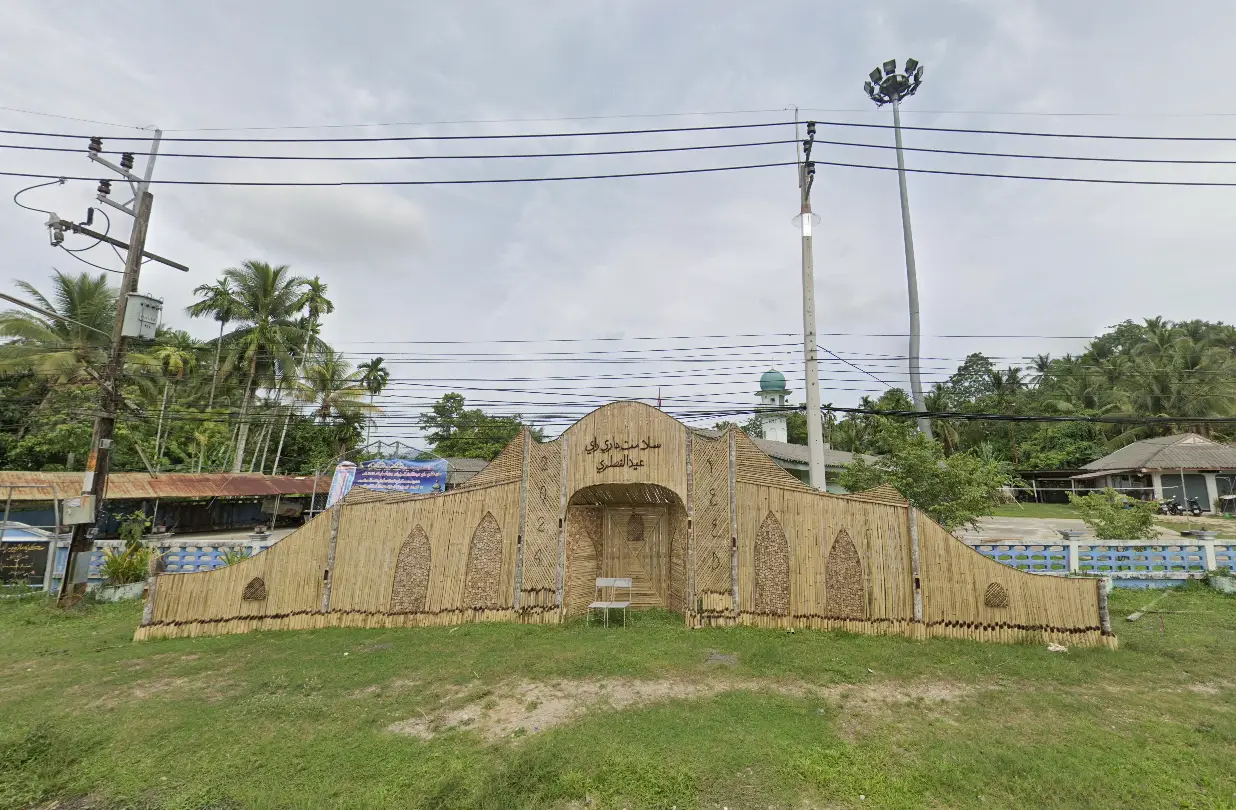
Sawo Mosque
Open Days: Daily
Opening Hours: 08.00 – 17.00
Sawo Mosque is an Islamic religious site in Sawo Subdistrict, Rueso District, Narathiwat Province. It stands within a Muslim community in Thailand’s southern border region, where religion, Malay local culture, agriculture, village life, and local language remain closely connected. The mosque is meaningful as a community place of worship rather than a commercial tourist attraction. It offers visitors a quiet way to understand Islamic life in rural Rueso.
Sawo Subdistrict consists of seven villages: Ban Mulae, Ban Sawo Hulu, Ban Chue Rae, Ban Due Yae, Ban Bue Cho, Ban Sawo, and Ban Bue Cho Bong O. The area was formerly covered with dense tropical forest. The name “Sawo” comes from the local Yawi language and is associated with the meaning of a large snake or python. This place name reflects the area’s local language, memory, and cultural roots before it developed into a settled agricultural subdistrict.
Sawo Mosque should be understood as a community mosque. It is a place for prayer, religious learning, gathering, and village connection. Sawo Subdistrict has several mosques across its villages, showing the importance of Islam in daily life. A mosque in this setting is not only a prayer hall. It is a place where different generations meet, where religious life continues, and where the identity of the community remains visible.
The cultural context of Sawo is clearly Malay-Muslim. Local people in the subdistrict are primarily Muslim, and important traditions include fasting during Ramadan, Eid al-Fitr, Eid al-Adha, Mawlid, circumcision ceremonies, and visiting graves. These traditions show why the mosque is central to the community throughout the year. It supports not only formal worship, but also the rhythm of family, village, and religious life.
During Ramadan, mosques in Sawo Subdistrict become especially important. Fasting, prayer, religious teaching, and gathering after iftar strengthen both faith and community relationships. Eid periods bring family visits, forgiveness, proper dress, and shared happiness. These occasions make the mosque a place of both worship and social connection in the village.
The local economy of Sawo is based mainly on agriculture. Key crops include rubber, rambutan, durian, mangosteen, and other fruits. Livestock and small-scale trading also support local households. Sawo Mosque therefore stands within an agricultural community where daily work in orchards, gardens, and villages is closely linked with the cycle of prayer and religious practice.
The landscape of Sawo also includes waterways. The Sai Buri River passes through parts of the subdistrict, and local canals such as Su-ngai Mati, Ai Teng, Luboh Talong, and Luboh form part of the local environment. These waterways support the wider agricultural landscape and help explain the village character of the area. A visit to Sawo gives travelers a view of rural Narathiwat beyond the main roads and city centers.
Road access in Sawo includes main routes and village roads made of concrete, gravel, and earth. Traffic is generally lighter than in urban communities, and the subdistrict is used as a route toward Raman District in Yala Province as well as toward Narathiwat town and Su-ngai Kolok. This makes Sawo Mosque a practical stop for travelers exploring the Rueso area or moving between Narathiwat, Rueso, and Yala.
Visitors should remember that Sawo Mosque is an active religious place. Modest clothing is expected, voices should be kept low, and worshippers should not be disturbed. Anyone wishing to enter the interior or prayer area should ask permission from a caretaker or a local community member, especially during prayer times, on Fridays, during Ramadan, or during major Islamic occasions.
Photography should be respectful. Visitors should focus on the exterior and the general setting unless permission is given. Worshippers should not be photographed at close range without consent. A visit to a community mosque is most meaningful when approached with respect for the people who use the site every day.
A short visit of about 30 minutes to 1 hour is usually sufficient for observing the exterior, understanding the village context, and continuing to nearby places in Rueso District. Groups should coordinate with local people or the mosque caretaker when possible so the visit remains orderly and does not disturb worship.
Getting There is most practical by private car or local hired transport. From Rueso town, travel into Sawo Subdistrict through the local road network. Travelers arriving by train can get off at Rueso Railway Station and continue by local transport or motorcycle taxi into Sawo Subdistrict. The route is suitable for a local visit within Rueso District.
A visit to Sawo Mosque can be combined with Rueso Railway Station, Masjid Yami-ah Rueso, the grave of Khun Sarakit Rueso, Bueng Bua Bakong, Lamae Nok sea of mist, and Ban Eno OTOP Nawatwithi Tourism Village. These places help travelers understand Rueso through religion, local history, railway travel, wetlands, nature, and agricultural communities.
Rueso Railway Station is an important nearby transport point. It connects Rueso with other districts in Narathiwat and neighboring southern provinces. Travelers who arrive by train can use the station as a starting point before continuing to Sawo Mosque and nearby community sites.
Bueng Bua Bakong is a suitable nature and learning stop after visiting Sawo Mosque. The area is associated with water management and a scenic wetland setting with lotus and natural views. Combining the mosque with Bueng Bua Bakong gives the route both religious and environmental dimensions.
Ban Eno OTOP Nawatwithi Tourism Village in Lalo Subdistrict adds a community tourism element to the trip. The village is associated with agricultural life, local stories, fruit-growing areas, and the Budo mountain landscape. Visiting Sawo Mosque and Ban Eno in the same wider area helps travelers see more than one side of rural Rueso.
Restaurants near Sawo Mosque are mainly found around Rueso town and along the main routes. Options include Rangsit Boat Noodles Rueso, Awn Cha Narathiwat Rueso, Cafe’ Intrend Rueso, Kanah & Red Coffee Rueso, and Cha Uthong Rueso. Travelers should allow time to reach the town area because the mosque is in a village and agricultural setting rather than a dense dining district.
Accommodation choices close to Sawo are limited. Travelers who want more hotel options usually stay in Mueang Narathiwat and visit Sawo and Rueso as a day trip. Practical options include Art Nara Resort, The Imperial Narathiwat Hotel, Tanyong Hotel, Paksina 2 Hotel, and Sapthawee Home @ Narathiwat. Staying in Narathiwat town also makes it easier to continue to Narathat Beach, Narathiwat Central Mosque, the airport, and other attractions in the province.
In summary, Sawo Mosque is a meaningful community Islamic site in Sawo Subdistrict, Rueso District, Narathiwat Province. Its value lies in its role as a place of worship within a Malay-Muslim agricultural community. The mosque helps visitors understand Rueso through faith, village life, Yawi language, Ramadan traditions, Eid celebrations, waterways, orchards, and the quiet rural character of the southern border region.
| Name | Sawo Mosque |
| Location | Sawo Subdistrict, Rueso District, Narathiwat Province |
| Address | Sawo Subdistrict, Rueso District, Narathiwat 96150, Thailand |
| Highlights | A community mosque in Sawo Subdistrict, a Malay-Muslim area of Rueso District, used for worship and local religious life |
| History | An Islamic religious site in Sawo Subdistrict, where Muslim communities and mosques form an important part of village life |
| Name Origin | Named after Sawo Subdistrict; the word “Sawo” comes from local Yawi language and is associated with a large snake or python |
| Distinctive Features | Located in a rural Muslim community surrounded by villages, orchards, agricultural land, and southern border cultural life |
| Travel Information | Travel by private car or local transport from Rueso town into Sawo Subdistrict. Train travelers can get off at Rueso Railway Station and continue by local transport |
| Current Status | Open as an Islamic religious site in Sawo Subdistrict and part of a community where mosques serve as religious centers |
| Open Days | Daily |
| Opening Hours | 08.00 – 17.00 |
| Main Areas / Zones | Prayer area, religious activity area, mosque courtyard, and surrounding community area |
| Nearby Tourist Attractions | 1. Rueso Railway Station, about 5 km 2. Masjid Yami-ah Rueso, about 5 km 3. Grave of Khun Sarakit Rueso, about 5 km 4. Sai Buri River in Sawo Subdistrict, about 6 km 5. Bueng Bua Bakong, about 10 km 6. Lamae Nok Sea of Mist, about 15 km 7. Ban Eno OTOP Nawatwithi Tourism Village, about 15 km |
| Nearby Restaurants | 1. Rangsit Boat Noodles Rueso, about 5 km, Tel. 063-092-7260 2. Awn Cha Narathiwat Rueso, about 5 km, Tel. 063-080-6349 3. Cafe’ Intrend Rueso, about 6 km, Tel. 093-335-3495 4. Kanah & Red Coffee Rueso, about 6 km, Tel. 089-511-3246 5. Cha Uthong Rueso, about 6 km, Tel. 098-976-1999 |
| Nearby Accommodations | 1. Art Nara Resort, about 40 km, Tel. 065-772-2226, 091-846-4739 2. The Imperial Narathiwat Hotel, about 45 km, Tel. 073-515-041 3. Tanyong Hotel, about 45 km, Tel. 073-511-477 4. Paksina 2 Hotel, about 46 km, Tel. 086-287-5050 5. Sapthawee Home @ Narathiwat, about 46 km, Tel. 089-733-1470, 092-830-8626 |
Frequently Asked Questions (FAQ)
Q: Where is Sawo Mosque located?
A: Sawo Mosque is located in Sawo Subdistrict, Rueso District, Narathiwat Province, within a Muslim community in Thailand’s southern border region.
Q: What are the opening hours of Sawo Mosque?
A: General visiting hours are daily from 08.00 to 17.00. Worship activities follow Islamic prayer times.
Q: Why is Sawo Mosque important?
A: It is a community mosque and a place of worship for Muslims in Sawo Subdistrict, where Islam and Malay local culture are central to village life.
Q: What does the name Sawo mean?
A: The name Sawo comes from local Yawi language and is associated with a large snake or python. It became the name of Sawo Subdistrict in Rueso District.
Q: How should visitors behave at Sawo Mosque?
A: Visitors should dress modestly, speak quietly, avoid disturbing worshippers, and ask permission before entering the interior or prayer area.
Q: How can travelers get to Sawo Mosque?
A: From Rueso town, travel into Sawo Subdistrict by private car or local transport. Train travelers can get off at Rueso Railway Station and continue by local transport.
Q: What nearby places can be visited with Sawo Mosque?
A: Nearby places include Rueso Railway Station, Masjid Yami-ah Rueso, the grave of Khun Sarakit Rueso, Bueng Bua Bakong, Lamae Nok sea of mist, and Ban Eno OTOP Nawatwithi Tourism Village.
 Category: ●Places of Worship
 Group: ●Mosque
Last Update : 2 WeekAgo
 Last Update : 2 WeekAgo
 Click to Access the Navigation Map GPS
 Art, Culture and Heritage
 Landmarks and Memorials(8)
 Royal Palace(1)
 Art, Craft Centres, Tradition(7)
 Museums(4)
 Art Gallery(1)
 Temple(16)
Mosque(23)
Temple(16)
Mosque(23)
 Other Sacred Sites(4)
 Research and Development
 Royal Project(1)
 Suburban Living
 Village, Community(9)
 Local Market(1)
 Nature and Wildlife
 National Parks and Marine Reserves(5)
 Mountain (Doi)(2)
 Dam, Reservoir, Lake(2)
 Waterfalls(16)
 River, Canal(3)
 Bays and Beaches(5)
 Islands(1)
 Other natural attractions(4)
 Entertainment and Agricultural
 Stadium(1)
 Farms, Parks and Ecotourism(7)
 Shopping
 Shopping and Night Market(1)
 Travel Articles, Recipes
 Travel Review, Food Review(1)


