
lovethailand home >South Travel Attractions >Nakhon Si Thammarat Travel Attractions >Lan Saka >Khao Kaeo > Sala Thewada Nakarat Nakhon Si Thammarat
TL;DR: Sala Thewada Nakarat Nakhon Si Thammarat is located at Moo 4, Khao Kaeo Subdistrict, Lan Saka District, Nakhon Si Thammarat Province, open Daily, hours 08.00 – 17.00.
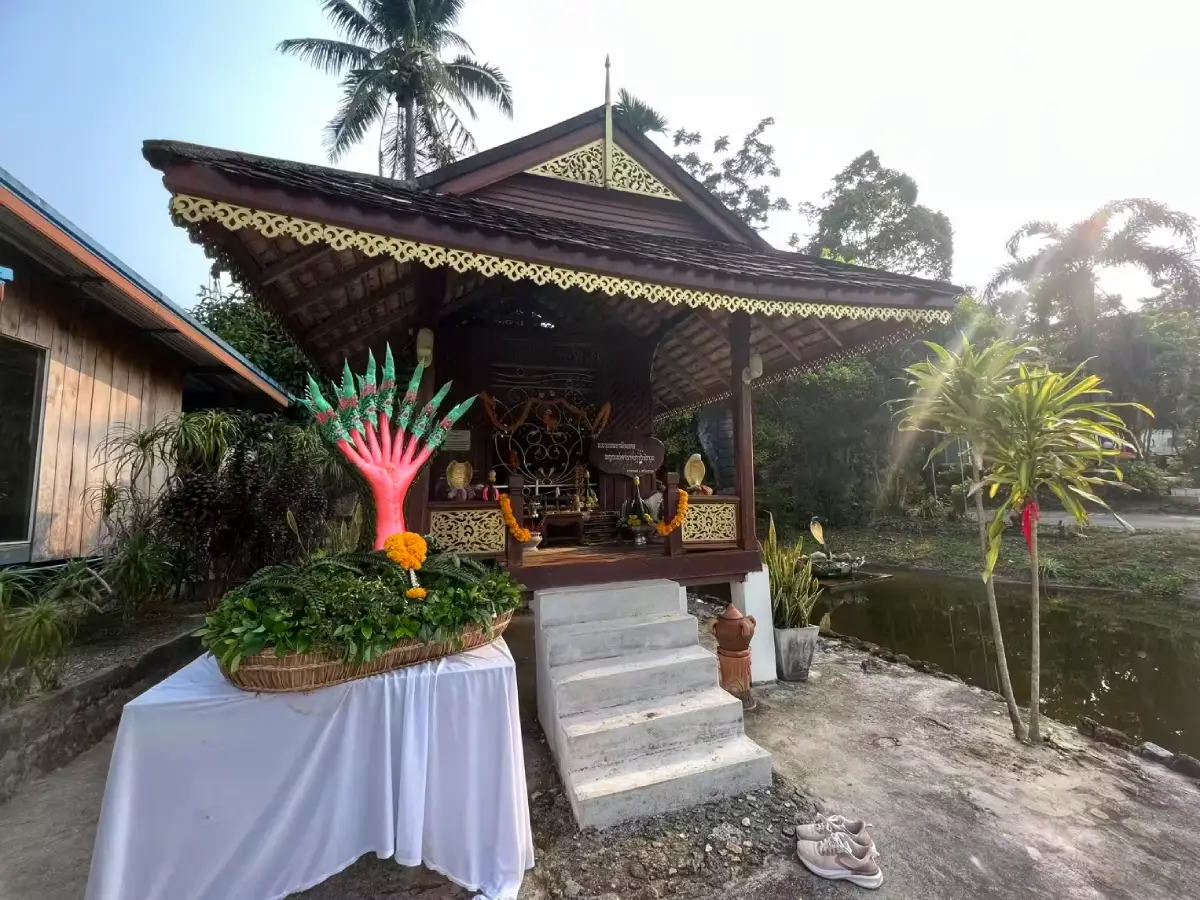
Sala Thewada Nakarat Nakhon Si Thammarat
Open Days: Daily
Opening Hours: 08.00 – 17.00
Sala Thewada Nakarat Nakhon Si Thammarat is located in Moo 4, Khao Kaeo Subdistrict, Lan Saka District, Nakhon Si Thammarat Province. It is a local sacred site associated with a natural water source known as Huai Pak Nakarat or Huai Thewada Nakarat. The water flows out from a gap in the rocks in a form that resembles the mouth of a naga, then winds through the landscape like the body of a serpent. This distinctive natural form gave the stream its name, and local people regard the water as sacred.
The site is meaningful because it connects nature, water, local belief, and official ceremonial culture. Unlike the old-city monuments of Nakhon Si Thammarat, which are known for temples, city walls, and Brahmanical shrines, Sala Thewada Nakarat represents the sacred landscape of Lan Saka: forested hills, small streams, clear water, and beliefs surrounding the naga as a guardian of water and fertility.
The heart of the site is Huai Pak Nakarat. The stream is known for its cool, clear water and its origin at a rocky opening. In local belief, the naga is associated with water, protection, abundance, and the connection between the human world and the sacred realm. For this reason, the water is not treated as ordinary stream water. It is respected as a source of coolness, blessing, and auspicious power.
Huai Pak Nakarat is one of the 6 sacred water sources of Nakhon Si Thammarat Province. These water sources are used in important ceremonies, including Buddhist holy water rites, consecration water, and auspicious ceremonies of the province. Among the 6 sources, Huai Pak Nakarat is the sacred water source located in Khao Kaeo Subdistrict, Lan Saka District. It is therefore an important natural water source outside the old city that still plays a role in ceremonial culture.
In ceremonial practice, water from Huai Pak Nakarat is collected together with water from other sacred sources of Nakhon Si Thammarat and then used in consecration ceremonies at Phra Wihan Luang, Wat Phra Mahathat Woramahawihan. This connection gives the small stream in Lan Saka a wider meaning. It links a quiet natural site in Khao Kaeo with one of the most important sacred centers of Nakhon Si Thammarat.
The ceremonial collection point is a place where several small streams meet. This convergence of water has strong symbolic value. In Thai ritual culture, water is associated with coolness, purification, renewal, blessing, and auspicious beginnings. When several streams come together at one point, the site becomes especially suitable for ceremonial water collection.
The area is also associated with 3 plants used in local ritual memory: bai raet, bamboo, and rattan. Local belief holds that these plants are protected by the naga. They are not cut casually. When water is collected for ceremony, bamboo may be used to make a water container, bai raet may be used as a stopper, and rattan may be used to tie the bamboo container. These details show that the sacredness of the place includes not only the water, but also the plants, ritual materials, and local practices surrounding the collection of water.
Sala Thewada Nakarat is best suited for cultural and spiritual travel rather than ordinary recreation. Visitors should come to pay respect, learn about Huai Pak Nakarat, observe the natural stream, and understand its role in the sacred water tradition of Nakhon Si Thammarat. It should not be treated merely as a photo spot or a place for casual water play, because the central meaning of the site lies in reverence for the water source.
The name “Thewada Nakarat” reflects layered belief. “Thewada” refers to celestial beings, while “Nakarat” refers to the great naga. Together, the name suggests a connection between heaven, earth, water, and the human community. The water flowing from the rock is therefore understood not only as a natural phenomenon, but as a sacred gift bringing coolness and blessing.
Within Lan Saka District, Sala Thewada Nakarat adds a distinctive cultural dimension to the area. Lan Saka is already known for natural and community-based attractions such as Khiri Wong Village, Karom Waterfall, Wang Mai Pak Waterfall, and the mountain landscape near Khao Luang. Sala Thewada Nakarat is different because its main value is ceremonial and spiritual. It is especially suitable for visitors interested in sacred water, local belief, and the ritual heritage of southern Thailand.
A meaningful visit usually takes about 20 to 40 minutes. Visitors can pay respect, observe the stream, and learn about the role of the site in provincial ceremonies. Photography should be done with care and without disturbing the sacred area or the water collection point. The site is quiet and simple, so it is best visited with a respectful and unhurried attitude.
Visiting Sala Thewada Nakarat also helps travelers understand that Nakhon Si Thammarat’s sacred geography extends beyond its major temples. The province’s spiritual landscape includes ancient temples, Brahmanical shrines, city monuments, and sacred water sources. A cultural route can connect Sala Thewada Nakarat with Wat Phra Mahathat Woramahawihan, Wat Na Phra Lan, Wat Sema Mueang, Wat Sema Chai, Wat Pratu Khao, and Huai Khao Mahachai to tell the broader story of Nakhon Si Thammarat’s 6 sacred water sources.
Getting There can be done via the Nakhon Si Thammarat–Ban Song route, then continuing into Khao Kaeo Subdistrict, Lan Saka District. From there, local roads lead toward Moo 4 and Huai Pak Nakarat. Private car, motorcycle, or local hired transport is recommended because the site is a community water source rather than a large attraction on a major highway. Visitors who are unfamiliar with the route should use navigation and ask local residents for guidance.
The site can be combined with other Lan Saka attractions in a half-day or full-day route. Visitors may include Karom Waterfall, Khiri Wong Village, Wang Mai Pak Waterfall, local cafés in Khao Kaeo, and cultural sites closer to Nakhon Si Thammarat city. This route is suitable for travelers who want both natural scenery and cultural depth.
The best time to visit is in the morning or late afternoon, when the weather is more comfortable. During the rainy season, visitors should check the weather before traveling because streams may rise and walking areas can become slippery. Visitors should avoid entering fast-flowing water or unclear paths and should be especially careful with children and elderly travelers.
Proper etiquette is important. Visitors should dress respectfully, speak quietly, keep the site clean, avoid touching ritual objects without permission, avoid damaging plants, and avoid stepping on or disturbing the ceremonial water collection area. If a local ceremony is taking place, visitors should give space to the community and follow local guidance.
Sala Thewada Nakarat is a small place with large cultural meaning. It brings together natural water, naga belief, sacred ceremonies, local plants, and the ritual identity of Nakhon Si Thammarat. For visitors who want to understand the province beyond its major temples and monuments, this sacred stream offers a quiet but significant cultural experience.
| Name | Sala Thewada Nakarat / Huai Pak Nakarat / Huai Thewada Nakarat |
| Location | Moo 4, Khao Kaeo Subdistrict, Lan Saka District, Nakhon Si Thammarat Province |
| Highlights | Sacred water source where water flows from a rocky opening resembling a naga’s mouth, with a winding stream shaped like the body of a naga and ceremonial use as consecration water |
| History / Significance | One of the 6 sacred water sources of Nakhon Si Thammarat Province and an important natural sacred site of Khao Kaeo, Lan Saka |
| Natural Features | Cool and clear stream water flowing from a rocky gap, with several small streams converging at the ceremonial collection point |
| Belief / Ritual Meaning | Associated with naga belief, sacred water, Buddhist holy water, consecration water, and important provincial ceremonies |
| Main Areas / Zones | Sala Thewada Nakarat, worship area, Huai Pak Nakarat stream, ceremonial water collection point, rocky water source, and surrounding natural area |
| Ritual Plants | Bai Raet, bamboo, and rattan, traditionally associated with ceremonial water collection |
| Travel Information | Use the Nakhon Si Thammarat–Ban Song route to Khao Kaeo Subdistrict, Lan Saka District, then continue by local road to Moo 4 and Huai Pak Nakarat. Private car, motorcycle, or local hired transport is recommended. |
| Current Status | Open for visitation and worship as a local sacred water source |
| Open Days | Daily |
| Opening Hours | 08.00 – 17.00 |
| Admission Fee | Free Admission |
| Facilities | Worship area, sala, stream-viewing area, and community access routes in Khao Kaeo Subdistrict |
| Nearby Tourist Attractions | 1. Karom Waterfall, Khao Luang National Park, about 6 km 2. Khiri Wong Village, about 10 km 3. Wang Mai Pak Waterfall, about 12 km 4. Khiri Wong Natural Tie-Dye Group, about 11 km 5. Wat That Noi, about 15 km 6. Somdet Phra Srinagarindra 84 Park, about 20 km 7. Wat Phra Mahathat Woramahawihan, about 25 km |
| Nearby Restaurants | 1. Khrua Kanda Khao Kaeo-Lan Saka, about 5 km, Tel. 075-419-199, 081-476-6629 2. Lansaka Mountain View, about 6 km, Tel. 065-547-7782 3. Ban Khao Kot Lan Saka, about 8 km, Tel. 095-438-7198 4. D’Endless Bar & Bistro, about 8 km 5. COTE x PARADAi Mamuang Song Ton, about 18 km 6. Khanom Chin Mueang Khon Sen Sot, about 24 km, Tel. 086-475-7641, 088-764-8430, 084-293-2456 |
| Nearby Accommodations | 1. D’Endless Resotel, about 8 km 2. Pool House Lan Saka, about 8 km, Tel. 075-803-912, 086-692-1499 3. Ban Khao Kot Resort, about 8 km 4. Green View Resort Lan Saka, about 9 km, Tel. 062-262-8619 5. Roen Tha Ha Resort, about 12 km, Tel. 089-592-7455 6. Navakitel Design Hotel, about 25 km, Tel. 080-393-9339 |
Frequently Asked Questions (FAQ)
Q: Where is Sala Thewada Nakarat located?
A: It is located in Moo 4, Khao Kaeo Subdistrict, Lan Saka District, Nakhon Si Thammarat Province, at the Huai Pak Nakarat sacred water source.
Q: What are the opening hours?
A: It is open daily from 08.00 to 17.00.
Q: Is there an admission fee?
A: No. Admission is free.
Q: Why is it called Huai Pak Nakarat?
A: The stream flows from a rocky opening that resembles the mouth of a naga, and the winding stream resembles the body of a naga.
Q: Why is Huai Pak Nakarat important?
A: It is one of the 6 sacred water sources of Nakhon Si Thammarat Province and is used for holy water, consecration water, and important ceremonies.
Q: What should visitors do respectfully at the site?
A: Visitors should dress modestly, speak quietly, keep the area clean, avoid damaging plants, avoid disturbing the ceremonial water collection point, and respect local belief.
Q: How can travelers get there?
A: Travelers can use the Nakhon Si Thammarat–Ban Song route to Khao Kaeo Subdistrict, then continue to Moo 4 and Huai Pak Nakarat by local road.
Q: What nearby places can be visited with Sala Thewada Nakarat?
A: Nearby places include Karom Waterfall, Khiri Wong Village, Wang Mai Pak Waterfall, the Khiri Wong natural tie-dye group, Wat That Noi, Somdet Phra Srinagarindra 84 Park, and Wat Phra Mahathat Woramahawihan.
 Category: ●Places of Worship
 Group: ●Other Sacred Sites
Last Update : 2 MonthAgo
 Last Update : 2 MonthAgo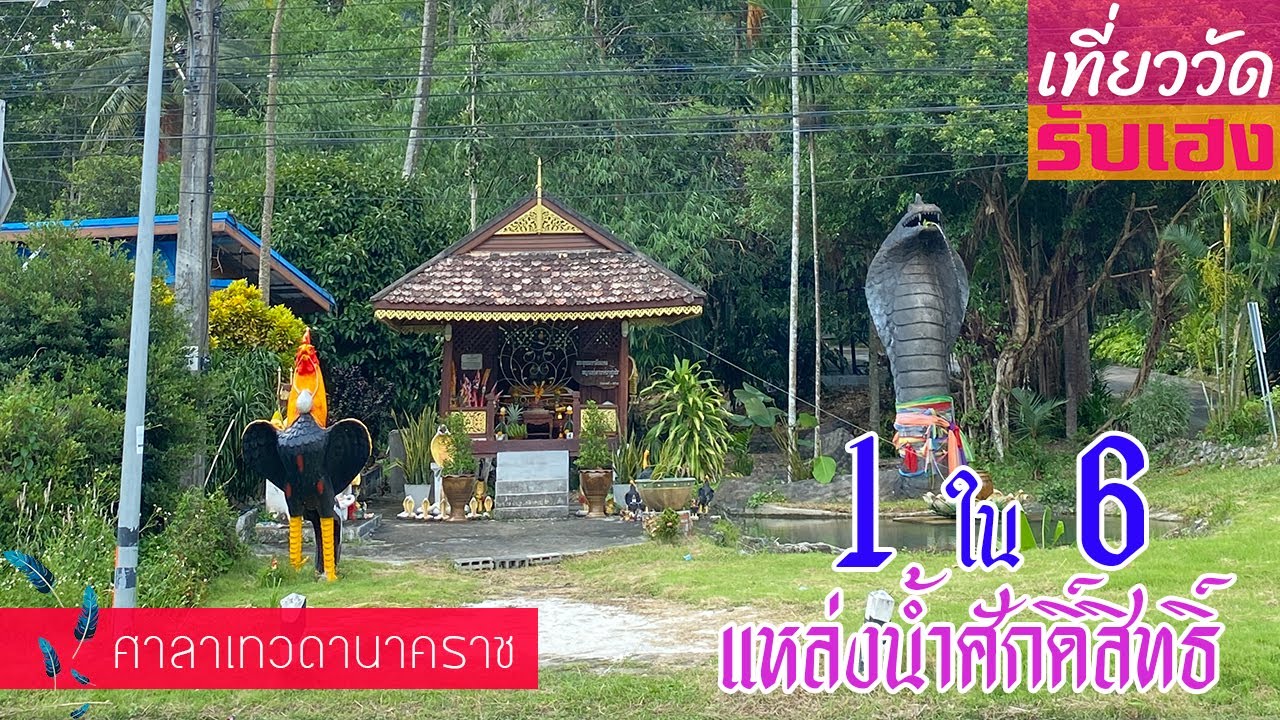
 Click to Access the Navigation Map GPS
Sala Thewada Nakarat Nakhon Si Thammarat Map
Recommend

 Art, Culture and Heritage
 Historical Sites and Monuments(9)
 Landmarks and Memorials(9)
 Royal Palace(1)
 Art, Craft Centres, Tradition(12)
 Museums(5)
 Educational Places
 Educational Gardens, Farm(2)
 Temple(44)
 Mosque(2)
Other Sacred Sites(17)
Mosque(2)
Other Sacred Sites(17)
 Research and Development
 Royal Project(2)
 Suburban Living
 Village, Community(8)
 Local Market(1)
 Floating Market(1)
 Nature and Wildlife
 National Parks and Marine Reserves(6)
 Mountain (Doi)(11)
 Dam, Reservoir, Lake(10)
 Waterfalls(43)
 Hot Springs(1)
 Caves(13)
 River, Canal(3)
 Bays and Beaches(29)
 Islands(2)
 Other natural attractions(3)
 Entertainment and Agricultural
 Farms, Parks and Ecotourism(3)
 Outdoor and Adventure Activities(4)
 Travel Articles, Recipes
 Travel Review, Food Review(2)
 Southern Food Menu, Southern Food Recipes(18)


