
lovethailand home >South Travel Attractions >Nakhon Si Thammarat Travel Attractions >Nop Phi Tam >Krung Ching > Mountain Pra Trees
TL;DR: Mountain Pra Trees is located at Moo 8, Krung Ching Subdistrict, Nopphitam District, Nakhon Si Thammarat Province, open Natural community forest area; not a gated attraction with fixed admission, hours Daytime visits are recommended.
Mountain Pra Trees
Open Days: Natural community forest area; not a gated attraction with fixed admission rounds
Opening Hours: Daytime visits are recommended
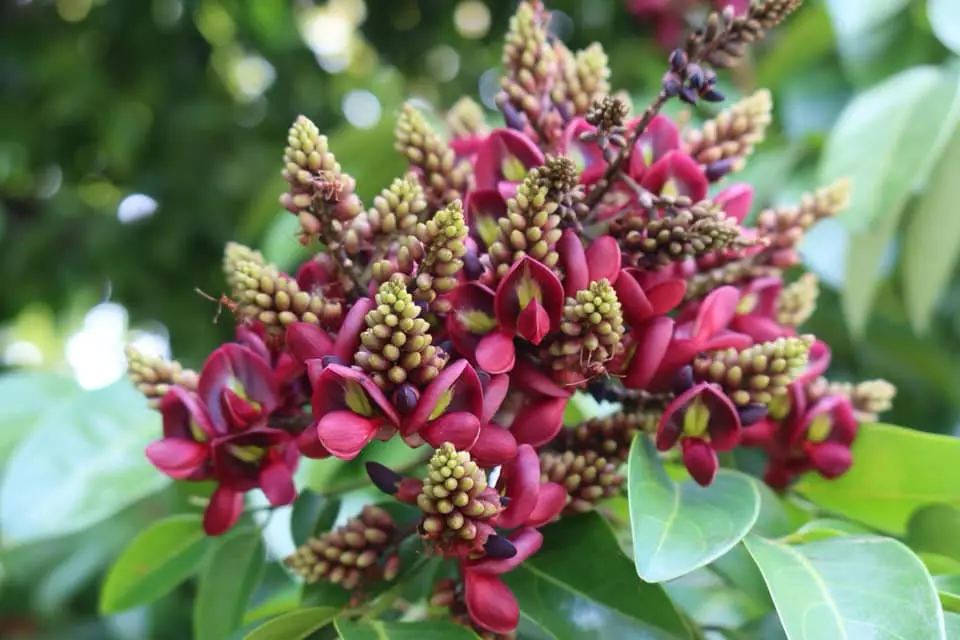
Mountain Pra Trees, or the Color-Changing Pra Forest, are one of the most distinctive natural highlights of Krung Ching Subdistrict in Nopphitam District, Nakhon Si Thammarat Province. The attraction is not a single tree or a built tourist site, but a large community forest landscape where Pra trees grow across the mountainous terrain. Between January and March, the young leaves of Pra trees turn yellow, orange, and reddish orange, creating a striking seasonal contrast against the deep green rainforest of southern Thailand.
The Color-Changing Pra Forest is located around Moo 8, Krung Ching Subdistrict, Nopphitam District. It is connected with several local Pra forest areas used and protected by communities in Ban Suan Prang, Ban Huai Tong, Ban Thap Nam Tao, and Ban Huai Haeng. Pra trees are important not only because of their seasonal beauty, but also because their seeds, known locally as Luk Pra or Luk Kra, are used in local food, community products, rituals, and ecological knowledge.
Krung Ching is a highland basin surrounded by mountains and dense forest. Local people often describe the area as “Ao Krung Ching,” meaning a mountain-enclosed basin. The area is rich in forest resources and headwaters, making it a suitable habitat for many native plants. Pra trees have become one of the natural symbols of Nopphitam District, reflected in the district motto that refers to the beauty of the Pra tree. For local people, Pra is not merely a forest plant; it is part of the identity of the land.
The beauty of mountain Pra trees appears most clearly when the trees flush new leaves. During this period, large areas of the forest show warm tones of yellow, orange, and reddish orange. When seen from higher viewpoints or mountain roads, these colors stand out among the surrounding green forest. This seasonal phenomenon is unusual in southern Thailand, where evergreen rainforest usually dominates the landscape throughout the year. The large concentration of Pra trees in Krung Ching gives the area a rare visual identity.
The Thai name “Ton Pra Phu Khao” refers to Pra trees growing in the mountainous areas of Krung Ching, while “Pa Pra Plian Si” emphasizes the seasonal color-changing forest. These names describe the same natural character from two angles: one focuses on the local tree species, and the other on the visual landscape created by the trees. Understanding both names helps travelers see this attraction not simply as a photo spot, but as a living forest system connected to people, food, and culture.
Pra is a native tree found in the tropical rainforests of southern Thailand, especially in mountain forests such as Krung Ching in Nopphitam District. Its seeds, known locally as Luk Pra or Luk Kra, are collected and processed into several local dishes. They can be boiled, pickled, roasted, fried, seasoned, or added to curries and chili pastes. In Nakhon Si Thammarat, Luk Pra is closely associated with southern food culture and is one of the ingredients that give local cuisine a strong sense of place.
The Pra forest is also connected with the local season known as “Pra Taek,” when mature Pra fruits split and fall to the ground. Nopphitam has hosted community activities related to Pra, including forest-opening rituals, forest ordination, Pra tree planting, community tourism route testing, and local food activities. These traditions show that the Pra forest is not just a seasonal sightseeing landscape. It is a cultural system involving belief, conservation, food, local livelihood, and community-based tourism.
Local ecological knowledge related to Pra trees covers many aspects. In food culture, Pra seeds are boiled, pickled, roasted, fried, and cooked into dishes such as sour curry with Pra seeds and Pra seed chili paste. In textile knowledge, fresh Pra leaves can be used to produce natural dyes in light brown, dark brown, brick, and pinkish red tones. In ritual life, local communities have practices connected with opening the Pra forest and showing respect to guardian spirits. In conservation, communities maintain agreements to protect important trees and avoid destructive harvesting.
What makes the Pra forest of Krung Ching especially valuable is that its meaning goes far beyond visual beauty. Travelers who visit this area can learn how one native tree species can support food, income, traditional knowledge, cultural identity, and ecological conservation. This makes the Color-Changing Pra Forest suitable for travelers interested in southern forest ecology, local food, community-based tourism, and the relationship between people and watershed forests.
The best time to visit is from January to March, when the Pra trees produce colorful new leaves. This is the period when the warm tones of the leaves are most visible. Clear-weather days are best for photography because sunlight enhances the contrast between the colored Pra leaves and the green rainforest. Outside this season, the forest remains important as a community forest and ecological learning area, but the color-changing scenery is less prominent.
A visit to the Color-Changing Pra Forest should be planned as a nature and community trip rather than a commercial attraction visit. The area is part of a living landscape. Travelers should prepare suitable footwear, drinking water, sun protection, and a personal trash bag. Those who want to enter community forest areas or walk beyond roadside viewpoints should contact local people or the Krung Ching Subdistrict Administrative Organization before traveling. This helps ensure safety and prevents disturbance to local life.
Responsible travel is essential in the Pra forest. Visitors should not break branches, pick leaves, collect Pra seeds without permission, step on seedlings, litter, or make excessive noise. The beauty of the forest exists because local communities have protected it over generations. Seeing the Pra forest only as a photo backdrop would miss its deeper meaning. The best way to visit is to respect it as a shared natural and cultural resource.
Getting There is most convenient by private car or rental vehicle. From Nakhon Si Thammarat city, travelers can drive toward Tha Sala District and continue to Nopphitam District, then follow the Tha Sala – Krung Ching route into Krung Ching Subdistrict. The area is mountainous and passes through local communities, so careful driving is recommended, especially during rain or fog. Once in Krung Ching, Ban Thap Nam Tao in Moo 8 and the Krung Ching Subdistrict Administrative Organization can be used as local reference points for asking directions.
The Pra forest is not a building or a single fenced entrance. It is a forest landscape spread across community and mountain areas. For this reason, local guidance is valuable. Asking residents or local authorities helps travelers find suitable observation points, understand the current condition of the leaves, and avoid entering sensitive areas. This is especially important for photographers, study groups, and visitors who want to learn about the forest beyond roadside views.
The Color-Changing Pra Forest can be combined with several other attractions in Krung Ching. Nearby places include Khao Chang Lon Sea of Mist, Krung Ching Hot Spring, Krung Ching Waterfall, Hong Cave, Khlong Klai rafting routes, and Krung Nang Waterfall. Each place offers a different experience: waterfalls, hot springs, caves, rafting, mountain viewpoints, and forest study trails. Adding the Pra forest to this route creates a richer picture of Krung Ching as a destination of forests, water, mountains, and community culture.
For photography, the Pra forest is best captured in wide landscape shots showing the warm colors of Pra leaves against the green forest. Close-up shots of young leaves can also show the seasonal transition beautifully. Morning and soft afternoon light are suitable for natural colors. Visitors should avoid damaging ground vegetation or entering risky spots for the sake of photographs. In community areas, photographing local residents should always be done with permission.
The Pra forest also works well as an educational destination. It connects rainforest ecology, native food plants, community resource management, local rituals, natural dyes, and eco-tourism. Students, researchers, and travelers interested in community-based conservation can learn how forest protection can coexist with careful local use. The story of the Pra forest shows that conservation is not always about separating people from nature; it can also come from shared rules, respect, and long-term community responsibility.
Food culture is another reason the Pra tree matters. Luk Pra is processed into pickles, curries, chili paste, fried snacks, and other local dishes. These foods help travelers understand why the tree is valued beyond its appearance. The seasonal color of Pra leaves may attract visitors, but its deeper identity lies in the way it has become part of local kitchens, rituals, products, and memory.
Compared with other natural attractions in Nakhon Si Thammarat, the Color-Changing Pra Forest has a very specific identity. It is not mainly a waterfall, cave, or sea-of-mist viewpoint. Its main attraction is a native forest tree and the seasonal transformation of a living forest. This makes it ideal for travelers who prefer meaningful, low-impact nature experiences and want to understand the details of southern Thailand’s rainforest communities.
In summary, Mountain Pra Trees and the Color-Changing Pra Forest in Krung Ching offer a rare combination of seasonal beauty, local food culture, ecological knowledge, and community conservation. January to March is the best period to see the leaves change color, while the Pra harvest season reveals the close relationship between the forest and local life. With respectful travel and local guidance, this forest is one of Nakhon Si Thammarat’s most meaningful natural attractions.
| Name | Mountain Pra Trees / Color-Changing Pra Forest |
| Location | Moo 8, Krung Ching Subdistrict, Nopphitam District, Nakhon Si Thammarat Province |
| Address | Pra forest area, Ban Thap Nam Tao, Moo 8, Krung Ching Subdistrict, Nopphitam District, Nakhon Si Thammarat 80160, Thailand |
| Highlights | About 5,000 rai of Pra forest where young leaves turn yellow, orange, and reddish orange from January to March |
| History | A community Pra forest in Nopphitam District with long-standing local use in food, rituals, natural dyeing, and conservation |
| Name Origin | Mountain Pra Trees refers to Pra trees growing in the mountainous areas of Krung Ching, while Color-Changing Pra Forest refers to the seasonal color change of Pra leaves |
| Distinctive Features | Native southern tree, seasonal leaf color change, edible Pra seeds, and Pra leaves used for natural dyeing |
| Travel Information | Travel by private car through Nopphitam District and the Tha Sala – Krung Ching route toward Krung Ching Subdistrict and Ban Thap Nam Tao, Moo 8. Ask local residents or Krung Ching Subdistrict Administrative Organization for suitable viewing points |
| Current Status | A natural and community-based conservation learning area of Krung Ching Subdistrict |
| Best Season | January – March for seasonal Pra leaf color change |
| Facilities | Natural community forest area; visitors should prepare drinking water, walking shoes, and personal necessities |
| Main Areas / Zones | Color-Changing Pra Forest in Ban Thap Nam Tao, Moo 8, and community Pra forest areas in Ban Suan Prang, Ban Huai Tong, Ban Thap Nam Tao, and Ban Huai Haeng |
| Caretaker | Krung Ching communities and Krung Ching Subdistrict Administrative Organization |
| Main Contact Number | Krung Ching Subdistrict Administrative Organization, Tel. 075-752-600 |
| Official Website / Official Page | Krung Ching Subdistrict Administrative Organization, Nopphitam District, Nakhon Si Thammarat Province |
| Nearby Tourist Attractions | 1. Khao Chang Lon Sea of Mist, about 8 km 2. Krung Ching Hot Spring, about 10 km 3. Krung Ching Waterfall, about 12 km 4. Hong Cave, about 14 km 5. Khlong Klai Rafting Route, about 15 km 6. Krung Nang Waterfall, about 18 km |
| Nearby Restaurants | 1. Restaurant / Café at Krung Ching Hill Camping & Resort, about 8 km 2. Restaurant at Krung Ching Homestay and Resort, about 10 km 3. Local Food Stalls in Ban Phitam Community, about 10 km 4. Food and Drink Area on the Khao Chang Lon Sea of Mist Route, about 11 km 5. Local Restaurants around Nopphitam District, about 18 km |
| Nearby Accommodations | 1. Krung Ching Hill Camping & Resort, about 8 km, Tel. 087-283-3084, 093-779-8585 2. Ruean Krung Ching Resort, about 9 km 3. Krung Ching Homestay and Resort, about 10 km, Tel. 098-280-7098 4. Nam Ta Lad Resort Happy Home, about 12 km 5. Kittipoom Hill, about 22 km |
Frequently Asked Questions (FAQ)
Q: Where are the Mountain Pra Trees or Color-Changing Pra Forest located?
A: They are located around Moo 8, Krung Ching Subdistrict, Nopphitam District, Nakhon Si Thammarat Province, in a mountainous community forest area.
Q: When is the best time to see the Color-Changing Pra Forest?
A: January to March is the best period because Pra trees produce young leaves in yellow, orange, and reddish orange tones across the forest.
Q: Why are Pra trees important to Nopphitam?
A: Pra trees are important for local food, community income, natural dyeing knowledge, forest-opening rituals, and watershed forest conservation.
Q: What local foods can be made from Pra seeds?
A: Pra seeds can be boiled, pickled, roasted, fried, seasoned, and used in local dishes such as sour curry with Pra seeds and Pra seed chili paste.
Q: Is there an admission fee for the Color-Changing Pra Forest?
A: The area is a natural community forest, and no specific official admission fee for the Pra forest was found. Visitors should contact the local community or Krung Ching Subdistrict Administrative Organization before traveling.
Q: How do travelers get to the Mountain Pra Trees?
A: Travel by private car to Nopphitam District, follow the Tha Sala – Krung Ching route, and continue toward Krung Ching Subdistrict and Ban Thap Nam Tao, Moo 8. Ask local residents near the area for directions.
Q: How should visitors prepare for this trip?
A: Visitors should prepare walking shoes, drinking water, sun protection, a personal trash bag, and should respect community rules by not collecting Pra seeds or damaging plants without permission.
Q: What nearby places can be visited on the same route?
A: Nearby places include Khao Chang Lon Sea of Mist, Krung Ching Hot Spring, Krung Ching Waterfall, Hong Cave, Khlong Klai rafting routes, and Krung Nang Waterfall.
 Category: ●Nature and Wildlife
 Group: ●Other natural attractions
Last Update : 2 WeekAgo
 Last Update : 2 WeekAgo
 Click to Access the Navigation Map GPS
 Art, Culture and Heritage
 Historical Sites and Monuments(9)
 Landmarks and Memorials(9)
 Royal Palace(1)
 Art, Craft Centres, Tradition(12)
 Museums(5)
 Educational Places
 Educational Gardens, Farm(2)
 Places of Worship
 Temple(44)
 Mosque(2)
 Other Sacred Sites(17)
 Research and Development
 Royal Project(2)
 Suburban Living
 Village, Community(8)
 Local Market(1)
 Floating Market(1)
 National Parks and Marine Reserves(6)
 Mountain (Doi)(11)
 Dam, Reservoir, Lake(10)
 Waterfalls(43)
 Hot Springs(1)
 Caves(13)
 River, Canal(3)
 Bays and Beaches(29)
 Islands(2)
Other natural attractions(3)
Islands(2)
Other natural attractions(3)
 Entertainment and Agricultural
 Farms, Parks and Ecotourism(3)
 Outdoor and Adventure Activities(4)
 Travel Articles, Recipes
 Travel Review, Food Review(1)
 Southern Food Menu, Southern Food Recipes(18)


