
lovethailand home >South Travel Attractions >Krabi Travel Attractions >Koh Lanta >Sala Dan > Masjid Ban Loh Bahara
TL;DR: Masjid Ban Loh Bahara is located at Ban Loh Bahara, Moo 3, Sala Dan Subdistrict, Ko Lanta District, Krabi Province, open Open Daily For Religious Activities, hours 08.00 – 17.00 For General Visits, And Open According To Prayer Times For.

Masjid Ban Loh Bahara
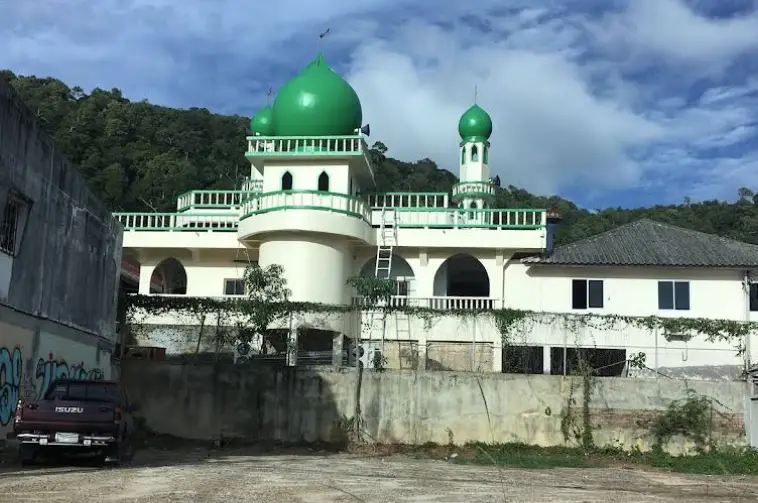
Open Days: Open Daily For Religious Activities
Opening Hours: 08.00 – 17.00 For General Visits, And Open According To Prayer Times For Worshippers
Masjid Ban Loh Bahara in Krabi Province is an important mosque of Ban Loh Bahara community in Sala Dan Subdistrict, Ko Lanta District. It is located at 678 Moo 3, Sala Dan – Sangka-U Road, Sala Dan Subdistrict, Ko Lanta District, Krabi 81150. The mosque is a central Islamic place of worship for the local Muslim community and a strong symbol of cooperation, faith, and community continuity on Ko Lanta. It was established through the effort of earlier community leaders who donated land, labor, funds, time, and spiritual commitment to create a permanent mosque for prayer, religious education, community gatherings, and local activities.
In brief, Masjid Ban Loh Bahara, historically associated with the name “Masjid Samakkee Phatthana Ban Loh Bahara,” is an old mosque of Ban Loh Bahara on Ko Lanta. It was built through community cooperation in the late 1960s and officially registered as a mosque on 22 September 1971 under registration number 92. The mosque is now located in Moo 3, Sala Dan Subdistrict, Ko Lanta District, Krabi Province. Its importance lies not only in the building itself, but also in the story of its founders, the succession of imams, khatibs, and bilals, the work of mosque committees, and the role of the mosque in Muslim life on Ko Lanta.
Loh Bahara is part of Sala Dan, the northern gateway area of Ko Lanta. This part of the island is known not only for beaches, piers, restaurants, and tourism services, but also for real local communities with deep religious and cultural roots. Ko Lanta has long been home to Muslim communities, Chao Lay communities, fishing families, traders, and old coastal settlements. Ban Loh Bahara is therefore part of a larger island identity shaped by maritime life, local faith, community leadership, and intergenerational memory.
The history of Masjid Ban Loh Bahara clearly reflects the strength of community cooperation. Local narratives record that 21 key people came together to lay the foundation of the mosque and contribute their time, labor, funds, and determination. The original location was in Moo 4, Ko Lanta Yai Subdistrict, Ko Lanta District, Krabi Province. Later, the administrative area changed to Moo 3, Sala Dan Subdistrict. This change did not reduce the mosque’s importance. Instead, it shows how the mosque grew together with the development of Sala Dan and Ko Lanta.
The early founders included respected elders, land donors, builders, fundraisers, religious learners, coordinators, and community supporters. Among the names preserved in local history are Nai Ya Le Kasikun, Nai Matdee Naknaen, Nang Sida Kokyai, Nai Matsat Thing-it, Nai Ae Kasikun, Nai Bao Kokyai, Nai Baonui Kokyai, Nai Sa-at Chiao Chan, Nai Iat Naknaen, Nai Charin Kokyai, Nai Mae Kokyai, Nai Daeng Naknaen, Nai Sep Naknaen, Nai Matnui Kokyai, Nai On Sahan, Nai Hamda Chaipho, Nai Mae Wachedi, Nai Baoyao Chaipho, Nai Bai Naknaen, Nai So Lae Wachedi, and Nai Yop Pana. These names represent more than individuals; they represent the different roles required to build a mosque and sustain a community.
The story of the founders shows that the mosque was not created by one person alone. It came from a collective structure of support: those who donated land, those who understood construction, those who raised funds, those with religious knowledge, those who coordinated work, those who encouraged the community, and those who contributed physical labor. This shared effort made the mosque a true community institution rather than a building owned by any single family.
Official mosque directory information states that construction began on Saturday, 11 September 1968 at 09.30, with Nai Matdee Naknaen and Nang Sida Kokyai donating land measuring 2 rai, 3 ngan, and 3 square wah for the mosque. Later community records also mention additional land donation and land purchase, expanding the mosque’s area and strengthening its role as a religious and community center. This shows that the mosque’s development continued beyond its first building phase.
After construction was completed, the mosque began permanent religious operation and a mosque committee was selected. The historical name “Masjid Samakkee Phatthana Ban Loh Bahara” reflects the values of unity and development. For the community, the mosque was not only a place to pray, but also a symbol of collective discipline, shared responsibility, and spiritual growth.
The mosque was officially registered on 22 September 1971 under registration number 92. This formal registration placed it within Thailand’s administrative structure for Islamic religious affairs and gave the mosque a clear leadership framework consisting of an imam, khatib, bilal, and mosque committee. These roles are essential for managing prayer, religious instruction, community coordination, and public responsibilities.
The first committee recorded in local history included Nai Mae Wachedi as imam and chairman, Nai Charin Kokyai as bilal and vice chairman, Nai So Lae Wachedi as khatib and vice chairman, Nai Ae Kasikun as registrar, Nai Matsat Thing-it as reception officer, Nai Hasan Chiao Chan as secretary, Nai Sep Naknaen as assistant reception officer, Nai Matdee Naknaen as treasurer, Nai Ya Le Kasikun in the governance role, Nai Bao Kokyai in charge of buildings and grounds, and other committee members who helped manage mosque affairs. This structure shows that the mosque valued religious leadership, administration, finance, maintenance, and community cooperation from the beginning.
Over time, the mosque changed religious office holders and committee members according to community needs and official terms. Mosque records show the succession of imams from Nai Mae Wachedi to Nai So Lae Wachedi, Nai Don Wahap Mi-mae, Nai Monchit Wachedi, and again Nai So Lae Wachedi. The current imam is Nai Songsak Wachedi, selected on 10 May 2024. This succession reflects the mosque’s organized continuity and the community’s commitment to maintaining religious leadership.
Current online mosque records identify the present religious leadership as Nai Songsak Wachedi as imam, Nai Sumit Kokyai as khatib, and Nai Kamon Pana as bilal. These positions are important for anyone who wishes to coordinate religious, educational, or community-related matters with the mosque. The mosque is not only a place that people enter casually; it is a functioning religious institution with recognized leadership.
The current mosque committee includes roles such as registration, treasury, religious and academic affairs, public relations, general coordination, zakat and social welfare, halal affairs, women and youth affairs, secretarial work, education, special activities, and building maintenance. This structure demonstrates that Masjid Ban Loh Bahara is responsible for much more than daily prayer. It is involved in education, youth development, community welfare, zakat administration, and the orderly care of the mosque space.
The important areas of the mosque include the prayer building, main prayer space, imam’s prayer-leading area, khatib’s sermon area, mosque courtyard, meeting and community activity areas, religious learning areas, and areas connected with the Ban Loh Bahara Mosque Child Development Center. The mosque therefore functions as a place of worship, a learning environment, and a community support space at the same time.
Masjid Ban Loh Bahara also appears in Sala Dan Municipality information as a significant community site. The municipality refers to the Ban Loh Bahara Mosque Child Development Center and identifies the mosque as one of Sala Dan’s tsunami evacuation points. This confirms that the mosque plays a broader public role in education, child care, community coordination, and local safety preparedness.
For Ban Loh Bahara community, the mosque is part of daily life. Friday prayer, daily prayer, religious education, community meetings, mutual support, Ramadan activities, and Islamic holy day gatherings all strengthen the mosque’s role as the heart of the village. The success of the mosque is not measured only by the size of its building, but by its ability to bring people together through faith, discipline, generosity, and shared responsibility.
Visitors interested in local culture on Ko Lanta can understand Masjid Ban Loh Bahara as an entry point into the Muslim community life of the island. Sala Dan is often seen by travelers as a pier area or gateway to hotels and beaches, but it is also a lived-in community with real religious institutions and long-standing local networks. Visiting respectfully helps reveal that Ko Lanta’s tourism exists alongside local culture, faith, and daily life.
Visitors should follow mosque etiquette carefully. Non-worshippers should ask permission before entering interior areas. Clothing should be modest. Shoulders, upper arms, and legs should be covered appropriately. Women should dress modestly and cover their hair when entering the prayer area. Visitors should not walk in front of people praying, speak loudly, take photographs of people without permission, or disturb religious activities. The mosque is a sacred place and an active community space, so respectful behavior is essential.
The most suitable time for a general visit is usually during the late morning or afternoon when no major prayer or religious event is taking place. Muslim religious activities follow daily prayer times, which change throughout the year. Visitors who wish to study the community, photograph the exterior, or write about the mosque should treat the site as a living religious institution, not simply as a tourist backdrop.
Getting There is convenient once visitors are on Ko Lanta. The mosque is on Sala Dan – Sangka-U Road in Sala Dan Subdistrict, near Khlong Dao and not far from Sala Dan Pier. From the mainland side of Krabi, visitors can travel onto Ko Lanta via the Siri Lanta Bridge, then continue toward Sala Dan and Ban Loh Bahara. Those staying in Sala Dan, Khlong Dao, or Phra Ae can reach the mosque by car, rented motorbike, local shared transport, or hired vehicle.
Masjid Ban Loh Bahara can be included in a cultural and community route on Ko Lanta. Nearby places include Sala Dan Pier, Khlong Dao Beach, Phra Ae Beach, Lanta Animal Welfare, Thung Yee Peng Ecotourism Community, and Lanta Old Town. A well-rounded Ko Lanta itinerary should include beaches, local communities, conservation areas, and old coastal settlements because these elements together form the real identity of the island.
A short visit to the mosque may take only a limited amount of time for those viewing the exterior and learning its general history. However, visitors who want to understand the mosque more deeply should pay attention to the founders, the succession of imams, the committee structure, and the mosque’s public role. The true value of Masjid Ban Loh Bahara lies in its story of community cooperation, not only in the physical structure.
Overall, Masjid Ban Loh Bahara is a religious site with historical, social, educational, and community value. It is a lasting result of the faith and cooperation of the earlier generations of Ban Loh Bahara. Decades after its establishment, the mosque continues to serve as a spiritual center and a symbol of unity on Ko Lanta. Visitors who approach the place respectfully will see a deeper side of Ko Lanta beyond beaches, resorts, and coastal scenery: a living island community shaped by religion, memory, and shared responsibility.
| Name | Masjid Ban Loh Bahara / Masjid Samakkee Phatthana Ban Loh Bahara |
| Location | Ban Loh Bahara, Moo 3, Sala Dan Subdistrict, Ko Lanta District, Krabi Province |
| Address | 678 Moo 3, Sala Dan – Sangka-U Road, Sala Dan Subdistrict, Ko Lanta District, Krabi 81150, Thailand |
| Coordinates | Ban Loh Bahara Area, Approximately 7.6344, 99.0339 |
| Highlights | An old community mosque of Ban Loh Bahara, officially registered under number 92 on 22 September 1971, with a history rooted in land donation, community cooperation, and Islamic religious leadership |
| History | Built through community cooperation in the late 1960s. The mosque was originally in Moo 4, Ko Lanta Yai Subdistrict, before the administrative area changed to Moo 3, Sala Dan Subdistrict. It was officially registered on 22 September 1971. |
| Name Origin | The name comes from Ban Loh Bahara, the community where the mosque is located. The historical name Masjid Samakkee Phatthana Ban Loh Bahara reflects unity and community development through religion. |
| Distinctive Features | A central Islamic place of worship for the community, used for Friday prayer, daily prayer, religious education, youth activities, community meetings, and public responsibilities in Ban Loh Bahara |
| Travel Information | From Sala Dan Pier or Khlong Dao, follow Sala Dan – Sangka-U Road toward Ban Loh Bahara. The mosque can be reached by car, rented motorbike, local shared transport, or hired vehicle on Ko Lanta. |
| Current Status | Open as the community mosque of Ban Loh Bahara and still active for worship, education, community activities, and local public functions in Sala Dan Subdistrict |
| Open Days | Open Daily For Religious Activities |
| Opening Hours | 08.00 – 17.00 For General Visits, And Open According To Prayer Times For Worshippers |
| Fees | No Admission Fee; visitors should ask permission before entering interior areas and may donate voluntarily |
| Facilities | Prayer area, mosque courtyard, meeting and community activity space, religious learning areas, and areas related to Ban Loh Bahara Mosque Child Development Center |
| Main Areas / Zones | Prayer Building Main Prayer Area Imam’s Prayer-Leading Area Khatib’s Sermon Area Mosque Courtyard Community Meeting Area Religious Education And Youth Area Ban Loh Bahara Mosque Child Development Center |
| Religious Leaders / Caretakers | Imam: Nai Songsak Wachedi / Khatib: Nai Sumit Kokyai / Bilal: Nai Kamon Pana |
| Main Contact Number | Masjid Ban Loh Bahara, Tel. 075-684-415 / Sala Dan Municipality, Tel. 075-667-230 |
| Official Website / Official Page | Mosque Directory Of The Central Islamic Council Of Thailand, Online Mosque Database, And Sala Dan Municipality Website |
| Nearby Tourist Attractions | 1. Khlong Dao Beach, about 2 km 2. Sala Dan Pier, about 3 km 3. Phra Ae Beach, about 5 km 4. Lanta Animal Welfare, about 7 km, Tel. 084-304-4331 5. Thung Yee Peng Ecotourism Community, about 11 km, Tel. 089-590-9173 6. Lanta Old Town, about 20 km 7. Mu Ko Lanta National Park, about 28 km |
| Nearby Restaurants | 1. Krua Nidnoy, about 2 km, Tel. 080-127-0316 2. Time For Lime, about 2 km, Tel. 075-684-590 3. Nang Sabai German Bakery, about 2 km, Tel. 083-175-9670 4. Laanta Seafood, about 3 km, Tel. 075-668-411, 081-787-1549 5. Sea View Lanta Restaurant And Bar, about 3 km, Tel. 075-668-047, 086-748-8375 6. The Fat Monkey, about 3 km, Tel. 061-528-2967 |
| Nearby Accommodations | 1. Smile Place Lanta Krabi, about 1 km, Tel. 064-020-5577 2. Nantawan House, about 1 km, Tel. 093-581-6924, 090-287-9411 3. Lanta Triple Novel, about 2 km, Tel. 084-844-8215, 092-524-7666 4. Lanta Residence & Spa, about 3 km, Tel. 075-668-331 5. Chada Lanta Beach Resort, about 3 km, Tel. 075-668-124 6. Avani+ Koh Lanta Krabi Resort, about 5 km, Tel. 075-626-999, 075-626-890 |
Frequently Asked Questions (FAQ)
Q: Where is Masjid Ban Loh Bahara located?
A: Masjid Ban Loh Bahara is located at 678 Moo 3, Sala Dan – Sangka-U Road, Sala Dan Subdistrict, Ko Lanta District, Krabi 81150, Thailand.
Q: What are the opening hours of Masjid Ban Loh Bahara?
A: The mosque is open daily for religious activities according to prayer times. General visits are best made between 08.00 and 17.00, with permission requested before entering interior areas.
Q: Is there an admission fee?
A: There is no admission fee. Visitors may donate voluntarily and should respect mosque rules and etiquette.
Q: What is the history of Masjid Ban Loh Bahara?
A: The mosque was built through the cooperation of local founders and residents in the late 1960s. It was officially registered on 22 September 1971 under registration number 92.
Q: Who is the current imam of Masjid Ban Loh Bahara?
A: The current imam is Nai Songsak Wachedi. Nai Sumit Kokyai serves as khatib, and Nai Kamon Pana serves as bilal.
Q: What is the main significance of Masjid Ban Loh Bahara?
A: Its main significance lies in its foundation through community unity, its role as the Islamic center of Ban Loh Bahara, and its ongoing functions in worship, education, youth activities, and community welfare.
Q: How should visitors dress when visiting the mosque?
A: Visitors should dress modestly, avoid revealing clothing, ask permission before entering interior areas, avoid photographing people without consent, and never disturb worshippers.
Q: What nearby places can be visited after Masjid Ban Loh Bahara?
A: Nearby places include Khlong Dao Beach, Sala Dan Pier, Phra Ae Beach, Lanta Animal Welfare, Thung Yee Peng Ecotourism Community, Lanta Old Town, and Mu Ko Lanta National Park.
Tel : 075684415
 Tel : 075684415
 Category: ●Places of Worship
 Group: ●Mosque
Last Update : 1 MonthAgo
 Last Update : 1 MonthAgo
 Click to Access the Navigation Map GPS
Masjid Ban Loh Bahara Map
Recommend

 Art, Culture and Heritage
 Historical Sites and Monuments(1)
 Landmarks and Memorials(7)
 Art, Craft Centres, Tradition(2)
 Museums(2)
 Educational Places
 Educational Gardens, Farm(1)
 Temple(3)
Mosque(2)
Temple(3)
Mosque(2)
 Other Sacred Sites(1)
 Research and Development
 Royal Project(1)
 Suburban Living
 Village, Community(6)
 Nature and Wildlife
 National Parks and Marine Reserves(5)
 Mountain (Doi)(2)
 Dam, Reservoir, Lake(3)
 Waterfalls(12)
 Hot Springs(3)
 Caves(20)
 River, Canal(2)
 Bays and Beaches(36)
 Islands(23)
 Other natural attractions(7)
 Entertainment and Agricultural
 Farms, Parks and Ecotourism(1)
 Outdoor and Adventure Activities(1)
 Travel Articles, Recipes
 Southern Food Menu, Southern Food Recipes(1)


