
lovethailand home >South Travel Attractions >Krabi Travel Attractions >Muang >Khao Khram > Krabi Agricultural Occupation Promotion and Develo..
TL;DR: Krabi Agricultural Occupation Promotion and Development Center (Horticulture) is located at Phetkasem Road, Khao Khram Subdistrict, Mueang Krabi District, Krabi Province, open Open Year-Round, hours 08.30 – 16.30.

Krabi Agricultural Occupation Promotion and Development Center (Horticulture)
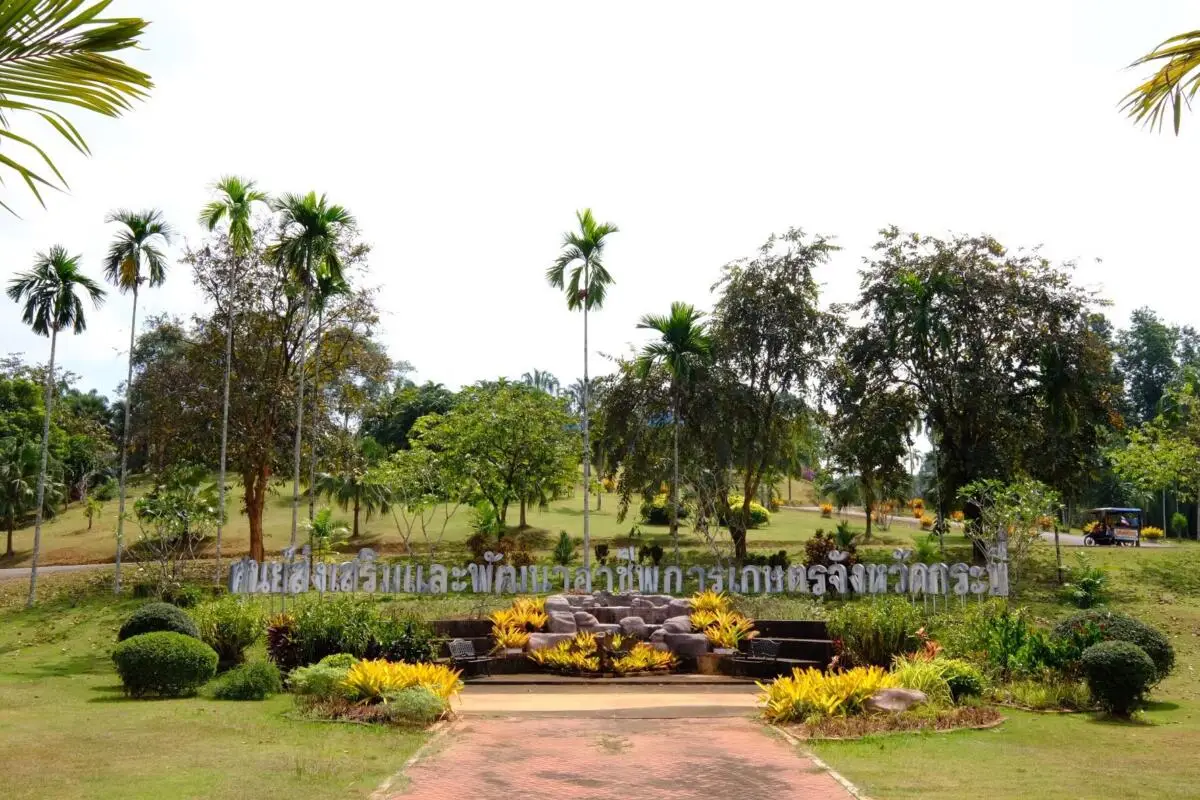
Open Days: Open Year-Round
Opening Hours: 08.30 – 16.30
Krabi Agricultural Occupation Promotion and Development Center (Horticulture), commonly known as Krabi Horticulture Center, is one of Krabi Province’s most valuable agricultural learning and agrotourism sites. Located at 401 Moo 1, Phetkasem Road, Khao Khram Subdistrict, Mueang Krabi District, Krabi Province, the center lies on the Krabi – Ao Luek route, about 20 km from Krabi Town. Its main role is to collect local plant varieties, test domestic and international plant varieties, produce and distribute quality plant materials to farmers, and serve as a learning center for horticulture, ornamental plants, fruit crops, herbs, sufficiency economy farming, and southern Thai plant genetic conservation.
In brief, Krabi Horticulture Center is an ideal destination for travelers who want to explore the greener side of Krabi. Inside the center are mother-plant plots, trial plots, tropical ornamental plant areas, anthurium plots, bromeliad plots, fruit-tree learning plots, commercial and local durian plots, longkong plots, mangosteen plots, herbal plant collections, seed-production plots, sufficiency economy learning plots, and areas dedicated to southern native plant varieties. Surrounded by hills and fresh air, the center is suitable for sightseeing, photography, educational visits, and practical agricultural learning.
The center is more than a tourist attraction. It is an agricultural development unit under the Department of Agricultural Extension, Ministry of Agriculture and Cooperatives. Its work focuses on plant collection, testing, production, propagation, and knowledge transfer to farmers, particularly in horticultural crops suited to southern Thailand. Krabi’s climate and landscape support a wide range of tropical plants, including fruit crops, ornamental plants, herbs, and local plant resources. For this reason, the center functions as a research-oriented learning space, a propagation site, and an educational destination for the public.
The center covers approximately 481 rai and is set amid green hills in Khao Khram. This atmosphere gives visitors a very different impression of Krabi from the province’s beaches and islands. Here, Krabi appears as a province of fertile land, plant diversity, agricultural testing plots, and quiet green landscapes. The center is not a decorative garden created only for visitors; it is a real working agricultural site where selected areas are opened for learning and agrotourism.
One of the most attractive features of the center is its plant diversity. Visitors can see many tropical ornamental plants such as anthuriums, bromeliads, orchids, torch ginger, red palms, lady palms, heliconias, and other ornamental species suitable for southern Thailand’s humid tropical climate. Many of these plants have vivid colors, unusual shapes, and strong photographic appeal. Anthuriums are especially prominent because the center has collected and displayed many varieties with different colors and forms.
Anthuriums are tropical ornamental plants known for their distinctive spathes and colorful floral appearance. They are used as cut flowers, potted plants, and landscape ornamentals. Varieties mentioned in earlier visitor information include Midori with green flowers, Minaki White with white flowers, Twingo with soft pink flowers, and Royal Flush with purple tones. These examples show how one group of ornamental plants can vary greatly in color, shape, and ornamental use.
Bromeliads are another highlight. These plants are valued for colorful foliage rather than flowers alone. Their leaves often form rosettes with shades of red, pink, yellow, green, or variegated patterns. Because they are visually striking and relatively adaptable to tropical landscaping, they are useful for both home gardens and commercial ornamental plant production. The center uses bromeliads as part of its agrotourism appeal and as a learning subject for plant propagation.
Orchids also add beauty and educational value to the center. Tropical orchids are well suited to southern Thailand and are important for ornamental horticulture, conservation, and commercial plant production. Visitors can observe differences in flower color, form, and cultivation style. Some orchids are suitable for landscaping, some for collectors, and others require specialized care. Viewing orchids in a horticultural center helps visitors understand both their beauty and their practical cultivation requirements.
Torch ginger is a meaningful southern plant because it is both ornamental and edible. Its large, colorful flowers are used in some southern Thai dishes and local food traditions. Including torch ginger in the center connects horticulture with local cuisine and household plant knowledge. It shows that a plant can be valuable not only as a decorative species but also as part of food culture and community wisdom.
Heliconia is another tropical ornamental plant often used in landscape design and cut-flower production. Its bright bracts and unusual shapes make it visually striking in gardens. At Krabi Horticulture Center, heliconia helps visitors understand how tropical flowering plants can be used for landscaping, ornamental plant businesses, and plant-material distribution.
Fruit-tree learning plots are another key part of the center. The site includes plots for fruit crops such as durian, longkong, mangosteen, and other horticultural crops suited to the South. Durian, longkong, and mangosteen are economically important in many southern provinces. Trial and learning plots allow farmers to observe varieties, plant management, orchard layout, and cultivation practices. For general visitors, these plots show that high-quality fruits require careful planning, suitable planting material, and long-term management.
The sufficiency economy learning plot gives the center a broader social role. It demonstrates how land can be used efficiently, how households can grow vegetables and useful plants, and how small-scale farming can reduce risk. This area is especially useful for students, local communities, and people who want to start practical home gardening or small-scale food production.
The herbal plant collection is also valuable. Herbs have long been part of Thai life through food, traditional knowledge, health practices, and community wisdom. Seeing herbs growing in real plots allows visitors to identify leaf shapes, scents, plant forms, and uses more clearly than reading names alone. This area is suitable for people interested in local plants and the responsible use of plant resources.
Another important mission of the center is seed production and distribution of quality plant materials to support farmers in projects managed by agricultural offices and related agencies. Good plant material is fundamental to agricultural success because it affects plant strength, yield, product quality, and farmer income. Krabi Horticulture Center is therefore not only a place to display plants; it is part of a wider agricultural support system for southern Thailand.
The center also contributes to conservation of southern native plant genetic resources. Many local plants are valuable for food, medicine, culture, and biodiversity, but some can be overlooked when modern production systems focus on a limited number of commercial crops. By collecting and displaying native plants, the center helps younger generations understand the importance of plant diversity and local natural heritage.
For study groups, the center is suitable for farmers, students, government agencies, community enterprises, and visitors interested in practical agriculture. Learning topics may include bromeliad propagation, vegetable propagation, sprout production, herbal processing, herbal drink preparation, seed collection, plant propagation, fruit-tree management, and agricultural product development. This makes the center useful not only for sightseeing but also for training and applied knowledge transfer.
For general travelers, a visit to Krabi Horticulture Center offers a slower and more observant travel experience than visiting beaches or islands. Visitors can walk through ornamental plant plots, photograph anthuriums and bromeliads, enjoy the surrounding hills, and learn that the beauty of the site comes from real horticultural work. The center’s attraction lies in the combination of scenery, plant diversity, and agricultural knowledge.
The landscape is one of the center’s strengths. With hills around the area and fresh air throughout much of the site, it is a peaceful place for a light nature-based visit. Facilities listed for visitors include a tourist reception area, internet access, separate male and female restrooms, parking, accommodation, and a camping area. These facilities make the center suitable for both individual visitors and organized groups.
A general visit should take at least 1 to 2 hours. Visitors who want to photograph plants, walk slowly through the plots, and read the information should allow more time. Study groups or training groups should contact the center in advance so that staff can prepare appropriate guidance or activities. Some demonstrations and agricultural activities may depend on timing, season, or staff availability.
Getting There is easiest by private car, rental car, or hired vehicle. From Krabi Town, take Phetkasem Road toward Ao Luek for about 20 km. The center is located in Khao Khram Subdistrict along the main road connecting Krabi Town with Ao Luek. Travelers staying in Ao Nang or Klong Muang can also plan a route through Khao Khram and combine the visit with Tha Pom Khlong Song Nam.
The center can be combined with several nearby attractions. For a nature and family route, visitors can continue to Tha Pom Khlong Song Nam, Ao Tha Lane, Khao Garos, or Khao Ngon Nak. For a beach route, Noppharat Thara Beach and Ao Nang are convenient options. For a mixed learning and nature route, Wat Tham Suea, Khao Khanap Nam, and the Shell Cemetery can also be added depending on travel time.
Visitors should bring comfortable walking shoes, a hat, water, and a camera. Because some areas are open-air plots, morning or late afternoon visits are more comfortable. Visitors should not pick plants, enter restricted plots, or disturb working areas. Some plants are part of mother-plant collections, trial plots, or conservation plots, so respectful behavior helps preserve the center’s educational value.
Overall, Krabi Agricultural Occupation Promotion and Development Center broadens the meaning of travel in Krabi. It shows that Krabi is not only about seas, islands, and limestone scenery, but also about plant diversity, agricultural knowledge, farmer support, and conservation of southern plant resources. The center is ideal for travelers who want knowledge, greenery, and a deeper understanding of local agriculture.
Krabi Horticulture Center should not be seen merely as a place to take photos with flowers. It is a learning space where visitors can understand how a single plant variety connects with selection, propagation, cultivation, conservation, farmer support, and agricultural livelihoods. A visit here helps show that agriculture is closely connected to food, community economy, natural resources, and the long-term sustainability of Krabi Province.
| Name | Krabi Agricultural Occupation Promotion and Development Center (Horticulture) / Krabi Horticulture Center |
| Location | Phetkasem Road, Khao Khram Subdistrict, Mueang Krabi District, Krabi Province |
| Address | 401 Moo 1, Phetkasem Road, Khao Khram Subdistrict, Mueang Krabi District, Krabi 81000, Thailand |
| Coordinates | 8.2146761, 98.8086657 |
| Highlights | A horticultural learning and agrotourism center with anthuriums, bromeliads, orchids, fruit trees, herbs, sufficiency economy plots, and southern native plant collections |
| History / Role | A center for collecting local plant varieties, testing domestic and international plant varieties, producing and distributing quality plant materials to farmers, and supporting agricultural study visits in Krabi Province |
| Name Origin | The official name reflects its mission to promote and develop agricultural occupations, especially horticulture. Krabi Horticulture Center is the common name used because of its plant-focused work and learning plots. |
| Distinctive Features | A green 481-rai site surrounded by hills, suitable for plant learning, photography, and agricultural study visits |
| Travel Information | From Krabi Town, take Phetkasem Road on the Krabi – Ao Luek route for about 20 km to Khao Khram Subdistrict. Private car, rental car, or hired vehicle is recommended. |
| Current Status | Open as an agricultural learning and agrotourism site under the Department of Agricultural Extension, Ministry of Agriculture and Cooperatives |
| Open Days | Open Year-Round |
| Opening Hours | 08.30 – 16.30 |
| Fees | No Admission Fee |
| Facilities | Tourist reception area, internet access, separate male and female restrooms, parking, accommodation, and camping area |
| Main Areas / Zones | Mother-Plant Plots Trial Plots Anthurium Plots Bromeliad Plots Tropical Ornamental Plant Plots Fruit-Tree Learning Plots Commercial And Local Durian Plots Longkong Plots Mangosteen Plots Sufficiency Economy Learning Plot Herbal Plant Collection Seed-Production Plots Southern Native Plant Collection |
| Caretaker | Krabi Agricultural Occupation Promotion and Development Center, Department of Agricultural Extension, Ministry of Agriculture and Cooperatives |
| Main Contact Number | 075-656-388, 085-781-8778, 086-475-0856 |
| Official Website / Official Page | Krabi Agricultural Occupation Promotion and Development Center Website and Department of Agricultural Extension Website |
| Nearby Tourist Attractions | 1. Tha Pom Khlong Song Nam, about 7 km 2. Ao Tha Lane, about 11 km 3. Khao Garos, about 11 km 4. Khao Ngon Nak, about 12 km 5. Noppharat Thara Beach, about 16 km 6. Shell Cemetery, about 19 km 7. Than Bok Khorani, about 20 km 8. Huai To Waterfall, about 25 km |
| Nearby Restaurants | 1. Krua Thara, about 16 km, Tel. 091-825-9252 2. Wangsai Seafood, about 16 km, Tel. 075-638-128, 081-891-7740 3. The Hilltop Ao Nang, about 16 km, Tel. 075-637-195 4. Lae Lay Grill, about 17 km, Tel. 075-661-588, 065-050-7887 5. Ruanthip Khlong Son Branch, about 18 km, Tel. 075-656-222 6. Ruanthip Krabi Town Branch, about 20 km, Tel. 075-611-635, 075-632-043 |
| Nearby Accommodations | 1. Poonsiri Resort Aonang, about 10 km, Tel. 075-656-260 2. Naga Peak Resort, about 13 km, Tel. 083-968-6809 3. Centara Anda Dhevi Resort & Spa Krabi, about 16 km, Tel. 075-626-222 4. Holiday Ao Nang Beach Resort, Krabi, about 16 km, Tel. 075-810-888 5. Aonang Phu Petra Resort, Krabi, about 20 km, Tel. 075-626-666, 085-122-1919 6. Deevana Plaza Krabi Aonang, about 16 km, Tel. 075-639-999 |
Frequently Asked Questions (FAQ)
Q: Where is Krabi Agricultural Occupation Promotion and Development Center located?
A: It is located at 401 Moo 1, Phetkasem Road, Khao Khram Subdistrict, Mueang Krabi District, Krabi Province, on the Krabi – Ao Luek route, about 20 km from Krabi Town.
Q: What are the opening hours of Krabi Horticulture Center?
A: It is open year-round from 08.30 to 16.30.
Q: Is there an admission fee?
A: No. Current official tourism information lists the center as free to visit.
Q: What can visitors see inside the center?
A: Visitors can see anthuriums, bromeliads, orchids, tropical ornamental plants, fruit-tree plots, durian, longkong, mangosteen, herbal plants, sufficiency economy plots, and southern native plant collections.
Q: Who is this place suitable for?
A: It is suitable for travelers, families, students, farmers, ornamental plant enthusiasts, and agricultural study groups.
Q: How long should visitors spend at the center?
A: A general visit should take at least 1 to 2 hours. Study groups or visitors joining agricultural activities should allow more time and contact the center in advance.
Q: How do visitors get there from Krabi Town?
A: Take Phetkasem Road from Krabi Town toward Ao Luek for about 20 km to Khao Khram Subdistrict. Private car, rental car, or hired vehicle is recommended.
Q: What nearby attractions can be visited on the same trip?
A: Nearby places include Tha Pom Khlong Song Nam, Ao Tha Lane, Khao Garos, Khao Ngon Nak, Noppharat Thara Beach, the Shell Cemetery, Than Bok Khorani, and Huai To Waterfall.
Tel : 075612913
 Tel : 075612913
 Category: ●Educational Places
 Group: ●Educational Gardens, Farm
Last Update : 4 WeekAgo
 Last Update : 4 WeekAgo
 Click to Access the Navigation Map GPS
Krabi Agricultural Occupation Promotion and Development Center (Horticulture) Map
Recommend

 Art, Culture and Heritage
 Historical Sites and Monuments(1)
 Landmarks and Memorials(7)
 Art, Craft Centres, Tradition(2)
 Museums(2)
Educational Gardens, Farm(1)
Museums(2)
Educational Gardens, Farm(1)
 Places of Worship
 Temple(3)
 Mosque(2)
 Other Sacred Sites(1)
 Research and Development
 Royal Project(1)
 Suburban Living
 Village, Community(6)
 Nature and Wildlife
 National Parks and Marine Reserves(5)
 Mountain (Doi)(2)
 Dam, Reservoir, Lake(3)
 Waterfalls(12)
 Hot Springs(3)
 Caves(20)
 River, Canal(2)
 Bays and Beaches(36)
 Islands(23)
 Other natural attractions(7)
 Entertainment and Agricultural
 Farms, Parks and Ecotourism(1)
 Outdoor and Adventure Activities(1)
 Travel Articles, Recipes
 Southern Food Menu, Southern Food Recipes(1)


