
lovethailand home >North Travel Attractions
>Nan Travel Attractions >Phu Pieng
>Tha Nao
> Wat Hua Na
TL;DR: Wat Hua Na is located at Ban Hua Na, Tha Nao Subdistrict, Phu Phiang District, Nan Province, Thailand, open Daily, hours 08.00–17.00 Hrs.

Wat Hua Na
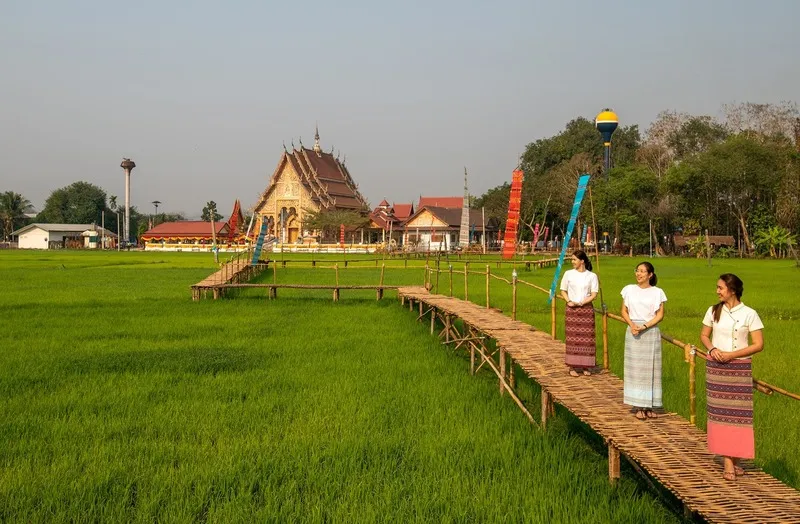
Open Days: Daily
Opening Hours: 08.00–17.00 Hrs.
Wat Hua Na is located in Ban Hua Na, Tha Nao Subdistrict, Phu Phiang District, Nan Province. It is a community temple under the Mahanikaya sect and one of the old Buddhist temples near Nan town. The temple was established around 1773 and received its royal boundary designation in August 1921. Wat Hua Na is especially notable for its stucco relief sculptures inside the ubosot, which depict episodes from the life of the Buddha and the Vessantara Jataka. These artworks make the temple an interesting cultural stop for travelers who want to explore Buddhist art, Chiang Saen craftsmanship, and village temples in Phu Phiang District.
The temple is more than a local place of worship. It is a cultural site shaped by the faith of monks, villagers, skilled artisans, and donors from Nan and other provinces. A major restoration took place around 1990, led by Phra Khru Wutthitham Phinan, also known as Luang Pho Mueang Chai Katapunyo, together with Phra Khru Athon Nanthakit, deputy abbot of Wat Phaya Phu in Nan town. Local villagers raised funds and devotees contributed to the construction and decoration of the ubosot.
Wat Hua Na has long served as the spiritual center of Ban Hua Na. It has been a place for merit-making, Buddhist ceremonies, Dharma listening, ordinations, temple festivals, and community gatherings. Although the temple is now known for its artistic interior, its core role remains that of a living community temple where local faith continues to be practiced.
The temple received its royal boundary designation during the reign of King Rama VI. This designation is important because it provides a proper sacred boundary for formal monastic ceremonies. It confirms the temple’s religious status and reflects the long-standing Buddhist roots of the Ban Hua Na community.
The most distinctive feature of Wat Hua Na is the interior of its ubosot. Skilled artisans from Chiang Saen District, Chiang Rai Province, were invited to create stucco works in the Chiang Saen style. The walls inside the ubosot display sculptural scenes from Buddhist history and the Vessantara Jataka. These reliefs are not only decorative; they also function as visual Dharma lessons for worshippers and visitors.
The stucco works were created by Sala Phet Sitthikaeo, an artisan from Ban Chiang Saen in Chiang Rai Province. The work began in 1986 and was completed in 1995. This long period of craftsmanship shows the level of detail and devotion involved. The reliefs require both artistic skill and a deep understanding of Buddhist narratives, especially the story of Vessantara, which teaches generosity, compassion, sacrifice, and the perfection of giving.
The Vessantara Jataka is one of the most important Buddhist stories in Thai and Lanna culture. It tells the story of the Bodhisattva who perfected generosity before becoming the Buddha. By presenting this story in stucco relief, Wat Hua Na allows visitors to learn Buddhist values through art. The temple therefore serves as both a sacred space and a visual learning site.
Another important detail is the ubosot windows, which are decorated with lacquer and gold leaf. This technique adds refinement and dignity to the sacred building. Together with the stucco wall sculptures, the gilded windows create a rich artistic atmosphere inside the ubosot and make Wat Hua Na especially valuable for visitors interested in northern Thai temple craftsmanship.
Wat Hua Na can be visited as part of a cultural route around Phu Phiang District. It is located not far from Wat Phra That Chae Haeng, the major sacred relic temple of Nan Province, and can also be combined with Wat Tha Nao, Wat Nong Daeng, Wat Phumin, and Nan National Museum. This makes it a good stop for travelers who want to see both famous temples and quieter community temples with distinctive local art.
Getting There is convenient by private car, rental car, or local hired vehicle. From Nan town, cross the Nan River toward Phu Phiang District and continue to Tha Nao Subdistrict and Ban Hua Na. The temple is located along Rural Road 4020. A private vehicle is recommended because it allows visitors to combine Wat Hua Na with nearby temples and cultural attractions in the same day.
Visitors should allow at least 30 to 45 minutes to appreciate the stucco reliefs inside the ubosot. The details should be viewed slowly, especially the Buddhist narrative scenes and Vessantara story. Visitors should dress respectfully, speak quietly, and avoid touching the stucco artworks or decorated windows, as these elements have cultural and religious value.
The best time to visit is in the morning or late afternoon, when the weather is more comfortable and the temple atmosphere is calm. Travelers who enjoy photography may find the exterior and village setting pleasant in softer light, while those interested in Buddhist art should focus on the ubosot interior and its sculptural details.
Overall, Wat Hua Na is a valuable cultural temple in Nan Province. Its founding around 1773, royal boundary designation in 1921, major restoration in 1990, Chiang Saen-style stucco reliefs, Vessantara Jataka scenes, and gilded windows make it a meaningful destination for travelers interested in Buddhist art and local temple heritage near Nan town.
| Name | Wat Hua Na |
| Location | Ban Hua Na, Tha Nao Subdistrict, Phu Phiang District, Nan Province, Thailand |
| Address | Rural Road 4020, Tha Nao Subdistrict, Phu Phiang District, Nan Province 55000 |
| Temple Type | Community Temple Under The Mahanikaya Sect |
| Highlights | Ubosot With Stucco Relief Sculptures Of Buddhist History And The Vessantara Jataka, Chiang Saen-Style Craftsmanship, Lacquered And Gilded Windows, And Phra Chao Than Chai |
| History | Established Around 1773, Received Its Royal Boundary Designation In August 1921, And Underwent A Major Restoration Around 1990 |
| Distinctive Features | Interior Stucco Wall Sculptures Depicting Buddhist History And The Vessantara Jataka, Created By Sala Phet Sitthikaeo From Ban Chiang Saen, Chiang Rai Province |
| Main Sacred Objects | Ubosot, Stucco Relief Walls, Buddhist History Scenes, Vessantara Jataka Sculptures, Gilded Windows, And Phra Chao Than Chai |
| Travel Information | From Nan Town, Cross The Nan River Toward Phu Phiang District, Then Continue To Tha Nao Subdistrict And Ban Hua Na; Private Car, Rental Car, Or Local Hired Vehicle Is Recommended |
| Current Status | Active Community Buddhist Temple And Cultural Art Attraction In Phu Phiang District, Nan Province |
| Open Days | Daily |
| Opening Hours | 08.00–17.00 Hrs. |
| Abbot / Caretaker | Phra Palat Weerawat Weerawatthano |
| Main Contact Number | 084-1516047 |
| Nearby Tourist Attractions | 1. Wat Tha Nao 2 km 2. Wat Nong Daeng, Tha Nao Subdistrict 4 km 3. Wat Phra That Chae Haeng Royal Temple 7 km 4. Wat Phumin 9 km 5. Nan National Museum 9 km |
| Nearby Restaurants | 1. Ruean Chao Nang 7 km, Tel. 061-8791626, 081-8085588 2. Khao Soi Hoi Khaeng 7 km, Tel. 083-7620334 3. Curve Coffee & Bar 7 km 4. Lemongrass 9 km 5. Hua Loet Rot Khao Tom Baht Diao 9 km |
| Nearby Accommodations | 1. Nan Seasons Boutique Resort 6 km, Tel. 054-719500 2. Wiang Kaeo Hotel 8 km 3. Nan Nakara Boutique Hotel 9 km 4. Khum Mueang Min 9 km 5. Nan Boutique Hotel 9 km |
Frequently Asked Questions (FAQ)
Q: Where Is Wat Hua Na Located?
A: Wat Hua Na Is Located In Ban Hua Na, Tha Nao Subdistrict, Phu Phiang District, Nan Province, Thailand.
Q: When Was Wat Hua Na Established?
A: Wat Hua Na Was Established Around 1773 And Received Its Royal Boundary Designation In August 1921.
Q: What Is The Main Highlight Of Wat Hua Na?
A: The Main Highlight Is The Ubosot Interior, Which Features Stucco Relief Sculptures Depicting Buddhist History And The Vessantara Jataka.
Q: Who Created The Stucco Reliefs Inside Wat Hua Na?
A: The Reliefs Were Created By Sala Phet Sitthikaeo, An Artisan From Ban Chiang Saen In Chiang Rai Province, Between 1986 And 1995.
Q: How Is Wat Hua Na Connected With Chiang Saen Art?
A: During The Major Restoration, Artisans From Chiang Saen Were Invited To Create Stucco Works In The Chiang Saen Style, Giving The Temple A Distinctive Artistic Identity.
Q: How Can Visitors Get To Wat Hua Na?
A: From Nan Town, Cross The Nan River Toward Phu Phiang District And Continue To Tha Nao Subdistrict And Ban Hua Na. A Private Car, Rental Car, Or Local Hired Vehicle Is Recommended.
Q: What Kind Of Travelers Is Wat Hua Na Suitable For?
A: It Is Suitable For Travelers Interested In Old Community Temples, Buddhist Stucco Art, Chiang Saen Craftsmanship, Vessantara Jataka Narratives, And Cultural Routes Near Nan Town.
 Category: ●Places of Worship
 Group: ●Temple
Last Update : 3 WeekAgo
 Last Update : 3 WeekAgo
 Click to Access the Navigation Map GPS
Wat Hua Na Map
Recommend
 Art, Culture and Heritage
 Landmarks and Memorials(6)
 Art, Craft Centres, Tradition(6)
 Museums(4)
 Historical Houses and The Ancient City(1)
 Art Gallery(1)
 Educational Places
 Educational Gardens, Farm(1)
 University Temple(68/402)
 Church(1)
 Other religious and spiritural sites(18)
 Research and Development
 Royal Project(2)
 Suburban Living
 Village, Community(13)
 Local Market(1)
 Nature and Wildlife
 National Parks and Marine Reserves(9)
 Mountain (Doi)(6)
 Dam, Reservoir, Lake(16)
 Waterfalls(28)
 Hot Springs(1)
 Caves(11)
 River, Canal(5)
 Other natural attractions(10)
 Entertainment and Agricultural
 Farm, Parks, Gardens and Ecotourism(4)
 Outdoor and Adventure Activities(2)


