
lovethailand home >North Travel Attractions >Nan Travel Attractions >Tha Wang Pha >Si Phum > Wat Ban Don Mun
TL;DR: Wat Ban Don Mun is located at Si Phum Subdistrict, Tha Wang Pha District, Nan Province, Thailand, open Daily, hours Not officially specified. Highlights include Ancient Tai Lue viharn, traditional Lanna architecture, preserved wooden structure.

Wat Ban Don Mun
Open Days: Daily
Opening Hours: Not officially specified
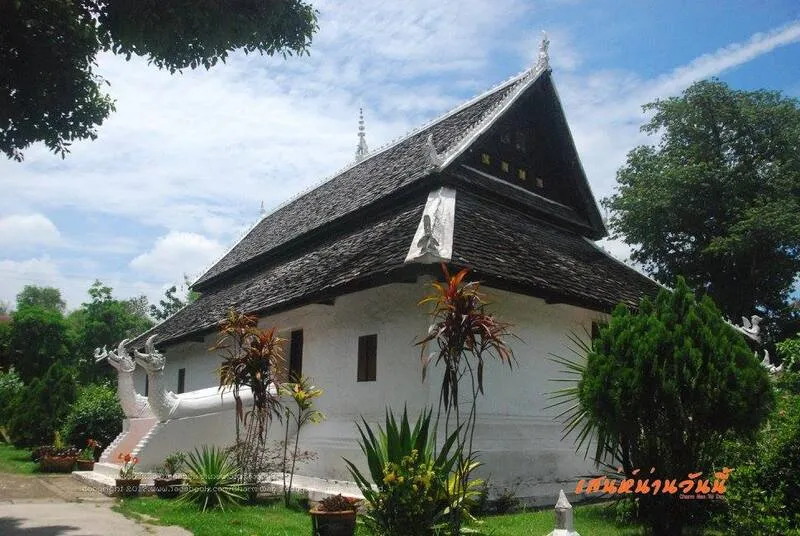
Wat Don Moon is an important historical Tai Lue temple located in Si Phum Subdistrict, Tha Wang Pha District, Nan Province, Thailand. The temple dates back to the early Rattanakosin period and represents one of the most significant examples of Tai Lue religious architecture in northern Thailand. It was originally constructed in 1832 (B.E. 2375) and completed in 1837 (B.E. 2380) under the patronage of Chao Luang Anuphap, reflecting the prosperity and strong Buddhist faith of the local community at that time.
Wat Don Moon is not only a place of worship but also a cultural center that reflects the identity and heritage of the Tai Lue people in Nan. The temple has played a continuous role as a spiritual and communal hub, where religious ceremonies, merit-making traditions, and local cultural activities have been carried out for generations. This continuity of use gives the temple a living cultural value beyond its architectural significance.
The most distinctive feature of the temple is its traditional Tai Lue viharn (assembly hall), which preserves the original architectural style that has been passed down through generations. The structure reflects a deep understanding of local materials, climate adaptation, and aesthetic simplicity. The roof structure, in particular, remains one of the most important elements that retain the original Tai Lue identity, characterized by its layered form and balanced proportions.
The historical timeline of Wat Don Moon shows continuous development and restoration, reflecting the relationship between the temple and the local community. In its early period, Phra Panya served as the abbot. Later, in 1857 (B.E. 2400), the principal Buddha image was constructed, and the base (chukchi) was decorated, marking an important stage in the temple’s religious development. During this period, Phra Thong was the abbot.
In 1928 (B.E. 2471), the temple underwent significant structural improvements, including replacing wooden roof shingles and renovating the roofing system. These changes were necessary to ensure the temple’s usability and longevity. At that time, Phra Son served as the abbot. This renovation reflects the adaptation of traditional structures to changing environmental and material conditions.
The largest restoration took place in 1947 (B.E. 2490), led by Phra Boonpleng Khamyuang, the abbot at that time, along with local leaders such as Mr. Phong Norkham (village headman of Moo 2) and Mr. Wong Nanchai (village headman of Moo 3), together with villagers from both communities. This restoration involved a complete replacement of the roof, strengthening the structure, and replacing deteriorated wooden pillars with brick-and-mortar columns. Only two original wooden pillars were preserved, which can still be seen today.
Additional modifications during this restoration included widening the windows slightly (originally about 30 centimeters wide), closing the rear naga door of the viharn (which originally had three doors), and redesigning the interior elements such as the ceiling, the principal Buddha shrine, and decorative components. Despite these extensive changes, the restoration successfully preserved the core identity of Tai Lue architecture, especially the roof structure, which remains the defining characteristic of the viharn.
In 1986 (B.E. 2529), the viharn began to deteriorate significantly, particularly the remaining original wooden pillars, which showed signs of structural weakening. The roof developed leaks, and the walls began to separate. As a result, another restoration was carried out, including reinforcing the base of the wooden pillars with concrete, replacing all roof shingles, and strengthening the foundation around the viharn.
This restoration was carried out by Mr. Pan Boonma, a skilled craftsman, under the supervision of Mr. Sawat Norkham, the subdistrict headman of Si Phum, and Phra Athikan Udom Paphasaro, the abbot at that time. The collaboration between craftsmen, monks, and community leaders demonstrates the collective effort to preserve the temple as an important cultural heritage site.
Wat Don Moon received its official boundary for ordination ceremonies (Wisungkhamsima) on February 13, 1989 (B.E. 2532). Later, it was officially registered as a historical monument in the Royal Gazette (Volume 117, Special Issue 103 Ng) on October 6, 2000 (B.E. 2543). This recognition confirms its national importance in terms of history, architecture, and cultural heritage.
Today, Wat Don Moon remains an active temple that continues to serve the local community. Visitors can experience both its historical depth and its living traditions. The temple offers a peaceful atmosphere, allowing visitors to appreciate the beauty of Tai Lue architecture and the cultural continuity that has been preserved over nearly two centuries.
Getting There From Nan city, take Highway 1080 (Nan–Thung Chang route). After approximately 35 kilometers, reach Ban Huai Duea in Si Phum Subdistrict. Turn left and continue for about 2 kilometers, then turn right for 500 meters, and finally turn left again for about 1 kilometer. The temple is located in Ban Don Moon village. Traveling by private car is the most convenient option.
| Name | Wat Don Moon |
| Location | Si Phum Subdistrict, Tha Wang Pha District, Nan Province, Thailand |
| Address | Ban Don Moon, Si Phum, Tha Wang Pha, Nan Province |
| Highlights | Ancient Tai Lue viharn, traditional Lanna architecture, preserved wooden structure |
| History | Built in 1832 and completed in 1837 under Chao Luang Anuphap |
| Name Origin | Named after the Don Moon community where the temple is located |
| Distinctive Features | Original Tai Lue wooden viharn with preserved roof structure |
| Travel Information | Accessible by private car via Highway 1080 |
| Current Status | Registered national historical monument |
| Open Days | Daily |
| Opening Hours | Not officially specified |
| Main Areas / Zones | Tai Lue viharn, principal Buddha hall, community temple grounds |
| Nearby Tourist Attractions | 1. Wat Nong Bua, about 5 km 2. Wat Sri Mongkol, about 10 km 3. Cocoa Valley, about 15 km 4. Pua District, about 20 km 5. Wat Phumin, about 70 km |
| Nearby Restaurants | 1. Pla Sod Tha Wang Pha Restaurant, about 5 km 2. Baan Im Suk, about 6 km 3. Cocoa Valley Cafe, about 15 km, Tel. 097-186-6116 4. Huen Champa, about 7 km 5. King Pho, about 8 km |
| Nearby Accommodations | 1. Nan Napa Resort, about 5 km, Tel. 098-748-8106 2. White Chill Resort, about 7 km, Tel. 092-335-2499 3. Chill Loft Homestay, about 8 km 4. Coconut Resort Nan, about 10 km, Tel. 081-979-7961 5. Pua View Resort, about 20 km |
Frequently Asked Questions (FAQ)
Q: When was Wat Don Moon built?
A: It was built in 1832 and completed in 1837.
Q: What is the highlight of the temple?
A: The ancient Tai Lue viharn with its original wooden structure.
Q: Why is Wat Don Moon important?
A: It represents Tai Lue cultural heritage and is a registered historical monument.
Q: How do visitors get there?
A: By private car via Highway 1080 from Nan city.
Q: Is it an active temple?
A: Yes, it remains an active community temple.
 Category: ●Places of Worship
 Group: ●Temple
Last Update : 5 MonthAgo
 Last Update : 5 MonthAgo
 Click to Access the Navigation Map GPS
 Art, Culture and Heritage
 Landmarks and Memorials(6)
 Art, Craft Centres, Tradition(6)
 Museums(4)
 Historic Homes and Cities(1)
 Art Gallery(1)
 Educational Places
 Educational Gardens, Farm(1)
Temple(68)
Educational Gardens, Farm(1)
Temple(68)
 Church(1)
 Other Sacred Sites(18)
 Research and Development
 Royal Project(2)
 Suburban Living
 Village, Community(13)
 Local Market(1)
 Nature and Wildlife
 National Parks and Marine Reserves(9)
 Mountain (Doi)(6)
 Dam, Reservoir, Lake(16)
 Waterfalls(28)
 Hot Springs(1)
 Caves(11)
 River, Canal(5)
 Other natural attractions(10)
 Entertainment and Agricultural
 Farms, Parks and Ecotourism(4)
 Outdoor and Adventure Activities(2)


