
lovethailand home >North Travel Attractions >Nan Travel Attractions >Song Kwar >Na Rai Luang > Hmong New Year Festival
TL;DR: Hmong New Year Festival is located at Ban Tham Wiang Kae, Village No. 1, open Held annually in December, hours According to the schedule of Ban Tham Wiang Kae community.
Hmong New Year Festival
Open Days: Held annually in December
Opening Hours: According to the schedule of Ban Tham Wiang Kae community
The Hmong New Year Festival at Ban Tham Wiang Kae, Village No. 1 is an important cultural tradition of the Hmong people in Northern Thailand. It is a time for family reunion, community gathering, and the preservation of ethnic identity. Held every December, the festival allows relatives and community members to return home, meet one another, and celebrate the beginning of a new cycle together.
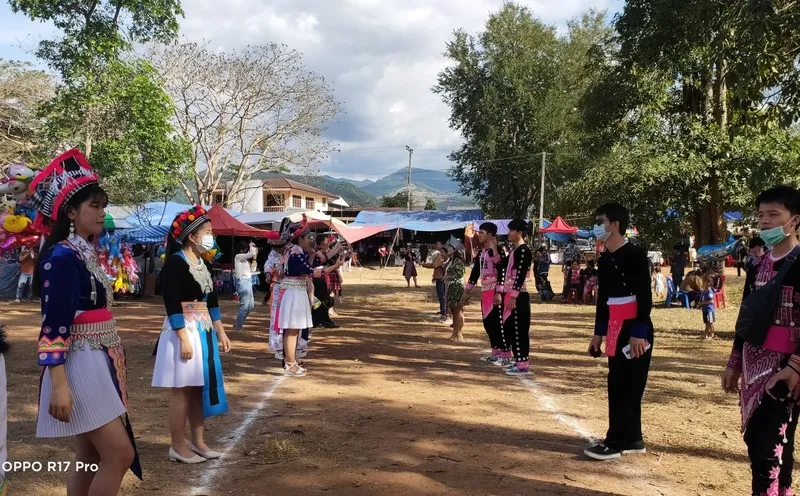
One of the most striking features of the Hmong New Year is the traditional costume. Men, women, children, and young people dress in beautifully embroidered Hmong attire with bright colors and intricate patterns. These garments represent not only beauty but also craftsmanship, ethnic pride, and the cultural knowledge passed down through generations.
The festival includes several important activities, such as playing the Hmong reed pipe, traditional dancing, performances by children and young people, and the ball-tossing game known as “Pov Pob.” The ball-tossing activity is especially meaningful because it traditionally creates opportunities for young men and women to meet, talk, and build relationships in a respectful community setting.
The sound of the Hmong reed pipe gives the festival a unique cultural atmosphere. This traditional instrument is used to express emotion, memory, love, and identity. Along with dance and youth performances, it helps younger generations learn and take pride in their cultural heritage.
The significance of the Hmong New Year goes beyond celebration. It is a reaffirmation of Hmong identity within Thai society. The festival strengthens family bonds, preserves language and customs, and keeps traditional music, costume, dance, and social values alive.
For visitors, the Hmong New Year Festival at Ban Tham Wiang Kae offers an opportunity to experience Northern Thailand’s ethnic culture closely. Visitors can admire traditional Hmong clothing, listen to folk music, watch youth performances, and observe the warm atmosphere of a community reunion.
Getting There Visitors should plan ahead before traveling to Ban Tham Wiang Kae, especially in December, which is a popular travel season in Northern Thailand. Mountain routes may require careful driving, and it is recommended to check the event schedule with the local community before visiting.
| Name | Hmong New Year Festival, Ban Tham Wiang Kae Village No. 1 |
| Ethnic Group | Hmong |
| Location | Ban Tham Wiang Kae, Village No. 1 |
| Period | December annually |
| Significance | A family reunion event and a celebration of Hmong ethnic culture |
| Highlights | Traditional Hmong costumes, folk games, reed pipe music, dancing, and ball tossing |
| Main Activities | Hmong reed pipe performance, traditional dances, children and youth shows, and Pov Pob ball tossing |
| Cultural Value | Reflects ethnic identity, community unity, and cultural transmission across generations |
| Travel Information | Travel to Ban Tham Wiang Kae and check the community schedule before visiting |
Frequently Asked Questions (FAQ)
Q: When is the Hmong New Year Festival at Ban Tham Wiang Kae held?
A: It is held annually in December.
Q: Why is the Hmong New Year important?
A: It is a family reunion and an important occasion for preserving Hmong cultural identity.
Q: What activities are included in the festival?
A: Activities include wearing traditional costumes, playing the Hmong reed pipe, dancing, youth performances, and ball tossing.
Q: What does the ball-tossing activity mean?
A: It is a traditional game that helps young men and women build relationships in a respectful cultural setting.
Q: Can tourists attend the festival?
A: Yes, visitors can attend, but they should dress respectfully and follow community customs.
 Category: ●Art, Culture and Heritage
 Group: ●Art, Craft Centres, Tradition
Last Update : 5 MonthAgo
 Last Update : 5 MonthAgo

 Landmarks and Memorials(6)
Art, Craft Centres, Tradition(6)
Landmarks and Memorials(6)
Art, Craft Centres, Tradition(6)
 Museums(4)
 Historic Homes and Cities(1)
 Art Gallery(1)
 Educational Places
 Educational Gardens, Farm(1)
 Places of Worship
 Temple(68)
 Church(1)
 Other Sacred Sites(18)
 Research and Development
 Royal Project(2)
 Suburban Living
 Village, Community(13)
 Local Market(1)
 Nature and Wildlife
 National Parks and Marine Reserves(9)
 Mountain (Doi)(6)
 Dam, Reservoir, Lake(16)
 Waterfalls(28)
 Hot Springs(1)
 Caves(11)
 River, Canal(5)
 Other natural attractions(10)
 Entertainment and Agricultural
 Farms, Parks and Ecotourism(4)
 Outdoor and Adventure Activities(2)


