
TL;DR: Wat Nat is located at Ban Nat, Moo 4, Chai Watthana Subdistrict, Pua District, Nan Province, open Daily, hours Open During Regular Temple Hours.

Wat Nat
Open Days: Daily
Opening Hours: Open During Regular Temple Hours
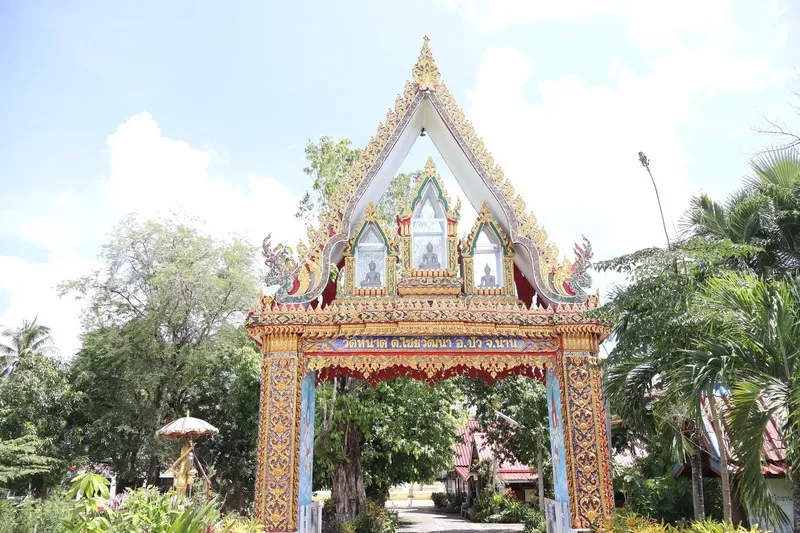
Wat Nat is located at 116 Ban Nat, Moo 4, Chai Watthana Subdistrict, Pua District, Nan Province. It is an old community temple with strong historical, religious, and cultural importance for Ban Nat and the surrounding area. Although local oral history describes the temple as an ancient sacred place that has long served as a center of faith, official temple records identify Wat Nat as having been established in 1857 and granted its consecrated boundary in 1971. These details confirm its long-standing role as a Buddhist temple in Chai Watthana Subdistrict.
Wat Nat is suitable for travelers who want to visit a quieter local temple in Pua District, study traditional Lanna architecture, and understand how village temples continue to shape community life in Nan Province. The temple is not only a place for Buddhist worship but also a cultural space where local memory, faith, and everyday life are closely connected.
The temple’s main appeal lies in its Lanna-style architecture. The viharn and stupa preserve traditional forms, including a three-tiered roof, carved wooden gable details, and a principal Buddha image in Lanna style. These elements reflect the artistic roots of the local community and reveal how religious buildings in northern Thailand functioned as both sacred spaces and expressions of craftsmanship.
According to local historical interpretation, Wat Nat may have developed during the period when the Lanna region was under Burmese influence between 1560 and 1785. This was a time of political and religious change across northern Thailand. During such periods, temples often played an essential role beyond ritual worship. They served as centers for learning, cultural preservation, moral guidance, and community unity.
In Lanna society, a temple was often the heart of a village. It was where people made merit, listened to sermons, learned religious teachings, gathered for ceremonies, and maintained local traditions. Wat Nat’s long association with Ban Nat therefore shows that the temple has been part of the community’s social and spiritual foundation for generations.
The viharn of Wat Nat reflects the elegance of Lanna architecture through its layered roof structure. The three-tiered roof creates visual depth and a graceful silhouette, while also showing the skill of local craftsmen who understood proportion, rhythm, and sacred space. Unlike large urban temples, Wat Nat expresses beauty through calmness, balance, and simplicity.
The carved wooden gable is another important feature. In Lanna temples, wood carving is not merely decorative. It often conveys auspicious meaning, Buddhist symbolism, and the refined aesthetic values of the local community. Such details require craftsmanship, patience, and an understanding of both art and religion.
Inside the viharn, the principal Buddha image serves as the spiritual focus of the temple. For villagers and visitors, the Buddha image represents serenity, devotion, and the presence of Buddhist teaching. During merit-making ceremonies and Buddhist holy days, the viharn becomes the central space where the community gathers in faith.
The stupa within the temple grounds is also significant. In Lanna Buddhist culture, stupas are associated with worship, merit, and sacred memory. Even when detailed historical records are limited, the existence of a stupa within a village temple confirms the temple’s role as a sacred and communal religious space.
One of the important figures connected with Wat Nat is Phra Khru Nantha Khemakhun Kongrit Khemacharo, a former abbot of Wat Nat and former ecclesiastical district chief of Pua District. He was highly respected by the local community and played an important role in religious leadership, moral instruction, and temple development. His legacy remains part of Wat Nat’s living history.
Although Phra Khru Nantha Khemakhun is now recorded as a former abbot, his contribution continues to be remembered by local residents. His role reflects the importance of Wat Nat not only as a village temple but also as a temple connected with the wider monastic administration of Pua District.
Today, Wat Nat continues to serve as a religious center for Ban Nat. Local residents visit the temple for merit-making, Buddhist ceremonies, and community traditions. The temple remains an active part of village life rather than simply a historical site. This living connection between temple and community is one of the most meaningful aspects of visiting Wat Nat.
The atmosphere of Wat Nat is quiet and local. It is best appreciated by travelers who enjoy slow cultural travel and who are willing to observe details rather than rush through a visit. The temple’s charm lies in its calm setting, traditional architecture, and deep connection with the surrounding community.
Chai Watthana Subdistrict is home to several culturally interesting temples, making Wat Nat a suitable stop in a broader Pua cultural itinerary. Travelers can combine a visit with Wat Ton Laeng, Wat Phra That Beng Sakat, Wat Phuket, Wat Rong Ngae, Cocoa Valley, and other local attractions around Pua District.
Getting There is most convenient by private car. From Pua town, travel toward Chai Watthana Subdistrict and Ban Nat, Moo 4. From Nan city, drive north toward Pua District, then continue to Chai Watthana Subdistrict. Local roads connect the temple with nearby villages and other cultural sites in the area.
Visitors should dress respectfully and observe proper temple etiquette. Shoes should be removed before entering the viharn, and photography should be done with care, especially around the principal Buddha image or during religious activities. The best time to visit is usually in the morning or late afternoon when the light is soft and the temple atmosphere feels especially peaceful.
For those interested in cultural preservation, Wat Nat is a valuable example of an old community temple that deserves continued care. Its viharn, stupa, carved wooden details, Buddha image, and local oral history all preserve important traces of the community’s past. Temples like this help visitors understand Nan Province beyond its famous landmarks, revealing the deeper relationship between Buddhism, craftsmanship, and village life.
Wat Nat is therefore more than a sacred place for worship. It is a cultural jewel of Pua District, representing history, faith, Lanna art, and the continuity of community life. For travelers seeking a quieter and more meaningful side of Nan, Wat Nat is a rewarding temple to include in a cultural route through Chai Watthana Subdistrict.
| Name | Wat Nat |
| Location | Ban Nat, Moo 4, Chai Watthana Subdistrict, Pua District, Nan Province |
| Address | 116 Ban Nat, Moo 4, Chai Watthana Subdistrict, Pua District, Nan Province, Thailand |
| Coordinates | 19.19689, 100.90457 |
| Highlights | Old community temple with Lanna-style viharn and stupa, three-tiered roof, carved wooden gable, and Lanna-style principal Buddha image |
| History | Local history links the temple to the Lanna period under Burmese influence between 1560 and 1785. Official temple records identify it as established in 1857 and granted its consecrated boundary in 1971 |
| Distinctive Features | Traditional Lanna architecture, three-tiered viharn roof, carved wooden gable, stupa, and principal Buddha image in Lanna style |
| Main Areas / Zones | Viharn, stupa, principal Buddha image, and community religious area |
| Important Former Abbot | Phra Khru Nantha Khemakhun Kongrit Khemacharo, former abbot of Wat Nat and former ecclesiastical district chief of Pua District |
| Open Days | Daily |
| Travel Information | Best reached by private car from Pua town to Chai Watthana Subdistrict and Ban Nat, Moo 4. From Nan city, drive north toward Pua District, then continue to Chai Watthana Subdistrict |
| Current Status | An active local Buddhist temple under the Mahanikaya sect and a religious center for Ban Nat community |
| Nearby Tourist Attractions | 1. Wat Ton Laeng, About 3 km 2. Wat Phra That Beng Sakat, About 7 km 3. Cocoa Valley, About 7 km 4. Wat Phuket, About 10 km 5. Wat Rong Ngae, About 12 km |
| Nearby Restaurants | 1. Cocoa Valley Cafe, About 7 km, Tel. 086-3330099 2. Shabu I-Un Pua, About 7 km 3. Ton Hu Kwang Noodle Shop, About 7 km 4. Ban Tai Lue Coffee, About 10 km 5. Local Restaurants In Pua Town, About 8 km |
| Nearby Accommodations | 1. Pua De View Boutique Resort, About 7 km, Tel. 064-1594563, 064-1594564 2. HOMU Villa, About 7 km, Tel. 094-1954163 3. Dai Jai Pua, About 12 km, Tel. 062-2624246, 092-6195928 4. Pawinsin Resort, About 10 km, Tel. 080-0657988, 054-791374 5. Cocoa Valley Resort, About 7 km, Tel. 086-3330099 |
Frequently Asked Questions (FAQ)
Q: Where is Wat Nat located?
A: Wat Nat is located at 116 Ban Nat, Moo 4, Chai Watthana Subdistrict, Pua District, Nan Province.
Q: Is Wat Nat an old temple?
A: Yes. Wat Nat is an old community temple. Official temple records identify it as established in 1857 and granted its consecrated boundary in 1971.
Q: What is the highlight of Wat Nat?
A: The highlight is its Lanna-style viharn and stupa, three-tiered roof, carved wooden gable, and principal Buddha image in Lanna style.
Q: Who was Phra Khru Nantha Khemakhun?
A: Phra Khru Nantha Khemakhun Kongrit Khemacharo was a former abbot of Wat Nat and former ecclesiastical district chief of Pua District.
Q: What type of travel is Wat Nat suitable for?
A: It is suitable for temple visits, cultural tourism, Lanna architecture study, and quiet local travel in Pua District.
Q: How can visitors get to Wat Nat?
A: The most convenient way is by private car from Pua town to Chai Watthana Subdistrict and Ban Nat, Moo 4. From Nan city, drive north toward Pua District first.
Q: Are there attractions near Wat Nat?
A: Nearby attractions include Wat Ton Laeng, Wat Phra That Beng Sakat, Cocoa Valley, Wat Phuket, and Wat Rong Ngae.
 Category: ●Places of Worship
 Group: ●Temple
Last Update : 5 MonthAgo
 Last Update : 5 MonthAgo
 Click to Access the Navigation Map GPS
 Art, Culture and Heritage
 Landmarks and Memorials(6)
 Art, Craft Centres, Tradition(6)
 Museums(4)
 Historic Homes and Cities(1)
 Art Gallery(1)
 Educational Places
 Educational Gardens, Farm(1)
Temple(68)
Educational Gardens, Farm(1)
Temple(68)
 Church(1)
 Other Sacred Sites(18)
 Research and Development
 Royal Project(2)
 Suburban Living
 Village, Community(13)
 Local Market(1)
 Nature and Wildlife
 National Parks and Marine Reserves(9)
 Mountain (Doi)(6)
 Dam, Reservoir, Lake(16)
 Waterfalls(28)
 Hot Springs(1)
 Caves(11)
 River, Canal(5)
 Other natural attractions(10)
 Entertainment and Agricultural
 Farms, Parks and Ecotourism(4)
 Outdoor and Adventure Activities(2)


