
lovethailand home >North Travel Attractions >Nan Travel Attractions >Muang Nan >Nai Wiang > Wat Suan Tan
TL;DR: Wat Suan Tan is located at Mahayot Road, Nai Wiang Subdistrict, Mueang Nan District, Nan Province, open Daily, hours Open All Day. Highlights include Phra Chao Thong Thip, Wat Suan Tan chedi, annual Songkran worship and bathing ceremony.
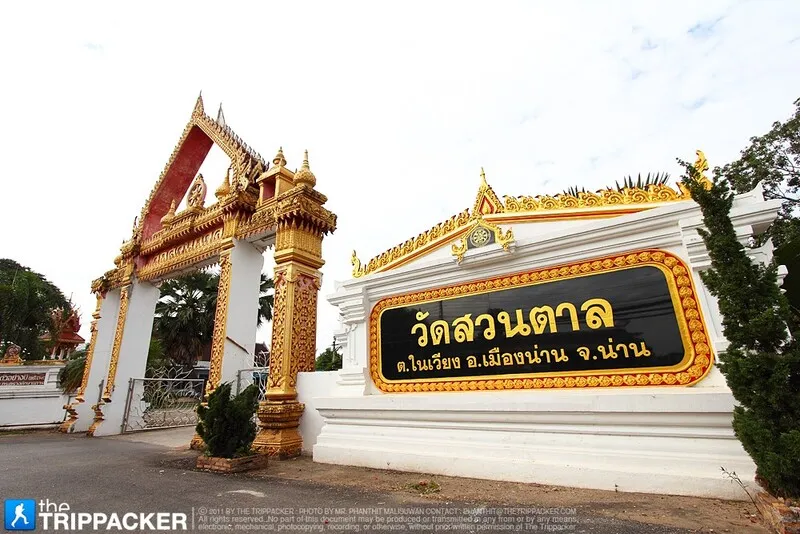
Wat Suan Tan
Open Days: Daily
Opening Hours: Open All Day
Wat Suan Tan is an important historic temple located on Mahayot Road in Nai Wiang Subdistrict, Mueang Nan District, Nan Province. It is one of Nan’s long-standing religious landmarks, closely associated with local history, Lanna culture, Sukhothai artistic influence, and the deep devotion surrounding Phra Chao Thong Thip, a large bronze Buddha image highly respected by the people of Nan.
The temple was founded by Queen Pathummawadi in 1227. Its name is connected with the old landscape of the area, which was once a palm grove outside the northern side of Nan’s old city wall. The name “Suan Tan” therefore preserves the memory of the former palm garden and the historical setting of the community. This makes the temple not only a place of worship but also a marker of settlement and urban expansion in old Nan.
Wat Suan Tan is located within easy reach of central Nan. Visitors can combine it with other important sites such as Wat Phumin, Wat Ming Mueang, Wat Phra That Chang Kham Worawihan, and Nan National Museum. For travelers interested in Buddhist art and local history, this temple offers a meaningful stop beyond the most crowded attractions in the old town.
The temple’s chedi is an important architectural feature. Its lower level has gateways on all 4 sides. Old photographs preserved by the National Archives show that before the major restoration during the reign of Chao Suriyaphong Pharitdet, corresponding to the reign of King Rama V, the chedi had a square base and a lotus-bud or phum khao bin form. This form reflects clear influence from Sukhothai art.
The lotus-bud form carries strong Buddhist symbolism. The lotus represents purity, awakening, and spiritual elevation. The presence of this form at Wat Suan Tan shows the artistic relationship between Nan and Sukhothai, and demonstrates how Nan absorbed and adapted artistic ideas from different cultural centers over time.
The major restoration during the time of Chao Suriyaphong Pharitdet was an important moment in the temple’s history. It helped preserve the religious and architectural significance of Wat Suan Tan during a period of social and political change in Nan. Restoration was not only a matter of repairing old structures; it was also a way of maintaining the continuity of local faith and collective memory.
Inside the viharn is the temple’s most revered Buddha image, Phra Chao Thong Thip. This large bronze Buddha image in the Mara Vijaya posture was commissioned by King Tilokaraj of Chiang Mai in 1449. The image measures 10 feet across the lap and 14 feet 4 inches in height. It is one of the most important Buddha images in Nan and remains a major focus of local devotion.
Phra Chao Thong Thip has a dignified and serene appearance. The Mara Vijaya posture represents the Buddha’s victory over temptation and obstacles. Its connection with King Tilokaraj also reflects the historical relationship between Nan and Chiang Mai during the Lanna period. For local people, the image is valued not only as a work of art but also as a sacred presence that protects and blesses the community.
Devotion to Phra Chao Thong Thip is most visible during the annual worship and bathing ceremony held during the Songkran festival. Each year, local residents and visitors gather to pay respect, bathe the Buddha image, and take part in celebrations held during both daytime and nighttime. This tradition keeps the temple alive as a living religious and cultural center.
The bathing ceremony during Songkran carries both religious and cultural meaning. It is a way to show reverence to an important Buddha image, ask for blessings, and begin the Thai New Year with a purified mind. At the same time, the festival strengthens community ties and allows younger generations to continue the cultural heritage of Nan.
Wat Suan Tan is valuable on many levels. Religiously, it enshrines a major Buddha image and serves as a place of worship for the community. Artistically, it preserves a chedi form linked to Sukhothai influence and a large bronze Buddha image associated with Lanna history. Culturally, it remains the center of an annual Songkran worship tradition that continues to connect people with the temple.
The atmosphere of the temple is calm and modest. Although it is located in town, it retains the feeling of a local temple. Visitors can walk around the chedi, enter the viharn to pay respect to Phra Chao Thong Thip, and experience a quieter side of Nan’s religious landscape. It is suitable for both merit-making and cultural exploration.
For travelers interested in Thai Buddhist art, Wat Suan Tan is worth visiting carefully. The scale, posture, and bronze craftsmanship of Phra Chao Thong Thip make the image especially impressive. Seeing it in person allows visitors to appreciate the spiritual power and artistic achievement of Lanna religious sculpture more fully.
Wat Suan Tan can be included in a cultural route around Nan city. Visitors may start from Wat Phumin and Nan National Museum, continue to Wat Phra That Chang Kham Worawihan and Wat Ming Mueang, and then visit Wat Suan Tan. It can also be paired with Wat Phra That Khao Noi for those who wish to combine temple visits with a viewpoint experience.
Getting There is convenient from central Nan. The temple is located on Mahayot Road in Nai Wiang Subdistrict. Visitors can reach it by private car, bicycle, or local transport from the old town area. From the Wat Phumin and Nan National Museum area, the route connects easily via Phakong Road or Suriyaphong Road toward Mahayot Road.
| Name | Wat Suan Tan |
| Location | Mahayot Road, Nai Wiang Subdistrict, Mueang Nan District, Nan Province |
| Address | Ban Suan Tan, Mahayot Road, Nai Wiang Subdistrict, Mueang Nan District, Nan 55000, Thailand |
| Highlights | Phra Chao Thong Thip, Wat Suan Tan chedi, annual Songkran worship and bathing ceremony |
| History | Founded by Queen Pathummawadi in 1227 and restored during the reign of Chao Suriyaphong Pharitdet |
| Name Origin | Named after the old palm grove outside the northern side of Nan’s old city wall |
| Distinctive Features | Chedi formerly showing a square base and lotus-bud form, reflecting Sukhothai artistic influence |
| Travel Information | Accessible from central Nan via Phakong Road or Suriyaphong Road toward Mahayot Road |
| Current Status | Active temple and important religious site in Nan city |
| Open Days | Daily |
| Opening Hours | Open All Day |
| Main Areas / Zones | Viharn of Phra Chao Thong Thip, Wat Suan Tan chedi, religious activity area, temple courtyard |
| Abbot / Caretaker | Phra Khru Sathit Thammarak |
| Main Contact Number | 054-521-127 |
| Nearby Tourist Attractions | 1. Wat Phumin, About 2 km 2. Wat Phra That Chang Kham Worawihan, About 2 km 3. Nan National Museum, About 2 km 4. Wat Ming Mueang, About 2 km 5. Wat Phra Koet, About 1 km |
| Nearby Restaurants | 1. Kuai Tiao Sala Ngoen, About 1 km 2. Ing Doi Restaurant, About 1 km 3. Khao Soi Ton Nam, About 2 km 4. Hot Bread, About 2 km 5. Huen Hom, About 3 km, Tel. 054-751-122 |
| Nearby Accommodations | 1. Phoemphun 2 Hotel, About 500 m 2. Baan Nan Hotel, About 1 km 3. Pukha Nanfa Hotel, About 2 km 4. Namthong Nan Hotel, About 2 km 5. Dhevaraj Hotel, About 2 km |
Frequently Asked Questions (FAQ)
Q: What is Wat Suan Tan known for?
A: It is known for Phra Chao Thong Thip, a large bronze Buddha image, and its historic chedi showing Sukhothai artistic influence.
Q: Where is Wat Suan Tan located?
A: It is located on Mahayot Road in Nai Wiang Subdistrict, Mueang Nan District, Nan Province.
Q: What is Phra Chao Thong Thip?
A: Phra Chao Thong Thip is a large bronze Buddha image in the Mara Vijaya posture, commissioned by King Tilokaraj of Chiang Mai in 1449.
Q: Does Wat Suan Tan have an annual festival?
A: Yes, the temple holds an annual worship and bathing ceremony for Phra Chao Thong Thip during the Songkran festival.
Q: Who should visit Wat Suan Tan?
A: It is suitable for visitors interested in important Buddha images, Sukhothai influence in Nan, and old temples in Nan city.
Q: What nearby attractions can be visited with Wat Suan Tan?
A: Visitors can combine it with Wat Phumin, Wat Phra That Chang Kham Worawihan, Nan National Museum, Wat Ming Mueang, and Wat Phra Koet.
 Category: ●Places of Worship
 Group: ●Temple
Last Update : 5 MonthAgo
 Last Update : 5 MonthAgo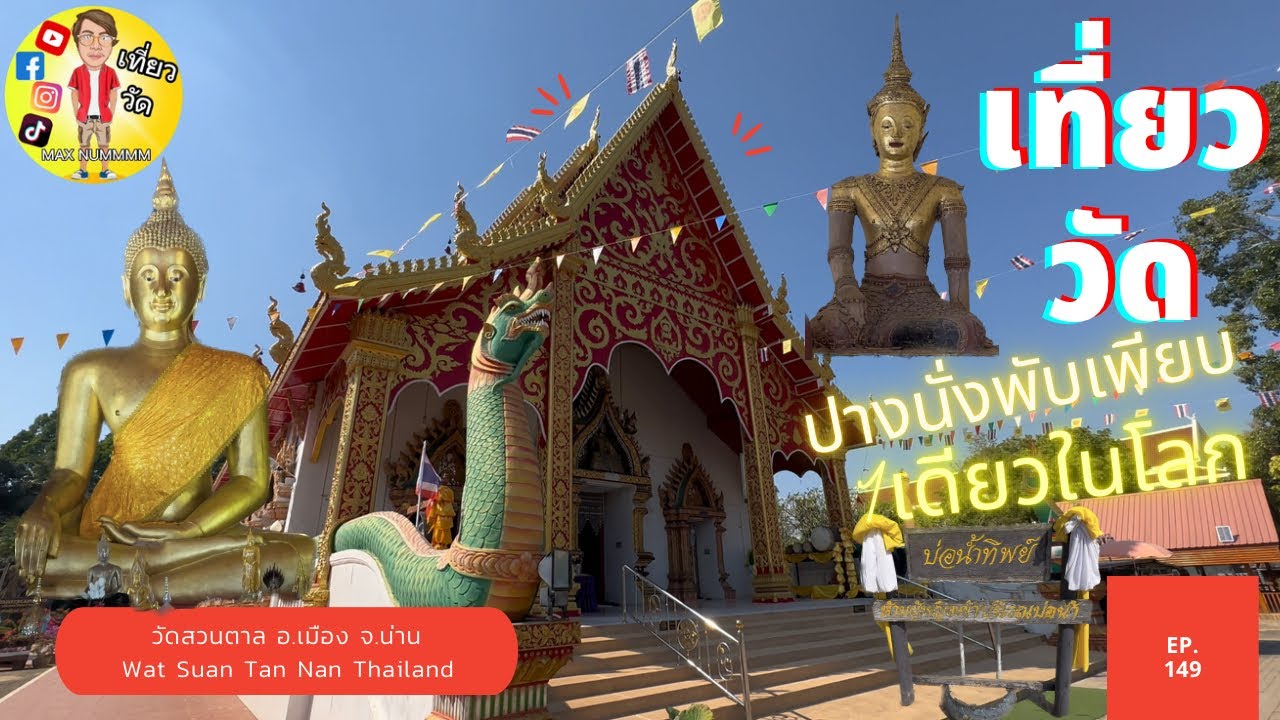
 Click to Access the Navigation Map GPS
Wat Suan Tan Map
Recommend

 Art, Culture and Heritage
 Landmarks and Memorials(6)
 Art, Craft Centres, Tradition(6)
 Museums(4)
 Historic Homes and Cities(1)
 Art Gallery(1)
 Educational Places
 Educational Gardens, Farm(1)
Temple(68)
Educational Gardens, Farm(1)
Temple(68)
 Church(1)
 Other Sacred Sites(18)
 Research and Development
 Royal Project(2)
 Suburban Living
 Village, Community(13)
 Local Market(1)
 Nature and Wildlife
 National Parks and Marine Reserves(9)
 Mountain (Doi)(6)
 Dam, Reservoir, Lake(16)
 Waterfalls(28)
 Hot Springs(1)
 Caves(11)
 River, Canal(5)
 Other natural attractions(10)
 Entertainment and Agricultural
 Farms, Parks and Ecotourism(4)
 Outdoor and Adventure Activities(2)


