
lovethailand home >North Travel Attractions >Nan Travel Attractions >Muang Nan >Du Tai > Wat Phaya Wat
TL;DR: Wat Phaya Wat is located at Ban Phaya Wat, Du Tai Subdistrict, Mueang Nan District, Nan Province, open Daily, hours 7:00 AM – 5:00 PM. Highlights include 5-tier laterite chedi, Phra Chao Fon Saen Ha, carved wooden pulpit.

Wat Phaya Wat
Open Days: Daily
Opening Hours: 7:00 AM – 5:00 PM
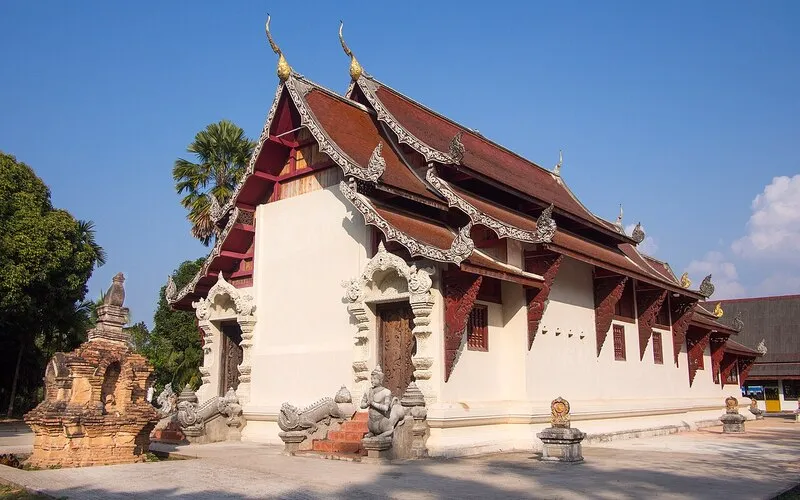
Wat Phaya Wat is an ancient temple located in Ban Phaya Wat, Du Tai Subdistrict, Mueang Nan District, Nan Province. It is considered one of the important historical and cultural temples of Nan, reflecting both religious significance and the development of the old city. The temple is conveniently located near Highway 101 before entering Nan town, with easy access via Highway 1025 for approximately 300 meters.
Unlike many ordinary temples, Wat Phaya Wat stands on land that once served as the center of Nan city during the period when the city was relocated from the Phra That Chae Haeng area to the western bank of the Nan River. This makes the temple a valuable historical site that helps explain the urban structure and transformation of Nan in earlier periods. In ancient times, temples were not only places of worship but also centers of education, governance, and community life.
From an archaeological perspective, Wat Phaya Wat is an important site that reveals the early development of Nan. It clearly shows the influence of the Lanna Kingdom, as well as the integration of artistic styles from Sukhothai and Chiang Mai in later periods. This blending of styles reflects the cultural transition and political connections of the region.
The most outstanding feature of the temple is the laterite chedi, constructed in a unique square, tiered form with five levels. This structure is rare in Thailand and closely resembles the famous Ku Kut Chedi in Lamphun, which dates back to the time of Queen Chamadevi. The chedi design represents Buddhist cosmology, symbolizing layers of existence and spiritual elevation.
Each level of the chedi contains niches that house standing Buddha images influenced by Sukhothai art. These statues display elegant proportions, upright posture, and refined details, representing the ideal characteristics of the Buddha according to Sukhothai artistic tradition.
However, the upper structure of the chedi features arched brickwork, a characteristic of Lanna architecture during the reign of King Tilokaraj of Chiang Mai. This indicates that the chedi underwent restoration or modification during a time when Chiang Mai’s artistic influence became dominant in Nan.
This combination of Sukhothai and Chiang Mai artistic elements makes Wat Phaya Wat particularly valuable in the study of Thai art history, as it clearly represents a transitional period between two major cultural influences in northern Thailand.
Inside the ordination hall is the revered Buddha image known as Phra Chao Fon Saen Ha, or Phra Chao Sai Fon. This sacred image played an important role in the lives of Nan residents, especially in traditional rain-making ceremonies. It served not only as a religious symbol but also as a focal point for community rituals.
In times of drought, villagers would carry this Buddha image in processions around the community to pray for rain. This practice reflects the deep connection between Buddhism, agriculture, and local beliefs. While such rituals were common in Lanna regions, the tradition associated with Wat Phaya Wat remains one of the most notable examples in Nan Province.
Another significant feature of the temple is the carved wooden pulpit, considered one of the finest examples of traditional Nan craftsmanship. The pulpit is intricately decorated with floral patterns, mythical creatures, and geometric designs, demonstrating the exceptional skill of local artisans.
It is believed that this pulpit was created during the period of Chao Attaworapanyo in the early 24th Buddhist century. This era marked a flourishing period of Lanna art in Nan, characterized by distinctive local styles and high levels of craftsmanship.
The atmosphere at Wat Phaya Wat today remains peaceful and simple, unlike the more crowded temples in the city center. It is an ideal place for visitors who wish to explore historical architecture, study ancient art, or find a quiet environment for reflection. Walking through the temple allows visitors to closely observe the details of the chedi and other preserved structures.
Getting There is straightforward. From Nan city, take Highway 101 toward the city entrance. Before crossing the bridge, turn left onto Highway 1025 and continue for about 300 meters. The temple will be located on the left-hand side, just a few minutes from the city center.
| Name | Wat Phaya Wat |
| Location | Ban Phaya Wat, Du Tai Subdistrict, Mueang Nan District, Nan Province |
| Address | Moo 6, Du Tai Subdistrict, Mueang Nan District, Nan 55000, Thailand |
| Coordinates | 18.7785, 100.7729 |
| Highlights | 5-tier laterite chedi, Phra Chao Fon Saen Ha, carved wooden pulpit |
| History | Linked to the relocation of Nan city and influenced by Sukhothai and Lanna art |
| Name Origin | Named after Ban Phaya Wat, an important historical community area |
| Distinctive Features | Blended Sukhothai and Lanna architectural styles |
| Travel Information | Turn from Highway 101 onto Highway 1025 and continue 300 meters |
| Current Status | Open as a temple and tourist attraction |
| Open Days | Daily |
| Opening Hours | 7:00 AM – 5:00 PM |
| Fees | Free |
| Abbot / Caretaker | Phra Khru Pariyatti Kittinan (Narongsak Suwannakitti) |
| Nearby Tourist Attractions | 1. Wat Ming Mueang – 1 km 2. Wat Si Phan Ton – 1 km 3. Wat Phumin – 2 km 4. Nan National Museum – 2 km 5. Wat Phra That Khao Noi – 3 km |
| Nearby Restaurants | 1. Im Suk Restaurant – 1 km, Tel. 065-914-2987 2. Khao Soi Ton Nam – 2 km 3. Huen Phuka – 2 km 4. Krua Hang Tor – 3 km 5. Rai Thiam Than Noodles – 3 km |
| Nearby Accommodations | 1. Namthong Nan Hotel – 1 km 2. Sasidara Resort – 2 km 3. Wiang Phumin Hotel – 2 km 4. Paknap Hostel – 2 km 5. Nan Nakara Boutique Hotel – 3 km |
Frequently Asked Questions (FAQ)
Q: Why is Wat Phaya Wat important?
A: It reflects the historical development of Nan and showcases a blend of Sukhothai and Lanna art.
Q: What is the main highlight of the temple?
A: The 5-tier laterite chedi and the sacred Phra Chao Fon Saen Ha Buddha image.
Q: What is Phra Chao Fon Saen Ha?
A: A Buddha image used in traditional rain-invoking ceremonies in Nan.
Q: Is the temple far from Nan city?
A: No, it is only about 1–2 km from the city center.
Q: Who should visit this temple?
A: It is ideal for visitors interested in history, art, and ancient temples.
Q: Can it be visited with other attractions?
A: Yes, it can be combined with other major attractions in Nan within one day.
Tel : 6654521118
 Tel : 6654521118
 Category: ●Places of Worship
 Group: ●Temple
Last Update : 5 MonthAgo
 Last Update : 5 MonthAgo
 Click to Access the Navigation Map GPS
Wat Phaya Wat Map
Recommend

 Art, Culture and Heritage
 Landmarks and Memorials(6)
 Art, Craft Centres, Tradition(6)
 Museums(4)
 Historic Homes and Cities(1)
 Art Gallery(1)
 Educational Places
 Educational Gardens, Farm(1)
Temple(68)
Educational Gardens, Farm(1)
Temple(68)
 Church(1)
 Other Sacred Sites(18)
 Research and Development
 Royal Project(2)
 Suburban Living
 Village, Community(13)
 Local Market(1)
 Nature and Wildlife
 National Parks and Marine Reserves(9)
 Mountain (Doi)(6)
 Dam, Reservoir, Lake(16)
 Waterfalls(28)
 Hot Springs(1)
 Caves(11)
 River, Canal(5)
 Other natural attractions(10)
 Entertainment and Agricultural
 Farms, Parks and Ecotourism(4)
 Outdoor and Adventure Activities(2)


