
lovethailand home >North Travel Attractions >Nan Travel Attractions >Thung Chang >Ngop > Wat Thung Sun
TL;DR: Wat Thung Sun is located at Ban Thung Sun, Moo 4, Ngop Subdistrict, Thung Chang District, Nan Province. Highlights include Community temple on a hill by Nam Sun, near Pang Nam Sun, built through the faith and cooperation of Ban Thung Sun villagers.
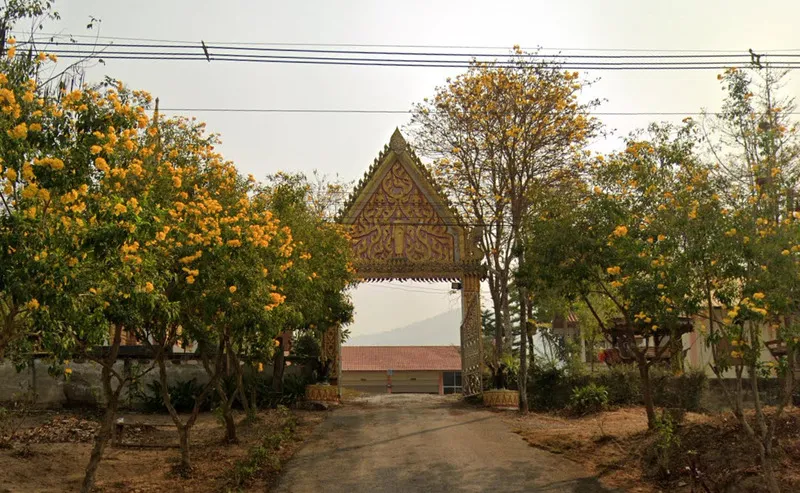
Wat Thung Sun
Operating day: Daily
Operating time: 08.00 - 17.00
Wat Thung Sun is located in Ban Thung Sun, Moo 4, Ngop Subdistrict, Thung Chang District, Nan Province. It is a public Buddhist temple under the Mahanikaya order and serves as the main spiritual center of the Ban Thung Sun community. The temple was officially permitted to be established on February 1, 1989, was announced as a temple in 1989, and received its royal boundary marker for monastic ceremonies on May 20, 2005. Although it is a small rural temple, Wat Thung Sun carries a deep local meaning because it was created through the faith, labor, and cooperation of the villagers themselves.
The temple stands beside the Nan–Thung Chang road, about 2 km from Wat Sri Don Chai in Ngop and about 8 km from the Thung Chang District Office. Its location makes it both a religious center for the village and a community landmark along an important local route. The temple land covers 6 rai and 7 square wah, with a Nor Sor 3 Kor land document, No. 125. It is recognized as a temple in a remote local area, reflecting the perseverance of villagers who built and maintained the temple despite limited resources.
The origin of Wat Thung Sun is closely connected with the daily life and security concerns of the local community. Before the village had its own temple, the people of Ban Thung Sun had to travel to Wat Sri Don Chai to make merit together with the villagers of Ngop. During the period between 1967 and 1973, the area faced problems related to communist insurgency. Traveling to the temple in the early morning on Buddhist holy days became a source of fear for villagers. This difficult situation led the community to consider building its own temple within the village.
In 1973, Mr. Thammasorn Inya, after retiring from his position as kamnan, invited several community members to discuss the creation of a village temple. Those involved included Mr. Som Khamrangsi, Mr. Kham Manokhat, Mr. Prasert Khattiya, Mr. Pan Khamrangsi, Mr. Mon Thepchantha, Mr. Phai Khamrangsi, and Mrs. Khan Thepchantha. When the idea was presented to the villagers, almost everyone agreed because they recognized the need for a temple close to home, both for religious convenience and for safety during a period of unrest.
After the community agreed, the villagers began raising funds in ways that reflected rural cooperation and self-reliance. When someone needed hired labor for farming or rice cultivation, villagers would work together as a group and donate the wages to the temple construction fund. The first recorded work project was clearing the orchard of Police Lieutenant Colonel Nop Inthachat, which earned 1,000 baht for the fund. The villagers also cultivated a communal cotton field, and the income from selling cotton was added to the temple fund.
The villagers did not only contribute money. They also produced or collected construction materials that could be found locally, such as timber and bricks. This means that Wat Thung Sun was not built through a large external budget, but through the labor, local materials, and faith of ordinary villagers. The temple therefore represents the strength of community cooperation and the desire to create a sacred space that belonged to the village itself.
In 1974, construction began on 6 rai of donated land. The donors included Mr. Thammasorn and Mrs. Kesi Inya, Mrs. Buali Thepchantha, Pa Nuan, and Pa Khan. Mr. Samoe Khamrangsi was hired as the sala, or local craftsman, responsible for the construction. The work was completed in 1975 during the time when Mr. Som Khamrangsi served as village headman. After the construction was completed, the villagers began the formal process of requesting permission to establish the temple from the Department of Religious Affairs under the Ministry of Education.
After the temple was built, the villagers invited Luang Pho Lo from Wat Prang in Pua District to reside at Wat Thung Sun, making him the first abbot of the temple. Mr. Thammasorn Inya served as the temple lay ritual leader, or achan wat, from the beginning of the temple’s establishment. These early roles were essential because a newly established temple required both religious leadership and community organization in order to function properly.
The temple’s monastic buildings include an ordination hall, monks’ quarters, a multipurpose pavilion, toilets, boundary walls, a drum tower, and a well. The ordination hall was built in 1974, measuring 8 meters wide and 15 meters long, constructed with brick and cement. The monks’ quarters were built in 1973, measuring 8.50 meters wide and 10.20 meters long, made of raised wooden structure. The multipurpose pavilion was built in 1993, measuring 6 meters wide and 24 meters long, constructed with brick and cement. The toilets were built in 1983, measuring 5 meters wide and 7 meters long with 2 seats, while the temple wall was constructed in 1977, measuring 31 meters wide and 95 meters long. Other features include one drum tower and one well.
Wat Thung Sun is situated on a hill north of the village, on the bank of Nam Sun, near a place known locally as “Pang Nam Sun.” This was a sandy water source where villagers and travelers regularly came to draw drinking water. The temple’s location therefore connects it with the hill, the water source, and the old travel routes of the community. It is not merely a group of religious buildings, but part of the cultural landscape of Ban Thung Sun.
In the memory of the community, Wat Thung Sun represents a time when villagers had to overcome hardship together. The temple reflects the insecurity of the past, the remoteness of the area, the lack of funds, and the determination of local people to build a secure spiritual center for their village. The history of the temple is therefore a story of faith, cooperation, and self-reliance.
Wat Thung Sun received its official announcement permitting temple establishment on June 23, 1989. Later, it received its royal boundary marker on May 20, 2005, with a consecrated area measuring 20 meters wide and 40 meters long. The announcement appeared in the Royal Gazette, General Announcement Issue, Volume 122, Section 58 Ng, dated July 21, 2005, under the Buddhist Places Division of the National Office of Buddhism. Receiving the royal boundary marker allowed the temple to conduct formal Sangha ceremonies properly according to Buddhist monastic regulations.
The temple history mentions several abbots. Luang Pho Lo from Wat Prang in Pua District was the first abbot. Later, several monks served as abbot, with Phra Kham Pan Piyasilo recorded as one of the long-serving abbots and the abbot mentioned in the temple history around 2005. This continuity shows how Wat Thung Sun developed from a village-built religious site into an officially recognized temple with a continuing role in local Buddhist life.
Getting There Travelers can reach Wat Thung Sun by taking the Nan–Thung Chang road toward Ngop Subdistrict in Thung Chang District, Nan Province. The temple is located about 2 km from Wat Sri Don Chai in Ngop and about 8 km from the Thung Chang District Office. A private car is the most convenient way to visit, especially for travelers who want to combine the temple with Wat Sri Don Chai, the Thung Chang district area, Doi Pha Phueng, Tham Pha Phueng, and attractions around Maneepreuk.
Visitors should dress respectfully, behave calmly, and treat the temple as an active religious site of the local community. Although Wat Thung Sun is not a large tourist temple, it is deeply valuable as a historical community temple. Visitors who take time to walk around slowly can understand the story of the temple through its ordination hall, monks’ quarters, multipurpose pavilion, drum tower, well, and the surrounding setting of Ban Thung Sun.
In summary, Wat Thung Sun is a community temple whose importance lies not only in its buildings but in the story of how it was created. It reflects the necessity, courage, faith, and unity of Ban Thung Sun villagers during a difficult period in local history. For travelers interested in rural temples, local history, community culture, and cultural routes in Thung Chang District, Wat Thung Sun is a meaningful place to visit.
| Name | Wat Thung Sun |
| Location | Ban Thung Sun, Moo 4, Ngop Subdistrict, Thung Chang District, Nan Province |
| Highlights | Community temple on a hill by Nam Sun, near Pang Nam Sun, built through the faith and cooperation of Ban Thung Sun villagers |
| History / Period | Built through local community effort between 1973 and 1975; permission to establish was granted on February 1, 1989; officially announced as a temple on June 23, 1989; received its royal boundary marker on May 20, 2005 |
| Name Origin | Named after Ban Thung Sun, the village that built and continues to care for the temple |
| Distinctive Features | A remote local temple created through village labor, communal fundraising, cotton farming, local materials, and shared Buddhist faith |
| Travel Information | Take the Nan–Thung Chang road toward Ngop Subdistrict; the temple is about 2 km from Wat Sri Don Chai and about 8 km from the Thung Chang District Office |
| Current Status | A public temple under the Mahanikaya order and an active village temple of Ban Thung Sun |
| Open Days | Daily |
| Opening Hours | Not Officially Specified |
| Main Areas / Zones | Ordination hall, monks’ quarters, multipurpose pavilion, drum tower, well, toilets, boundary wall, and the area near Pang Nam Sun |
| Abbot / Caretaker | Luang Pho Lo was the first abbot; Phra Kham Pan Piyasilo is recorded in the temple history around 2005 |
| Nearby Tourist Attractions | 1. Wat Sri Don Chai, Ngop, about 2 km 2. Thung Chang District Office Area, about 8 km 3. Civilian-Police-Military Heroic Monument, about 9 km 4. Doi Pha Phueng, about 40 km 5. Tham Pha Phueng, about 42 km |
| Nearby Restaurants | 1. Tiao Lung Khon, about 8 km, Tel. 096-426-3004 2. Krua Plai Na Thung Chang, about 9 km, Tel. 085-940-7511 3. Phu Ros Restaurant, about 70 km, Tel. 064-549-9964 4. Krua Ton Tan, Pua District, about 38 km, Tel. 081-884-3492 5. Kluay Hidden Cafe, Ban Maneepreuk, about 40 km |
| Nearby Accommodations | 1. Thung Chang Hill Resort, about 9 km, Tel. 086-374-4010 2. Chillax at Thung Chang, about 10 km, Tel. 087-921-2100 3. Lanlom Cafe & Huaikon Homestay, about 28 km 4. Siam Garden Bungalows, about 9 km 5. Baan Suan Kecha Homestay, Ban Maneepreuk, about 40 km |
Frequently Asked Questions (FAQ)
Q: Where is Wat Thung Sun located?
A: Wat Thung Sun is located in Ban Thung Sun, Moo 4, Ngop Subdistrict, Thung Chang District, Nan Province.
Q: When was Wat Thung Sun officially permitted to be established?
A: Wat Thung Sun was permitted to be established on February 1, 1989, and was officially announced as a temple on June 23, 1989.
Q: When did Wat Thung Sun receive its royal boundary marker?
A: Wat Thung Sun received its royal boundary marker on May 20, 2005.
Q: What is the main historical significance of Wat Thung Sun?
A: The temple was built through the faith and cooperation of Ban Thung Sun villagers during a period when traveling to another temple in the early morning was unsafe.
Q: What are the main areas inside Wat Thung Sun?
A: The temple includes an ordination hall, monks’ quarters, multipurpose pavilion, drum tower, well, toilets, boundary wall, and the area near Pang Nam Sun.
Q: How can travelers get to Wat Thung Sun?
A: Travelers can take the Nan–Thung Chang road toward Ngop Subdistrict. The temple is about 2 km from Wat Sri Don Chai and about 8 km from the Thung Chang District Office.
 Category: ●Places of Worship
 Group: ●Temple
Last Update : 5 MonthAgo
 Last Update : 5 MonthAgo
 Click to Access the Navigation Map GPS
 Art, Culture and Heritage
 Landmarks and Memorials(6)
 Art, Craft Centres, Tradition(6)
 Museums(4)
 Historic Homes and Cities(1)
 Art Gallery(1)
 Educational Places
 Educational Gardens, Farm(1)
Temple(68)
Educational Gardens, Farm(1)
Temple(68)
 Church(1)
 Other Sacred Sites(18)
 Research and Development
 Royal Project(2)
 Suburban Living
 Village, Community(13)
 Local Market(1)
 Nature and Wildlife
 National Parks and Marine Reserves(9)
 Mountain (Doi)(6)
 Dam, Reservoir, Lake(16)
 Waterfalls(28)
 Hot Springs(1)
 Caves(11)
 River, Canal(5)
 Other natural attractions(10)
 Entertainment and Agricultural
 Farms, Parks and Ecotourism(4)
 Outdoor and Adventure Activities(2)


