
lovethailand home >North Travel Attractions >Nan Travel Attractions >Chiang Klang >Puea > Wat Na Nun
TL;DR: Wat Na Nun is located at Ban Na Nun, Moo 2, Puea Subdistrict, Chiang Klang District, Nan Province, open Open Daily, hours Open 24 Hours.

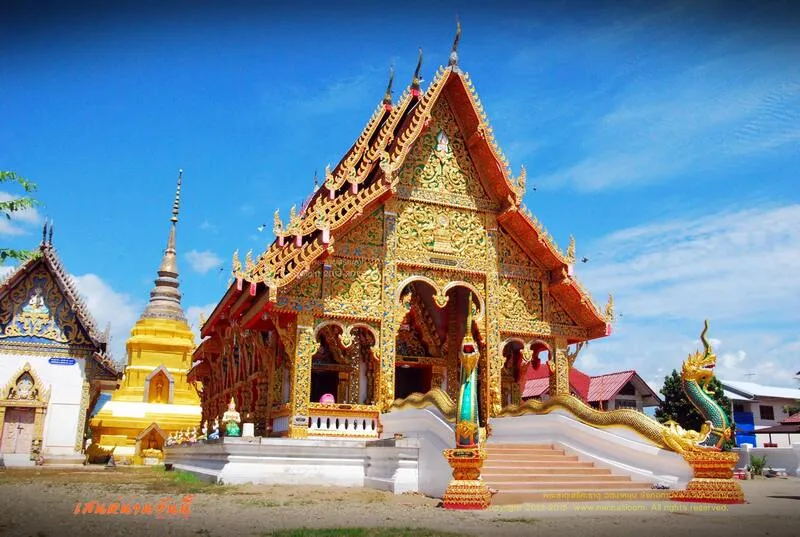
Wat Na Nun
Open Days: Open Daily
Opening Hours: Open 24 Hours
Wat Na Nun is located at No. 18, Moo 2, Puea Subdistrict, Chiang Klang District, Nan Province. It is a Mahanikaya Buddhist temple with a long history closely connected to Ban Na Nun community. The temple was first established in 1897 when Nai Fu Singthana donated land for the original temple site. The first location was in the middle of rice fields beside Lam Nam Long, a low-lying stream area that was regularly flooded during the rainy season. Because the site was narrow and could not be expanded, the local devotees later moved the temple to its present location on higher land in 1955.
The story of Wat Na Nun reflects the deep relationship between a village temple and its community. The temple did not begin as a large religious complex but as a modest community temple created through local faith. Nai Fu Singthana’s donation of land allowed villagers to establish a place for merit-making, Dhamma listening, Buddhist ceremonies, and community gathering. From its earliest period, the temple became the spiritual heart of Ban Na Nun.
The original temple stood in the rice fields near Lam Nam Long. This setting connects the temple’s history with the agricultural way of life of local villagers. The name “Na Nun” is tied to the village identity and the surrounding landscape, where rice fields, water sources, and rural settlement shaped the daily life of the community.
Although the original location was meaningful, it created practical difficulties. During the rainy season, floodwater often remained around the temple compound, making religious activities and building maintenance difficult. The land was also too limited for future expansion. As the community grew, the need for a more suitable temple site became increasingly important.
In 1955, the devotees of Wat Na Nun selected the present site, which was a higher rocky hill area. Villagers worked together to clear the forest and level the land by hand using simple tools such as hoes. The work took almost a year before the area became flat enough to build the temple. This collective effort remains one of the most meaningful parts of Wat Na Nun’s history, showing how deeply the local community valued the temple.
Phra Boon Thaen Thitawanno, later known as Phra Khru Sathit Wannakon, was the abbot during this important transition. He worked together with the devotees to dismantle structures from the old temple site, including monks’ residences, and rebuild them at the new location. The move was therefore not only a physical relocation but also a transfer of the community’s faith, memory, and religious life to a more secure setting.
After the relocation, the temple built an ubosot or viharn for Buddhist ceremonies and received its royal consecrated boundary, known as Visungkhamsima, on September 2, 1958. This was an important milestone because it allowed the temple to conduct key monastic ceremonies such as ordination according to Buddhist monastic rules.
Today, Wat Na Nun occupies a much larger and more stable site than its original location. The temple land covers 9 rai, 51 ngan, and 73 square wah, with two additional monastic land plots totaling 16 rai, 2 ngan, and 186 square wah. Its current setting is connected to village roads, private land, and the Nan-Thung Chang route, making access easier for villagers and visitors.
The value of Wat Na Nun lies not only in its religious function but also in its community history. The temple represents how villagers adapted to environmental challenges, moved their sacred site from a flood-prone area to higher ground, and rebuilt it through shared labor and devotion. It is a clear example of how rural Buddhist communities in Nan preserved their faith through cooperation and resilience.
According to current monastic records, Phra Athikan Sri Ratanachoto serves as the abbot of Wat Na Nun. The temple remains active as a place for merit-making, worship, and community religious activities. Its official Facebook page also provides public contact information for devotees and visitors.
For cultural travelers, Wat Na Nun offers a quieter and more authentic side of Nan Province. It may not be a large tourist temple, but its history is meaningful. Visitors can learn how a village temple developed from a flood-prone field site into a stable religious center through the effort of monks and villagers.
The temple is especially suitable for those interested in local history, village Buddhism, and the relationship between temples and agricultural communities. A visit to Wat Na Nun can be combined with other nearby temples in Chiang Klang District, such as Wat Nong Daeng, Wat Klang, Wat Pradit So, Wat Mai Wang Khian, and Wat Phuket.
Getting There from Nan city is convenient by taking Highway 1080 toward Chiang Klang and Thung Chang districts. Continue to Puea Subdistrict and Ban Na Nun. The temple is located near the Nan-Thung Chang route and can be reached by private car, motorcycle, or local transport.
| Name | Wat Na Nun |
| Location | Ban Na Nun, Moo 2, Puea Subdistrict, Chiang Klang District, Nan Province |
| Address | No. 18, Moo 2, Puea Subdistrict, Chiang Klang District, Nan Province |
| Highlights | Historic community temple relocated from a flood-prone rice field near Lam Nam Long to higher land in 1955 |
| History | Established in 1897 through land donated by Nai Fu Singthana; relocated in 1955; received Visungkhamsima on September 2, 1958 |
| Name Origin | Connected to Ban Na Nun and the original temple site in a rice-field landscape |
| Distinctive Features | A temple shaped by community faith, relocation from flooded lowland, and rural Buddhist life in Chiang Klang District |
| Abbot / Caretaker | Phra Athikan Sri Ratanachoto |
| Important Figures | Nai Fu Singthana, the land donor, and Phra Boon Thaen Thitawanno / Phra Khru Sathit Wannakon, who led the relocation and development |
| Current Status | Active Mahanikaya Buddhist temple |
| Open Days | Daily |
| Opening Hours | Open 24 Hours |
| Temple Area | Temple land: 9 rai, 51 ngan, 73 square wah; monastic land: 16 rai, 2 ngan, 186 square wah |
| Travel Information | From Nan city, take Highway 1080 toward Chiang Klang and Thung Chang, then continue to Puea Subdistrict and Ban Na Nun near the Nan-Thung Chang route |
| Main Contact Number | 080-932-6042 |
| Nearby Tourist Attractions | 1. Wat Nong Daeng (054-797-292, 089-023-9846) – 6 km 2. Wat Klang (054-798-702) – 8 km 3. Wat Pradit So (054-797-309) – 9 km 4. Wat Prang – 10 km 5. Wat Phuket – 17 km |
| Nearby Restaurants | 1. Ton Pho Restaurant (089-264-2109) – 4 km 2. Ban Noina Restaurant (085-694-9596) – 5 km 3. Khrua Narumon (081-779-8847) – 6 km 4. Saeng Thong Terrace (080-407-0555) – 7 km 5. Him Wat Cafe' (081-998-3719) – 8 km |
| Nearby Accommodations | 1. Saeng Thong Resort Chiang Klang Nan (080-407-0555, 083-707-0555) – 7 km 2. Rai Juthamas Resort (081-735-5322) – 8 km 3. Dee Tor Jai Farm Stay Nan – 8 km 4. The River Run Chiang Klang – 8 km 5. Ban Suan Khun Ya (084-293-6978) – 11 km |
Frequently Asked Questions (FAQ)
Q: Where is Wat Na Nun located?
A: Wat Na Nun is located at No. 18, Moo 2, Puea Subdistrict, Chiang Klang District, Nan Province.
Q: When was Wat Na Nun established?
A: The temple was established in 1897 through land donated by Nai Fu Singthana.
Q: Why was Wat Na Nun relocated?
A: The original site was in a low-lying rice field beside Lam Nam Long, where flooding occurred regularly during the rainy season and the land was too narrow for expansion.
Q: When was Wat Na Nun moved to its current location?
A: The community began developing the present temple site in 1955.
Q: When did Wat Na Nun receive Visungkhamsima?
A: It received Visungkhamsima on September 2, 1958.
Q: Who is the abbot of Wat Na Nun?
A: The abbot is Phra Athikan Sri Ratanachoto.
Q: What is the main contact number?
A: The main contact number is 080-932-6042.
Mobile : 0811676310
 Mobile : 0811676310
 Category: ●Places of Worship
 Group: ●Temple
Last Update : 4 MonthAgo
 Last Update : 4 MonthAgo
 Click to Access the Navigation Map GPS
 Art, Culture and Heritage
 Landmarks and Memorials(6)
 Art, Craft Centres, Tradition(6)
 Museums(4)
 Historic Homes and Cities(1)
 Art Gallery(1)
 Educational Places
 Educational Gardens, Farm(1)
Temple(68)
Educational Gardens, Farm(1)
Temple(68)
 Church(1)
 Other Sacred Sites(18)
 Research and Development
 Royal Project(2)
 Suburban Living
 Village, Community(13)
 Local Market(1)
 Nature and Wildlife
 National Parks and Marine Reserves(9)
 Mountain (Doi)(6)
 Dam, Reservoir, Lake(16)
 Waterfalls(28)
 Hot Springs(1)
 Caves(11)
 River, Canal(5)
 Other natural attractions(10)
 Entertainment and Agricultural
 Farms, Parks and Ecotourism(4)
 Outdoor and Adventure Activities(2)


