
lovethailand home >North Travel Attractions >Nan Travel Attractions >Bo Kluai >Bo Kluea Tai > Wat Bo Luang
TL;DR: Wat Bo Luang is located at Village No. 1, Ban Bo Luang / Ban Bo Kluang, Bo Kluea Tai Subdistrict, Bo Kluea District, Nan Province, Thailand, open Daily, hours Open During Regular Temple Visiting Hours.
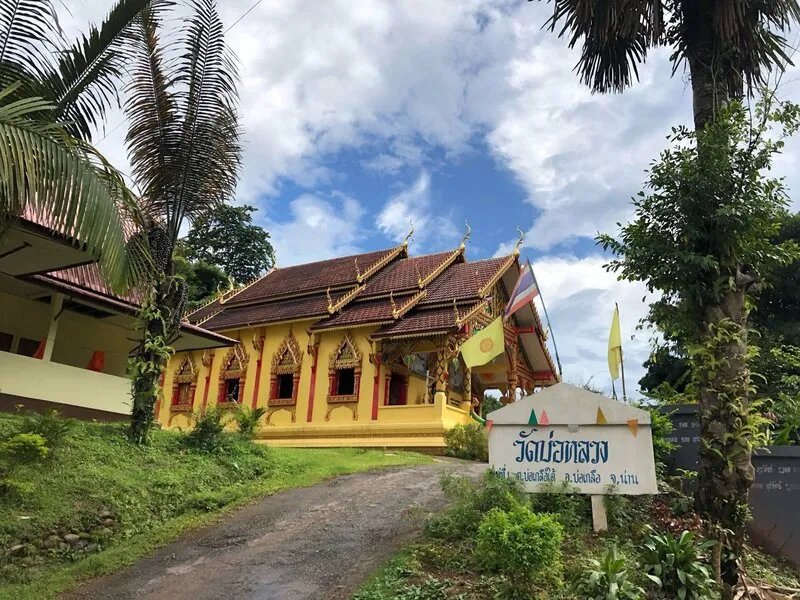
Wat Bo Luang
Open Days: Daily
Opening Hours: Open During Regular Temple Visiting Hours
Wat Bo Luang is located in Village No. 1, Ban Bo Luang or Ban Bo Kluang, Bo Kluea Tai Subdistrict, Bo Kluea District, Nan Province. It is a community temple under the Mahanikaya sect and one of the oldest Buddhist temples in the Bo Kluea area. The temple was officially permitted to be established in 1826 and received its royal boundary designation in 1990. Wat Bo Luang is especially significant because it is the legally established temple in Bo Kluea District, while many other religious places in the area are monastic residences.
Bo Kluea District is well known for its ancient mountain salt wells, a rare cultural landscape where salt, mountains, streams, villages, and local faith are closely connected. In this setting, Wat Bo Luang serves as the Buddhist spiritual center of the community. Visitors who come to Bo Kluea for the ancient salt wells, mountain scenery, and quiet village atmosphere can also visit Wat Bo Luang to understand the religious and social life of the local people.
The temple reflects the diversity of beliefs in Bo Kluea. Local information describes the district as a community where many people follow Buddhism, while others follow Christianity, traditional spirit beliefs, or no specific religion. Wat Bo Luang therefore stands as an important Buddhist center within a wider landscape of cultural and religious diversity. Its role is not only ceremonial but also social and moral, helping support community identity in a remote mountain district.
Wat Bo Luang has a long history. Its official establishment in 1826 shows that Buddhism has been rooted in this mountain community for nearly 200 years. In the past, when travel was difficult and the district was far from major towns, a temple provided spiritual stability, education, community gathering space, and moral guidance. Wat Bo Luang became an important anchor for local Buddhists living among the mountains and salt-producing villages.
The temple received its royal boundary designation in 1990. This designation is important because it allows formal monastic ceremonies to be conducted within a recognized sacred boundary. It confirms the temple’s religious status and strengthens its role as a fully functioning Buddhist temple for Bo Kluea Tai Subdistrict and surrounding communities.
The current abbot is Phra Maha Suradet Panyatharo. In a mountain community temple, the abbot plays an essential role in caring for the temple, leading ceremonies, supporting moral education, and maintaining the connection between monks and villagers. Wat Bo Luang remains an active temple because it continues to be cared for by monks and supported by local faith.
One of the most interesting aspects of Wat Bo Luang is its unusual architectural character. Local descriptions note that the temple buildings do not look entirely like a conventional Buddhist temple, yet they are not exactly church-like either. The temple separates the viharn and the ubosot into different sections. This spatial arrangement makes the temple distinctive and reflects the local context of Bo Kluea, where cultural and religious diversity has shaped the community environment.
The old ubosot was dismantled and a new one was built. Construction began in 2003 and continued gradually because it depended on donations from local villagers. The people living in the area did not have high incomes, so construction progressed slowly. This history reveals the depth of community faith. The temple was not built quickly through a large budget; it was shaped by the patience, donations, and shared devotion of villagers who wanted to preserve and improve their sacred place.
Wat Bo Luang was also formerly the site of a Buddhist scripture school in the general education division. This educational role was important for monks, novices, and local youth. After flooding in 2011, the school was moved to a new site at Ban Phak Hueak, Village No. 4, Bo Kluea Tai Subdistrict. Although the school moved away, the temple remains part of the educational history of Bo Kluea and shows how temples in rural Thailand often served as learning centers.
The relationship between Wat Bo Luang and the ancient salt wells is another important cultural point. The salt wells shaped Bo Kluea’s economy, identity, and way of life for generations. Wat Bo Luang served as the spiritual center for people living in that salt-producing landscape. Together, the temple and the salt wells form a cultural route that helps visitors understand Bo Kluea beyond scenery alone.
Travelers can combine Wat Bo Luang with the ancient salt wells, local salt-making demonstrations, community food stops, and nearby mountain destinations such as Sapan Village and Sapan Waterfall. This makes the temple a meaningful stop for visitors who want a deeper cultural experience in Bo Kluea. It adds the dimension of Buddhist faith and community life to a trip that might otherwise focus only on nature and salt-making.
The atmosphere of Wat Bo Luang is simple, quiet, and local. It is not a grand tourist temple, but that is part of its charm. Its value lies in age, community faith, unusual temple layout, and its role in a district known for mountain salt. Visitors should take time to observe the temple respectfully and understand it as a living community space rather than only a sightseeing stop.
Getting There is most convenient by private car, rental car, or local hired vehicle. Travelers can drive from Nan town toward Bo Kluea District through mountain roads, then continue to Bo Kluea Tai Subdistrict and Ban Bo Luang. The route is scenic but winding, so drivers should use caution, especially during rain, fog, or the cool season. The temple can be easily combined with the ancient salt wells and nearby attractions in Bo Kluea.
The best time to visit is in the morning or late afternoon, when the weather is more comfortable and the surrounding mountain atmosphere is pleasant. During the rainy season and cool season, the scenery around Bo Kluea is especially beautiful, but road conditions require extra care. Visitors should allow enough time for mountain travel and avoid rushing between attractions.
Visitors should dress respectfully, speak quietly, and avoid disturbing monks or local residents during religious activities. Since Wat Bo Luang is an active community temple, mindful behavior is important. Photography should be done politely, especially around monastic areas or ceremonies.
Overall, Wat Bo Luang is an important cultural and religious stop in Bo Kluea District. It preserves the history of the local Buddhist community, reflects the diversity of belief in the area, and connects with the wider cultural landscape of the ancient salt wells. A visit to Wat Bo Luang helps travelers see Bo Kluea not only as a scenic mountain destination, but also as a community with deep faith, resilience, and cultural memory.
| Name | Wat Bo Luang |
| Location | Village No. 1, Ban Bo Luang / Ban Bo Kluang, Bo Kluea Tai Subdistrict, Bo Kluea District, Nan Province, Thailand |
| Temple Type | Community Temple Under The Mahanikaya Sect |
| Highlights | Old Buddhist Temple Of Bo Kluea, Legally Established Temple In The District, Unusual Separation Of Viharn And Ubosot, And A Cultural Stop Near The Ancient Salt Wells |
| History | Officially Permitted To Be Established In 1826 And Received Its Royal Boundary Designation In 1990 |
| Distinctive Features | Temple Buildings With An Unusual Layout, Separating The Viharn And Ubosot, Reflecting The Local Context Of Bo Kluea |
| Significance | Spiritual Center Of The Buddhist Community In Bo Kluea And Former Site Of A Buddhist Scripture School Before It Was Relocated After The 2011 Flood |
| Travel Information | Travel From Nan Town To Bo Kluea District Through Mountain Roads, Then Continue To Bo Kluea Tai Subdistrict And Ban Bo Luang; Private Car, Rental Car, Or Local Hired Vehicle Is Recommended |
| Current Status | Active Community Buddhist Temple In Bo Kluea Tai Subdistrict, Bo Kluea District, Nan Province |
| Open Days | Daily |
| Opening Hours | Open During Regular Temple Visiting Hours |
| Main Areas / Zones | Viharn, Ubosot, Religious Activity Area, And Former Area Connected With Buddhist Scripture Education |
| Abbot / Caretaker | Phra Maha Suradet Panyatharo |
| Nearby Tourist Attractions | 1. Ancient Salt Wells / Bo Kluea Sin Thao 1 km, Tel. 054-718935, 054-778057 2. Mang River 1 km 3. Boklua View Resort And Bo Kluea Community Viewpoint 2 km, Tel. 054-719700, 081-8096392 4. Sapan Village 9 km 5. Sapan Waterfall 11 km |
| Nearby Restaurants | 1. Boklua View Resort Restaurant 2 km, Tel. 054-719700, 081-8096392 2. Local Food Shops Around The Ancient Salt Wells 1 km 3. Restaurants And Cafés In Bo Kluea District Center 2 km 4. Restaurants On The Sapan Village Route 9 km 5. Local Food Shops In Sapan Village 9 km |
| Nearby Accommodations | 1. Boklua View Resort 2 km, Tel. 054-719700, 081-8096392 2. Sapan See View 9 km, Tel. 091-9595642 3. Oun I Mang 9 km, Tel. 097-0362450 4. Song Mueang Camping Bo Kluea 9 km, Tel. 084-3739012 5. Sapan Good View 9 km, Tel. 082-6139823, 084-1732298 |
Frequently Asked Questions (FAQ)
Q: Where Is Wat Bo Luang Located?
A: Wat Bo Luang Is Located In Village No. 1, Ban Bo Luang Or Ban Bo Kluang, Bo Kluea Tai Subdistrict, Bo Kluea District, Nan Province, Near The Ancient Salt Wells Community.
Q: When Was Wat Bo Luang Established?
A: Wat Bo Luang Was Officially Permitted To Be Established In 1826 And Received Its Royal Boundary Designation In 1990.
Q: Why Is Wat Bo Luang Important?
A: It Is An Old Buddhist Temple Of Bo Kluea And A Key Spiritual Center For The Local Buddhist Community In A District Known For Its Ancient Mountain Salt Wells.
Q: What Is Distinctive About The Architecture Of Wat Bo Luang?
A: The Temple Has An Unusual Layout, With The Viharn And Ubosot Separated Into Different Sections, Reflecting The Local Context And Community-Based Construction Of Bo Kluea.
Q: Was Wat Bo Luang Connected With Buddhist Education?
A: Yes. It Was Formerly The Site Of A Buddhist Scripture School In The General Education Division Before The School Was Relocated To Ban Phak Hueak After The 2011 Flood.
Q: How Can Visitors Get To Wat Bo Luang?
A: Visitors Can Travel From Nan Town To Bo Kluea District Through Mountain Roads, Then Continue To Bo Kluea Tai Subdistrict And Ban Bo Luang. A Private Car, Rental Car, Or Local Hired Vehicle Is Recommended.
Q: What Kind Of Travelers Is Wat Bo Luang Suitable For?
A: It Is Suitable For Travelers Interested In Community Temples, Bo Kluea’s Salt-Making Culture, Local Buddhist History, Mountain Villages, And Cultural Routes In Nan Province.
 Category: ●Places of Worship
 Group: ●Temple
Last Update : 4 MonthAgo
 Last Update : 4 MonthAgo
 Click to Access the Navigation Map GPS
 Art, Culture and Heritage
 Landmarks and Memorials(6)
 Art, Craft Centres, Tradition(6)
 Museums(4)
 Historic Homes and Cities(1)
 Art Gallery(1)
 Educational Places
 Educational Gardens, Farm(1)
Temple(68)
Educational Gardens, Farm(1)
Temple(68)
 Church(1)
 Other Sacred Sites(18)
 Research and Development
 Royal Project(2)
 Suburban Living
 Village, Community(13)
 Local Market(1)
 Nature and Wildlife
 National Parks and Marine Reserves(9)
 Mountain (Doi)(6)
 Dam, Reservoir, Lake(16)
 Waterfalls(28)
 Hot Springs(1)
 Caves(11)
 River, Canal(5)
 Other natural attractions(10)
 Entertainment and Agricultural
 Farms, Parks and Ecotourism(4)
 Outdoor and Adventure Activities(2)


