
lovethailand home >North Travel Attractions >Nan Travel Attractions >Phu Pieng >Fai Kaeo > Wat Thung Noi
TL;DR: Wat Thung Noi is located at Ban Thung Noi, Village No. 4, Fai Kaeo Subdistrict, Phu Phiang District, Nan Province, Thailand, open Daily, hours 08.00–17.00 Hrs.
Wat Thung Noi
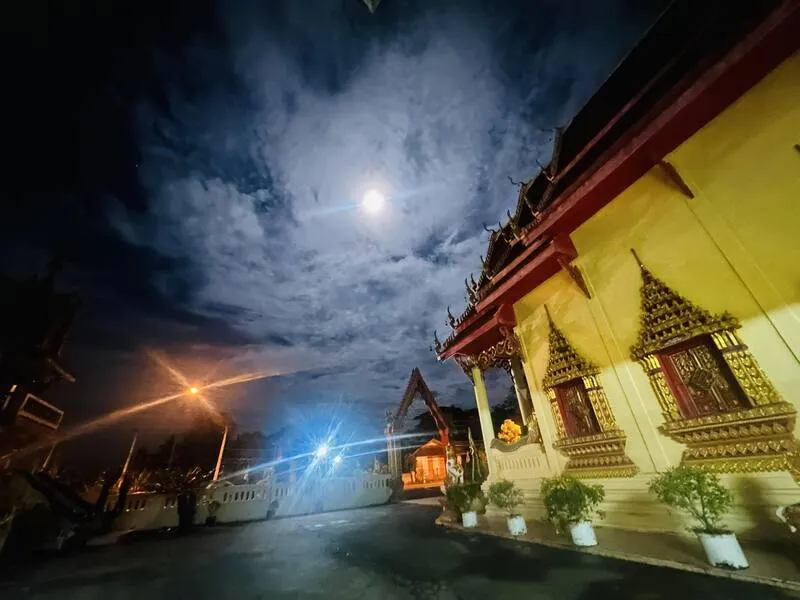
Open Days: Daily
Opening Hours: 08.00–17.00 Hrs.
Wat Thung Noi is located at No. 145, Village No. 4, Fai Kaeo Subdistrict, Phu Phiang District, Nan Province. It is a community temple under the Mahanikaya sect and covers about 3 rai, 3 ngan, and 10 square wah of land. Founded in 1714, Wat Thung Noi is an old village temple that has served the Ban Thung Noi community for more than 300 years. It is suitable for travelers who want to explore quiet local temples near Nan town and understand the relationship between Buddhism, village life, waterways, and rural landscapes in Phu Phiang District.
Wat Thung Noi represents the role of a local community temple in northern Thailand. It is not a large tourist landmark, but it remains meaningful as a spiritual center for villagers. Local people use the temple for merit-making, Buddhist ceremonies, Dharma listening, community activities, and important religious occasions. The temple is also associated with the local memory of respected monks such as Luang Pu Si Chang Ngoen and Phra Khru Phibun Nanthakit, also known locally as Tu Lung Wai.
The temple’s founding in 1714 shows that Ban Thung Noi has maintained Buddhist roots for generations. In traditional northern Thai communities, a temple often grew alongside the settlement itself. Once people established homes, fields, and water sources, the temple became the spiritual center of the village. Wat Thung Noi therefore reflects the long continuity of faith, settlement, and community life in Fai Kaeo Subdistrict.
The temple land is closely connected with the surrounding village landscape. To the north, it adjoins private land. To the south, it borders Lam Nam Haet, a local watercourse. To the west, it adjoins private land, and to the east it has an area of about 2 ngan. These boundary details show that Wat Thung Noi is not separate from everyday life. It stands within a living environment of homes, land, water, and local agriculture.
The southern boundary adjoining Lam Nam Haet is especially meaningful. Many northern Thai temples are closely linked with streams, rivers, and irrigation landscapes. Water supports agriculture, daily life, and community settlement. At Wat Thung Noi, the relationship with Lam Nam Haet helps visitors understand how temples, villages, fields, and water systems formed a connected cultural landscape in Nan Province.
The name Thung Noi reflects the rural identity of the area. “Thung” suggests open fields or agricultural land, while “Noi” gives a sense of a small, close-knit community. The name therefore connects the temple with the local landscape and the way of life of Ban Thung Noi. It is a simple name, but it carries the character of the place clearly.
Wat Thung Noi remains important because it continues to support Buddhist life in the village. People come here for Buddhist holy days, merit-making, chanting, sermons, memorial rites, and annual temple activities. Like many village temples in Nan, it is both a sacred space and a social space where villagers gather across generations.
The current abbot listed for Wat Thung Noi is Phra Baidika Narong Kattiphattho. In a community temple, the abbot plays an essential role as a religious leader, caretaker of temple buildings, organizer of Buddhist activities, and link between monks and villagers. The presence of resident monks helps keep the temple active as a living place of worship.
The temple’s association with Luang Pu Si Chang Ngoen and Phra Khru Phibun Nanthakit adds another layer of local faith. Respected monks often become part of a temple’s identity because villagers remember their teachings, discipline, and spiritual influence. For visitors, this connection makes Wat Thung Noi more than an old site; it is also a place of living memory and devotion.
Fai Kaeo Subdistrict is close to Nan town and several important Buddhist and cultural attractions. Wat Thung Noi can be combined with Wat Tha Lo, Wat Pua Chai, Wat Phra That Chae Haeng Royal Temple, Wat Phumin, and Nan National Museum. This makes it a good stop for travelers who want to see both famous Nan landmarks and quieter community temples in Phu Phiang District.
Getting There is convenient by private car, rental car, or local hired vehicle. From Nan town, cross the Nan River toward Phu Phiang District and continue to Fai Kaeo Subdistrict and Ban Thung Noi, Village No. 4. The temple can be included in a half-day cultural route together with Wat Phra That Chae Haeng, Wat Tha Lo, and Wat Pua Chai.
The atmosphere at Wat Thung Noi is quiet and local. Visitors should take time to pay respect, observe the village setting, and understand the temple as part of Ban Thung Noi’s daily life. The experience is most rewarding when the temple is viewed not only as a stop on a route, but as a long-standing spiritual space shaped by villagers, monks, land, and water.
Visitors should dress respectfully, speak quietly, and avoid disturbing monks or local residents during religious activities. Since Wat Thung Noi is an active community temple, respectful behavior is important. Photography should be done politely, especially near monks, ceremonies, or sacred objects.
The best time to visit is in the morning or late afternoon, when the weather is more comfortable and the atmosphere is calm. Visitors who come on Buddhist holy days or local merit-making occasions may see the temple’s community role more clearly, while those seeking a peaceful visit may prefer ordinary weekdays.
Overall, Wat Thung Noi is a valuable old community temple in Phu Phiang District, Nan Province. Its founding in 1714, long connection with Ban Thung Noi, temple land near Lam Nam Haet, association with respected monks, and role as a village Buddhist center make it a meaningful destination for travelers interested in local Buddhist heritage near Nan town.
| Name | Wat Thung Noi |
| Location | Ban Thung Noi, Village No. 4, Fai Kaeo Subdistrict, Phu Phiang District, Nan Province, Thailand |
| Address | No. 145, Village No. 4, Fai Kaeo Subdistrict, Phu Phiang District, Nan Province 55000 |
| Temple Type | Community Temple Under The Mahanikaya Sect |
| Temple Area | About 3 Rai, 3 Ngan, And 10 Square Wah |
| Highlights | Old Community Temple Of Ban Thung Noi, Founded In 1714, Connected With Luang Pu Si Chang Ngoen, Phra Khru Phibun Nanthakit, And Local Buddhist Faith In Fai Kaeo Subdistrict |
| History | Founded In 1714 And Has Served Ban Thung Noi Community For More Than 300 Years |
| Name Origin | The Name Reflects The Rural Landscape Of Ban Thung Noi, With “Thung” Suggesting Open Fields And “Noi” Suggesting A Small Local Community |
| Distinctive Features | A Long-Established Community Temple Located In A Village Landscape Of Private Land, Local Homes, And Lam Nam Haet Watercourse |
| Travel Information | From Nan Town, Cross The Nan River Toward Phu Phiang District And Continue To Fai Kaeo Subdistrict And Ban Thung Noi, Village No. 4; Private Car, Rental Car, Or Local Hired Vehicle Is Recommended |
| Current Status | Active Community Buddhist Temple In Ban Thung Noi, Fai Kaeo Subdistrict, Phu Phiang District, Nan Province |
| Open Days | Daily |
| Opening Hours | 08.00–17.00 Hrs. |
| Abbot / Caretaker | Phra Baidika Narong Kattiphattho |
| Main Contact Number | 084-3661887 |
| Official Website / Official Page | Wat Thung Noi, Fai Kaeo Subdistrict, Phu Phiang District, Nan Province |
| Nearby Tourist Attractions | 1. Wat Tha Lo 3 km 2. Wat Pua Chai 4 km 3. Wat Phra That Chae Haeng Royal Temple 5 km 4. Wat Phumin 7 km 5. Nan National Museum 7 km |
| Nearby Restaurants | 1. Khao Soi Hoi Khaeng 5 km, Tel. 083-7620334 2. Ruean Chao Nang 5 km 3. Lemongrass 7 km 4. Chom Nan Café And Bistro 7 km 5. Hua Loet Rot Khao Tom Baht Diao 7 km |
| Nearby Accommodations | 1. Phuphiang Khiangfah Resort 3 km 2. Pagoda Sight Residence 5 km 3. Nan Seasons Boutique Resort 5 km 4. Wiang Kaeo Hotel 7 km 5. Nan Nakara Boutique Hotel 7 km |
Frequently Asked Questions (FAQ)
Q: Where Is Wat Thung Noi Located?
A: Wat Thung Noi Is Located At No. 145, Village No. 4, Fai Kaeo Subdistrict, Phu Phiang District, Nan Province, Thailand.
Q: When Was Wat Thung Noi Founded?
A: Wat Thung Noi Was Founded In 1714 And Has Served Ban Thung Noi Community For More Than 300 Years.
Q: How Large Is Wat Thung Noi?
A: The Temple Covers About 3 Rai, 3 Ngan, And 10 Square Wah Of Land.
Q: Who Is The Abbot Of Wat Thung Noi?
A: The Current Abbot Listed For Wat Thung Noi Is Phra Baidika Narong Kattiphattho.
Q: What Are The Opening Hours Of Wat Thung Noi?
A: Wat Thung Noi Is Open Daily From 08.00 To 17.00 Hrs.
Q: Why Is Wat Thung Noi Important?
A: Wat Thung Noi Is An Old Community Temple Connected With Ban Thung Noi, Local Buddhist Faith, Lam Nam Haet, And Respected Monks Such As Luang Pu Si Chang Ngoen And Phra Khru Phibun Nanthakit.
Q: How Can Visitors Get To Wat Thung Noi?
A: From Nan Town, Cross The Nan River Toward Phu Phiang District And Continue To Fai Kaeo Subdistrict And Ban Thung Noi, Village No. 4. A Private Car, Rental Car, Or Local Hired Vehicle Is Recommended.
 Category: ●Places of Worship
 Group: ●Temple
Last Update : 5 MonthAgo
 Last Update : 5 MonthAgo
 Click to Access the Navigation Map GPS
 Art, Culture and Heritage
 Landmarks and Memorials(6)
 Art, Craft Centres, Tradition(6)
 Museums(4)
 Historic Homes and Cities(1)
 Art Gallery(1)
 Educational Places
 Educational Gardens, Farm(1)
Temple(68)
Educational Gardens, Farm(1)
Temple(68)
 Church(1)
 Other Sacred Sites(18)
 Research and Development
 Royal Project(2)
 Suburban Living
 Village, Community(13)
 Local Market(1)
 Nature and Wildlife
 National Parks and Marine Reserves(9)
 Mountain (Doi)(6)
 Dam, Reservoir, Lake(16)
 Waterfalls(28)
 Hot Springs(1)
 Caves(11)
 River, Canal(5)
 Other natural attractions(10)
 Entertainment and Agricultural
 Farms, Parks and Ecotourism(4)
 Outdoor and Adventure Activities(2)


