
lovethailand home >North Travel Attractions >Nan Travel Attractions >Phu Pieng >Nam Kaen > Wat Sawang Arun
TL;DR: Wat Sawang Arun is located at Ban Nam Kaen Klang, Village No. 2, Nam Kaen Subdistrict, Phu Phiang District, Nan Province, Thailand, open Daily, hours 08.00–17.00 Hrs.
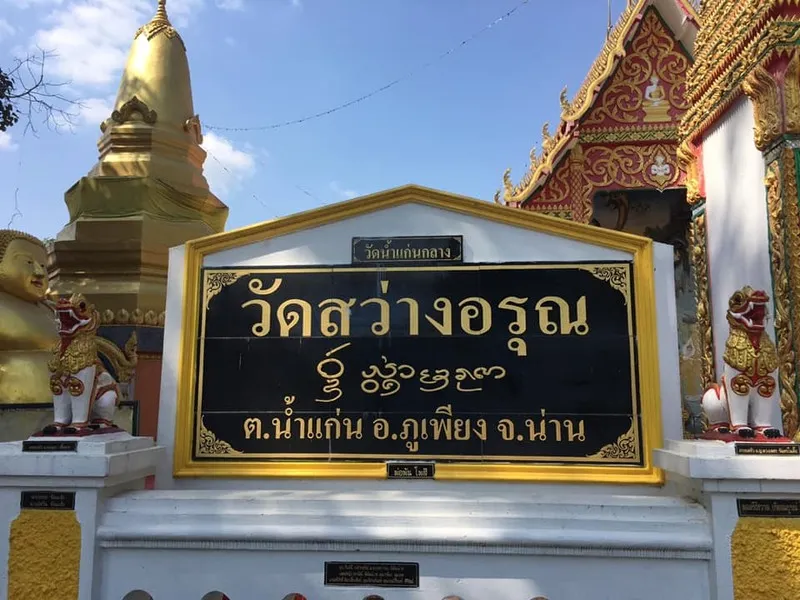
Wat Sawang Arun
Open Days: Daily
Opening Hours: 08.00–17.00 Hrs.
Wat Sawang Arun (Nam Kaen Klang) is located in Ban Nam Kaen Klang, Village No. 2, Nam Kaen Subdistrict, Phu Phiang District, Nan Province. It is a community temple under the Mahanikaya sect and one of the old Buddhist temples connected with the founding of Ban Nam Kaen Klang. The temple is believed to be more than 300 years old and has long served as a spiritual center for local residents. Its most meaningful landmark is an old sali luang, or Bodhi tree, which has stood with the temple and community for generations.
Wat Sawang Arun is suitable for travelers who want to understand Nan through quiet community temples rather than only through famous tourist landmarks. The temple reflects the relationship between Buddhism, village life, local memory, and community identity in Phu Phiang District. It is not a large tourist temple, but it preserves an important local story and continues to function as an active place of worship for Ban Nam Kaen Klang.
The exact date of the temple’s first construction is not clearly recorded. Local tradition states that it was created around the same period as the founding of Ban Nam Kaen Klang, more than 300 years ago. The old Bodhi tree in front of the temple is an important symbol of this continuity. In Buddhist culture, the Bodhi tree is deeply associated with the Buddha’s enlightenment, making it a meaningful presence within the temple grounds.
The temple has several important structures, including a viharn, ubosot, merit-making pavilion, monk residence, boundary walls, and a drum tower. These buildings show that Wat Sawang Arun remains a living community temple. The viharn and ubosot support religious ceremonies, the pavilion supports community merit-making, the monk residence supports monastic life, and the drum tower marks important moments in temple activities.
The old ubosot is one of the temple’s important features. In a community temple, the ubosot is a sacred space for formal Buddhist ceremonies and monastic functions. Its presence shows that Wat Sawang Arun has long played a central role in Buddhist practice for the local community.
Wat Sawang Arun is closely associated with Phra Khru Ophat Nanthasan, also known as Khru Ba Nu Den Tikkhapanyo, a former abbot of the temple and former ecclesiastical chief of Nam Kaen–Nam Kian Subdistrict. He was highly respected by people in Nam Kaen and nearby communities. His connection with the temple adds an important spiritual and historical layer to Wat Sawang Arun.
Another important sacred site at the temple is Phra That Likhit Bua Hong. This relic shrine is associated with the local faith surrounding the respected former abbot and serves as a place of worship for local people. The temple also holds an annual worship tradition for Phra That Likhit Bua Hong during the northern fifth lunar month, known as duean ha peng, which corresponds to the full moon of the third lunar month in the central Thai calendar.
This annual worship tradition shows the living faith of the Nam Kaen Klang community. During the festival, villagers gather for merit-making, offerings, worship, and Buddhist activities. For visitors, this is a meaningful time to observe local religious culture, although respectful behavior is especially important during ceremonies.
Wat Sawang Arun remains important as a place that helps guide and refine the minds of local residents. It is used for Buddhist holy days, merit-making, ordination ceremonies, community rituals, funerals, and annual temple events. Like many village temples in northern Thailand, it serves both religious and social functions.
Nam Kaen Subdistrict is located in Phu Phiang District, not far from Nan town and several important cultural attractions. Visitors can combine Wat Sawang Arun with Wat Nam Kaen Tai, Wat Na Lueang Muang Khwa, Wat Pong Kham, Wat Phra That Chae Haeng, and Wat Phumin. This route gives travelers a fuller view of Nan, from major sacred sites to smaller community temples.
Getting There is convenient by private car, rental car, or local hired vehicle. From Nan town, cross the Nan River toward Phu Phiang District and continue to Nam Kaen Subdistrict and Ban Nam Kaen Klang, Village No. 2. The temple can be included in a half-day cultural route around Phu Phiang District and Nan old town.
Visitors should dress respectfully, speak quietly, and avoid disturbing monks or local residents during religious activities. Since Wat Sawang Arun is an active community temple, respectful behavior is important. Photography should be done politely, especially around sacred objects, the Bodhi tree, Phra That Likhit Bua Hong, and temple ceremonies.
The best time to visit is in the morning or late afternoon, when the weather is more comfortable and the temple atmosphere is calm. Visitors interested in local religious culture may choose to visit during the annual Phra That Likhit Bua Hong worship festival, while those seeking a quiet experience can visit on ordinary weekdays.
Overall, Wat Sawang Arun (Nam Kaen Klang) is a meaningful cultural temple in Nan Province. Its long history, connection with the founding of Ban Nam Kaen Klang, old Bodhi tree, old ubosot, Phra That Likhit Bua Hong, respected former abbot, and annual worship tradition make it a valuable stop for travelers interested in local Buddhist heritage in Phu Phiang District.
| Name | Wat Sawang Arun (Nam Kaen Klang) |
| Location | Ban Nam Kaen Klang, Village No. 2, Nam Kaen Subdistrict, Phu Phiang District, Nan Province, Thailand |
| Address | No. 88, Ban Nam Kaen Klang, Village No. 2, Nam Kaen Subdistrict, Phu Phiang District, Nan Province |
| Temple Type | Community Temple Under The Mahanikaya Sect |
| Highlights | Old Community Temple Of Ban Nam Kaen Klang, Ancient Bodhi Tree, Old Ubosot, Phra That Likhit Bua Hong, And Annual Worship Tradition During Duean Ha Peng |
| History | The Exact Founding Date Is Not Clearly Recorded, But Local Tradition States That The Temple Is More Than 300 Years Old And Was Established Alongside Ban Nam Kaen Klang Community |
| Distinctive Features | The Ancient Sali Luang Or Bodhi Tree In Front Of The Temple Symbolizes The Long Relationship Between The Temple, Buddhism, And The Local Community |
| Main Sacred Objects | Viharn, Ubosot, Merit-Making Pavilion, Monk Residence, Drum Tower, Boundary Walls, Old Bodhi Tree, And Phra That Likhit Bua Hong |
| Related Tradition / Ritual | Annual Worship Tradition For Phra That Likhit Bua Hong During Duean Ha Peng, Corresponding To The Full Moon Of The Third Lunar Month |
| Travel Information | From Nan Town, Cross The Nan River Toward Phu Phiang District And Continue To Nam Kaen Subdistrict And Ban Nam Kaen Klang, Village No. 2; Private Car, Rental Car, Or Local Hired Vehicle Is Recommended |
| Current Status | Active Community Buddhist Temple In Ban Nam Kaen Klang, Nam Kaen Subdistrict, Phu Phiang District, Nan Province |
| Open Days | Daily |
| Opening Hours | 08.00–17.00 Hrs. |
| Main Areas / Zones | Ubosot, Viharn, Merit-Making Pavilion, Monk Residence, Drum Tower, Old Bodhi Tree, Phra That Likhit Bua Hong, And Community Religious Activity Area |
| Related Abbot / Caretaker | Phra Khru Ophat Nanthasan (Den Tikkhapanyo), Former Abbot Of Wat Sawang Arun And Former Ecclesiastical Chief Of Nam Kaen–Nam Kian Subdistrict |
| Official Website / Official Page | Wat Sawang Arun Ban Nam Kaen Klang |
| Nearby Tourist Attractions | 1. Wat Nam Kaen Tai 2 km 2. Wat Na Lueang Muang Khwa 5 km 3. Wat Pong Kham, Nam Kian Subdistrict 8 km 4. Wat Phra That Chae Haeng Royal Temple 12 km 5. Wat Phumin 14 km |
| Nearby Restaurants | 1. Khao Soi Hoi Khaeng 12 km, Tel. 083-7620334 2. Ruean Chao Nang 12 km, Tel. 089-0734688 3. Lemongrass 14 km 4. Chom Nan Café And Bistro 14 km 5. Hua Loet Rot Khao Tom Baht Diao 14 km |
| Nearby Accommodations | 1. Nan Seasons Boutique Resort 12 km 2. Nan Boutique Resort 13 km 3. Baan Nan B&B Hotel 14 km 4. Wiang Kaeo Hotel 14 km 5. Nan Nakara Boutique Hotel 14 km |
Frequently Asked Questions (FAQ)
Q: Where Is Wat Sawang Arun (Nam Kaen Klang) Located?
A: Wat Sawang Arun Is Located In Ban Nam Kaen Klang, Village No. 2, Nam Kaen Subdistrict, Phu Phiang District, Nan Province.
Q: How Old Is Wat Sawang Arun?
A: Local Tradition States That Wat Sawang Arun Is More Than 300 Years Old And Was Established Alongside Ban Nam Kaen Klang Community.
Q: What Are The Main Highlights Of Wat Sawang Arun?
A: The Main Highlights Include The Old Community Temple Setting, Ancient Bodhi Tree, Old Ubosot, Phra That Likhit Bua Hong, And Annual Worship Tradition.
Q: Why Is The Bodhi Tree At Wat Sawang Arun Important?
A: The Old Bodhi Tree, Locally Called Sali Luang, Has Stood With The Temple And Community For Generations And Symbolizes The Continuity Of Local Buddhist Faith.
Q: What Annual Tradition Is Associated With Wat Sawang Arun?
A: The Temple Holds An Annual Worship Tradition For Phra That Likhit Bua Hong During Duean Ha Peng, Corresponding To The Full Moon Of The Third Lunar Month.
Q: What Are The Opening Hours Of Wat Sawang Arun?
A: The Temple Is Open Daily From 08.00 To 17.00 Hrs.
Q: How Can Visitors Get To Wat Sawang Arun?
A: From Nan Town, Cross The Nan River Toward Phu Phiang District And Continue To Nam Kaen Subdistrict And Ban Nam Kaen Klang, Village No. 2. A Private Car, Rental Car, Or Local Hired Vehicle Is Recommended.
 Category: ●Places of Worship
 Group: ●Temple
Last Update : 5 MonthAgo
 Last Update : 5 MonthAgo
 Click to Access the Navigation Map GPS
 Art, Culture and Heritage
 Landmarks and Memorials(6)
 Art, Craft Centres, Tradition(6)
 Museums(4)
 Historic Homes and Cities(1)
 Art Gallery(1)
 Educational Places
 Educational Gardens, Farm(1)
Temple(68)
Educational Gardens, Farm(1)
Temple(68)
 Church(1)
 Other Sacred Sites(18)
 Research and Development
 Royal Project(2)
 Suburban Living
 Village, Community(13)
 Local Market(1)
 Nature and Wildlife
 National Parks and Marine Reserves(9)
 Mountain (Doi)(6)
 Dam, Reservoir, Lake(16)
 Waterfalls(28)
 Hot Springs(1)
 Caves(11)
 River, Canal(5)
 Other natural attractions(10)
 Entertainment and Agricultural
 Farms, Parks and Ecotourism(4)
 Outdoor and Adventure Activities(2)


