
lovethailand home >Central Travel Attractions >Chachoengsao Travel Attractions >Bang Khla >Samet Nuea > Wat Hua Suan
TL;DR: Wat Hua Suan is located at Samet Tai Subdistrict, Bang Khla District, Chachoengsao, Thailand, open Open daily, hours 08:00 – 16:00.
Wat Hua Suan
Open Days: Open daily
Opening Hours: 08:00 – 16:00
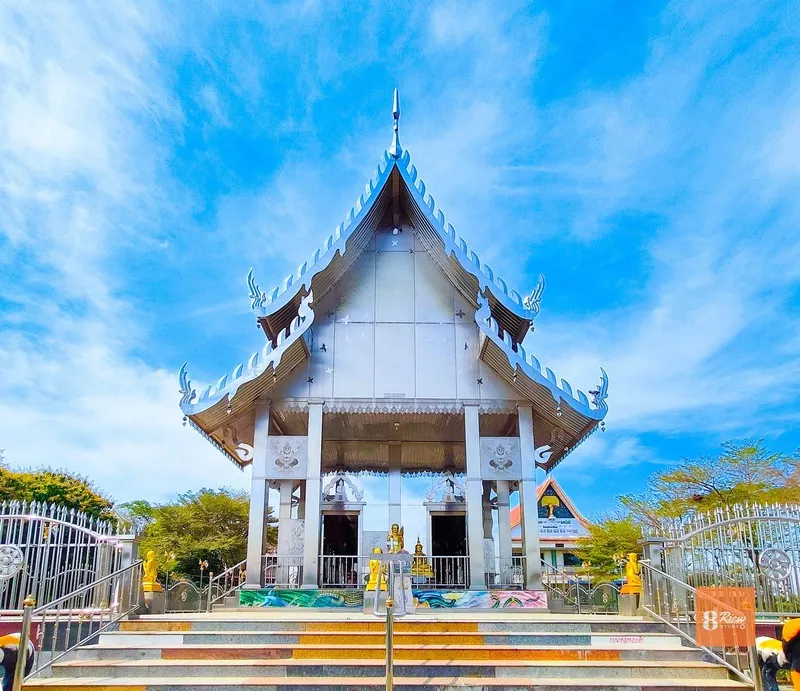
Wat Hua Suan in Samet Tai Subdistrict, Bang Khla District is a community temple best known for its “stainless-steel ubosot”—a contemporary piece of craftsmanship designed for long-term durability. The entire ubosot is built with 304 stainless steel, and details such as the chofa, bai raka, hang hong, and the decorative patterns around the structure add depth to both the devotional atmosphere and the architectural experience. For a Bang Khla day trip, this temple works well as a calm starting point before continuing to the floating market, famous grilled river prawn restaurants, and riverside accommodation, all within one day.
Wat Hua Suan is located in Samet Tai Subdistrict, Bang Khla District, Chachoengsao Province. It is a community temple under the Maha Nikaya order, widely recognized by locals as the “stainless-ubosot temple” because its ubosot was built entirely from stainless steel, becoming a distinctive landmark at the district level. If you enjoy temple visits that offer more than a quiet ambiance—places with details you can stroll around and study at ease—Wat Hua Suan is a destination where merit-making naturally connects with observing craftsmanship and the temple’s approach to restoring and renewing religious buildings in a community setting.
Community temples in Bang Khla have a character of their own. The Bang Pakong River environment and the orchard-to-community network mean that temples are not only religious sites; they are also meeting points for real everyday life. From seasonal merit-making events, kathin and pha pa ceremonies, and ordinations, to community activities that require shared public space, Wat Hua Suan has grown within this context. It has developed through local faith and local labor, eventually creating a strong visual landmark for the area: a stainless-steel ubosot that often makes passersby want to stop and take a closer look.
In terms of history, Wat Hua Suan covers an area of approximately 12 rai and 128 square wah. The temple was established in 1897 and received official permission to be designated as a temple in 1900. These dates reflect a community temple with a substantial historical foundation—not created for tourism, but to support local faith and rituals. In Bang Khla, one story commonly mentioned alongside the temple’s history concerns the role of respected teachers from nearby areas. Information notes that “Luang Pho Luea of Wat Sao Cha-ngok (Phra Khru Nandathirachan)” initiated the construction of the temple’s ubosot during an earlier period. This helps frame Wat Hua Suan as part of a broader network of religious devotion in Bang Khla rather than a temple that stands alone; it sits within the religious landscape of riverside communities where people recognize and connect with temples across subdistrict boundaries.
Another key milestone for a community temple is the granting of a “wisungkhamsima” (royal boundary). This official designation defines the ecclesiastical boundary for monastic acts, enabling important ceremonies such as ordination to be conducted properly under Sangha regulations. Wat Hua Suan received its royal boundary on 1 March 1928 and later received a subsequent royal boundary on 12 November 2010, with a designated boundary area measuring 24 meters wide and 32 meters long. When these milestones are read alongside the timeline of the stainless-steel ubosot, it becomes clear that the temple’s “renewal of religious space” was not merely about repairing a building. It was also about organizing and securing a stable ceremonial area that could function reliably in the long term.
The most distinctive feature of Wat Hua Suan is its stainless-steel ubosot, created from both necessity and design thinking. When it became time to repair the old ubosot and it was found to be severely deteriorated, the temple leadership at the time developed the concept of building a new ubosot that would be “more durable than before” and longer-lasting than conventional brick-and-mortar construction. This led to the approach of building the entire ubosot with stainless steel. Construction began around April 2009 and was completed around December 2010. The choice of material is not only about a shining surface; it reflects a clear intention to help the community’s sacred structure endure, reduce frequent maintenance burdens, and preserve the ubosot’s form as a spiritual anchor for future generations.
The ubosot is built using 304 stainless steel and measures approximately 7.50 meters wide, 18 meters long, and 6.50 meters high. It stands on a raised concrete base and features granite flooring. These details mean that the visit is not just “arrive and take a photo” but also an opportunity to observe elements that reflect both durability and refined craftsmanship. Although the material is modern, the ubosot maintains the visual language of Thai temples through its roofline and traditional decorative components, such as the chofa, bai raka, and hang hong, formed from stainless steel and finished with careful welding and detailing. When sunlight hits the surface, the lines and contours become more pronounced, which is why many visitors prefer coming in the morning for pleasant weather and beautiful light.
Beyond the structure itself, what gives the stainless-steel ubosot a sense of “content” is the decorative detail on the gables and windows, which depict the Buddha and celestial beings. This prevents the overall appearance from feeling rigid like a typical metal building and keeps the space aligned with the Thai sense of a sacred environment—designed to naturally encourage a respectful, composed mindset. Surrounding the ubosot is a stainless-steel fence with Dharmachakra motifs and swan-topped posts holding lanterns, which further enhances the orderliness of the area and supports its readiness for ceremonial use.
A highlight for detail-oriented visitors is the stainless-steel carving around the exterior, depicting “80 arahants.” This transforms the ubosot from a purely functional ceremonial structure into something like a “visual book” that can be read while walking. Symbolically, arahants represent the completion of practice leading to liberation. Placing them around the ubosot quietly reminds visitors that a religious place is not only for asking for blessings, but also for reflecting on the deeper aims of training the mind.
At the front of the ubosot stands Phra Sivali, an arahant widely revered in Thailand and commonly associated with beliefs about kindness, good fortune, and abundance. Inside, the principal Buddha image is Phra Phuttha Mahalaap. Many visitors begin by paying respect to Phra Sivali at the front and then enter the ubosot to worship the principal image. This sequence creates a natural rhythm: starting outdoors in an open space and then moving into the calmer, more inward-focused interior—ideal for those who want both photo-worthy moments and a peaceful temple experience in the same trip.
If you view Wat Hua Suan through the lens of visitor experience, its strength is that the temple is not so large that walking becomes tiring, yet it has enough detail to make your time feel worthwhile. You can circle the stainless-steel ubosot from multiple angles, observe how light and shadow shift across the surface, and appreciate how Thai elements such as the chofa and bai raka integrate with modern material without feeling visually awkward. Then you can end with a calm worship moment inside. For the best atmosphere, morning offers comfortable weather and softer light for studying the details, while late afternoon provides warmer tones that give the metal surface more depth and make photos stand out naturally.
As a community temple, Wat Hua Suan also suits visitors who want to travel respectfully. Dress modestly, keep quiet in the ubosot area, and walk without disturbing people who come to make merit. If you wish to make merit, a simple approach works well—donate according to your means, offer a set of necessities, or contribute to temple upkeep as you feel appropriate. Many community temples have grown through small, consistent collective support, and this kind of merit-making helps sustain a shared cultural space for the community over time.
Getting There Wat Hua Suan is in Samet Tai Subdistrict, Bang Khla District, Chachoengsao Province. Traveling by private car is the most convenient. Pin “Wat Hua Suan” or “Stainless Ubosot Wat Hua Suan” on your map and drive into the Bang Khla–Samet Tai area. Park in the designated temple area as appropriate. If you want to make a Bang Khla day trip worthwhile, it is best to start in the morning for comfortable weather, then continue to Bang Khla Floating Market, nearby important temples, and finish with riverside grilled prawn restaurants, a signature of Bang Khla.
The most satisfying Wat Hua Suan trip is usually a “no-rush” trip. The temple provides a calm pace, while Bang Khla offers the lively rhythm of markets and restaurants. You can begin by walking around the stainless-steel ubosot to see it from every angle, examine the 80 arahant figures around the exterior, worship Phra Sivali at the front and the principal Buddha image inside, and then move on to local life at the floating market or riverside restaurants. Planned this way, a single day can include devotion, craftsmanship, local culture, and the flavors Bang Khla is known for—all in one route.
| Place Name | Wat Hua Suan |
| Address | Samet Tai Subdistrict, Bang Khla District, Chachoengsao, Thailand |
| Place Summary | A Maha Nikaya community temple in Bang Khla, notable for its “stainless-steel ubosot” built entirely with 304 stainless steel. Construction started around 2009 and was completed around 2010. Phra Sivali is enshrined at the front, Phra Phuttha Mahalaap is the principal Buddha image inside, and the exterior features carvings depicting 80 arahants. Suitable for a faith-based visit combined with viewing contemporary temple architecture. |
| Key Highlights | 304 stainless-steel ubosot, stainless formed chofa–bai raka–hang hong details, gables and windows depicting the Buddha and celestial beings, Dharmachakra-pattern fence and swan-topped lantern posts, exterior arahant depictions (80 figures), worship points for Phra Sivali and Phra Phuttha Mahalaap, easy to combine with Bang Khla floating market and riverside grilled prawn routes. |
| Site History | Established in 1897 and officially permitted as a temple in 1900. Information notes that “Luang Pho Luea of Wat Sao Cha-ngok” initiated ubosot construction in an earlier period. The temple received its royal boundary (wisungkhamsima) on 1 March 1928 and received a later royal boundary on 12 November 2010 (boundary 24 m wide, 32 m long). The stainless-steel ubosot was built from around April 2009 and completed around December 2010. |
| Temple Phone Number | 038-583-988, 089-099-0791 |
| Current Abbot / Administrator (Latest) | Phra Khru Phawana Jariyakhun (Prayong Khuncharo) |
| Travel | Private car is most convenient. Pin “Wat Hua Suan” or “Stainless Ubosot Wat Hua Suan” and drive into the Samet Tai–Bang Khla area. Park at designated points, then continue to Bang Khla Floating Market and riverside restaurants. |
| Current Status | Open for worship and visiting the stainless-steel ubosot. |
| Nearby Tourist Attractions (Road Distance) | 1) Bang Khla Floating Market – approx. 15 km 2) Wat Pak Nam Jolo – approx. 25 km 3) Wat Saman Rattanaram – approx. 28 km 4) Wat Sothon Wararam Worawihan – approx. 25 km 5) Ban Mai 100-Year Market (Chachoengsao Town Area) – approx. 27 km |
| Nearby Restaurants (Road Distance + Phone) | 1) Ko Kung Pao (Bang Khla Floating Market) – approx. 15 km โทร. 081-861-1655 2) Je Tem Grilled Prawns & Fish (Bang Khla Floating Market) – approx. 15 km โทร. 063-209-0258 3) Thao Kae Chue (Bang Khla) – approx. 16 km โทร. 038-541-020 4) Rommaisaitarn – approx. 26 km โทร. 038-542-794 5) Phae Kung Samerng – approx. 20 km โทร. 081-410-2498 |
| Nearby Accommodations (Road Distance + Phone) | 1) Bang Khla Resort – approx. 17 km โทร. 085-224-4139 2) Tamarind@Bangkhla – approx. 18 km โทร. 065-563-2392 3) Little Bangkhla – approx. 17 km โทร. 062-492-4953 4) T Vintage (Bang Khla) – approx. 22 km โทร. 038-541-445 5) Suntara Wellness Resort & Hotel – approx. 25 km โทร. 038-823-317 |
Frequently Asked Questions (FAQ)
Q: When was Wat Hua Suan established?
A: Wat Hua Suan was established in 1897 and received official permission to be designated as a temple in 1900.
Q: Why is Wat Hua Suan famous for a “stainless ubosot”?
A: The temple built a new ubosot entirely from 304 stainless steel to improve durability and long-term usability, with distinctive details such as the chofa, bai raka, hang hong, and notable exterior decorative work.
Q: When was the stainless-steel ubosot built?
A: Construction began around April 2009 and was completed around December 2010.
Q: What is the meaning of the “80 arahants” depicted around the ubosot?
A: It is a symbolic reminder of Buddhist practice leading to liberation, turning the ubosot into a place that encourages reflection rather than functioning only as a ceremonial building.
Q: What are the main worship points inside Wat Hua Suan?
A: Phra Sivali is enshrined at the front, and Phra Phuttha Mahalaap is the principal Buddha image inside the ubosot—both are commonly worshipped for auspicious blessings.
Q: What time is best to visit Wat Hua Suan?
A: Morning is ideal for comfortable weather and softer light to appreciate details, while late afternoon offers warmer tones that add depth to the stainless surface and makes it easy to continue on to Bang Khla’s food-and-attraction route afterward.
 Category: ●Places of Worship
 Group: ●Temple
Last Update : 6 MonthAgo
 Last Update : 6 MonthAgo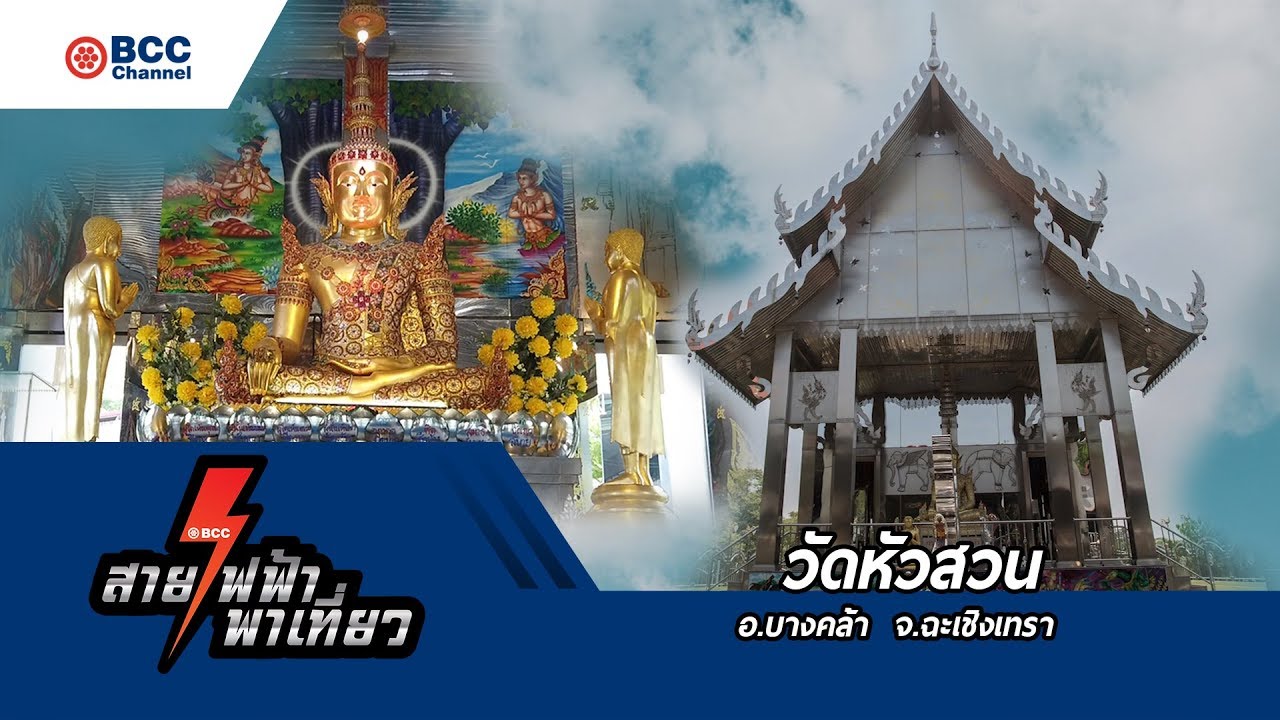
 Click to Access the Navigation Map GPS
Wat Hua Suan Map
Recommend

 Art, Culture and Heritage
 Historical Sites and Monuments(3)
 Landmarks and Memorials(4)
 Royal Palace(1)
 Art, Craft Centres, Tradition(10)
 Museums(2)
 Historic Homes and Cities(1)
 Educational Places
 Museum for Study(1)
 Library(1)
 Educational Gardens, Farm(2)
Temple(50)
Educational Gardens, Farm(2)
Temple(50)
 Mosque(2)
 Other Sacred Sites(7)
 Research and Development
 Royal Project(4)
 Suburban Living
 Village, Community(5)
 Local Market(4)
 Floating Market(1)
 Nature and Wildlife
 National Parks and Marine Reserves(2)
 Mountain (Doi)(1)
 Dam, Reservoir, Lake(6)
 Waterfalls(1)
 Caves(1)
 River, Canal(2)
 Bays and Beaches(1)
 Islands(2)
 Other natural attractions(2)
 Entertainment and Agricultural
 Zoos and Aquariums(1)
 Animal camps and shows(1)
 Farms, Parks and Ecotourism(6)
 Spas and Wellness
 Spas and Wellness(1)
 Travel Articles, Recipes
 Travel Review, Food Review(3)


