
lovethailand home >Central Travel Attractions >Chachoengsao Travel Attractions >Bang Khla >Sao Changok > Wat Sao Cha Ngok
TL;DR: Wat Sao Cha Ngok is located at Moo 1, Sao Cha Ngok Subdistrict, Bang Khla District, Chachoengsao 24110 (Bang Pakong Riverfront), open Open daily, hours 08:00 – 17:00.
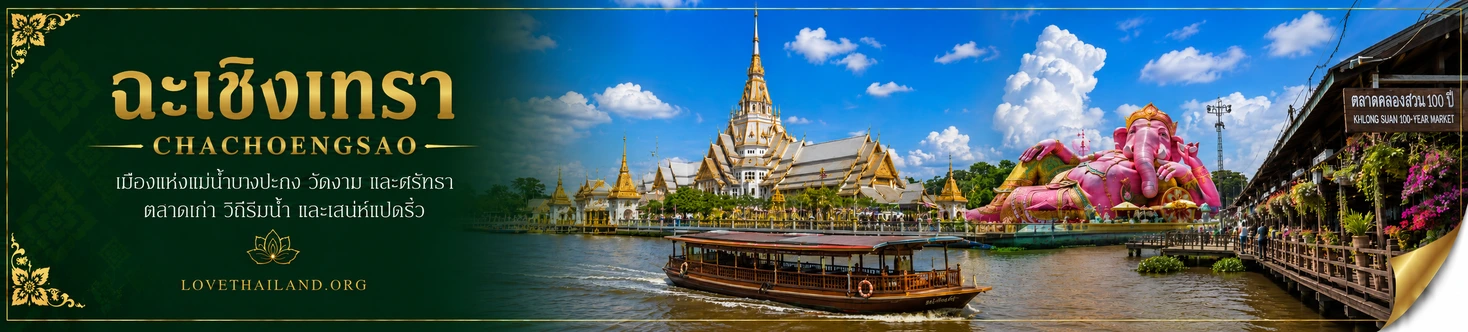
Wat Sao Cha Ngok

Open Days: Open daily
Opening Hours: 08:00 – 17:00
Wat Sao Cha Ngok is an old riverside temple on the Bang Pakong River in Bang Khla District. Founded in 1813, it carries both the community history of the Bang Pakong river basin and the well-known local legend behind its name. The temple is also strongly associated with Luang Pho Luea, a revered monk whose reputation is linked to sacred talismans such as the Palad Khik and the red yantra cloth, and it enshrines a replica Buddha footprint that is more than 100 years old. If you want a classic, calm riverside-temple atmosphere in Chachoengsao, this is a place where you can read “history through the river” in a very tangible way.
Wat Sao Cha Ngok is a local (community) temple under the Maha Nikaya order. It is located in Moo 1, Sao Cha Ngok Subdistrict, Bang Khla District, Chachoengsao Province, directly on the Bang Pakong River. The first thing that stands out is how striking the temple looks from the water. Because the temple complex sits right beside an open stretch of river, the view feels especially dignified and “anchored.” For people who once traveled by boat as part of everyday life, a riverside temple like this was not only a religious site but also a real marker of where communities, piers, and river networks were situated along the Bang Pakong.
To understand Wat Sao Cha Ngok beyond the shorthand of being a “famous amulet temple,” it helps to begin with the Bang Pakong River basin itself. The Bang Pakong has long been both an ecosystem and an economic lifeline for Chachoengsao. Bang Khla and other riverside areas historically supported orchards, agriculture, and trading communities that depended on boat travel. When the river served as a road, riverside temples naturally became centers of faith, community learning, and a steady rhythm in the flow of people moving up and down the waterway. In that context, “riverside temple” is not simply a scenic backdrop but a social structure rooted in geography.
Temple records state that Wat Sao Cha Ngok was founded in 1813 by Nai Nuch and Nang Yang, residents of Khlong Song Phi Nong, Bang Khla District, who initiated the establishment and donated roughly 6 rai of land. In its earliest stage, the temple reportedly had only simple monk residences roofed with thatch, reflecting how many early community temples began through faith and shared labor rather than large capital. Later, in 1837, the temple and local devotees began building an ordination hall (about 5 meters wide and 8 meters long) and monk quarters, but limited funds delayed completion. In 1849, Khun Phat (Rang) and villagers joined in further restoration and formally established the consecrated boundary (phatthasima) in the same year. This timeline shows gradual growth aligned with the community’s capacity, a common pattern among older riverside temples in central and eastern Thailand.
The temple’s growth is also reflected in later expansions of temple land holdings. On 29 September 1914, Nai Choem (son of Nai To and Amdaeng Klin of Khlong Ban Mu) donated land to the temple as monastic property totaling 48 rai 96 square wah. On 11 February 2000, Mr. Chaloem Dechsupapong donated an additional plot as kalpana land totaling 3 rai 3 ngan 40 square wah. In many communities, such increases in temple land tend to occur when a temple’s role in local life becomes steadily more significant, because temple land is not only construction space but also a resource base supporting ongoing religious functions, restoration, and community activities.
Wat Sao Cha Ngok received the royal grant of Wisungkhamsima in 1969. For a community temple, this is an important milestone because wisungkhamsima formally recognizes the boundary for monastic acts in the ordination hall, enabling major ceremonies such as ordination to be conducted in full accordance with Sangha regulations. This is another layer confirming that the temple is not merely a small local site by the river, but a temple with an established religious structure and a clearly recognized role in the modern period.
However, what makes the name “Wat Sao Cha Ngok” particularly memorable in cultural terms is the legend of its origin, which is directly tied to riverside life. The story says that in the past, a wedding procession traveled by boat to seek a bride. As the procession drew near, the bride leaned out (“cha ngok”) to look and accidentally fell from the house and died. Later, her parents donated this land to build a temple and named it “Wat Sao Cha Ngok” in her memory. From an anthropological perspective, such legends work on two levels: first, they explain a place name through a vivid event people can easily remember; second, they underline a lived truth of river communities — the river sustains life, yet it can also take life away.
Because the temple sits beside the Bang Pakong, reading the temple landscape is inseparable from the history of water-based movement. In periods when roads did not reach everywhere, boat travel was normal. Riverside temples therefore became both “rest stops for boats” and “rest stops for the heart,” places to make merit before continuing a journey or to offer gratitude upon returning home. Many riverside temple traditions are associated with water processions, merit-making along the banks, and communal gatherings shaped by seasonal river rhythms. So when people say, “the temple looks beautiful from the water,” that is not only a tourism remark; it echoes a collective memory from a time when the river was the primary route.
Another major reason the temple’s devotion extends beyond the local area is its association with an important monk of the temple, Phra Khru Nanthathiracharn (Luang Pho Luea). He is respected by many Buddhists and is known for creating and distributing red yantra cloth to soldiers during wartime and for being strongly linked to sacred objects, especially the Palad Khik. In Thai cultural belief, the Palad Khik carries layered meanings connected to protection, attraction/charisma, and luck. Socially, it reflects how faith often seeks something tangible to hold onto during uncertain times.
Stories that keep Luang Pho Luea’s name circulating include accounts of consecration so powerful that the talisman could “float against the current.” Even if such narratives are transmitted orally, the key point is how miracle stories function in Thai culture. They are not meant to be proven scientifically; they serve to expand faith through vivid imagery and make a teacher’s virtues unforgettable. In a river community that lives with water daily, an image of something moving against the current becomes even more potent because it is framed against a reality everyone understands — the force of the river, shifting water levels, and travel by boat.
Importantly, Wat Sao Cha Ngok is not only about amulets. It also holds “material traces of devotion” that let visitors read time within the temple itself, such as a replica Buddha footprint that is over 100 years old. In many Thai temples, replica footprints reflect the belief in remembering the Buddha through a symbolic imprint in the human world, and they often become a natural place for people to set intentions about life, family, work, and inner calm. With this temple set by the river, the cool, quiet riverside atmosphere encourages a slower, steadier rhythm of worship.
If we look at Wat Sao Cha Ngok through the lens of “riverside religious landscape,” it clearly reflects three roles of temples in the Bang Pakong basin. First, it is a ritual center for the surrounding community within walking or paddling distance. Second, it stores local memory through its name legend and restoration history. Third, it gathers devotion across wider areas through the reputation of Luang Pho Luea and related sacred objects. Together, these layers make the temple a shared space across generations — local residents, pilgrims, and visitors interested in river-basin culture who want to read place through an authentic site.
To make a visit worthwhile, you do not need to rush through a quick prayer and leave. Instead, notice small details that reveal the larger story of the river basin — the riverbank line, the open view across the water, angles where you can see boats or water movement, and the breeze passing through the temple grounds. These details help explain why riverside temples endure: they hold both spiritual meaning and place-based meaning at the same time.
Another interesting aspect of riverside temples in Chachoengsao today is how they connect with the modern local economy. Bang Khla is remembered for its floating market and many riverside restaurants. That makes it easy to shape a cultural route around Wat Sao Cha Ngok in a “devotion + river life” rhythm: visit the temple to make merit and worship, then continue to Bang Khla’s food-and-market spots without a long drive. This balance keeps the trip both peaceful and lively.
Getting There Wat Sao Cha Ngok is in Bang Khla District, Chachoengsao Province. Traveling by private car is the most convenient. Set your map pin to “Wat Sao Cha Ngok” and follow the route into Sao Cha Ngok Subdistrict. Parking is available within the temple area. If you want the full riverside feeling, allow time to walk along the Bang Pakong River frontage in front of the temple to see clearly how the site is connected to the river landscape.
Wat Sao Cha Ngok can be read on three levels at once. The first is its founding and restoration history, which mirrors community growth. The second is the name legend that preserves a shared memory of river life. The third is the devotion to Luang Pho Luea and the sacred objects that draw visitors from many areas. With all of this set against the living backdrop of the Bang Pakong River, the temple becomes a tangible summary of “local history that is still alive.”
| Place Name | Wat Sao Cha Ngok |
| Address | Moo 1, Sao Cha Ngok Subdistrict, Bang Khla District, Chachoengsao 24110 (Bang Pakong Riverfront) |
| Place Summary | A Maha Nikaya riverside temple on the Bang Pakong River, founded in 1813, with the “Sao Cha Ngok” name legend, devotion connected to Luang Pho Luea (Palad Khik / red yantra cloth), and a replica Buddha footprint over 100 years old. |
| Key Highlights | Beautiful riverside setting (especially from the water), long history since the early Rattanakosin era, name legend linked to river life, devotion tied to Luang Pho Luea and sacred objects, replica Buddha footprint over 100 years old. |
| Period | Founded 1813 (Early Rattanakosin); Wisungkhamsima granted 1969 |
| Key Evidence | Ordination hall construction/restoration timeline (1837, 1849), consecrated boundary established 1849, expansion of temple lands (monastic property and kalpana land), Wisungkhamsima 1969, replica Buddha footprint over 100 years old. |
| Name Origin | Local legend says a bride leaned out to look at a boat wedding procession, fell, and died; her family donated the land to build the temple and named it “Wat Sao Cha Ngok” in her memory. |
| Temple Leadership (Latest) | Phra Athikan Thirasak Thatukamo (Phra Khru Nanthathiranunwat) |
| Contact Number | 038-521-058, 089-541-5615 |
| Travel | Private car is most convenient. Pin “Wat Sao Cha Ngok,” enter Sao Cha Ngok Subdistrict, Bang Khla. Parking is available, and you can walk along the Bang Pakong River frontage for the best riverside atmosphere. |
| Current Status | Open for worship, merit-making, and temple activities depending on occasions. |
| Nearby Tourist Attractions (Road Distance) | 1) Bang Khla Floating Market – 12 km 2) Wat Pho Bang Khla – 13 km 3) Wat Pak Nam Jolo – 18 km 4) Wat Saman Rattanaram – 22 km 5) Ban Mai 100-Year Market (Chachoengsao City area) – 30 km |
| Popular Restaurants Nearby (Road Distance + Phone) | 1) Ko Kung Pao (Bang Khla Floating Market area) – 12 km 2) Rommai Saitarn – 13 km Tel. 038-542-794, 086-155-7111 3) Phae Kung Samerng – 15 km 4) Thao Kae Chue (Bang Khla area) – 13 km 5) Je Tem Grilled Prawns & Fish (Bang Khla Floating Market area) – 12 km |
| Popular Accommodations Nearby (Road Distance + Phone) | 1) Bang Khla Resort – 14 km 2) Tala Bangkla Riviera – 16 km 3) Tamarind@Bangkhla (Tamarind ณ บางคล้า) – 15 km Tel. 065-563-2392 4) Blue Ozone Resort & Spa – 18 km 5) Little Bangkhla – 16 km |
Frequently Asked Questions (FAQ)
Q: When was Wat Sao Cha Ngok established?
A: The temple was founded in 1813 by Nai Nuch and Nang Yang, who initiated the construction and donated land for the earliest temple area.
Q: Where did the name Wat Sao Cha Ngok come from?
A: According to local legend, a bride leaned out to look at a wedding procession arriving by boat, fell from the house, and died. Her family then donated the land to build a temple and named it “Wat Sao Cha Ngok” in her memory.
Q: What is Luang Pho Luea famous for?
A: Luang Pho Luea (Phra Khru Nanthathiracharn) is a revered monk known for distributing red yantra cloth to soldiers and for sacred objects, especially the Palad Khik, which remains widely sought after by devotees.
Q: What old or historic object can visitors pay respect to inside the temple?
A: The temple enshrines a replica Buddha footprint that is over 100 years old, and it remains an important point of worship for visitors.
Q: When is the best time to visit for the most beautiful atmosphere?
A: Morning or late afternoon is ideal for walking around the temple and along the Bang Pakong River, as the light is beautiful, the temperature is milder, and the riverside feels especially calm.
Q: If I want a worthwhile Bang Khla day trip, where should I go after visiting the temple?
A: You can continue to Bang Khla Floating Market to enjoy riverside life and local food, visit other important nearby temples within Bang Khla District, and finish with a relaxed riverside meal or an overnight stay in the Bang Khla area.
 Category: ●Places of Worship
 Group: ●Temple
Last Update : 6 MonthAgo
 Last Update : 6 MonthAgo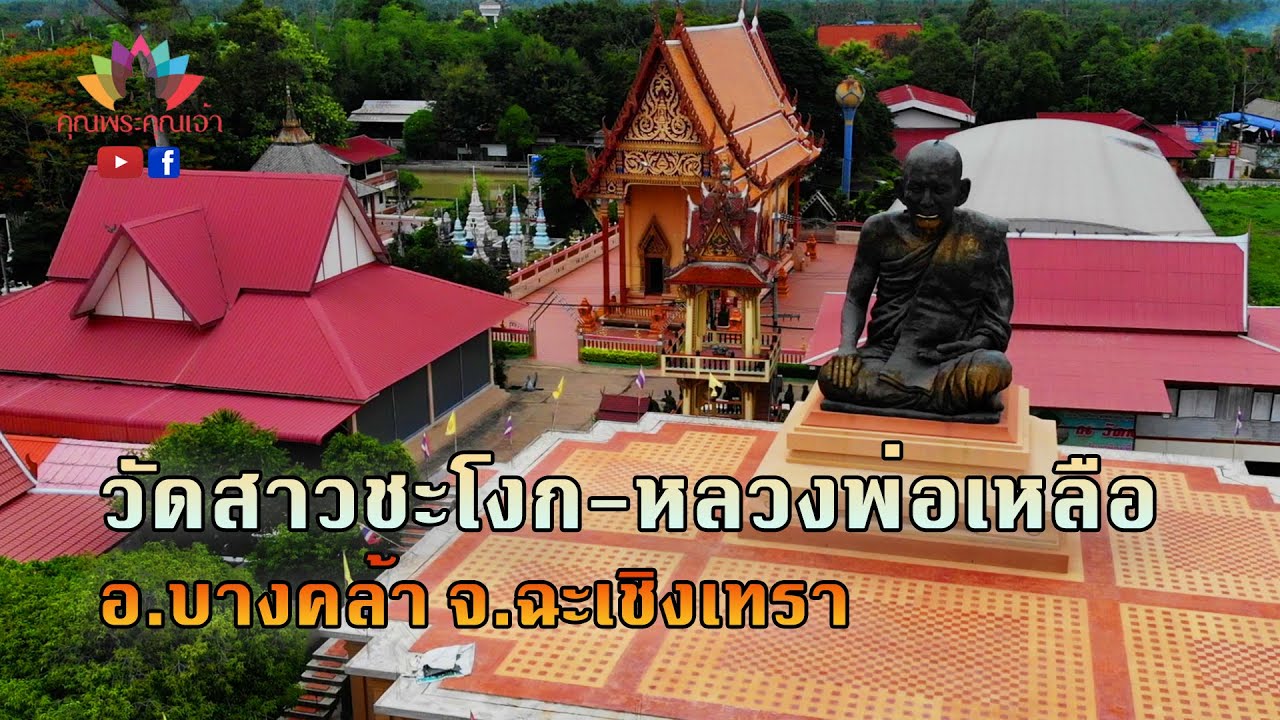
 Click to Access the Navigation Map GPS
Wat Sao Cha Ngok Map
Recommend

 Art, Culture and Heritage
 Historical Sites and Monuments(3)
 Landmarks and Memorials(4)
 Royal Palace(1)
 Art, Craft Centres, Tradition(10)
 Museums(2)
 Historic Homes and Cities(1)
 Educational Places
 Museum for Study(1)
 Library(1)
 Educational Gardens, Farm(2)
Temple(50)
Educational Gardens, Farm(2)
Temple(50)
 Mosque(2)
 Other Sacred Sites(7)
 Research and Development
 Royal Project(4)
 Suburban Living
 Village, Community(5)
 Local Market(4)
 Floating Market(1)
 Nature and Wildlife
 National Parks and Marine Reserves(2)
 Mountain (Doi)(1)
 Dam, Reservoir, Lake(6)
 Waterfalls(1)
 Caves(1)
 River, Canal(2)
 Bays and Beaches(1)
 Islands(2)
 Other natural attractions(2)
 Entertainment and Agricultural
 Zoos and Aquariums(1)
 Animal camps and shows(1)
 Farms, Parks and Ecotourism(6)
 Spas and Wellness
 Spas and Wellness(1)
 Travel Articles, Recipes
 Travel Review, Food Review(3)


