
lovethailand home >Central Travel Attractions >Chachoengsao Travel Attractions >Bang Khla >Pak Nam > Wat Mongkhon Thep
TL;DR: Wat Mongkhon Thep is located at Moo 12, Pak Nam Subdistrict, Bang Khla District, Chachoengsao 24110, open Open daily, hours 08:00 – 17:00.
Wat Mongkhon Thep
Open Days: Open daily
Opening Hours: 08:00 – 17:00
Wat Mongkhon Thep If you are looking for a temple in Bang Khla District that offers “serious calm” rather than a quick stop to pay respects and leave, Wat Mongkhon Thep in Moo 12, Pak Nam Subdistrict, Chachoengsao Province, is a clear match. This temple was shaped as a place for meditation practice from the beginning. It did not start as a sightseeing temple, but gradually grew from a meditation hermitage and the devotion of the surrounding community, eventually becoming a community temple under the Mahanikaya sect where daily chanting and meditation form the core rhythm of the place.
The shared image of Pak Nam Subdistrict and the Bang Khla area is that of a “river-basin landscape,” closely tied to Chachoengsao’s waterways, especially the broader Bang Pakong River basin that has long sustained orchard communities, canal networks, and everyday mobility. In environments where riverside life still follows nature’s cadence, the emergence of a meditation hermitage is not surprising. Such settings naturally help “reduce noise,” both physically and mentally. Many visitors feel that simply moving from a busy city into Bang Khla makes breathing and thinking slow down on their own.
The origin story of Wat Mongkhon Thep begins with the period when a wandering forest monk (phra thudong) came to stay in this area, first as a temporary dwelling and later as the seed of a meditation hermitage. In local memory, a thudong monk represents a life centered on renunciation, discipline, and the search for inner quiet. When a monk of this tradition settles in a place, it often becomes a catalyst for nearby communities to develop the surroundings into a suitable meditation environment. Over time, the site was officially declared Wat Mongkhon Thep in 1999 (B.E. 2542), taking its name from the monk remembered by the community. This naming pattern reflects both the “root of faith” and the “foundational figure” connected to the site in a direct and recognizable way.
In terms of official documentation and Sangha status, Wat Mongkhon Thep received permission to be built on October 11, 1994 (B.E. 2537), and was formally established on June 3, 1999 (B.E. 2542). Ms. Sanae Pan Tha Khai was the applicant for the construction permit and also donated land measuring 53 rai, 1 ngan, and 89 square wah. After the temple’s land was fully organized, the total area was about 75 rai, 2 ngan, and 26 square wah. These figures matter because they reflect a scale sufficient for the temple to function as a meditation center, including ceremonial buildings, practice zones, areas for practitioners, and practical utilities expected of a modern temple environment.
What makes Wat Mongkhon Thep particularly notable at the provincial level is its status as “Chachoengsao Provincial Meditation Center No. 27.” In practice, this means the temple is not limited to seasonal ceremonies but actively supports ongoing meditation practice. Many visitors pay close attention to the daily schedule because the temple holds chanting and meditation every day from 05:00 to 20:30. This creates a clear time frame that turns the temple into a “training ground for the mind.” Beginners can lean on the schedule to build gentle discipline, while experienced practitioners can use it as a rhythm for reflection and balance.
In terms of administration and community leadership, the first abbot was Phra Athikan Bancha Sirivijjayo. He has since been appointed as “Phra Khru Phawana Sitthikhun (Vi. Chp.).” The honorific closely associated with the idea of “meditation (phawana)” aligns directly with the temple’s identity: the community remembers this place not only as somewhere to make merit, but as a place to train mindfulness, deepen concentration, and elevate life through real practice. As the temple developed with a fully established ubosot and sacred structures, it received Wisungkhamsima (royal consecration of the ordination boundary) on May 11, 2011 (B.E. 2554), a milestone confirming readiness for monastic rites under Sangha regulations.
Viewed as a “contemporary temple,” Wat Mongkhon Thep is an example of architecture designed to be simple yet precise in materials and detail. Most structures are contemporary in style, with an overall tone that feels clean and uncluttered. Instead of competing through heavy ornamentation, the design prioritizes proportion and surface finishes that create calm. Many visitors notice immediately, upon entering the ubosot area, that the environment is arranged for steady attention rather than hurried sightseeing. This matches the identity of a meditation center that values “mental spaciousness” more than “visual density.”
The ubosot was built during 2008–2010 (B.E. 2551–2553). It stands on a base raised about 1.5 meters, measuring 9.40 meters wide and 30.50 meters long. The raised platform creates a clear sense of “lifting the ritual space above the ordinary ground,” strengthening the symbolic boundary of a place meant for bodily and mental stillness. Inside, the walls and floor are clad in marble, offering a cool visual texture and softly reflecting light. The exterior walls are brick and plaster, finished with white exposed-aggregate wash, making the building bright in daytime and especially striking when sunlight hits it in the morning or late afternoon.
One feature that often holds visitors’ attention is the “gable panels,” because the temple chose embossed aluminum reliefs as a contemporary form of narrative art that fits the overall architecture. The east-facing gable depicts 100 figures of the Buddha in the form known as “Phitsadarn Kai.” This can be read on multiple levels, from a devotional vision of the Buddha in expansive dimensions to a symbolic statement that “the Dhamma has many doorways,” yet leads to the same essential aim: liberation from suffering. The west-facing gable depicts 101 figures of Phra Mongkhon Thep Muni (Sot Chanthasaro). This compositional choice makes the temple’s connection to meditation traditions in modern Thai society visible in a concrete form, while also showing how “numbers” are used as both beauty and meaning.
Around the ubosot, a “glass boundary wall (kamphaeng kaeo)” encloses the sacred precinct, measuring 33.75 meters wide and 54.85 meters long. In Thai temple symbolism, this is more than a fence: it defines the ritual boundary and acts as a symbolic line between secular space and ceremonial space. A clearly enclosed area also helps organize visitor movement so entry and exit feel orderly and do not disturb chanting or meditation inside. It supports the temple’s ability to preserve a calm atmosphere even on busier days.
The main Buddha image in the ubosot is named “Phra Phutthachao Ong Ton That Ton Tham.” The emphasis on “that” (element/essence) and “tham” (Dhamma) leads many practitioners to interpret the name as a call to return to the “core” of meditation: not drifting with daily mental turbulence, but observing the causes and conditions of body and mind directly. When visitors sit quietly in the ubosot, the simple design, marble surfaces, and the restrained white tone often make it easier to settle attention compared with spaces filled with dense decorative details.
The temple’s daily chanting and meditation schedule is essential to describe as part of the “experience of the place.” For readers who intend to practice, the key issue is not only whether the ubosot is beautiful, but whether the rhythm of practice is real and continuous. A temple that sustains morning and evening routines consistently gives visitors confidence that they can arrive and be supported by a stable framework, rather than being pulled back into the rush of the outside world. It also provides beginners with a form of “gentle discipline” through time structure, without requiring excessive self-pressure.
Looking deeper, a meditation-focused temple within the Bang Pakong River basin holds an interesting “cultural background,” because river-basin communities are naturally accustomed to living with nature’s cycles—water levels, planting seasons, orchard rhythms, and occasional fishing patterns. Such cycles cultivate habits of observation and patience. When a temple offers mindfulness and meditation training based on observing breath and thought, it feels like extending “community life skills” into “inner skills” in a seamless way. Visitors who know Bang Khla mainly through the floating market or riverside grilled prawn restaurants often discover another layer through Wat Mongkhon Thep: a quieter Bang Khla where the practice of silence becomes a form of learning.
For a one-day cultural itinerary, Wat Mongkhon Thep can serve as a strong “morning starting point.” Early hours are cooler and naturally suit steady attention. After paying respects and spending time in calm, visitors can continue to Bang Khla attractions such as the floating market or nearby temples. This way, the day becomes more than a checklist of places; it becomes a balanced rhythm that holds devotion, calm, and local flavor together.
Getting There From Chachoengsao town, head toward Bang Khla District and set your navigation to Wat Mongkhon Thep in Pak Nam Subdistrict. Traveling by private car is the most convenient option, especially if you want to align your visit with the temple’s daily routines—arriving early for the quiet atmosphere or visiting later for an unhurried look at the ubosot’s artistic details. It is advisable to check the route before leaving and allow extra time on weekends, when some roads may see increased traffic from visitors heading to the floating market and riverside restaurants.
When you combine its beginnings as a meditation hermitage, its growth into a designated provincial meditation center, its clear timeline of establishment and consecrated ordination boundary, and its contemporary architecture designed for calm attention, Wat Mongkhon Thep stands out with a distinct identity. It does not compete through lavish ornamentation. Instead, it is defined by stillness, simplicity, and the consistency of daily routines—qualities that make visitors feel the place was truly built to let the mind rest.
| Place Name | Wat Mongkhon Thep |
| Address | Moo 12, Pak Nam Subdistrict, Bang Khla District, Chachoengsao 24110 |
| Place Summary | A community temple under the Mahanikaya sect in Pak Nam Subdistrict. It developed from a meditation hermitage, was established in 1999 (B.E. 2542), received Wisungkhamsima in 2011 (B.E. 2554), features a contemporary ubosot with embossed aluminum gable reliefs, and is designated as Chachoengsao Provincial Meditation Center No. 27. |
| Highlights | Daily meditation practice and chanting; contemporary marble-clad ubosot; embossed aluminum gable reliefs (100 figures of “Phitsadarn Kai” and 101 figures of Phra Mongkhon Thep Muni); the main Buddha image named “Phra Phutthachao Ong Ton That Ton Tham.” |
| Contact Phone | 083-598-6877, 038-088-000 |
| Current Steward / Abbot (Latest) | Phra Khru Phawana Sitthikhun (Vi. Chp.) |
| Travel | Drive from Chachoengsao town toward Bang Khla District, then enter Pak Nam Subdistrict and set navigation to “Wat Mongkhon Thep” for direct routing. |
| Current Status | Open for worship and participation in the temple’s daily routines. |
| Nearby Tourist Attractions (Road Distance) | 1) Bang Khla Floating Market – 12 km 2) Wat Pho Bang Khla – 13 km 3) Wat Pak Nam Jo Lo – 15 km 4) Wat Saman Rattanaram – 28 km 5) Ban Mai 100-Year Market (Chachoengsao old town area) – 34 km |
| Popular Restaurants Nearby (Road Distance + Phone) | 1) Kor Kung Pao (Bang Khla Floating Market) – 12 km. Tel. 081-861-1655 2) Kung Pao Talay Pao Restaurant – 13 km. Tel. 099-257-0634 3) Rommai Saitarn – 14 km. Tel. 038-542-794 4) Thao Kae Chue – 13 km. Tel. 038-541-020 5) Bang Khla Cafe & Restaurant – 12 km. Tel. 082-510-4538 |
| Popular Accommodations Nearby (Road Distance + Phone) | 1) Bang Khla Resort – 18 km. Tel. 085-224-4139 2) Tala Bangkla Riviera – 16 km. Tel. 062-323-7424 3) Blue Ozone Resort & Spa – 17 km. Tel. 081-611-1144 4) Tamarind@Bangkhla – 15 km. Tel. 065-563-2392 5) Little Bangkhla – 19 km. Tel. 062-492-4953 |
Frequently Asked Questions (FAQ)
Q: Where is Wat Mongkhon Thep located?
A: It is located in Moo 12, Pak Nam Subdistrict, Bang Khla District, Chachoengsao Province.
Q: When was Wat Mongkhon Thep officially established?
A: The temple received permission to be built on October 11, 1994 (B.E. 2537), and was officially established on June 3, 1999 (B.E. 2542).
Q: Is Wat Mongkhon Thep officially a meditation center?
A: Yes. It is designated as Chachoengsao Provincial Meditation Center No. 27, with meditation practice forming the core identity of the temple.
Q: What is the key highlight of the ubosot at Wat Mongkhon Thep?
A: The ubosot is contemporary in style with marble cladding inside, and distinctive embossed aluminum gable reliefs—one side depicting 100 figures of “Phitsadarn Kai,” and the other depicting 101 figures of Phra Mongkhon Thep Muni (Sot Chanthasaro).
Q: What is the name of the main Buddha image in the ubosot?
A: The main Buddha image is named “Phra Phutthachao Ong Ton That Ton Tham.”
Q: How should I prepare if I want to practice meditation at the temple?
A: Dress respectfully, avoid loud noise, follow practice-area etiquette and chanting times, and arrive early to settle in and prepare your mind before joining any routine.
 Category: ●Places of Worship
 Group: ●Temple
Last Update : 6 MonthAgo
 Last Update : 6 MonthAgo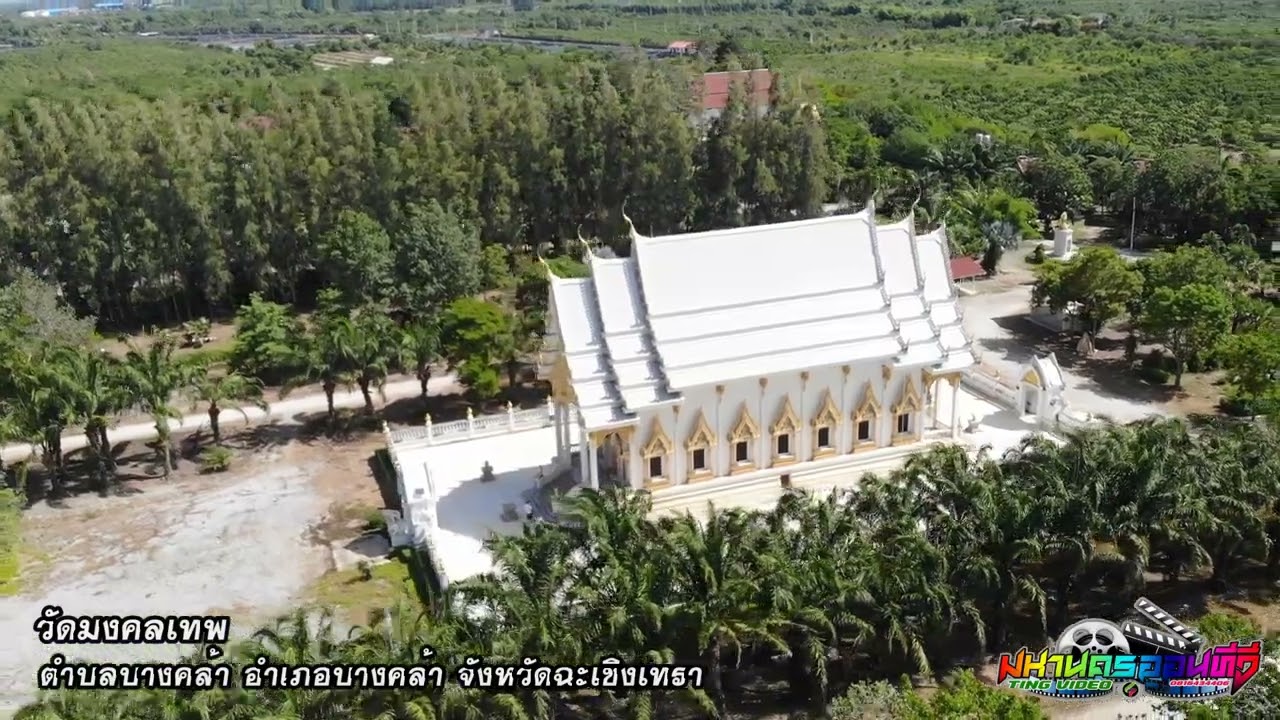
 Click to Access the Navigation Map GPS
Wat Mongkhon Thep Map
Recommend

 Art, Culture and Heritage
 Historical Sites and Monuments(3)
 Landmarks and Memorials(4)
 Royal Palace(1)
 Art, Craft Centres, Tradition(10)
 Museums(2)
 Historic Homes and Cities(1)
 Educational Places
 Museum for Study(1)
 Library(1)
 Educational Gardens, Farm(2)
Temple(50)
Educational Gardens, Farm(2)
Temple(50)
 Mosque(2)
 Other Sacred Sites(7)
 Research and Development
 Royal Project(4)
 Suburban Living
 Village, Community(5)
 Local Market(4)
 Floating Market(1)
 Nature and Wildlife
 National Parks and Marine Reserves(2)
 Mountain (Doi)(1)
 Dam, Reservoir, Lake(6)
 Waterfalls(1)
 Caves(1)
 River, Canal(2)
 Bays and Beaches(1)
 Islands(2)
 Other natural attractions(2)
 Entertainment and Agricultural
 Zoos and Aquariums(1)
 Animal camps and shows(1)
 Farms, Parks and Ecotourism(6)
 Spas and Wellness
 Spas and Wellness(1)
 Travel Articles, Recipes
 Travel Review, Food Review(3)


