
lovethailand home >Northeastern Travel Attractions >Yasothon Travel Attractions >Kut Chum >Kut Chum > Phu Mak Phrik
TL;DR: Phu Mak Phrik is located at Ban Thong Samrit, Moo 15, Kut Chum Subdistrict, Kut Chum District, Yasothon Province, open Daily, hours 06.00 – 15.00.
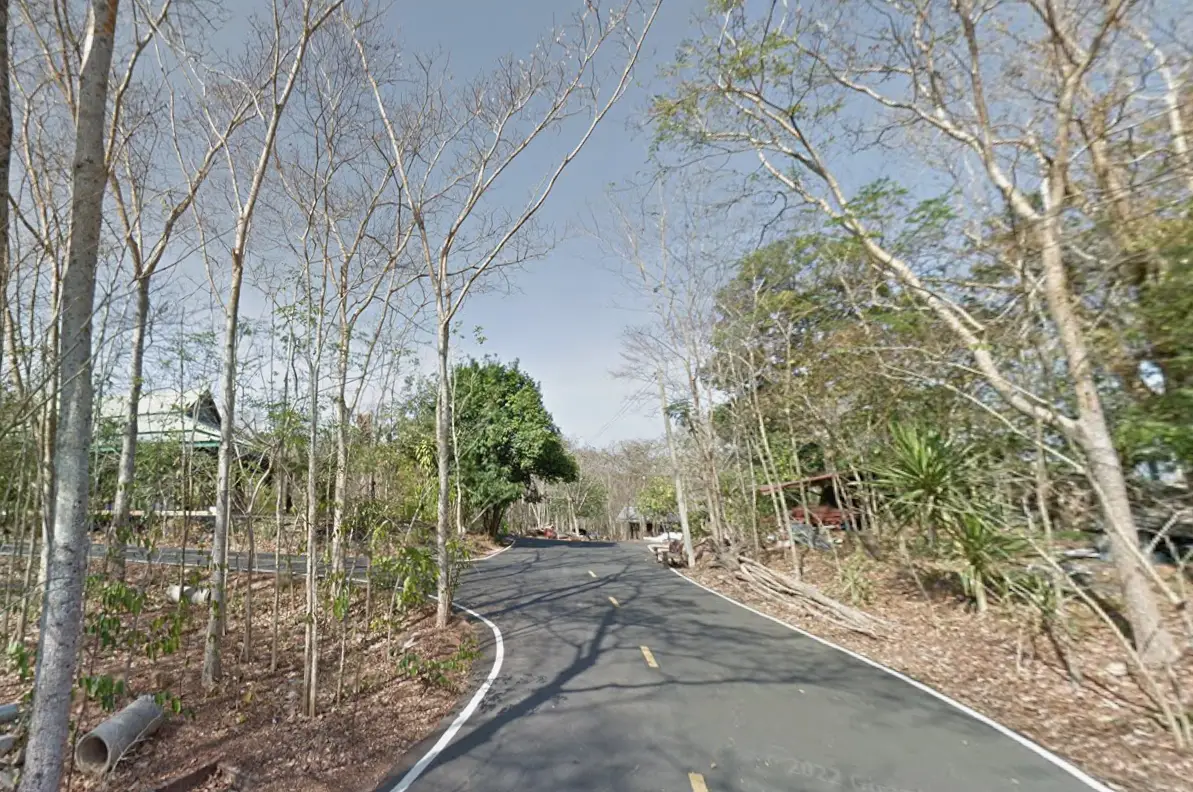
Phu Mak Phrik
Open Days: Daily
Opening Hours: 06.00 – 15.00
Phu Mak Phrik in Yasothon is a natural attraction, community forest, and Buddhist forest-temple site located at Ban Thong Samrit, Moo 15, Kut Chum Subdistrict, Kut Chum District, Yasothon Province. The area is known for its forested hill landscape, moist streamside habitats, natural spring-fed water areas, small rock crevices, forest plants, and local wildlife. Its most distinctive ecological highlight is the local mountain crab known as “Pu Paeng,” a rare local crab with a purple carapace and orange body and legs. This crab lives in rock crevices along streams, making Phu Mak Phrik an important local ecosystem learning site.
Phu Mak Phrik is part of the wider natural landscape of Kut Chum District, together with Phu Hin Pun, Phu Tham Phra, Phu Thang Kwian, and Lub Nong No Reservoir. These places show that Kut Chum is not only a rural and agricultural district, but also an area with hills, rock fields, forest temples, springs, caves, and local ecological habitats. Phu Mak Phrik adds a special ecological layer to this route because it combines a restored community forest, a Buddhist temple, streamside life, spring water, and distinctive plant species in one place.
The area is significant as a restored community forest. In the past, part of the hill was used as a chili-growing area and later became degraded. Through serious care by the Phu Mak Phrik monastic community and local people, the forest was restored until the area became green and shaded again. The former monastic residence later developed into Wat Phu Mak Phrik. This history makes the site meaningful because it shows how a degraded hill can return to a living forest landscape when monks, villagers, and local communities work together.
The name “Phu Mak Phrik” reflects the memory of the place. Local stories connect the name with chili plants that once grew on the hill. The name therefore preserves a trace of past land use while the present landscape shows recovery, forest care, and local conservation. Visitors can understand the site as a living example of how community memory, land use, religion, and ecology become part of one cultural landscape.
The terrain of Phu Mak Phrik includes forested slopes, moist rock crevices, streamside areas, natural water seepage, and small cave-like rock zones. The presence of moisture is important. It supports plants, mosses, lichens, streamside vegetation, insects, and small animals. The natural spring known locally as Ang Pla Kang Chan Ko Bong is one of the important features of the area. Spring-fed water helps maintain humidity and supports the survival of small creatures and plants that depend on cool and moist microhabitats.
The most memorable animal associated with Phu Mak Phrik is Pu Paeng. This local mountain crab has a striking appearance, with a purple shell and orange body and legs. It lives in small spaces among rocks near water. Its presence shows that the streamside environment remains suitable for sensitive small aquatic life. For visitors, Pu Paeng should be appreciated as an ecological indicator rather than treated as a curiosity to catch. Observing it respectfully helps protect the habitat that makes Phu Mak Phrik special.
Visitors should not catch, move, or disturb Pu Paeng. They should avoid stepping into streamside crevices, turning over rocks, throwing waste into water, or damaging vegetation near the stream. The crab’s habitat depends on clean water, shade, moisture, and stable rock conditions. If these small habitats are damaged, the crab and other living organisms may be affected. Responsible travel at Phu Mak Phrik therefore means observing nature without taking anything away from it.
Ang Pla Kang Chan Ko Bong is another important natural feature. It is described as a natural spring-fed water source, which means it is more than a simple pond or photo point. In a hill ecosystem, spring water helps maintain humidity through dry periods and supports the surrounding plants and animals. The presence of spring water also explains why the area can support moss, lichens, streamside plants, and small animals in rock crevices. This makes the site valuable for local ecological learning.
Visitors should treat the spring area carefully. Small wet surfaces, moss, and plants around rocks are part of the ecological system. They should not be trampled, polluted, or disturbed. In natural sites like Phu Mak Phrik, the most fragile features are often the smallest ones: tiny plants on rock surfaces, crab burrows, wet soil, and shaded cracks. Protecting these details helps preserve the overall health of the forest.
Chan Pha trees are another major natural highlight. Many Chan Pha trees grow around caves and rocky areas within Phu Mak Phrik. These plants are well adapted to rocky terrain and create a distinctive visual character. Their tall, slender forms and long leaves add beauty to the cave and rock landscape. They also show how plants can live in difficult conditions where soil is shallow and rock surfaces dominate. For nature lovers, the Chan Pha trees are one of the most memorable plant features of the area.
Chan Pha should be protected as part of the identity of Phu Mak Phrik. Plants growing on rocks and near caves often grow slowly and depend on specific conditions. Visitors should not cut, dig, or remove them. Taking photos is appropriate, but removing plants damages both the landscape and the ecosystem. Keeping Chan Pha in place helps preserve the natural character that makes Phu Mak Phrik different from ordinary forest hills.
Wat Phu Mak Phrik gives the area a strong spiritual dimension. The site developed from a monastic residence into a Buddhist temple surrounded by forest. The temple atmosphere is calm, shaded, and suitable for worship, merit-making, meditation, and quiet reflection. Visitors can pay respect to the Buddha, rest in the forest-temple atmosphere, and continue to explore nearby natural features. This combination of temple and forest makes the experience both peaceful and educational.
The presence of a temple inside a community forest is important for conservation. A temple can become a center of respect, discipline, and shared care. When a forest is connected with religious practice, local people often feel more protective of the landscape. At Phu Mak Phrik, the temple and community forest work together as part of the same living place. Nature is not separate from faith; the forest itself becomes part of the quiet atmosphere of the temple.
The small viewpoint at Phu Mak Phrik allows visitors to enjoy the surrounding hill and forest landscape. The access route may not be highly visible, so visitors should ask monks or local people before walking to the viewpoint. It is not a large developed observation deck, but a simple natural viewpoint where visitors can pause, look out, and enjoy the peaceful upland setting. Safety is important. Visitors should stay on appropriate paths and avoid climbing risky rocks or steep areas.
Phu Mak Phrik is suitable for light nature walks and quiet ecological observation, especially in the late rainy season and early cool season. During this period, the forest is fresh, plants are more active, and moist habitats are easier to observe. Visitors can see streamside vegetation, Chan Pha trees, rock crevices, forest shade, and the peaceful temple setting. Proper shoes are recommended because some surfaces may be slippery, especially near water and shaded rocks.
The site is valuable as a local ecosystem learning area. In one place, visitors can see the relationship between forest, rocks, water, plants, crabs, and community conservation. Spring water supports moist habitats. Rock crevices shelter crabs and other small animals. Plants in cracks help hold soil and moisture. Tree shade protects the ground from drying too quickly. These natural relationships make Phu Mak Phrik a practical field classroom for understanding small-scale ecology in northeastern Thailand.
For those interested in community history, Phu Mak Phrik reflects the transformation of a degraded area into a restored community forest. This change requires long-term care, local rules, replanting, reduced disturbance, and shared responsibility. The site shows that conservation is not only a government task. It can grow from a community, a temple, and people who see value in bringing a forest back to life.
Phu Mak Phrik is best suited for travelers who appreciate quiet, simple, and authentic places. It is not a commercial tourist attraction with many facilities. Its value lies in the restored forest, temple atmosphere, rare local crab, natural spring, Chan Pha trees, and peaceful hill setting. Visitors should prepare drinking water, suitable shoes, modest clothing, sun protection, and a respectful attitude toward both the temple and nature.
Getting There is most convenient by private car. The site is located at Ban Thong Samrit, Moo 15, Kut Chum Subdistrict, Kut Chum District, Yasothon Province. From Kut Chum District, travel toward Ban Thong Samrit and follow local community routes to Phu Mak Phrik. Some roads are rural and pass through hill areas, so visitors should check road and weather conditions before traveling, especially during the rainy season. From Phu Hin Pun, travelers can continue to Phu Mak Phrik, with the distance commonly described as about 8 km.
From Yasothon city, travelers can drive to Kut Chum District and continue to Ban Thong Samrit. The trip can be done as a day route. A practical plan is to visit Phu Mak Phrik together with Phu Hin Pun, Lub Nong No Reservoir, Phu Tham Phra, and Phu Thang Kwian. This route gives visitors a complete picture of Kut Chum’s nature, including forest temples, rock fields, springs, caves, and local ecological habitats.
The current visiting hours are daily from 06.00 to 15.00. Morning is the best time to visit because the weather is cooler, the forest is quieter, and the light is suitable for walking and photography. Visitors can still visit later in the day, but it is better to avoid staying too late in streamside or forest areas because visibility decreases and wet rocks may become difficult to walk on.
There is no admission fee for general visits. Visitors can worship, walk through appropriate natural areas, and enjoy the temple atmosphere during visiting hours. Because the site is both a temple and a community forest, visitors should dress modestly, speak quietly, avoid disturbing monks or meditators, avoid littering, avoid collecting plants, avoid catching animals, and avoid entering monastic or sensitive ecological areas without permission.
Facilities are basic and suitable for a temple and natural site. Available facilities include parking, toilets, temple areas, some walking routes, and quiet resting areas. Main restaurants and accommodations are in Kut Chum District center. Visitors should bring drinking water and other essentials before entering the natural area. Study groups or photography groups should coordinate with the temple or local agencies before visiting.
For photography, Phu Mak Phrik offers many meaningful subjects: forest-temple scenery, sunlight through trees, streams, rock crevices, Chan Pha trees, spring-fed water areas, and the community forest atmosphere. Photos of Pu Paeng should be taken without touching or moving the crab. Visitors should not move rocks, plants, or animals for photographs. Ethical nature photography records what is present without damaging the ecosystem.
For families, Phu Mak Phrik is a valuable outdoor classroom. Children can learn about community forests, spring water, local crabs, Chan Pha trees, and temple etiquette in one visit. Parents should closely supervise children near streams, rocks, and slippery areas. The visit can help children understand that small animals and plants are part of a larger natural system that must be respected.
For meditation and quiet travel, Phu Mak Phrik offers a calm forest-temple atmosphere. The sound of wind, birds, trees, and water creates a peaceful setting for rest and reflection. Visitors do not need many activities here. A simple visit that includes worship, quiet walking, and mindful observation is enough to experience the meaning of the place.
For students and study groups, Phu Mak Phrik is useful for learning about community forest restoration, streamside ecology, spring-fed habitats, small animal diversity, rock plants, and the role of temples in conservation. It shows that local conservation depends on relationships among people, monks, natural resources, and shared rules. This makes the site suitable for environmental education, community studies, and cultural landscape learning.
For international travelers, Phu Mak Phrik presents a clear example of the relationship between nature, Buddhism, and community in rural northeastern Thailand. Yasothon is often known for the Rocket Festival, temples, and Isan culture, but Phu Mak Phrik reveals another side: a restored community forest, a quiet forest temple, a rare local crab, a natural spring, and Chan Pha trees growing around rocky cave areas. This site helps visitors understand Yasothon beyond its city attractions.
Phu Mak Phrik is a small but ecologically valuable destination. It does not need large buildings or commercial facilities to be meaningful. Its value comes from a living forest, water that seeps from the hill, rock crevices that shelter animals, plants that grow near caves, and a temple that helps protect the landscape. Preserving places like this keeps Yasothon’s travel identity diverse, combining culture, Buddhism, ecology, and community conservation.
In summary, Phu Mak Phrik in Yasothon is a natural attraction and forest temple with strong ecological and cultural value. Its highlights include the restored community forest, Pu Paeng crab with purple carapace and orange body and legs, Ang Pla Kang Chan Ko Bong natural spring, Chan Pha trees near cave areas, a small viewpoint, and the peaceful atmosphere of Wat Phu Mak Phrik. It is suitable for travelers who want to explore Kut Chum through nature, worship in a forest temple, learn about streamside ecology, and connect the trip with Phu Hin Pun, Phu Tham Phra, Lub Nong No Reservoir, and other natural sites in Kut Chum District.
| Name | Phu Mak Phrik / Wat Phu Mak Phrik |
| Type | Natural Attraction, Community Forest, Buddhist Forest Temple, Natural Spring Area, And Local Ecology Learning Site |
| Location | Ban Thong Samrit, Moo 15, Kut Chum Subdistrict, Kut Chum District, Yasothon Province |
| Address | Wat Phu Mak Phrik, Ban Thong Samrit, Moo 15, Kut Chum Subdistrict, Kut Chum District, Yasothon 35140, Thailand |
| Highlights | Restored community forest, peaceful forest temple, small viewpoint, Pu Paeng crab with purple carapace and orange body and legs, Ang Pla Kang Chan Ko Bong natural spring, and many Chan Pha trees near cave areas |
| Landscape Characteristics | Hill landscape, community forest, streamside rock crevices, natural spring, cave areas, forest-temple setting, rock plants, and community nature routes around Ban Thong Samrit |
| Ecological Highlights | Habitat of Pu Paeng crab along moist streamside rock crevices, natural spring water that supports local humidity, and many Chan Pha trees growing around cave and rocky areas |
| Religious Significance | Home to Wat Phu Mak Phrik, which developed from a forest monastic residence. The site has a peaceful Buddhist forest-temple atmosphere suitable for worship, merit-making, quiet reflection, and meditation. |
| Background | Part of the hill was once a chili-growing area and became degraded. It was later restored through forest planting and serious care by the Phu Mak Phrik monastic community and local people, eventually developing into Wat Phu Mak Phrik. |
| Suitable Activities | Worship, community forest walking, streamside ecology learning, natural spring observation, Chan Pha tree viewing, nature photography, community forest restoration study, and combining the trip with Phu Hin Pun or Phu Tham Phra |
| Travel Information | Travel by private car to Ban Thong Samrit, Moo 15, Kut Chum Subdistrict, Kut Chum District, Yasothon Province. From Phu Hin Pun, the route can continue to Phu Mak Phrik, about 8 km away. |
| Current Status | Open as a Buddhist forest temple, restored community forest, and natural attraction for worship, nature observation, ecology learning, and quiet recreation |
| Open Days | Daily |
| Opening Hours / Recommended Visiting Hours | 06.00 – 15.00 |
| Fees | No admission fee |
| Facilities | Parking area, toilets, forest-temple area, some nature walking routes, small viewpoint, and restaurants in Kut Chum District center |
| Main Areas / Zones | Wat Phu Mak Phrik Zone Worship Hall And Temple Area Zone Phu Mak Phrik Community Forest Zone Streamside Rock Crevice And Pu Paeng Habitat Zone Ang Pla Kang Chan Ko Bong Natural Spring Zone Cave And Chan Pha Tree Zone Small Viewpoint Zone Ban Thong Samrit Nature Route Zone |
| Caretaker / Related Agencies | Monastic Community Of Wat Phu Mak Phrik, Kut Chum Subdistrict Administrative Organization, Kut Chum Pattana Subdistrict Municipality, Yasothon Provincial Office Of Buddhism, and Ban Thong Samrit community |
| Contact Numbers | Kut Chum Subdistrict Administrative Organization, Fax. 045-979707 Kut Chum Pattana Subdistrict Municipality, Tel. 045-789158 |
| Nearby Tourist Attractions | 1. Phu Hin Pun / Wat Pa Phutthasathan Phu Hin Pun, about 8 km 2. Lub Nong No Reservoir, about 9 km 3. Phu Tham Phra / Wat Phu Tham Phra, about 11 km 4. Phu Thang Kwian, about 12 km 5. Kut Chum District Center, about 18 km 6. Wat Mahathat Yasothon, about 58 km 7. Ban Sing Tha Old Quarter, about 59 km 8. Phaya Thaen Public Park, about 60 km |
| Nearby Restaurants | 1. Local Restaurants In Ban Thong Samrit And Kut Chum Subdistrict, about 1 km 2. Shabu Nai Phon Cha Nom Kae Dam Kut Chum, about 18 km, Tel. 085-4920665 3. Ta Nai Khai Luk Chin Kut Chum, about 18 km, Tel. 098-6408742 4. Noodle Shop Luk Chin Kut Chum Yasothon, about 18 km, Tel. 082-1643459 5. Cozyroom Cafe Slowbar Coffee & Cozy Life Kut Chum, about 18 km, Tel. 091-1794613 6. Lab Ped Yasothon Kut Chum, about 19 km, Tel. 064-7450659 |
| Nearby Accommodations | 1. Sot Chaeng Resort Kut Chum, about 16 km, Tel. 061-4977465 2. Kut Chum Resort, about 18 km, Tel. 045-789333 3. Sabai Sabai Resort Kut Chum, about 18 km, Tel. 093-3944224 4. Phiang Din Resort Kut Chum, about 18 km, Tel. 088-4805802 5. Yostawee Resort Kut Chum, about 19 km, Tel. 085-7485932 6. The Green Park Grand Hotel Yasothon, about 60 km, Tel. 045-714700-1 |
Frequently Asked Questions (FAQ)
Q: Where is Phu Mak Phrik located?
A: Phu Mak Phrik is located at Ban Thong Samrit, Moo 15, Kut Chum Subdistrict, Kut Chum District, Yasothon Province. It is a community forest, Buddhist forest temple, and local ecology learning site.
Q: What is Phu Mak Phrik known for?
A: It is known for its restored community forest, Wat Phu Mak Phrik, Pu Paeng crab with purple carapace and orange body and legs, Ang Pla Kang Chan Ko Bong natural spring, Chan Pha trees, and small viewpoint.
Q: What are the opening hours?
A: Phu Mak Phrik is open daily from 06.00 to 15.00. Morning is the best time for worship, nature walking, and streamside ecology observation.
Q: Is there an admission fee?
A: There is no admission fee for general visits. Visitors can worship, walk through appropriate natural areas, and enjoy the forest-temple atmosphere during visiting hours.
Q: What does Pu Paeng crab look like?
A: Pu Paeng is a local mountain crab with a purple carapace and orange body and legs. It lives in moist rock crevices along streams in healthy natural habitats.
Q: What should visitors be careful about?
A: Visitors should dress modestly, watch for slippery streamside rocks, avoid catching animals, avoid collecting plants, avoid littering, speak quietly, and avoid entering monastic or sensitive ecological areas without permission.
Q: How can travelers get to Phu Mak Phrik?
A: Travel by private car to Ban Thong Samrit, Moo 15, Kut Chum Subdistrict, Kut Chum District, Yasothon Province. From Phu Hin Pun, travelers can continue to Phu Mak Phrik, about 8 km away.
Q: What nearby attractions can be visited on the same trip?
A: Nearby attractions include Phu Hin Pun, Lub Nong No Reservoir, Phu Tham Phra, Phu Thang Kwian, Kut Chum District Center, Wat Mahathat Yasothon, Ban Sing Tha Old Quarter, and Phaya Thaen Public Park.
 Category: ●Nature and Wildlife
 Group: ●Mountain (Doi)
Last Update : 1 MonthAgo
 Last Update : 1 MonthAgo
 Click to Access the Navigation Map GPS
 Art, Culture and Heritage
 Historical Sites and Monuments(6)
 Landmarks and Memorials(1)
 Art, Craft Centres, Tradition(4)
 Museums(1)
 Historic Homes and Cities(1)
 Places of Worship
 Temple(22)
 Church(1)
 Other Sacred Sites(9)
 Research and Development
 Royal Project(2)
 Suburban Living
 Village, Community(3)
 Local Market(1)
 National Parks and Marine Reserves(2)
Mountain (Doi)(2)
National Parks and Marine Reserves(2)
Mountain (Doi)(2)
 Dam, Reservoir, Lake(7)
 River, Canal(2)
 Bays and Beaches(1)
 Other natural attractions(2)
 Entertainment and Agricultural
 Farms, Parks and Ecotourism(1)


