
lovethailand home >Northeastern Travel Attractions >Yasothon Travel Attractions >Sai Mun >Dong Ma Fai > Dong Mafai National Forest Reserve
TL;DR: Dong Mafai National Forest Reserve is located at Mainly in Sai Mun District, Yasothon Province, especially around Dong Mafai Subdistrict, with connected forest areas related to Thung Tae, open Daily, hours 06.00 – 18.00.
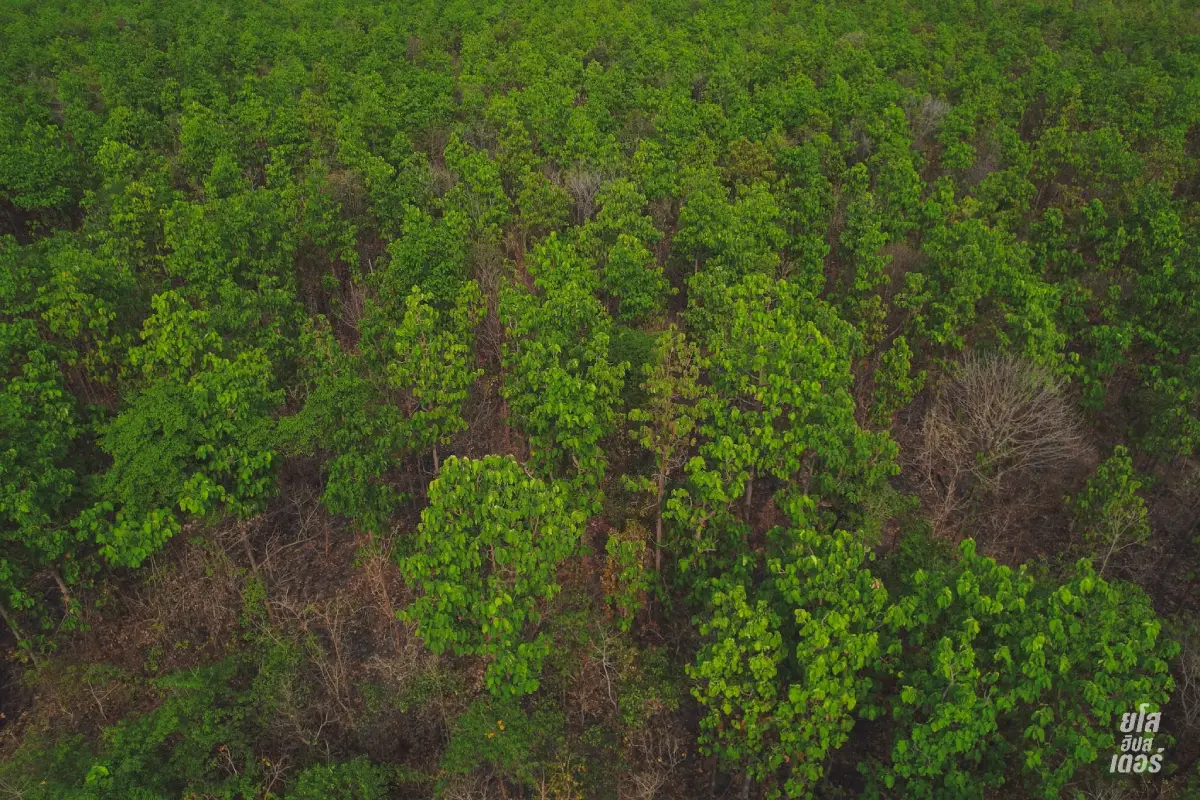
Dong Mafai National Forest Reserve
Open Days: Daily
Opening Hours: 06.00 – 18.00
Dong Mafai National Forest Reserve in Yasothon Province is an important natural forest area connected mainly with Sai Mun District and adjoining forest landscapes near Mueang Yasothon District. It is a valuable Isan forest landscape where nature, seasonal forest food, local livelihoods, community beliefs, wildfire prevention, and conservation work are closely connected. The area is known as a dry dipterocarp and mixed deciduous forest, and older tourism information describes the broader forest reserve area as covering about 63,000 rai, with about 7,100 rai of relatively complete forest remaining. Today, Dong Mafai continues to be recognized as a living forest resource for communities around the area.
Dong Mafai is not only a place of trees. For local people, it is a food forest, a cultural forest, a seasonal workplace, and a shared natural resource. During the rainy season, many kinds of wild mushrooms appear on the forest floor, including termite mushrooms, local Isan mushrooms, russula-like edible mushrooms, puffball-type mushrooms, and other forest fungi known by local collectors. The forest also provides seasonal foods such as red ant eggs, cicadas, small lizards, edible young leaves, and wild vegetables. These resources make the forest part of everyday life and local food security.
The main character of Dong Mafai comes from its dry dipterocarp and semi-mixed deciduous forest ecology. During the dry season, many trees shed their leaves, the forest floor becomes open, and dry leaf litter accumulates. During the rainy season, moisture returns to the soil, mushrooms emerge, small plants grow again, and the forest becomes a source of seasonal food. This rhythm gives the forest a clear seasonal identity. Visitors who understand this pattern will see that the beauty of Dong Mafai lies not in constant greenness, but in the way the forest changes through the year.
The dry dipterocarp forest is especially important in northeastern Thailand. Trees in this type of forest are adapted to dry conditions, sandy soils, and seasonal fire risk. The forest floor receives more sunlight than dense evergreen forest, allowing grasses, herbs, mushrooms, and small edible plants to grow after rain. The landscape may look sparse in the dry season, but it is highly meaningful to local communities because it supports many kinds of forest food. This makes Dong Mafai a strong example of how Isan dry forests support both ecology and community livelihoods.
The mixed deciduous character of the forest adds more diversity. Different tree species, shrubs, vines, ground plants, insects, birds, and small animals create a layered ecosystem. Although the forest is not known as a major wildlife-watching destination for large animals, its smaller ecological life is very important. Mushrooms, ants, cicadas, lizards, edible leaves, and herbs are all part of the forest’s living system. Local knowledge helps people recognize when and where these resources appear.
Wild mushrooms are one of Dong Mafai’s most important seasonal highlights. Local collectors know from experience which mushrooms are edible, where they often grow, and what kind of rain brings them out. This knowledge cannot be replaced by casual observation. It comes from years of walking in the forest, watching soil, moisture, tree roots, termite mounds, and forest changes. For visitors, mushrooms should be understood as a sign of forest health, community knowledge, and seasonal livelihood rather than simply as objects to collect.
Termite mushrooms are highly valued because of their aroma and texture. Other local mushrooms such as hed khai, hed la-ngok, and hed phor are also closely associated with Isan seasonal food. Some mushrooms can command high prices in local markets, creating short-term income for households during the rainy season. At the same time, responsible harvesting is important. Local collectors avoid destroying the forest floor unnecessarily because mushroom growth depends on underground fungal networks and healthy soil conditions.
Beyond mushrooms, Dong Mafai provides other forest foods connected with Isan cuisine. Red ant eggs are widely used in local dishes and are highly valued when in season. Cicadas, small lizards known locally as kapom, and wild vegetables such as phak tio and phak kradom reflect a food culture that uses seasonal resources with practical knowledge. These foods are not unusual in the local context. They are part of rural food wisdom, shaped by climate, forest ecology, and community experience.
Dong Mafai also has cultural and spiritual meaning. The area is connected with Phra That Fun, a local sacred site in Sai Mun District. Local tradition explains the stupa through stories of migration, ancestral memory, and soil brought from an original homeland. This connection gives the forest landscape a cultural layer beyond ecology. Visitors can understand Dong Mafai as a cultural landscape where forest, food, sacred places, and community history are tied together.
The forest is also linked with the Toom Ka Fire Lighting tradition of Ban Thung Tae. The toom ka fruit, a forest fruit used in the tradition, is hollowed out, carved with patterns, and lit with a candle inside as a Buddhist offering during the end of Buddhist Lent. This practice shows that forest resources are not only food. They can also become ritual objects, community art, and symbols of local identity. The continued presence of forest plants supports the continuity of local cultural practices.
Wildfire prevention is one of the most important current issues for Dong Mafai. Dry dipterocarp forest is vulnerable to fire during the dry season because fallen leaves and dry ground vegetation can ignite easily. Wildfire can damage young trees, mushrooms, insects, small animals, food plants, and the soil itself. It can also create smoke and dust that affect nearby villages. Because of this, provincial agencies, district officials, local administrations, village networks, and environmental volunteers work together to create firebreaks and monitor forest fire risk.
Firebreak activities in Dong Mafai are not only technical conservation work. They are community protection activities. The forest supports many surrounding villages, so a fire affects food resources, household income, nearby farms, air quality, and public safety. When local people and officials work together to prevent fire, they are protecting both nature and community life. This makes Dong Mafai a good example of community-based forest conservation in practice.
For visitors, Dong Mafai is best approached as a quiet nature and community learning site. It is not a commercial tourist park with extensive leisure facilities. Its value lies in real forest ecology, seasonal food resources, local knowledge, and conservation work. Visitors should stay on appropriate community routes, avoid entering deep forest areas without local guidance, and respect both the forest and people who depend on it. The best visit is one that observes and learns rather than disturbs.
The recommended visiting time is from early morning to late afternoon, between 06.00 and 18.00. Daylight is important because the area is a forest landscape, not an urban attraction. The rainy season is especially meaningful for learning about mushrooms and forest foods. The dry season is meaningful for understanding dry dipterocarp ecology, leaf fall, firebreaks, and wildfire prevention. Evening or night visits are not suitable for general visitors because visibility and safety become more difficult.
Visitors should dress for a natural forest environment. Closed shoes or walking shoes are recommended. Long sleeves and long trousers help protect against branches, insects, and scratches. Drinking water, a hat, mosquito repellent, a small personal trash bag, and a charged phone are useful. Visitors unfamiliar with the area should contact local leaders or related agencies before entering forest routes, especially if visiting as a study group, photography group, or research group.
Forest product collection should be approached carefully. Dong Mafai is a national forest reserve and a community resource base. General travelers should focus on learning and observation rather than collecting mushrooms, plants, or animals. Removing forest resources without knowledge or permission can damage the ecosystem and reduce the resource base of local communities. Responsible visitors help keep the forest productive for the people who rely on it season after season.
Getting There is most convenient by private car. From Yasothon city, travel toward Sai Mun District and continue to Dong Mafai Subdistrict or community routes that connect with Dong Mafai Forest. Another route can be connected from Thung Tae Subdistrict in Mueang Yasothon District, which is culturally linked with Dong Mafai through the Toom Ka Fire Lighting tradition. A private vehicle allows travelers to manage time, reach community access points, and continue to nearby attractions on the same trip.
A practical travel route can begin in Yasothon city, continue to Sai Mun District to learn about Dong Mafai Forest and seasonal forest foods, then visit Phra That Fun for the spiritual and historical layer of the area. Travelers can then continue to Wat Burapha Ban Thung Tae or the Thung Tae cultural learning area to understand the Toom Ka Fire Lighting tradition. With more time, the route can return to Yasothon city for Phaya Thaen Public Park, the Toad Museum, Wat Mahathat, and Ban Sing Tha Old Quarter.
There is no admission fee for general nature visits along appropriate community routes. However, visitors should respect the protected forest area. They should not light fires, litter, cut trees, hunt animals, disturb wildlife, or enter official work zones without permission. Study groups, school groups, and organized visits should coordinate with the Provincial Office of Natural Resources and Environment, Dong Mafai Subdistrict Administrative Organization, or Thung Tae Municipality before traveling.
Facilities in and around Dong Mafai are practical rather than commercial. The forest area has community access routes, forest routes used by local people, firebreak areas, natural learning areas, and coordination points through local agencies. Restaurants and accommodations are more available in Sai Mun District or Yasothon city. Visitors should prepare personal supplies before entering the forest area and avoid expecting resort-style facilities inside the forest.
For photography, Dong Mafai offers subtle but meaningful subjects: dry dipterocarp trees, fallen leaves, mushrooms after rain, early morning forest light, community food gathering, firebreak activities, and the atmosphere of an Isan forest. Photographers should avoid moving mushrooms, plants, or animals for composition. They should also ask permission before photographing local people closely. The best images are those that respect the natural and community context of the forest.
For families, Dong Mafai can serve as an outdoor classroom. Children can learn that Isan forests are not empty or poor landscapes. They contain food, mushrooms, herbs, insects, small animals, sacred places, and cultural traditions. A family visit should focus on observation, respect, and simple environmental lessons: do not litter, do not start fires, do not remove forest resources carelessly, and understand that forest conservation protects food, air, water, and culture.
For international travelers, Dong Mafai is a strong example of how dry forests in northeastern Thailand support rural life. It shows that forest conservation in Isan is connected with food security, local beliefs, seasonal livelihoods, and wildfire prevention. Unlike famous national parks designed for tourism, Dong Mafai is valuable because it is a working community forest landscape. It helps visitors understand the deeper relationship between people and forest in rural Thailand.
Dong Mafai also reflects modern conservation challenges. The forest faces wildfire risk, open burning problems, PM2.5 smoke concerns, resource-use pressure, and surrounding agricultural activity. Protecting the forest requires cooperation among government agencies, local administrations, village leaders, environmental volunteers, and communities that use forest resources. This cooperation is one of the most important stories of the forest today.
The significance of Dong Mafai therefore lies in many layers: food, ecology, culture, faith, community economy, and conservation. It adds depth to the travel identity of Yasothon. The province is known for the Rocket Festival, temples, and city landmarks, but Dong Mafai shows another side: forests that feed people, local knowledge that reads the seasons, cultural traditions that depend on forest plants, and communities that work to prevent forest fire.
In summary, Dong Mafai National Forest Reserve is a valuable Isan forest landscape in Yasothon Province. Its highlights include dry dipterocarp and mixed deciduous forest, seasonal wild mushrooms, red ant eggs, cicadas, edible wild plants, links with Phra That Fun, connections with the Toom Ka Fire Lighting tradition, and active wildfire prevention by agencies and communities. It is suitable for visitors who want to understand Yasothon through nature, local food knowledge, community conservation, and the living relationship between people and forest.
| Name | Dong Mafai National Forest Reserve / Dong Mafai Forest, Yasothon |
| Type | National Forest Reserve, Natural Forest Area, Seasonal Forest Food Site, Dry Dipterocarp And Mixed Deciduous Forest Learning Area |
| Location | Mainly in Sai Mun District, Yasothon Province, especially around Dong Mafai Subdistrict, with connected forest areas related to Thung Tae Subdistrict in Mueang Yasothon District |
| Address Summary | Dong Mafai Forest Area, Dong Mafai Subdistrict, Sai Mun District, Yasothon 35170, Thailand, with connected community forest landscapes in Thung Tae Subdistrict, Mueang Yasothon District |
| Highlights | Dry dipterocarp forest, mixed deciduous forest, seasonal wild mushrooms, red ant eggs, cicadas, small lizards, edible wild leaves, local food resources, and cultural links with the Toom Ka Fire Lighting tradition |
| Area Information | Older tourism information describes the broader forest reserve as covering about 63,000 rai, with about 7,100 rai of relatively complete forest remaining. Current conservation activities focus on important community forest zones and wildfire prevention areas around Dong Mafai and nearby communities. |
| Forest Characteristics | Dry Dipterocarp Forest Mixed Deciduous Forest Seasonal Isan Forest Landscape Seasonal Forest Food Zone Wildfire Monitoring And Firebreak Area |
| Forest Foods And Resources | Termite Mushrooms Hed Khai Hed La-Ngok Hed Phor Red Ant Eggs Cicadas Small Lizards Phak Tio Phak Kradom Seasonal Wild Plants And Local Herbs |
| Significance | A food forest for surrounding communities, an Isan forest ecosystem learning site, a wildfire prevention area, and a cultural landscape connected with Phra That Fun and the Toom Ka Fire Lighting tradition of Ban Thung Tae |
| Suitable Activities | Nature observation, dry forest ecology learning, seasonal forest food study, forest photography, wildfire prevention learning, community livelihood study, and cultural route connections with Phra That Fun and Ban Thung Tae |
| Travel Information | From Yasothon city, travel toward Sai Mun District and continue to Dong Mafai Subdistrict or community routes connected with Dong Mafai Forest. A private car is the most convenient option for reaching the area and nearby attractions. |
| Current Status | Open as a natural forest and community learning area, with ongoing conservation, firebreak, wildfire prevention, and restoration activities by government agencies, local administrations, environmental volunteer networks, and surrounding communities |
| Open Days | Daily |
| Opening Hours / Recommended Visiting Hours | 06.00 – 18.00 |
| Fees | No admission fee for general nature visits along appropriate community routes |
| Facilities | Community access routes, forest-use routes, firebreak areas, natural learning areas, local agency coordination points, restaurants in Sai Mun District, and accommodations in Sai Mun District or Yasothon city |
| Main Areas / Zones | Dry Dipterocarp Forest Zone Mixed Deciduous Forest Zone Seasonal Forest Food Zone Rainy-Season Mushroom Zone Firebreak And Wildfire Monitoring Zone Surrounding Community Route Zone Phra That Fun Sacred Landscape Zone Ban Thung Tae Toom Ka Tradition Connection Zone |
| Caretaker / Related Agencies | Yasothon Provincial Office Of Natural Resources And Environment, Royal Forest Department, local forest agencies, Dong Mafai Subdistrict Administrative Organization, Thung Tae Municipality, Sai Mun District, Mueang Yasothon District, environmental volunteer networks, and surrounding Dong Mafai communities |
| Contact Numbers | Yasothon Provincial Office Of Natural Resources And Environment, Tel. 045-715466 Dong Mafai Subdistrict Administrative Organization, Tel. 042-707342 Thung Tae Municipality, Tel. 045-583000 |
| Nearby Tourist Attractions | 1. Phra That Fun, Sai Mun District, about 6 km 2. Sai Mun District Center, about 8 km 3. Wat Burapha Ban Thung Tae / Thung Tae Cultural Learning Area, about 18 km 4. Ban Chiang Wang Cattle And Buffalo Market, about 28 km 5. Phaya Thaen Public Park, about 35 km 6. Toad Museum, about 35 km 7. Wat Mahathat Yasothon, about 36 km 8. Ban Sing Tha Old Quarter, about 37 km |
| Nearby Restaurants | 1. Im Aroi Restaurant, Sai Mun District, about 8 km, Tel. 088-5602706 2. Khrok Nua Khrua Saep Restaurant, Sai Mun District, about 8 km, Tel. 087-8317114 3. Café Amazon Sai Mun, about 9 km, Tel. 098-8268144 4. Friends Café, Sai Mun District, about 9 km, Tel. 085-0247642 5. Nana Cake Sai Mun Branch, about 9 km, Tel. 087-6555084 6. Local Restaurants In Sai Mun District Center, about 8-10 km |
| Nearby Accommodations | 1. Ban Rak Resort, Sai Mun District, about 9 km, Tel. 081-9558234, 045-787280 2. Green Zone Resorts, Sai Mun Subdistrict, about 10 km 3. PK Garden Hotel Yasothon, about 30 km, Tel. 045-711456 4. The Green Park Grand Hotel Yasothon, about 34 km, Tel. 045-714700-1 5. JP Emerald Hotel Yasothon, about 35 km, Tel. 045-714456 6. The Zen Hotel Yasothon, about 35 km, Tel. 045-711455 7. BM Grand Hotel Yasothon, about 36 km, Tel. 045-712333 |
Frequently Asked Questions (FAQ)
Q: Where is Dong Mafai National Forest Reserve located?
A: Dong Mafai National Forest Reserve is located in Yasothon Province, mainly in Sai Mun District around Dong Mafai Subdistrict, with connected forest areas related to Thung Tae Subdistrict in Mueang Yasothon District.
Q: What is Dong Mafai Forest known for?
A: The forest is known for dry dipterocarp and mixed deciduous forest, seasonal wild mushrooms, red ant eggs, cicadas, small lizards, edible wild leaves, and its role as a food forest for surrounding communities.
Q: What are the opening hours?
A: The recommended visiting hours are daily from 06.00 to 18.00, when there is enough daylight for nature observation and safe movement in the forest area.
Q: Is there an admission fee?
A: There is no admission fee for general nature visits along appropriate community routes.
Q: When is the best time to visit Dong Mafai Forest?
A: The rainy season is best for learning about wild mushrooms and seasonal forest foods, while the dry season is useful for understanding dry dipterocarp forest ecology and wildfire prevention work.
Q: How is Dong Mafai connected with the Toom Ka Fire Lighting tradition?
A: Dong Mafai is associated with the toom ka fruit used by Ban Thung Tae villagers to create carved candle-lit offerings for the Buddhist Lent-ending tradition.
Q: Can visitors collect mushrooms or forest products?
A: General visitors should focus on learning and observation rather than collecting mushrooms, plants, or animals without knowledge and permission, because the area is a national forest reserve and an important food source for local communities.
Q: What nearby attractions can be visited on the same trip?
A: Nearby attractions include Phra That Fun, Wat Burapha Ban Thung Tae, the Thung Tae cultural learning area, Phaya Thaen Public Park, the Toad Museum, Wat Mahathat Yasothon, and Ban Sing Tha Old Quarter.
 Category: ●Nature and Wildlife
 Group: ●National Parks and Marine Reserves
Last Update : 1 MonthAgo
 Last Update : 1 MonthAgo
 Click to Access the Navigation Map GPS
Dong Mafai National Forest Reserve Map

 Art, Culture and Heritage
 Historical Sites and Monuments(6)
 Landmarks and Memorials(1)
 Art, Craft Centres, Tradition(4)
 Museums(1)
 Historic Homes and Cities(1)
 Places of Worship
 Temple(22)
 Church(1)
 Other Sacred Sites(9)
 Research and Development
 Royal Project(2)
 Suburban Living
 Village, Community(3)
 Local Market(1)
National Parks and Marine Reserves(2)
Local Market(1)
National Parks and Marine Reserves(2)
 Mountain (Doi)(2)
 Dam, Reservoir, Lake(7)
 River, Canal(2)
 Bays and Beaches(1)
 Other natural attractions(2)
 Entertainment and Agricultural
 Farms, Parks and Ecotourism(1)


