
lovethailand home >Northeastern Travel Attractions >Ubon Ratchathani Travel Attractions >Khemarat >Kaeng Nuea > Wat Pitchasopharam
TL;DR: Wat Pitchasopharam is located at Ban Kaeng Nuea / Ban Rueang Udom, Kaeng Nuea Subdistrict, Khemmarat District, Ubon Ratchathani Province, open Daily, hours 08.00 – 17.00.
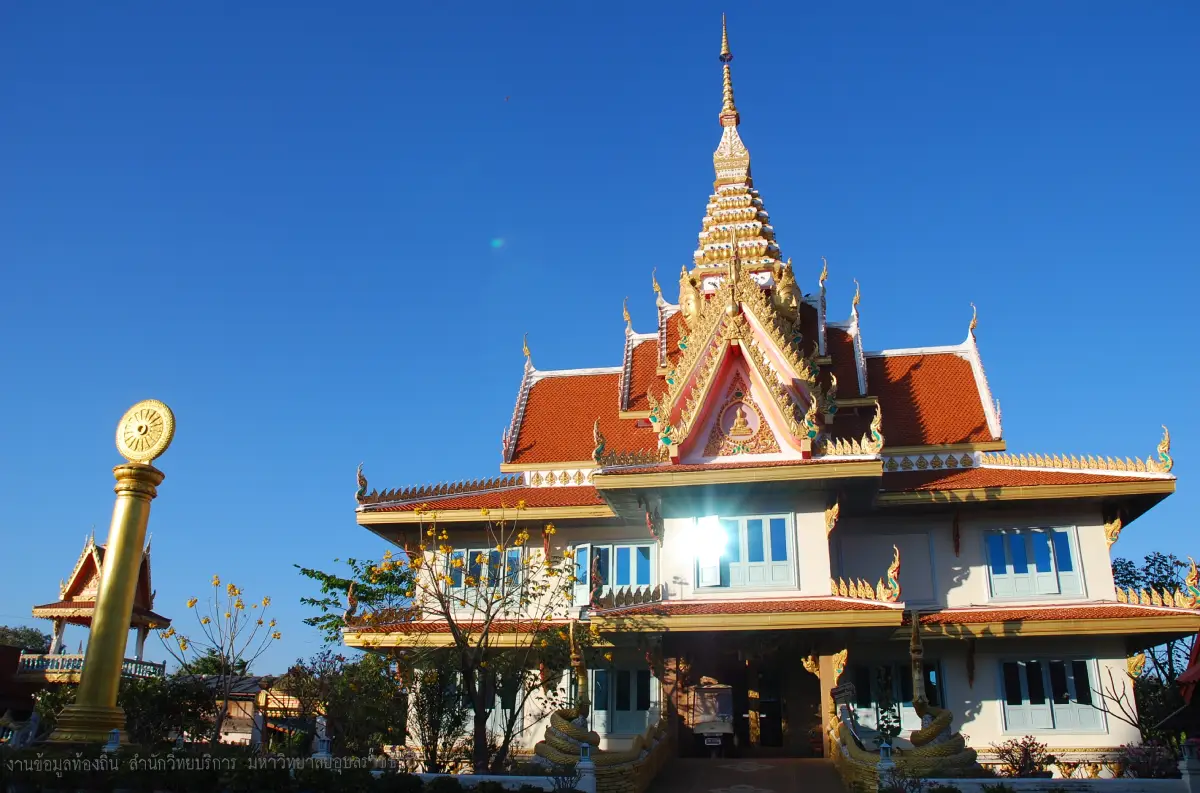
Wat Pitchasopharam
Open Days: Daily
Opening Hours: 08.00 – 17.00
Wat Pitchasopharam in Ubon Ratchathani is an important Buddhist temple in Kaeng Nuea Subdistrict, Khemmarat District. The temple is located in the Ban Kaeng Nuea and Ban Rueang Udom community area and is widely respected by people in the subdistrict, district, province, and nearby provinces. It is a local Mahanikaya Buddhist temple and is best known as the 3rd Provincial Meditation Practice Center of Ubon Ratchathani. For foreign travelers, Wat Pitchasopharam offers a deeper experience than a typical sightseeing temple because it functions as a living center for Buddhist meditation, monastic education, Dhamma study, and community faith.
The temple is suitable for visitors who want to pay respect, make merit, learn about Thai Buddhist practice, and understand how a rural temple can become a major center of meditation and monastic education. The atmosphere inside the temple is calm, orderly, and deeply connected with Buddhist discipline. Important areas include the ordination hall, sermon hall, multipurpose hall, meditation courtyard, meditation rooms, monastic residences, meditation huts, and the Pali Buddhist school. Wat Pitchasopharam is therefore not only a place to visit for photos. It is a place where Buddhism is studied, taught, practiced, and lived.
Wat Pitchasopharam has a long history in the Kaeng Nuea community. The temple was established in 1885 and received its consecrated boundary in 1939. The consecrated boundary measures 40 meters by 40 meters. The temple land covers 53 rai and 7 square wah. Its important monastic buildings include the ordination hall, sermon hall, monks’ residences, and the Buddhist scripture school. These physical foundations allowed the temple to grow from a local village monastery into one of the most important meditation and monastic-education centers in Khemmarat District.
The temple has been led by many abbots through its history, reflecting its continuity as a Buddhist institution. Earlier abbots include Phra Chan, Phra Khem, Phra Si, Phra Phrom, Phra Daeng, Phra Khun, Phra Bunmi, Phra Khen, Phra Som, Phra On, Phra Ma, Phra Khamphan, Phra Khamwen, and Phra Khru Wisal Khemakhun, who played an important role in the temple’s development from 1959 onward. This long line of leadership shows that Wat Pitchasopharam has served the community for generations and has not become important only in recent times.
The temple’s present reputation is closely tied to its role as the 3rd Provincial Meditation Practice Center of Ubon Ratchathani. It teaches both samatha, or calm meditation, and vipassana, or insight meditation, both inside the temple and outside the temple in outreach settings. The practice is especially active during the Buddhist Lent period and the cool season. The temple’s meditation method is based on the Four Foundations of Mindfulness: contemplation of body, feeling, mind, and Dhamma. Practitioners train through careful noting, walking meditation, sitting meditation, and direct observation of experience.
The meditation system at Wat Pitchasopharam is structured and disciplined. Practitioners are trained to observe the body, speech, and mind in different postures, including standing, walking, sitting, and lying down. Walking meditation is practiced in 6 stages, and meditation teachers examine the experience of practitioners through formal interviews. This approach allows practitioners to learn Buddhism through direct experience rather than only through reading or listening. For travelers who want to understand Thai Buddhist practice, the temple provides a clear example of living meditation culture.
The meditation facilities are extensive. The temple can support a large number of practitioners through its sermon hall, multipurpose hall, meditation courtyard, meditation rooms, 55 meditation huts, 3 large shared rooms, and around 50 toilets and restrooms. These facilities make the temple suitable for organized meditation retreats, monastic training, and parivasa activities. Visitors who wish to join a retreat should contact the temple in advance and follow the regulations of the practice center.
Wat Pitchasopharam is also known as a Pali Buddhist school of Ubon Ratchathani Province. It began as a religious study center offering instruction in Dhamma studies, Abhidhamma, and later Pali education. Monks and novices have come to study here continuously, and the school has produced many students who later became teachers and Dhamma workers in other monasteries. This makes the temple important not only for meditation but also for preserving Buddhist textual learning.
The temple’s academic achievements are widely respected in the regional monastic education system. The school has produced many successful students in Dhamma and Pali examinations and has been recognized as an outstanding monastic school. Its strength in both textual study and meditation practice gives Wat Pitchasopharam a complete Buddhist profile: it supports both pariyatti, the study of Buddhist scriptures, and patipatti, the practice of the Dhamma.
The current abbot is Phra Bhavana Suthaphirat, whose monastic name is Buddhasaro. He is a senior monk recognized for his role in insight meditation practice. He was ordained on 26 July 1988 at the consecrated boundary of Wat Pitchasopharam. His preceptor was Phra Ratchapariyattayakorn of Wat Pitchasopharam. In 2011, he received the royal ecclesiastical title Phra Khru Siri Bhavana Phirom, and in 2019 he received the title Phra Bhavana Suthaphirat as a royal monk of the insight-meditation line. His leadership continues the temple’s identity as a center of meditation, Dhamma teaching, and monastic education.
Under the leadership of Phra Bhavana Suthaphirat, the temple continues to teach and publish Dhamma. It maintains online Dhamma channels, recorded teachings, and materials related to samatha, vipassana, mindfulness, and the discipline of practitioners. This means the temple is not only a physical monastery but also a Dhamma source that reaches practitioners beyond Khemmarat. Visitors who come to the temple will see a community where teaching, practice, and dissemination are closely connected.
The ordination hall is one of the temple’s main religious structures. It measures 9 meters wide and 17 meters long and was built in 1968. The sermon hall measures 14 meters wide and 30 meters long and was built in 1965. These structures are used for Buddhist ceremonies, Dhamma talks, monastic activities, and community merit-making. Together, they reflect the temple’s development from a local monastery into a substantial religious center in Khemmarat District.
The temple also holds parivasa activities for monks and novices. Parivasa practice is connected with monastic discipline, reflection, restraint, and renewed commitment to the Dhamma. Wat Pitchasopharam is well suited for such activities because it has a structured practice environment, accommodation areas, and experienced monastic guidance. This adds another dimension to the temple’s importance as a place of training for monks, novices, and dedicated lay practitioners.
A visit to Wat Pitchasopharam should be calm and respectful. Visitors can begin at the main worship area, then walk to the ordination hall, sermon hall, meditation areas, and the monastic education zone. Those interested in meditation should ask the central office for information about practice schedules and regulations. A short visit usually takes 1–2 hours, while a formal meditation stay requires advance contact and proper preparation.
Because this is an active meditation center, visitors should behave with restraint. Dress modestly, cover shoulders and knees, keep voices low, avoid loud music, avoid talking in meditation areas, and do not enter monks’ residence areas without permission. Photography should be done respectfully, especially around monks, novices, and meditation practitioners. Keeping the temple clean and quiet is part of respecting its purpose as a place for mental cultivation.
Wat Pitchasopharam is located in Khemmarat District, a Mekong riverside district with strong Thai-Lao cultural identity. The temple can be combined with other attractions in Khemmarat, including Wat Pho and Phra Chao Yai Ong Saen, Khemmarat Walking Street, the Mekong viewpoint, Wat Phra That Phu Khao Ngoen, Kaeng Chang Mop, and Khun Phuri Prasat House Museum. This route allows travelers to experience meditation practice, old-town culture, riverside scenery, and local history in one district.
Wat Pho and Phra Chao Yai Ong Saen are important nearby cultural stops. Wat Pho is one of the old temples of Khemmarat and houses Phra Chao Yai Ong Saen, a revered Buddha image of the town. Visiting Wat Pitchasopharam first and Wat Pho afterward gives travelers 2 different views of Buddhism in Khemmarat: one centered on meditation and monastic education, the other centered on old-town devotion and sacred local heritage.
Khemmarat Walking Street is a good place to visit after the temple, especially on Saturday evenings. Travelers can see old wooden houses, local food, textiles, community products, and cultural performances. Combining the calm atmosphere of Wat Pitchasopharam with the living old-town atmosphere of Khemmarat gives a balanced travel experience that includes both inner practice and local life.
Wat Phra That Phu Khao Ngoen is another meaningful Buddhist destination in Khemmarat. It is located in Chiat Subdistrict and is known for a stupa on higher ground, a naga stairway, and scenic views from the temple area. Travelers interested in Buddhist sites can combine Wat Pitchasopharam with Wat Phra That Phu Khao Ngoen to experience both meditation practice and hilltop sacred architecture.
Kaeng Chang Mop is a natural attraction on the Mekong River, known for rock formations and riverside scenery, especially during the low-water season. Including Kaeng Chang Mop in the same trip creates contrast between the quiet meditation atmosphere of Wat Pitchasopharam and the open natural landscape of the Mekong. This combination is suitable for travelers who want both Buddhist culture and nature in Khemmarat.
Getting There is easiest by private car or hired vehicle. From Ubon Ratchathani city, travel toward Khemmarat District, then continue to Kaeng Nuea Subdistrict and Ban Rueang Udom. The distance is about 95–110 km, and the drive usually takes around 1 hour 40 minutes to 2 hours depending on traffic and route conditions. The temple address is No. 43, Moo 2, Ban Rueang Udom, Kaeng Nuea Subdistrict, Khemmarat District, Ubon Ratchathani 34170.
Travelers without a private vehicle can travel from Ubon Ratchathani city to Khemmarat by local bus or van, then continue to Kaeng Nuea by local hired vehicle. Return transport should be planned in advance because rural routes may not have frequent public service throughout the day. For small groups, hiring a car with a driver is the most practical option, especially when combining the temple with Khemmarat old town and Mekong attractions.
Wat Pitchasopharam is open daily from 08.00 to 17.00 and has no admission fee. Visitors can enter the temple, pay respect, walk around the grounds, and ask about meditation practice without buying a ticket. Those who want to stay for formal practice should contact the temple in advance so that their visit follows the practice schedule and temple regulations.
The best time to visit is in the morning or late afternoon when the weather is more comfortable and the temple atmosphere is quiet. Travelers who want to combine the temple with Khemmarat Walking Street can visit Wat Pitchasopharam in the morning or early afternoon, continue to Wat Pho and the Mekong viewpoint, and finish at Khemmarat Walking Street in the evening. Meditation practitioners should plan according to the temple’s retreat schedule.
Wat Pitchasopharam is suitable for several types of travelers. Buddhist visitors can make merit and pay respect. Meditation practitioners can learn about a structured insight-meditation center. Cultural travelers can see how a rural temple supports monastic education. Visitors exploring Khemmarat can use the temple as the beginning of a route connecting meditation practice, old-town heritage, the Mekong River, and local community life.
For foreign travelers, Wat Pitchasopharam is valuable because it shows Thai Buddhism beyond architecture and tourist landmarks. It reveals the working life of a Buddhist temple as a place of education, meditation, discipline, and Dhamma teaching. Visitors can understand that Thai temples are not only places to see beautiful buildings; they can also be schools, training centers, and living communities of practice.
Wat Pitchasopharam deserves a central place in a Khemmarat cultural and spiritual itinerary. Its strongest features are its status as the 3rd Provincial Meditation Practice Center of Ubon Ratchathani, its teaching of samatha and vipassana based on the Four Foundations of Mindfulness, its Pali Buddhist school, its structured meditation facilities, its respected abbot Phra Bhavana Suthaphirat, and its convenient connection to Khemmarat old town and the Mekong travel route.
| Name | Wat Pitchasopharam |
| Location | Ban Kaeng Nuea / Ban Rueang Udom, Kaeng Nuea Subdistrict, Khemmarat District, Ubon Ratchathani Province |
| Address | No. 43, Moo 2, Ban Rueang Udom, Kaeng Nuea Subdistrict, Khemmarat District, Ubon Ratchathani 34170, Thailand |
| Highlights | The 3rd Provincial Meditation Practice Center of Ubon Ratchathani, Pali Buddhist school, samatha and vipassana training based on the Four Foundations of Mindfulness, ordination hall, sermon hall, meditation courtyard, meditation rooms, and peaceful monastic atmosphere |
| History | A local Mahanikaya Buddhist temple established in 1885 and granted its consecrated boundary in 1939. The consecrated boundary measures 40 meters by 40 meters, and the temple land covers 53 rai and 7 square wah. |
| Local Role | A respected temple of Kaeng Nuea and Khemmarat, serving as a center for faith, meditation practice, monastic education, and Dhamma teaching |
| Distinctive Features | A complete Buddhist institution combining worship, monastic education, meditation practice, organized retreat facilities, and active Dhamma dissemination |
| Travel Information | From Ubon Ratchathani city, travel to Khemmarat District and continue to Kaeng Nuea Subdistrict and Ban Rueang Udom. The distance is about 95–110 km, and the drive takes around 1 hour 40 minutes to 2 hours. |
| Current Status | Open for worship, temple visits, meditation inquiries, and Buddhist activities |
| Open Days | Daily |
| Opening Hours | 08.00 – 17.00 |
| Fees | No admission fee |
| Facilities | Worship area, ordination hall, sermon hall, multipurpose hall, meditation courtyard, meditation rooms, meditation huts, shared accommodation rooms, restrooms, central office, parking area, and monastic education facilities |
| Main Areas / Zones | 1. Buddhist Worship Area 2. Ordination Hall 3. Sermon Hall 4. Multipurpose Hall 5. Meditation Courtyard 6. Meditation Rooms 7. Meditation Huts 8. Pali Buddhist School 9. Central Office 10. Monastic Residence Area |
| Abbot / Caretaker | Phra Bhavana Suthaphirat, monastic name Buddhasaro |
| Temple Contact Numbers | Phra Bhavana Suthaphirat, Tel. 086-222-2527 Central Office, Tel. 045-218-019 Pali Buddhist Education Department, Tel. 045-218-021 Radio Station, Tel. 045-218-072, 045-218-073 |
| Nearby Tourist Attractions | 1. Wat Na Nong Thung, Kaeng Nuea Subdistrict, about 5 km 2. Wat Sawang Arom, Kaeng Nuea Subdistrict, about 6 km 3. Wat Pho And Phra Chao Yai Ong Saen, Khemmarat, about 15 km 4. Khemmarat Walking Street, about 15 km 5. Khemmarat Mekong Viewpoint, about 15 km 6. Khun Phuri Prasat House Museum, about 16 km 7. Wat Phra That Phu Khao Ngoen, about 20 km 8. Kaeng Chang Mop, about 28 km 9. Wat Tham Phuang Rattanaram / Tham Pha Phuang, about 35 km |
| Nearby Restaurants | 1. Ban Pu Ka Ya Restaurant, about 15 km, Tel. 086-012-5759 2. Lae Khong Restaurant Khemmarat, about 17 km, Tel. 045-491-501, 087-111-2836 3. Khemkhong Cafe Khemmarat, about 17 km, Tel. 094-825-5258 4. Khemmarat Kung Sot, about 18 km, Tel. 089-425-0457, 088-580-8539 5. Shabu Indy Khemmarat, about 18 km, Tel. 080-468-5164 6. Ban Kong Phaniang Khemmarat, about 16 km, Tel. 083-732-5272, 093-552-3029 |
| Nearby Accommodations | 1. Ban Chuan Phit, about 15 km, Tel. 064-732-1792 2. Ban Kong Phaniang, about 16 km, Tel. 083-732-5272 3. Lae Khong River Resort, about 17 km, Tel. 087-111-2836 4. Rim Khong Thale Lom, about 18 km, Tel. 089-693-1074, 089-689-4168 5. Khiang Khong Homestay, about 18 km, Tel. 087-965-4114 6. Khemmarat Baandin Resort, about 20 km, Tel. 084-602-5795 7. Saen Suk Homestay, about 20 km, Tel. 095-613-5614 |
Frequently Asked Questions (FAQ)
Q: Where is Wat Pitchasopharam located?
A: Wat Pitchasopharam is located at No. 43, Moo 2, Ban Rueang Udom, Kaeng Nuea Subdistrict, Khemmarat District, Ubon Ratchathani 34170, Thailand.
Q: What are the opening hours of Wat Pitchasopharam?
A: Wat Pitchasopharam is open daily from 08.00 to 17.00.
Q: Is there an admission fee for Wat Pitchasopharam?
A: No. Visitors can enter the temple, pay respect, walk around the temple grounds, and ask about meditation practice without an admission fee.
Q: Why is Wat Pitchasopharam important?
A: It is the 3rd Provincial Meditation Practice Center of Ubon Ratchathani and a major Pali Buddhist school, teaching both samatha and vipassana meditation based on the Four Foundations of Mindfulness.
Q: Who is the abbot of Wat Pitchasopharam?
A: The abbot is Phra Bhavana Suthaphirat, whose monastic name is Buddhasaro, a senior monk in the insight-meditation line.
Q: What type of meditation is practiced at Wat Pitchasopharam?
A: The temple teaches mindfulness, samatha, vipassana, walking meditation, noting practice, and meditation training based on the Four Foundations of Mindfulness.
Q: How long should travelers spend at Wat Pitchasopharam?
A: A basic visit for worship and walking around the temple usually takes 1–2 hours. A formal meditation stay requires advance contact and should follow the temple’s retreat schedule.
Q: What nearby attractions can be visited with Wat Pitchasopharam?
A: Nearby attractions include Wat Pho and Phra Chao Yai Ong Saen, Khemmarat Walking Street, the Mekong viewpoint, Khun Phuri Prasat House Museum, Wat Phra That Phu Khao Ngoen, Kaeng Chang Mop, and Tham Pha Phuang.
 Category: ●Places of Worship
 Group: ●Temple
Last Update : 2 MonthAgo
 Last Update : 2 MonthAgo
 Click to Access the Navigation Map GPS
 Art, Culture and Heritage
 Historical Sites and Monuments(5)
 Landmarks and Memorials(2)
 Royal Palace(1)
 Art, Craft Centres, Tradition(7)
 Museums(3)
Temple(37)
Museums(3)
Temple(37)
 Other Sacred Sites(4)
 Research and Development
 Royal Project(2)
 Suburban Living
 Village, Community(2)
 Local Market(4)
 Nature and Wildlife
 National Parks and Marine Reserves(5)
 Mountain (Doi)(6)
 Dam, Reservoir, Lake(8)
 Waterfalls(12)
 Hot Springs(1)
 Caves(2)
 River, Canal(11)
 Bays and Beaches(8)
 Islands(2)
 Other natural attractions(6)
 Entertainment and Agricultural
 Zoos and Aquariums(1)
 Animal camps and shows(1)
 Farms, Parks and Ecotourism(1)


