
lovethailand home >Northeastern Travel Attractions >Ubon Ratchathani Travel Attractions >Khong Chiam >Huai Yang > Tham Phuang Waterfall
TL;DR: Tham Phuang Waterfall is located at Ban Na Bua, Moo 3, Huai Yang Subdistrict, Khong Chiam District, Ubon Ratchathani Province, open Daily, hours 08.00 – 17.00.

Tham Phuang Waterfall
Open Days: Daily
Opening Hours: 08.00 – 17.00
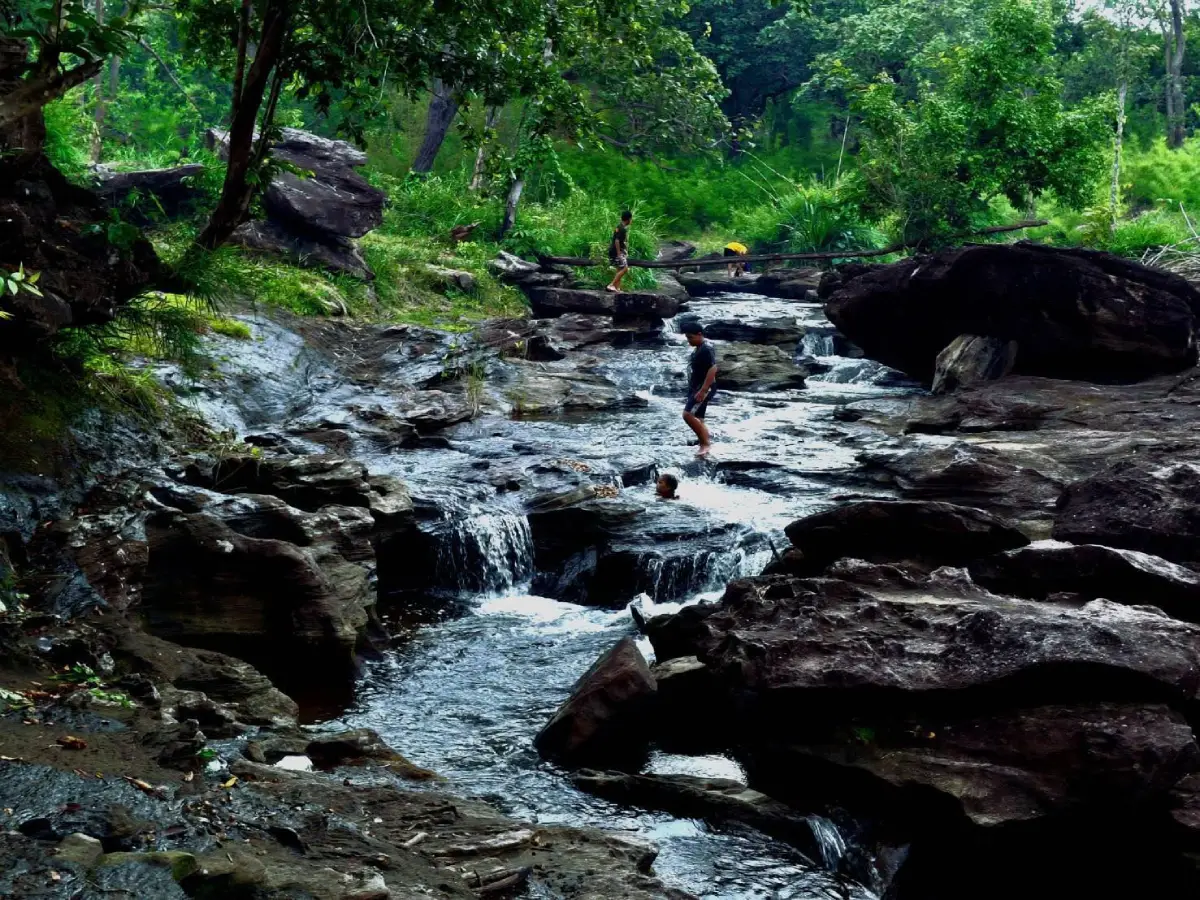
Tham Phuang Waterfall in Ubon Ratchathani Province is a seasonal natural waterfall located at Ban Na Bua, Moo 3, Huai Yang Subdistrict, Khong Chiam District. It is a quiet local nature destination formed by water gathering on higher ground before falling from a rocky overhang into the area around Tham Phuang. Unlike large, heavily developed waterfalls, Tham Phuang Waterfall is valued for its natural setting, forest atmosphere, local walking path, cliff-like rock formation, cave-related landscape, and seasonal stream flow. It is suitable for travelers who want to explore Ubon Ratchathani beyond major attractions and experience a more local side of Khong Chiam.
The waterfall depends on seasonal water, especially from the rainy season until around November. During this period, rainfall feeds the upper streams and small water channels, allowing water to collect and flow over the rocky cliff into the Tham Phuang area below. When the flow is strong, the site becomes fresh, green, and full of natural movement. In lower-water periods, the rock structure, overhang, natural channels, and cave-like setting become more visible. This seasonal character is an important part of the identity of Tham Phuang Waterfall.
The name Tham Phuang reflects the relationship between the waterfall and the cave-like rock area. This is not just a waterfall dropping into an open pool. It is a landscape where water, a rocky overhang, a cave-related area, forest shade, and natural ground come together. Visitors who take time to observe the site will see that its beauty comes from the interaction of rain, rock, slope, vegetation, and seasonal water rather than from a single dramatic viewpoint.
Tham Phuang Waterfall is located in Ban Na Bua, Huai Yang Subdistrict, in the wider Khong Chiam landscape. Khong Chiam is known for the Mekong River, the Mun River, sandstone cliffs, seasonal waterfalls, Pha Taem National Park, dry dipterocarp forest, and local village routes. Tham Phuang adds another layer to this landscape by representing a smaller community-based natural attraction. It offers a different perspective from the famous Mekong viewpoints and prehistoric rock painting areas.
The site is especially meaningful because it is seasonal. Visitors should not expect the same appearance throughout the year. In the rainy season, water flow becomes the main highlight. In late rainy and early cool months, the landscape is often greener and more comfortable for walking. In drier periods, visitors can observe rocks, the overhang, natural water channels, and the terrain more clearly. This variation is part of the natural rhythm of the place.
Getting to the waterfall is part of the experience. The route follows Road 2222, turns left toward Ban Nong Khong-Ban Na Bua, and then continues to the entrance area. From there, visitors walk along a local footpath to reach the waterfall. This approach makes the site feel more like a discovered natural place than a quick roadside stop. The walk allows travelers to move gradually from a village route into a more natural forest and waterfall setting.
The walking path requires care and awareness. It may include soil, roots, uneven ground, rocks, and damp sections depending on the season. During the rainy season, the path can become slippery, and water levels may change quickly. Visitors should wear shoes with good grip, walk in groups, avoid risky cliff edges, and allow enough time for the walk in and out. This is a natural site, so preparation matters more than at urban attractions.
In the rainy season, Tham Phuang Waterfall is at its most lively. Water from the upper area falls over the rocky overhang and into the ground around the cave area. The surrounding forest becomes greener, the air feels cooler, and the sound of water gives the site a strong natural atmosphere. However, this is also the season when caution is most important. Visitors should avoid traveling during heavy rain and should not enter areas with strong water flow or uncertain ground conditions.
Late rainy season to early cool season is often a suitable period for travelers who want both water flow and safer walking conditions. The waterfall may still have water, the surrounding vegetation remains fresh, and the weather becomes more comfortable. This period is also good for connecting Tham Phuang Waterfall with other attractions in Khong Chiam and Pha Taem routes, such as Saeng Chan Waterfall, Soi Sawan Waterfall, Sao Chaliang, Pha Taem Cliff, and the Two-Color River.
Tham Phuang Waterfall is not a heavily commercialized attraction. Its value lies in its quiet local character. Visitors should not expect extensive facilities directly at the waterfall. Instead, the experience is defined by the village route, forest footpath, rocky overhang, cave-related setting, and seasonal water. Travelers who enjoy small natural sites, slow walking, and quiet photography will appreciate the place more than those looking only for large-scale facilities.
The waterfall is also meaningful as a cultural-natural space. It is connected with Ban Na Bua and Huai Yang Subdistrict rather than standing apart from local life. The route, name, landscape, and local recognition all show the relationship between community and nature. A visit here helps travelers understand how local people identify natural places through water, rock, forest, and memory.
From a geographical perspective, Tham Phuang Waterfall shows how water shapes rock and land over time. Seasonal water flowing from higher ground follows natural cracks, channels, and slopes. It gradually wears down rock surfaces, carries sediment, and creates visible traces in the landscape. Even though the waterfall depends on seasonal flow, every rainy season contributes to the slow shaping of the site.
The cave-like setting and rocky overhang are important features. They give the waterfall vertical and spatial depth. Standing below the falling water, visitors can feel the weight of the rock, the shade of the overhang, and the movement of water from above. This makes the place different from a simple open stream waterfall. It feels more enclosed, quiet, and connected to the natural structure of the land.
Tham Phuang Waterfall is suitable for several types of visitors. Nature travelers can enjoy the forest and seasonal waterfall. Photographers can capture the walking path, rock overhang, water flow, and forest atmosphere. Students can learn about seasonal streams, local landscapes, and community-based natural sites. International visitors can experience a part of rural Isan that is not overly developed or staged for tourism.
For international travelers, the waterfall provides a different image of Thailand. It is not a beach, island, city, or large national park viewpoint. It is a local seasonal waterfall connected with a village, forest path, rocky terrain, and community geography. This type of place helps visitors understand that northeastern Thailand has many smaller natural landscapes that are important to local identity.
Photographers should choose timing carefully. Morning is often best for soft light and calmer conditions. Early afternoon can work for details of rock, water, and vegetation. After safe rainfall, the waterfall and forest may look especially fresh, but the path and stones may also be slippery. Camera and phone protection is recommended, especially in damp or rainy conditions.
Safety is essential. Visitors should not walk alone, climb unstable rock, approach cliff edges, or enter unknown water areas. Seasonal waterfalls can change quickly when rain falls in the upper catchment. A calm-looking stream may become stronger after rainfall. The safest way to visit is to travel during stable weather, follow the local walking route, and ask local people for recent path conditions when needed.
Getting There to Tham Phuang Waterfall follows Road 2222. Turn left toward the Ban Nong Khong-Ban Na Bua route, continue to the access point, and then walk along the local footpath to the waterfall. A private car or rental car is the most convenient option because the waterfall is a local natural attraction and public transport does not normally go directly to the walking entrance.
Travelers starting from Ubon Ratchathani city can drive toward Khong Chiam District, then continue toward Huai Yang Subdistrict and Ban Na Bua. Those already staying in Khong Chiam can plan the waterfall as a half-day nature trip or include it in a longer route with Pha Taem National Park attractions. Since some parts of the route are local roads and walking paths, time should be planned carefully.
Travelers without private transport should first reach Khong Chiam town and then arrange local transport or hire a vehicle to Ban Na Bua. This option requires advance planning because small natural attractions may not have frequent public transport. For small groups, hiring local transport is usually more practical and allows the group to connect several nearby attractions in one day.
A half-day trip from Khong Chiam can focus on Tham Phuang Waterfall, the Ban Na Bua route, and nearby local scenery. A full-day trip can combine the waterfall with Saeng Chan Waterfall, Soi Sawan Waterfall, or Sao Chaliang, depending on road and weather conditions. A slower two-day plan can include Khong Chiam town, the Two-Color River, Wat Tham Khuha Sawan, Pha Taem Cliff, and nearby waterfalls.
Food options are more convenient in Khong Chiam town and along the Mekong riverside than directly at the waterfall. Visitors should prepare drinking water and simple supplies before entering the footpath area. Khong Chiam restaurants commonly serve Mekong fish, Isan dishes, Thai food, river prawns, fish soup, fried river fish, and spicy local salads. Calling restaurants ahead is useful on weekends and holidays.
Accommodation suitable for visiting Tham Phuang Waterfall is mainly found in Khong Chiam town and along the Mekong River. Options include small hotels, riverside resorts, and quiet guesthouses. Staying in Khong Chiam is practical because it provides food, accommodation, river views, and access to multiple attractions in the Pha Taem and Khong Chiam area.
Useful items for the trip include shoes with good grip, drinking water, a hat, mosquito repellent, a small towel, a personal trash bag, and waterproof protection for phones or cameras. During the rainy season, a light raincoat or small umbrella may also be useful. Visitors should dress for walking and avoid footwear that slips easily on wet soil or rock.
Cleanliness is very important. Small natural sites can be damaged easily by litter. Visitors should take all rubbish back out, avoid leaving food waste, avoid using soap or chemicals in any water channel, avoid writing on rocks, and avoid damaging plants. Responsible travel helps preserve the waterfall’s quiet local atmosphere.
Tham Phuang Waterfall can also serve as an outdoor learning site. It shows how rainwater gathers on higher ground, moves along natural channels, falls from a rocky overhang, and creates a seasonal waterfall. It also shows how local communities name, remember, and use natural places. This makes the site valuable for students, nature groups, and travelers interested in community-based geography.
In the wider Khong Chiam travel context, Tham Phuang Waterfall adds depth to the route. Many visitors know Khong Chiam for the Mekong River, Pha Taem, and the Two-Color River, but Tham Phuang represents the smaller local waterfalls and forest paths that exist behind the better-known attractions. Visiting it helps distribute the travel experience beyond the main tourist points.
Responsible behavior also includes respect for the local community. Visitors should drive slowly through village areas, avoid blocking local roads, avoid loud noise, and follow local guidance when entering natural paths. Since the waterfall is connected with Ban Na Bua and Huai Yang Subdistrict, respectful travel helps keep the relationship between visitors and local residents positive.
Visitors should also understand the limits of a seasonal waterfall. The best-looking period is also the period that requires the most attention to rain and water conditions. If rain is heavy or the path is unsafe, it is better to postpone the visit or choose a safer nearby attraction. Good nature travel balances beauty with safety.
Overall, Tham Phuang Waterfall is a meaningful natural attraction for travelers seeking a deeper view of Ubon Ratchathani. It is not a large commercial waterfall with extensive facilities, but it offers a seasonal stream, rocky overhang, cave-related setting, forest walking route, and a clear connection with Ban Na Bua. Its value lies in quietness, locality, and the natural rhythm of rain-fed water.
Tham Phuang Waterfall is best visited by travelers who appreciate small natural places and are willing to prepare properly. When visited in the right season, with suitable footwear, careful walking, and respect for local conditions, the waterfall offers a calm and memorable experience. It reveals another side of Khong Chiam: not only the grand Mekong viewpoints and sandstone cliffs, but also local seasonal waterfalls hidden within village landscapes and forest paths.
| Name | Tham Phuang Waterfall |
| Location | Ban Na Bua, Moo 3, Huai Yang Subdistrict, Khong Chiam District, Ubon Ratchathani Province |
| Address | Natural attraction area at Ban Na Bua, Huai Yang Subdistrict, Khong Chiam District, Ubon Ratchathani 34220 |
| Coordinates / Navigation Point | Tham Phuang Waterfall, Ban Na Bua, Huai Yang Subdistrict, Khong Chiam District, Ubon Ratchathani; follow Road 2222 and turn left toward Ban Nong Khong-Ban Na Bua before walking along the local footpath to the waterfall |
| Distinctive Features | A seasonal waterfall formed by water gathering on higher ground and falling from a rocky overhang into the Tham Phuang area, with forest paths, cliff-like rocks, a cave-related setting, and a quiet local nature atmosphere |
| Name Origin | The name Tham Phuang is connected with the cave-like area and rocky overhang where the seasonal waterfall drops from above into the lower natural setting. |
| Natural Formation | The waterfall depends on seasonal runoff from higher ground, especially during the rainy season until around November. Water flows over a rocky overhang into the Tham Phuang area below. |
| Travel Information | Follow Road 2222, turn left toward Ban Nong Khong-Ban Na Bua, continue to the access point, and walk along the local footpath to reach the waterfall. A private car or rental car is the most convenient option. |
| Current Status | Open as a local natural attraction of Ban Na Bua, Huai Yang Subdistrict, Khong Chiam District |
| Open Days | Daily |
| Opening Hours | 08.00 – 17.00 |
| Facilities | Village access route, natural walking path, resting areas according to site conditions, and basic local services in Ban Na Bua or nearby communities |
| Main Areas / Zones | Ban Na Bua Access Zone Natural Footpath Zone Rocky Overhang Zone Tham Phuang Cave-Like Area Seasonal Waterfall Zone Rock And Water Channel Zone Forest Resting Zone Nature Photography Zone |
| Caretaker | Huai Yang Subdistrict Administrative Organization, Khong Chiam District, Ubon Ratchathani Province, and local leaders in the Ban Na Bua area |
| Main Contact Number | Huai Yang Subdistrict Administrative Organization, Tel. 045-251564 Local Huai Yang Information, Tel. 093-0741875 |
| Best Time To Visit | Rainy season to November for waterfall flow; late rainy to early cool season for walking, photography, and connecting with nearby Khong Chiam nature routes |
| Safety Notes | Be careful of slippery paths after rain, seasonal runoff, uneven ground and rocks, avoid walking alone, and ask local people about trail conditions during heavy rain periods. |
| Nearby Tourist Attractions | 1. Ban Na Bua And Huai Yang Nature Route, 1 km, Tel. 045-251564 2. Thung Na Mueang Waterfall, 14 km 3. Saeng Chan Waterfall / Long Ru Waterfall, 16 km, Tel. 0 4525 2581 4. Soi Sawan Waterfall, 22 km, Tel. 0 4525 2581 5. Sao Chaliang, Pha Taem National Park, 35 km, Tel. 0 4525 2581 6. Pha Taem Cliff And Prehistoric Rock Paintings, 36 km, Tel. 0 4525 2581 7. Two-Color River, Khong Chiam, 38 km |
| Nearby Restaurants | 1. Khrua Khong Chiam, 38 km, Tel. 045-351-027, 062-829-3697 2. Larb Pla Khong Chiam, 38 km, Tel. 045-351-283 3. Phae Araya Khong Chiam, 38 km, Tel. 045-351-015 4. Boeng Tawan Restaurant, 38 km, Tel. 089-717-7627 5. Chandara Khong Chiam, 39 km, Tel. 098-242-4464 6. Mae Nam Song Si Khong Chiam Restaurant, 38 km, Tel. 083-720-7706 |
| Nearby Accommodations | 1. Khong Chiam Hotel, 38 km, Tel. 086-468-7431 2. View Khong Khong Chiam Hotel, 38 km, Tel. 065-242-3392 3. Baan Kieng Tawan Khong Chiam, 39 km, Tel. 099-039-4290 4. Tohsang Heritage Khongjiam, 43 km, Tel. 045-351-174, 081-860-5905 5. Khong Chiam Orchid Riverside Resort, 44 km, Tel. 098-916-8771 |
Frequently Asked Questions (FAQ)
Q: Where is Tham Phuang Waterfall located?
A: Tham Phuang Waterfall is located at Ban Na Bua, Moo 3, Huai Yang Subdistrict, Khong Chiam District, Ubon Ratchathani Province.
Q: What are the opening days and hours?
A: Tham Phuang Waterfall is open daily from 08.00 to 17.00.
Q: Is there an entrance fee?
A: No confirmed specific entrance fee for Tham Phuang Waterfall is publicly listed. Visitors should prepare personal travel, food, and local service expenses.
Q: When does Tham Phuang Waterfall have water?
A: It is a seasonal waterfall with clear flow during the rainy season until around November, when runoff from higher ground feeds the waterfall.
Q: How can travelers get to Tham Phuang Waterfall?
A: Follow Road 2222, turn left toward Ban Nong Khong-Ban Na Bua, then walk along the local footpath to reach the waterfall. A private car or rental car is the most convenient option.
Q: What are the main highlights of Tham Phuang Waterfall?
A: The highlights are seasonal water falling from a rocky overhang into the Tham Phuang area, together with a forest walking route, cave-like setting, rocks, and a quiet local nature atmosphere.
Q: What attractions can be visited together with Tham Phuang Waterfall?
A: Nearby attractions include Thung Na Mueang Waterfall, Saeng Chan Waterfall, Soi Sawan Waterfall, Sao Chaliang, Pha Taem Cliff, the Two-Color River, and other Khong Chiam attractions.
Q: What should visitors prepare before going?
A: Visitors should bring shoes with good grip, drinking water, a hat, mosquito repellent, a personal trash bag, waterproof protection for phones or cameras, and check weather conditions before traveling during the rainy season.
 Category: ●Nature and Wildlife
 Group: ●Waterfalls
Last Update : 1 MonthAgo
 Last Update : 1 MonthAgo
 Click to Access the Navigation Map GPS
Tham Phuang Waterfall Map
Recommend

 Art, Culture and Heritage
 Historical Sites and Monuments(5)
 Landmarks and Memorials(2)
 Royal Palace(1)
 Art, Craft Centres, Tradition(7)
 Museums(3)
 Places of Worship
 Temple(37)
 Other Sacred Sites(4)
 Research and Development
 Royal Project(2)
 Suburban Living
 Village, Community(2)
 Local Market(4)
 National Parks and Marine Reserves(5)
 Mountain (Doi)(6)
 Dam, Reservoir, Lake(8)
Waterfalls(12)
Dam, Reservoir, Lake(8)
Waterfalls(12)
 Hot Springs(1)
 Caves(2)
 River, Canal(11)
 Bays and Beaches(8)
 Islands(2)
 Other natural attractions(6)
 Entertainment and Agricultural
 Zoos and Aquariums(1)
 Animal camps and shows(1)
 Farms, Parks and Ecotourism(1)


