
lovethailand home >Northeastern Travel Attractions >Ubon Ratchathani Travel Attractions >Muang Ubon Ratchathani >Nong Khon > Ban Pa Ao
TL;DR: Ban Pa Ao is located at Ban Pa Ao, Moo 9, Pa Ao Subdistrict, Mueang Ubon Ratchathani District, Ubon Ratchathani Province, open Daily, hours 08.00 – 17.00.

Ban Pa Ao
Open Days: Daily
Opening Hours: 08.00 – 17.00
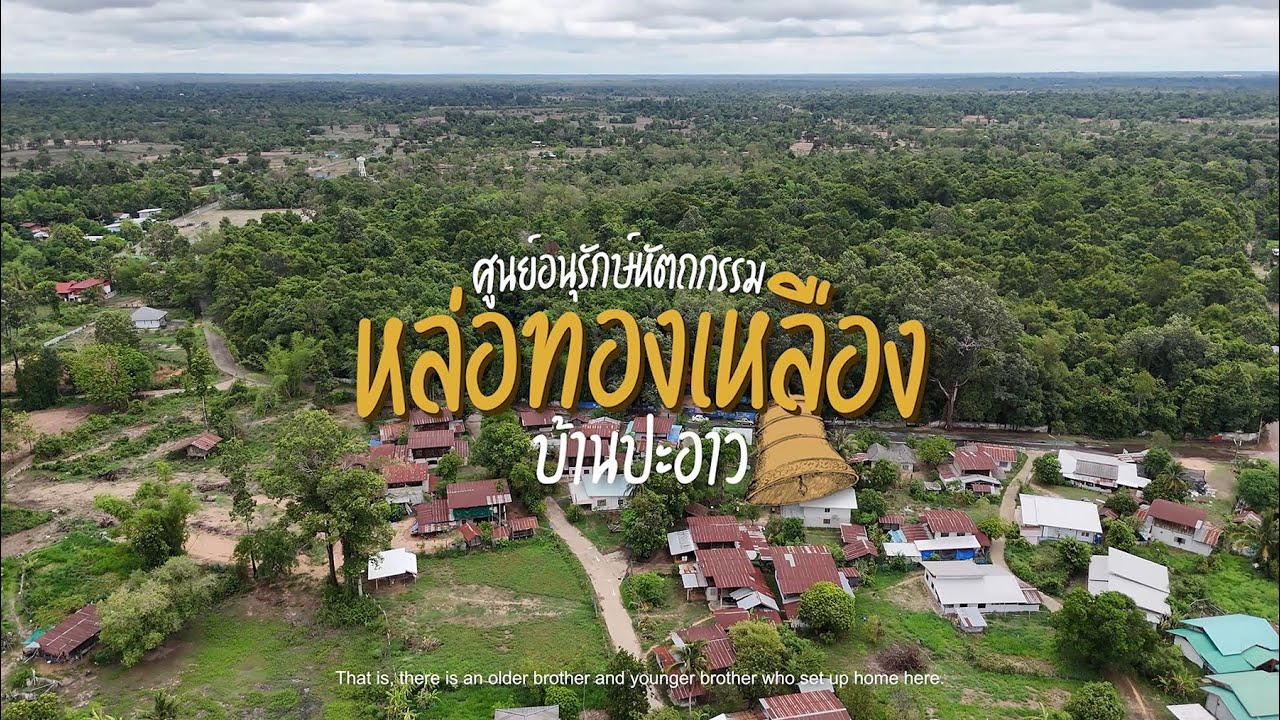
Ban Pa Ao in Ubon Ratchathani is one of the province’s most distinctive craft villages, known for traditional brass casting and handwoven silk. The community is located in Pa Ao Subdistrict, Mueang Ubon Ratchathani District, Ubon Ratchathani Province, west of Ubon Ratchathani city. Travelers reach the village by taking National Highway 23, also known as Chaeng Sanit Road, on the Ubon Ratchathani – Yasothon route, then turning into the local road toward the village. Ban Pa Ao is not only a place to buy souvenirs. It is a living craft community where visitors can see old brass-casting techniques, handwoven textiles, local products, community memory, and rural Isan life in one place.
The importance of Ban Pa Ao lies in the fact that its craft is still connected with real community life. Brassware here is not produced only for display. It is made by artisans, families, craft groups, and local networks that have inherited knowledge from earlier generations. A visit to Ban Pa Ao allows travelers to see finished brass products, local tools, molds, workshop areas, handwoven textiles, and the village environment that has supported this craft for more than 200 years. The sound of work, the texture of brass, the marks of hand tools, and the quiet pace of the village all give the place a depth that ordinary souvenir shops cannot provide.
Local history connects Ban Pa Ao with the movement of Lao-speaking communities from the Mekong region into lower northeastern Thailand. Oral tradition says that the ancestors of the village migrated from Vientiane through Nong Bua Lamphu and related historical settlements before reaching the Ubon Ratchathani area. This story places Ban Pa Ao within the broader history of population movement, settlement, cultural transfer, and craft knowledge in Isan. The village therefore has significance not only as a craft center, but also as a historical community rooted in the Thai-Lao cultural world.
The name Pa Ao is linked with a local story about the phrase Pa Ao, meaning the leaving behind of an uncle or younger male relative. According to the story, a group of relatives traveled together in search of a suitable settlement. One person stayed in the present village area while another continued northward to settle elsewhere. Over time, the phrase changed into the name Pa Ao. This name preserves a piece of community memory and gives the village an identity tied to its founding story.
Ban Pa Ao is more than 200 years old. Its age can be seen through oral history, ritual memory, local belief, old objects, craft knowledge, and the continuity of village occupations. Agriculture remains part of local life, while brass casting, silk weaving, food processing, and community tourism function as supplementary livelihoods. This combination of farming and craft work is typical of many Isan communities, but Ban Pa Ao stands out because its brass-casting knowledge is rare, visually striking, and still actively practiced.
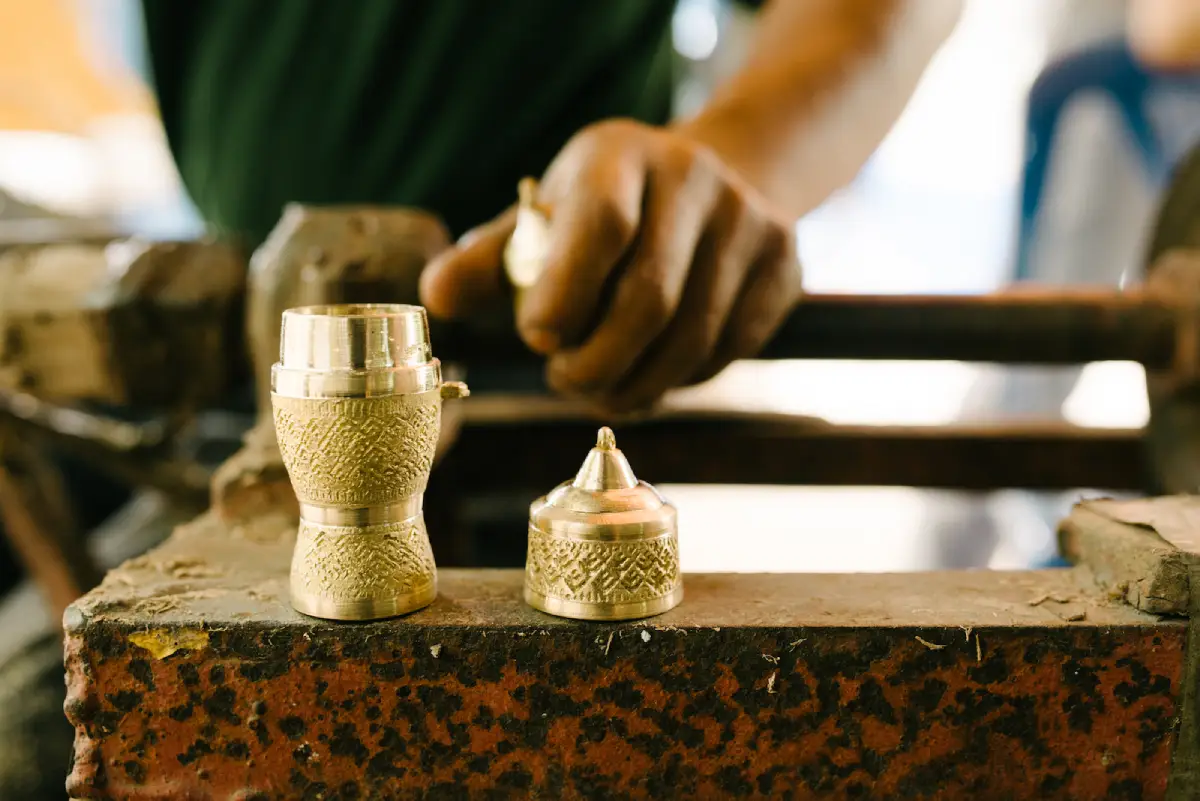
The village is best known for traditional brass casting using the lost-wax method. In Thai local terminology, this is known as the method in which wax is replaced by molten metal. The process requires many stages: forming the clay core, shaping and smoothing the mold, applying wax, creating patterns, covering the wax with clay, firing the mold, melting the metal, pouring molten brass, breaking the mold, polishing, and finishing the object. Each stage requires precision, patience, and experience. The final product is handmade, so no 2 pieces are exactly the same.
The mold material used by Ban Pa Ao artisans reflects local environmental knowledge. Craftsmen use termite-mound clay mixed with cow dung to make the clay core. Termite clay is fine and heat resistant, while cow dung helps the mold hold together and release more easily after firing. This material knowledge comes from long observation and experimentation. It shows that the craft is not only about metal. It is also about soil, heat, organic material, fire control, and the artisan’s ability to work with the natural properties of local resources.
The first stage of production is mold making. Artisans shape the clay mixture around a wooden core according to the desired form. The mold is then dried before being smoothed and shaped. Local turning tools are used to refine the surface and proportions. This stage determines the structure of the final object. If the core is not balanced, the finished product will also be unbalanced. Mold making therefore requires careful eyes and practiced hands.
After the clay core is ready, wax is applied around the surface. This wax layer becomes the space later occupied by molten brass. The thickness of the wax is critical. If it is too thin, the object may be weak. If it is too thick, the piece may become unnecessarily heavy. Artisans then decorate the surface with wax patterns. These patterns become raised or engraved details on the finished brass object after casting. This stage is where much of the visual character of Ban Pa Ao brassware is created.
Ban Pa Ao brassware has distinctive patterns such as rattan-fruit patterns, lotus-petal patterns, saw-tooth patterns, pine-tree patterns, fish-egg patterns, and roller patterns. These motifs are inspired by nature, local forms, and inherited design knowledge. They are not machine-made decorations. They are shaped by hand, which gives every object a subtle variation. When light reflects on the brass surface, the patterns create texture, depth, and a strong sense of handmade identity.
The village produces many types of brass objects, including cattle bells, temple bells, lime containers, betel-nut sets, small bells, caskets, bowls, trays, decorative objects, keychains, and souvenirs. In the past, many of these objects were used in daily life or religious settings. Over time, some products have been adapted for modern buyers while still preserving traditional forms and patterns. This ability to adapt has helped Ban Pa Ao craft remain relevant in contemporary markets.
The beauty of Ban Pa Ao brassware comes from the balance between handmade imperfection and detailed craftsmanship. The surface is not always mechanically smooth. It carries traces of casting, polishing, and hand finishing. These traces make the objects feel alive. Even pieces made from similar forms differ slightly in weight, curve, texture, and surface detail. This uniqueness is the strength of craft objects and one reason collectors and cultural travelers value Ban Pa Ao brassware.
The knowledge behind Ban Pa Ao brass casting is transmitted from person to person. Much of the work is learned through watching, helping, repeating, and working beside older artisans. A younger maker must learn how to hold tools, judge heat, read the color of fire, understand when the mold is ready, and solve problems when casting does not go as planned. This knowledge is difficult to replace with machines because it lives in the artisan’s eyes, hands, timing, and experience.
In addition to brassware, Ban Pa Ao is also known for silk weaving and local textiles. Villagers have long raised silkworms and woven silk for household use. Later, local women organized weaving groups to produce handwoven textiles for sale and supplementary income. Popular textiles include pha kab bua, mudmee silk, silk with prasat phueng motifs, luk kaew silk, and other local patterns. Textile work gives Ban Pa Ao another cultural dimension and shows that the village’s craft identity is not limited to metalwork.
Ban Pa Ao silk reflects the patience of Isan weavers. A single piece of cloth requires thread preparation, color planning, pattern arrangement, loom setting, and continuous weaving. The weaver must remember the pattern, control hand rhythm, and maintain the consistency of the cloth. Textile work and brass casting differ in material, but both require concentration and inherited skill. Together, they make Ban Pa Ao one of the most complete craft communities near Ubon Ratchathani city.
The village has demonstration and sales areas for brass products and local textiles. Visitors can observe craft processes, see finished work, and buy products directly from the community. This direct connection between maker, place, and product gives the visit special meaning. A brass bell or silk cloth purchased here is not an anonymous souvenir. It is an object connected with the maker, the village, the craft process, and the cultural history of Ban Pa Ao.
The local museum is another meaningful part of the village. It preserves objects related to religion, manuscripts, textile tools, silkworm equipment, pottery, brassware, betel-nut trays, lamps, old radios, and everyday village life. These objects show that Ban Pa Ao is not only a craft-production site. It is also a community with memory, belief, domestic culture, and social change preserved through ordinary things.
Local belief is also important in Ban Pa Ao. The community respects Chao Pu Saen Nan, remembered as a founding figure of the village. This belief connects the people with the land and with the ancestors who established the settlement. It explains why craft, faith, and community identity remain closely linked. Ban Pa Ao is not only an economic craft village; it is a place where history and belief continue to shape community life.
One important tradition that brings visitors to Ban Pa Ao is the Bun Bang Fai rocket festival. This Isan festival is connected with rain, fertility, agriculture, and community celebration. In Ban Pa Ao, the festival adds another layer to the village experience. Travelers who encounter this seasonal event can see how craft, farming, ritual, music, and community energy come together in a living Isan cultural setting.
Ban Pa Ao is suitable for families, students, cultural travelers, craft researchers, textile enthusiasts, and international visitors who want to understand local Thai craftsmanship in depth. The village shows that craft does not begin at a marketplace. It begins in homes, community workshops, local materials, tools, memories, and intergenerational learning. This is why the village remains valuable for cultural tourism.
For international visitors, Ban Pa Ao offers an especially clear view of a traditional Isan craft community. The lost-wax method is known in many cultures, but Ban Pa Ao gives it a local northeastern Thai character through termite clay, handmade molds, local motifs, brass forms, and community use. The visit helps travelers understand that Thai craft is diverse and regionally specific. It is not one uniform national style.
A meaningful visit can begin at the brass demonstration and sales area. Visitors can then observe the brass-casting process in areas open to the public, look at finished brassware, continue to textile products, and visit the local museum. This route gives a complete picture of Ban Pa Ao: metalwork, textiles, local history, belief, and everyday life.
Craft-production areas require respectful behavior. Brass casting involves fire, hot metal, clay molds, tools, and working spaces. Visitors should stay only in areas open for viewing and keep a safe distance from active work. Careful observation makes the experience more meaningful because every stage shows the difficulty and refinement of the craft.
The best time to visit is from morning to afternoon. These hours allow enough time to observe craft work, buy products, and continue to nearby attractions. Travelers starting from Ubon Ratchathani city in the morning can visit Ban Pa Ao first, then continue to Ban Yang Noi Arts and Crafts Center, Ban Chi Thuan, Phra That Suan Tan, the Big Buddha of Khueang Nai, or Ban Tha Wari within the same day.
Getting There is easiest by private car. From Ubon Ratchathani city, take National Highway 23, Chaeng Sanit Road, toward Yasothon. Around kilometer marker 273, turn right onto the local road and continue about 3 km to Ban Pa Ao. The route is practical for a half-day cultural trip from the city. Travelers can search for Ban Pa Ao or Ban Pa Ao Brassware Craft Village in a navigation app.
Ban Pa Ao is close enough to Ubon Ratchathani city for a short trip but rich enough for deeper cultural exploration. Within one visit, travelers can learn about a historical village, brass casting, silk weaving, local museum collections, community belief, and craft products. This density of cultural content makes the village one of the strongest craft destinations in the province.
Ban Pa Ao can be combined with Ban Yang Noi Arts and Crafts Center on the same route. Ban Pa Ao is known for brassware and silk, while Ban Yang Noi is known for arts and crafts, textiles, model farming, and royal-initiative community development. Visiting both places provides a broader understanding of community-based craft and vocational development in Ubon Ratchathani.
Ban Chi Thuan and Phra That Suan Tan also fit well with this route. Ban Chi Thuan offers Buddhist art, local architecture, and the remarkable lion-throne pulpit at Wat Si Nuan Saeng Sawang Arom. Combining Ban Pa Ao with Ban Chi Thuan creates a route of craft, religion, local art, and village history.
Ban Tha Wari adds a food-culture stop to the journey. The village is known for roasted coconut, a familiar local product for travelers along Chaeng Sanit Road. A route that includes Ban Pa Ao, Ban Tha Wari, Ban Chi Thuan, and Ban Yang Noi allows visitors to experience crafts, local food, temples, and community life within a short distance from Ubon Ratchathani city.
Restaurants near Ban Pa Ao are found mostly along Chaeng Sanit Road and in Ubon Ratchathani city. Visitors can eat before entering the village or after leaving it. Options include Thai restaurants, noodle shops, cafés, local eateries, and hotel restaurants. Eating outside the production areas helps keep the craft village clean and orderly.
Accommodation is easiest to find in Ubon Ratchathani city and along Chaeng Sanit Road. Visitors who want a convenient base can stay in the city and visit Ban Pa Ao as a day trip. This also allows easy continuation to other attractions such as Wat Phra That Nong Bua, Thung Si Mueang, Ubon Ratchathani National Museum, and the Khueang Nai cultural route.
In summary, Ban Pa Ao is one of Ubon Ratchathani’s most important craft destinations. Its value comes from more than age. It comes from the continuity of brass casting, the lost-wax method, distinctive local patterns, silk weaving, community products, the local museum, and the living identity of a village that still preserves its inherited knowledge. The village is suitable for Thai visitors, international travelers, students, families, craft lovers, and anyone seeking a deeper understanding of Ubon Ratchathani’s cultural heritage.
Ban Pa Ao shows that local wisdom is not frozen in the past. It continues through artisans, weavers, community groups, and families who keep the knowledge alive. Every brass object, every silk textile, and every village story carries the patience and pride of the community. A visit to Ban Pa Ao is therefore not only a shopping stop. It is a direct encounter with living Isan heritage and one of the most distinctive handmade traditions of Ubon Ratchathani.
| Name | Ban Pa Ao |
| Related Names | Ban Pa Ao Brassware Community / Ban Pa Ao Traditional Brass Casting Center / Ban Pa Ao Craft Village |
| Location | Ban Pa Ao, Moo 9, Pa Ao Subdistrict, Mueang Ubon Ratchathani District, Ubon Ratchathani Province |
| Address | Ban Pa Ao, Pa Ao Subdistrict, Mueang Ubon Ratchathani District, Ubon Ratchathani 34000, Thailand |
| Coordinates | 15.3570280436, 104.725608386 |
| Place Type | Craft Village / Cultural Tourism Community / Local Wisdom Learning Site / Brassware And Silk-Weaving Community |
| Highlights | Traditional Lost-Wax Brass Casting, Ban Pa Ao Silk Weaving, Brassware Demonstration And Sales Area, Local Museum, And A Historical Community Over 200 Years Old |
| History / Origin | Local history connects the ancestors of Ban Pa Ao with migration from Vientiane through Nong Bua Lamphu before settlement in the Ubon Ratchathani area. The village has preserved brass-casting and silk-weaving knowledge for generations |
| Name Origin | The name Pa Ao is linked with the local phrase meaning “leaving an uncle or younger male relative behind,” preserving the village’s founding memory |
| Brassware Features | Handmade Lost-Wax Brass Casting With Local Motifs Such As Rattan-Fruit Pattern, Lotus-Petal Pattern, Saw-Tooth Pattern, Pine-Tree Pattern, Fish-Egg Pattern, And Roller Pattern |
| Main Products | Bells, Temple Bells, Caskets, Betel-Nut Sets, Lime Containers, Bowls, Trays, Brass Souvenirs, Silk Textiles, Pha Kab Bua, Mudmee Silk, Luk Kaew Silk, And Handwoven Fabric Products |
| Travel Information | From Ubon Ratchathani City, Take National Highway 23, Chaeng Sanit Road, Toward Yasothon. Around Kilometer Marker 273, Turn Right Onto The Local Road And Continue About 3 Km To Ban Pa Ao |
| Current Status | Open To Visitors As A Cultural Tourism Community With Active Brassware Craft, Silk Weaving, A Local Museum, And Community Products |
| Open Days | Daily |
| Opening Hours | 08.00 – 17.00 |
| Main Areas / Zones | Brassware Demonstration And Sales Center Traditional Brass-Casting Workshop Area Brass Product Sales Area Silk-Weaving And Textile Product Area Ban Pa Ao Local Museum Community Wisdom Learning Area Chao Pu Saen Nan Shrine Surrounding Ban Pa Ao Village Area |
| Caretaker / Related Groups | Ban Pa Ao Community, Traditional Brassware Craft Group, Ban Pa Ao Women’s Silk Group, And Pa Ao Subdistrict Administrative Organization |
| Local Contact Number | Pa Ao Subdistrict Administrative Organization, Tel. 045-840-492 |
| Nearby Tourist Attractions | 1. Ban Pa Ao Local Museum, about 0.5 km 2. Ban Pa Ao Brassware Demonstration And Sales Center, about 0.3 km 3. Chao Pu Saen Nan Shrine, Ban Pa Ao, about 1 km 4. Ban Yang Noi Arts And Crafts Center, about 16 km 5. Phutthasathan Khrong Rat 60 Pi, Ban Ae, about 19 km 6. Ban Chi Thuan And Phra That Suan Tan, about 26 km 7. Wat Phra That Nong Bua, Mueang Ubon Ratchathani District, about 22 km |
| Nearby Restaurants | 1. Khiang Chaeng Sanit Road, about 19 km, Tel. 082-292-4429 2. Rak Aroi Chaeng Sanit Road, about 19 km, Tel. 096-813-7159 3. Bamee Jakkrawan Ubon, Chaeng Sanit Branch, about 20 km, Tel. 065-920-2899 4. Nom Wan Chaeng Sanit, about 20 km, Tel. 094-295-3270 5. Krua Pa Nong Bamee Rim Mun, about 23 km, Tel. 094-455-6255 6. Tohsang Restaurant, about 23 km, Tel. 045-245-531-5 |
| Nearby Accommodations | 1. Chaeng Sanit 3 Apartment, about 19 km, Tel. 092-981-9900 2. The Nine Place Chaeng Sanit, about 19 km, Tel. 091-019-9777 3. 168 Studio At Ubon Ratchathani, about 20 km, Tel. 063-750-3311 4. B2 Ubon Airport Premier Hotel, about 23 km, Tel. 045-950-881 5. Sunee Grand Hotel, about 24 km, Tel. 081-265-3388, 081-955-2992 6. Tohsang Heritage Ubon Ratchathani, about 23 km, Tel. 045-245-531-5, 094-396-9626 |
Frequently Asked Questions (FAQ)
Q: Where is Ban Pa Ao located?
A: Ban Pa Ao is located in Pa Ao Subdistrict, Mueang Ubon Ratchathani District, Ubon Ratchathani Province. From Ubon Ratchathani city, take National Highway 23 toward Yasothon and turn into the local road near kilometer marker 273.
Q: What are the opening hours of Ban Pa Ao?
A: Ban Pa Ao is open daily from 08.00 to 17.00.
Q: What is Ban Pa Ao famous for?
A: Ban Pa Ao is famous for traditional brass casting using the lost-wax method. It is also known for handwoven silk, pha kab bua, mudmee silk, luk kaew silk, and local community products.
Q: What makes Ban Pa Ao brassware distinctive?
A: Ban Pa Ao brassware is handmade piece by piece using the lost-wax method. Its distinctive patterns include rattan-fruit, lotus-petal, saw-tooth, pine-tree, fish-egg, and roller patterns.
Q: How old is Ban Pa Ao?
A: Ban Pa Ao is an old community with a history of more than 200 years. Local stories connect its ancestors with migration from Vientiane and Nong Bua Lamphu before settling in the Ubon Ratchathani area.
Q: What can visitors see inside Ban Pa Ao?
A: Visitors can see brassware demonstration areas, traditional brass-casting workshops, brass product sales areas, silk and textile product areas, the local museum, Chao Pu Saen Nan Shrine, and the surrounding village community.
Q: What nearby places can be visited with Ban Pa Ao?
A: Nearby places include Ban Yang Noi Arts and Crafts Center, Phutthasathan Khrong Rat 60 Pi, Ban Chi Thuan, Phra That Suan Tan, Ban Tha Wari, and Wat Phra That Nong Bua.
Q: What souvenirs should visitors buy from Ban Pa Ao?
A: Suitable souvenirs include brass bells, temple bells, caskets, betel-nut sets, bowls, trays, brass decorative objects, silk textiles, pha kab bua, mudmee silk, and handwoven fabric products.
 Category: ●Suburban Living
 Group: ●Village, Community
Last Update : 2 MonthAgo
 Last Update : 2 MonthAgo
 Click to Access the Navigation Map GPS

 Art, Culture and Heritage
 Historical Sites and Monuments(5)
 Landmarks and Memorials(2)
 Royal Palace(1)
 Art, Craft Centres, Tradition(7)
 Museums(3)
 Places of Worship
 Temple(37)
 Other Sacred Sites(4)
 Research and Development
 Royal Project(2)
Village, Community(2)
 Local Market(4)
 Nature and Wildlife
 National Parks and Marine Reserves(5)
 Mountain (Doi)(6)
 Dam, Reservoir, Lake(8)
 Waterfalls(12)
 Hot Springs(1)
 Caves(2)
 River, Canal(11)
 Bays and Beaches(8)
 Islands(2)
 Other natural attractions(6)
 Entertainment and Agricultural
 Zoos and Aquariums(2)
 Animal camps and shows(1)
 Farms, Parks and Ecotourism(1)
 Waterpark(1)
 Travel Articles, Recipes
 Travel Review, Food Review(1)


