
lovethailand home >Northeastern Travel Attractions >Ubon Ratchathani Travel Attractions >Muang Ubon Ratchathani >Nai Muang > Wat Tai Beach
TL;DR: Wat Tai Beach is located at Nai Mueang Subdistrict, Mueang Ubon Ratchathani District, Ubon Ratchathani Province, open Accessible daily depending on dry-season water levels, hours No ticketed opening hours; best visited from daytime to early evening.
Wat Tai Beach
Open Days: Accessible daily depending on dry-season water levels
Opening Hours: No ticketed opening hours; best visited from daytime to early evening
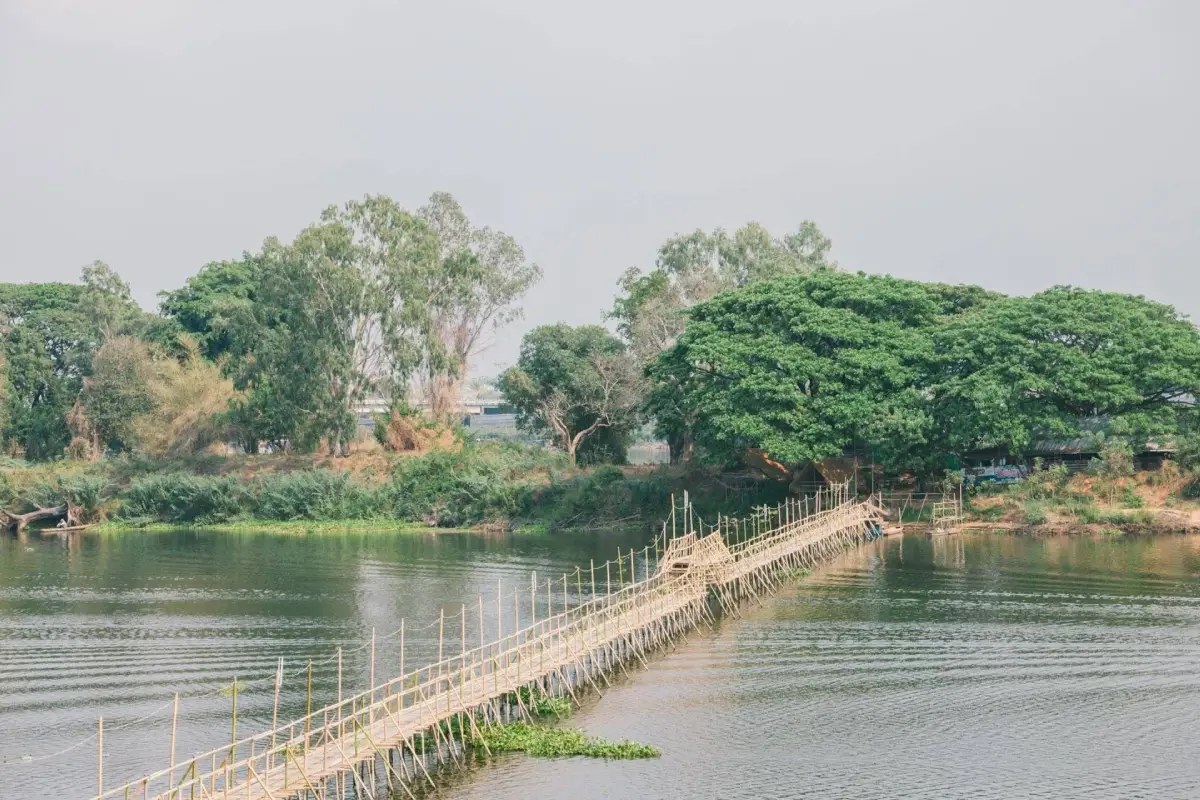
Hat Wat Tai in Ubon Ratchathani is a seasonal sandbank beach in the middle of the Mun River, located within the city municipality. It is best visited from January to May, when the river level drops and reveals a clean sandy island with clear water, shade trees, bamboo walkways, riverside food rafts, and scenic views near the Seri Prachathipatai Bridge and Rattanakosin 200 Years Bridge.
Hat Wat Tai in Ubon Ratchathani is one of the most distinctive riverside attractions in the city. It is not a sea beach, but a seasonal freshwater sandbank in the middle of the Mun River. This is precisely what gives the place its character. During the dry season, the water level drops and reveals a small sandy island with pale sand, clear water, shady trees, bamboo walkways, riverside food rafts, and a relaxed local atmosphere. For travelers who want to experience Ubon Ratchathani beyond temples and city landmarks, Hat Wat Tai offers a direct view of how the city is connected to the Mun River.
Hat Wat Tai is located in Nai Mueang Subdistrict, Mueang Ubon Ratchathani District, Ubon Ratchathani Province. The entrance is near the Provincial Electricity Authority area and close to Wat Tai Phra Chao Yai Ong Tue, one of the important temples of the city. From the Seri Prachathipatai Bridge or the Rattanakosin 200 Years Bridge, visitors can look eastward and see the sandbank island in the river. This setting makes Hat Wat Tai different from ordinary riverside spots. It is not just a riverbank; it is a seasonal island-like beach shaped by the rhythm of the Mun River.
The most suitable time to visit Hat Wat Tai is from January to May. These months are part of the dry season in northeastern Thailand, when the Mun River recedes and the sandy beach becomes clearly visible. The scenery is at its best when the pale sand, clean water, and green trees appear together. During the rainy season or periods of high water, the beach area and some activities depend on river conditions. Hat Wat Tai should therefore be understood as a seasonal natural attraction rather than a fixed-site tourist facility with permanent access in the same form throughout the year.
The charm of Hat Wat Tai lies in its local simplicity. For people in Ubon Ratchathani, the place has long been associated with casual leisure, riverside meals, family gatherings, and time spent with friends. Visitors will find food rafts, simple bamboo structures, shaded areas, and river views that feel closely tied to everyday local life. The experience is not polished or artificial. It is a place where travelers can see how residents of the city relax beside the river and how food, water, temple communities, and city life are connected.
The main activity at Hat Wat Tai is eating on riverside rafts or at local food stalls near the beach area. Popular dishes include dancing shrimp salad, grilled fish, spicy northeastern Thai food, river fish dishes, and shared Thai meals suited to groups. The appeal is not only the food itself, but the atmosphere in which it is eaten. Sitting close to the river, feeling the breeze, seeing reflections on the water, and watching people gather for a relaxed meal all create a memorable Ubon Ratchathani experience.
During the daytime, Hat Wat Tai is suitable for viewing the sandbank, bamboo walkway, food rafts, and shade trees. The clear light helps reveal the shape of the beach and the contrast between sand, water, and greenery. Late afternoon is especially pleasant. The temperature becomes more comfortable, the light softens, and the Mun River takes on a calmer mood. At sunset, the river becomes a beautiful viewing point. At night, light from the Seri Prachathipatai Bridge reflects on the water and creates a different riverside atmosphere, especially for visitors who enjoy city-and-river photography.
Hat Wat Tai is closely connected with Wat Tai Phra Chao Yai Ong Tue, an important Buddhist temple nearby. The temple is known for Phra Chao Yai Ong Tue, a highly respected Buddha image, and the surrounding community is connected with local Songkran-period traditions such as building sand pagodas. This cultural context makes a visit to Hat Wat Tai more meaningful. Travelers can combine riverside relaxation with temple worship and local heritage in the same route.
The Mun River plays an important role in the identity of Ubon Ratchathani. It flows along the southern side of the city and has shaped settlement, food culture, recreation, and local livelihoods for generations. Hat Wat Tai is one of the clearest places to see this relationship. The city is not only made up of temples, markets, roads, and administrative districts. It also includes riverside communities, seasonal landscapes, and natural spaces where residents continue to meet, eat, rest, and remember.
For travelers interested in deeper cultural tourism, Hat Wat Tai is worth experiencing slowly. Its value is not found in a single photo spot. It is found in the texture of the sand, the bamboo walkway, the shade of the trees, the sound of people eating by the river, and the view of the Mun River flowing through the city. The place helps visitors understand Ubon Ratchathani as a living riverside city rather than just a gateway to larger attractions such as Pha Taem, Sam Phan Bok, or national parks.
Because Hat Wat Tai is seasonal, planning matters. The best months are January, February, March, April, and May, when the river level is lower and the beach is visible. If visiting during the rainy season or after heavy rain, travelers should expect the condition of the beach and access points to change. The availability of bamboo walkways, food rafts, and beach activities may vary according to river level and local operators. A visit during the dry season gives the clearest and most reliable experience of the sandbank.
Getting There is easy from central Ubon Ratchathani because Hat Wat Tai lies within the city municipality. Travelers can go by private car, rental car, motorcycle, or local hired transport. The route leads toward Khuean Thani Road and the area near the Provincial Electricity Authority. Wat Tai Phra Chao Yai Ong Tue, the Seri Prachathipatai Bridge, and the Rattanakosin 200 Years Bridge are useful landmarks for navigation. For travelers staying in the city center, the beach can be combined with nearby temples, the national museum, city parks, and local evening markets.
Travelers arriving from Ubon Ratchathani Airport can first enter the city and then plan an afternoon or evening visit to Wat Tai Phra Chao Yai Ong Tue and Hat Wat Tai. From there, it is easy to continue to Thung Si Mueang, Rim Mun walking areas, or restaurants in the city. Travelers arriving by train at Ubon Ratchathani Railway Station in Warin Chamrap can cross the Mun River toward the city and continue to the Hat Wat Tai area without a long journey. This makes the beach practical for visitors who want a short but meaningful city-based route.
Combining Hat Wat Tai with Wat Tai Phra Chao Yai Ong Tue creates a well-rounded itinerary. In the morning or late morning, travelers can visit the temple and pay respect to the important Buddha image. Later in the day, they can continue down toward the sandbank for riverside food and relaxation. In the evening, they can enjoy views of the river and nearby bridges. This route is suitable for cultural travelers, families, elderly visitors, and foreign travelers who want a gentle and meaningful introduction to Ubon Ratchathani.
Safety should be kept in mind. Hat Wat Tai is a natural riverside area, not a controlled water park. Anyone entering the water should be careful about depth, current, and seasonal river conditions. Children should always be supervised by adults. Visitors walking on bamboo bridges or raft access points should move carefully, especially when surfaces are wet or crowded. When choosing a food raft or restaurant, it is best to consider the stability of the walkway, seating area, and access point.
Hat Wat Tai is also a rewarding place for photography. Visitors can capture the sandbank, bamboo walkway, riverside rafts, trees on the island, local food, and sunset light over the Mun River. The strongest images from this place are often simple and natural. Photographers interested in cultural scenes should respect local people and avoid disturbing diners or residents. When photographing individuals, asking permission is the proper approach.
For foreign travelers, Hat Wat Tai provides an accessible way to understand Ubon Ratchathani through several key ideas: the Mun River, local food, riverside life, seasonal sandbanks, bamboo walkways, and temple communities. With some explanation of the Mun River and Wat Tai Phra Chao Yai Ong Tue, the visit becomes more than a meal by the water. It becomes a compact cultural experience that connects nature, Buddhism, community, and everyday leisure.
For families, Hat Wat Tai is suitable for a relaxed afternoon or early evening outing. A safe and stable restaurant area should be chosen, especially when traveling with children or elderly visitors. Elderly travelers should visit when the sun is not too strong and should use transport that can stop near the access point. Groups of friends often enjoy the place for riverside dining and conversation. Travelers interested in history can add Ubon Ratchathani National Museum, Thung Si Mueang, and nearby temples to make the route more complete.
Overall, Hat Wat Tai is more than a small city beach. It is a seasonal landscape, a riverside leisure space, a local food destination, and part of a temple-linked community. Visitors who come at the right time of year will see the Mun River in one of its most charming forms: calm water, pale sand, green shade, local rafts, and a living city beside the river.
Travelers should plan with the seasonal nature of the site in mind. Hat Wat Tai does not operate like a ticketed attraction with fixed gates and fixed services. It is best visited from daytime to early evening, especially during the dry season. Bringing some cash, wearing footwear suitable for sand and bamboo walkways, and checking the weather before traveling will make the visit smoother. For a full city experience, Hat Wat Tai can be combined with Wat Tai Phra Chao Yai Ong Tue, Thung Si Mueang, Ubon Ratchathani National Museum, Wat Thung Si Mueang, and the Rim Mun walking area.
| Name | Hat Wat Tai, Ubon Ratchathani |
| Location | Nai Mueang Subdistrict, Mueang Ubon Ratchathani District, Ubon Ratchathani Province |
| Address | Mun River area near Wat Tai Phra Chao Yai Ong Tue and the entrance near the Provincial Electricity Authority, Nai Mueang Subdistrict, Mueang Ubon Ratchathani District, Ubon Ratchathani 34000 |
| Highlights | Seasonal sandbank island in the Mun River, pale sand during the dry season, clear water, shaded trees, bamboo walkway, riverside food rafts, and evening bridge views |
| History | A long-standing riverside leisure area of Ubon Ratchathani, connected with the Hat Wat Tai community and nearby Wat Tai Phra Chao Yai Ong Tue, an important temple of the city |
| Name Origin | The name Hat Wat Tai is connected with the nearby Wat Tai temple area and the riverside community along the Mun River. |
| Distinctive Features | A seasonal freshwater sandbank in the middle of the Mun River, visible mainly during the dry season, with shaded trees, riverside food rafts, and sunset views |
| Travel Information | Travel from central Ubon Ratchathani toward Khuean Thani Road or the Provincial Electricity Authority area. Wat Tai Phra Chao Yai Ong Tue, Seri Prachathipatai Bridge, and Rattanakosin 200 Years Bridge are useful nearby landmarks. |
| Current Status | A seasonal natural attraction within Ubon Ratchathani Municipality, best visited during the dry season from January to May |
| Open Days | Accessible daily depending on dry-season water levels |
| Opening Hours | No ticketed opening hours; best visited from daytime to early evening |
| Fees | No general admission ticket for the beach area. Food, drinks, and services from food rafts or local shops are charged by individual operators. |
| Facilities | Riverside food rafts, rest areas, seasonal bamboo walkway, photo spots, and nearby local shops |
| Main Areas / Zones | 1. Mun River sandbank zone 2. Seasonal bamboo walkway and beach access zone 3. Food raft and riverside dining zone 4. Shaded tree area on the island 5. Bridge and sunset viewpoint zone 6. Hat Wat Tai community and Wat Tai Phra Chao Yai Ong Tue connection zone |
| Caretaker | The area is within Ubon Ratchathani Municipality and is connected with the Hat Wat Tai community and local food raft operators. |
| Main Contact Number | Ubon Ratchathani Municipality Tel. 045-246-061 |
| Official Website / Official Page | Ubon Ratchathani Municipality website CBT Thailand / DASTA website |
| Nearby Tourist Attractions | 1. Wat Tai Phra Chao Yai Ong Tue, about 0.5 km 2. Rattanakosin 200 Years Bridge, about 1 km 3. Thung Si Mueang, about 1 km 4. Ubon Ratchathani National Museum, about 1 km, Tel. 045-251015 5. Wat Thung Si Mueang, about 2 km 6. Wat Phra That Nong Bua, about 6 km 7. Ubon Ratchathani Zoo, about 14 km, Tel. 093-3209369 |
| Nearby Restaurants | 1. Mala Klai Chan Ubon, Hat Wat Tai entrance area, about 0.2 km, Tel. 064-217-2345, 090-803-2044 2. Baan Fern Nee, about 0.5 km, Tel. 095-943-2616 3. The Ratchathani Hotel and Restaurant, about 1 km, Tel. 090-270-1010 4. Matt Cafe & Bar, about 1 km, Tel. 045-244-389 5. Sarntai Ubon Ratchathani Branch, about 2 km, Tel. 065-459-4228 6. Sa-Le-Te, about 2 km, Tel. 063-750-5557 7. Sao Ubon, about 5 km, Tel. 063-246-9545, 092-746-1016 |
| Nearby Accommodations | 1. The Ratchathani Hotel, about 1 km, Tel. 045-244-388, 045-243-584 2. T3 House, about 2 km, Tel. 045-244-911, 092-161-8651 3. Ubon Best Place, about 2 km 4. Tohsang Heritage Ubon Ratchathani Hotel, about 2 km 5. Ubon Hotel, about 1 km 6. YUU Hotel Ubon Ratchathani, about 2 km, Tel. 045-935-955 |
Frequently Asked Questions (FAQ)
Q: Where is Hat Wat Tai located?
A: Hat Wat Tai is located in Nai Mueang Subdistrict, Mueang Ubon Ratchathani District, Ubon Ratchathani Province, near Wat Tai Phra Chao Yai Ong Tue and the Rattanakosin 200 Years Bridge.
Q: What is the best time to visit Hat Wat Tai?
A: The best time to visit is from January to May, when the Mun River level drops and the sandy river island becomes clearly visible.
Q: Is there an admission fee for Hat Wat Tai?
A: There is no general admission ticket for the beach area. Visitors pay separately for food, drinks, and services provided by local operators.
Q: Are there restaurants or food rafts at Hat Wat Tai?
A: Yes. Seasonal food rafts and local shops serve riverside meals, with popular dishes such as dancing shrimp salad, grilled fish, and northeastern Thai food.
Q: Can visitors swim at Hat Wat Tai?
A: Hat Wat Tai is a natural freshwater beach along the Mun River. Visitors should check water level and current before entering the water, and children should always be supervised by adults.
Q: What nearby attractions can be combined with Hat Wat Tai?
A: Nearby attractions include Wat Tai Phra Chao Yai Ong Tue, Thung Si Mueang, Ubon Ratchathani National Museum, Wat Thung Si Mueang, Wat Phra That Nong Bua, and the Rim Mun walking area.
Q: Is Hat Wat Tai suitable for foreign travelers?
A: Yes. It is suitable for foreign travelers who want to experience riverside life, local food, the Mun River, and a seasonal natural attraction within Ubon Ratchathani city.
Q: Does Hat Wat Tai have fixed opening hours?
A: Hat Wat Tai is a seasonal natural area rather than a ticketed attraction, so it does not have fixed gate-style opening hours. Daytime to early evening during the dry season is the best time to visit.
 Category: ●Nature and Wildlife
 Group: ●Bays and Beaches
Last Update : 1 MonthAgo
 Last Update : 1 MonthAgo
 Click to Access the Navigation Map GPS
 Art, Culture and Heritage
 Historical Sites and Monuments(5)
 Landmarks and Memorials(2)
 Royal Palace(1)
 Art, Craft Centres, Tradition(7)
 Museums(3)
 Places of Worship
 Temple(37)
 Other Sacred Sites(4)
 Research and Development
 Royal Project(2)
 Suburban Living
 Village, Community(2)
 Local Market(4)
 National Parks and Marine Reserves(5)
 Mountain (Doi)(6)
 Dam, Reservoir, Lake(8)
 Waterfalls(12)
 Hot Springs(1)
 Caves(2)
 River, Canal(11)
Bays and Beaches(8)
River, Canal(11)
Bays and Beaches(8)
 Islands(2)
 Other natural attractions(6)
 Entertainment and Agricultural
 Zoos and Aquariums(1)
 Animal camps and shows(1)
 Farms, Parks and Ecotourism(1)


