
lovethailand home >Northeastern Travel Attractions >Ubon Ratchathani Travel Attractions >Muang Ubon Ratchathani >Chae Ra Mae > Ubon Ratchathani National Museum
TL;DR: Ubon Ratchathani National Museum, Ubon Ratchathani attractions : Art, Culture and Heritage, Museums.
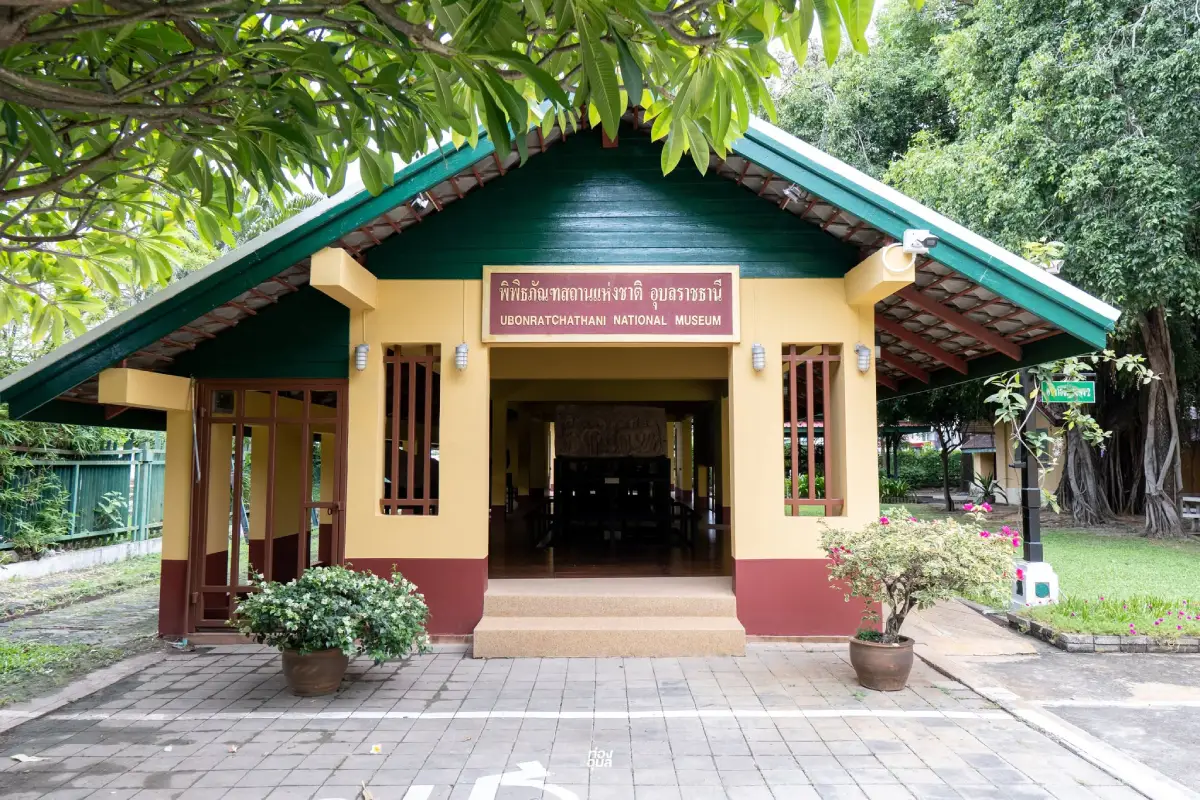
Ubon Ratchathani National Museum
Open Days: Wednesday – Sunday, Closed On Mondays, Tuesdays And Public Holidays
Opening Hours: 09.00 – 16.00
Ubon Ratchathani National Museum is one of the most important cultural landmarks in the heart of Ubon Ratchathani city. Located at 318 Khuan Thani Road, Nai Mueang Subdistrict, Mueang Ubon Ratchathani District, the museum occupies the former provincial hall, a historic single-storey building completed in 1918. Today, the building serves as a comprehensive gateway to the history, archaeology, art, local culture, textiles, music, crafts and Buddhist heritage of Ubon Ratchathani. For travelers who want to understand the city before exploring its temples, old town streets, riverside areas and cultural festivals, this museum is one of the best places to begin.
The museum is valuable not only because it preserves ancient objects, but because it explains Ubon Ratchathani as a living cultural city. Inside, visitors can follow the story of the province from geography and early settlement to prehistoric communities, Dvaravati culture, Chenla influence, Khmer civilization, Thai-Lao culture, local textiles, folk music, domestic utensils, administrative history and Buddhist fine arts. The museum is suitable for Thai visitors, foreign travelers, families, students and anyone interested in the cultural depth of southern Isan. It gives context to many places that travelers will later see around the city, especially Thung Si Mueang, Wat Thung Si Mueang, Wat Si Ubon Rattanaram and other temples in the old town.
The building itself is one of the museum’s major highlights. Originally used as the provincial hall of Ubon Ratchathani, it was constructed during the reign of King Rama VI. The structure is a single-storey masonry building raised above ground level, with a hip roof, a rectangular floor plan, a central hall, surrounding rooms and corridors that connect the exhibition areas. Decorative wooden fretwork appears above doorframes and along the supporting elements under the eaves, adding refinement to the official architecture. The building’s warm yellow walls, dark shutters, red-tiled roof and calm proportions give it a distinct historic character that still stands out in the old city area.
The story of the building mirrors the growth of Ubon Ratchathani itself. It once functioned as the administrative centre of the province before a newer provincial hall was built west of Thung Si Mueang in 1968. After the old building no longer served its original government function, Ubon Ratchathani Province handed it over to the Fine Arts Department in 1983 for restoration and conversion into a national museum. After conservation work and the permanent exhibition were completed, Her Royal Highness Princess Maha Chakri Sirindhorn, then holding the title of Princess Sirindhorn, presided over the official opening ceremony on 30 June 1989. Since then, the former provincial hall has continued its public role as a cultural learning space rather than an administrative office.
Architecturally, Ubon Ratchathani National Museum is calm, balanced and elegant. Its hip roof softens the formal character of an old government building, while the raised floor, surrounding corridors and shuttered windows reflect practical design for Thailand’s hot climate. The front lawn and long horizontal façade create a quiet atmosphere, making the museum especially appealing for visitors interested in heritage architecture. The building received an architectural conservation award from the Association of Siamese Architects under Royal Patronage in 1989 and was registered as an ancient monument by the Fine Arts Department in 2001. This makes the museum important as a historic building, a protected monument and a cultural institution.
The permanent exhibition is arranged as a city museum. Instead of presenting isolated objects without context, it connects natural conditions, archaeology, art history and local life into a continuous narrative. Visitors begin with general information about Ubon Ratchathani Province and then move into the geography and geology of northeastern Thailand. These sections help explain how rivers, landforms, natural resources and settlement patterns shaped local communities. The exhibition then leads into the prehistoric period, where tools, objects and archaeological evidence show early human presence in the region. This gradual structure helps visitors understand why Ubon Ratchathani became an important cultural area in southern Isan.
One of the most rewarding parts of the museum is the section on early historical periods, including Dvaravati culture and Chenla or pre-Angkorian Khmer culture from around the 12th to 15th Buddhist centuries. These rooms show that Ubon Ratchathani was connected to wider cultural movements across the Mekong region and mainland Southeast Asia. The later exhibition on Khmer culture during the Angkorian period, around the 15th to 18th Buddhist centuries, adds another layer to this story. Sculptures, architectural fragments, religious objects and archaeological materials reveal the influence of belief systems, artistic styles and political-cultural networks that reached deep into the southern Isan region.
The exhibition then moves toward Thai-Lao culture from the 23rd to 25th Buddhist centuries, a period closely related to the formation of Ubon Ratchathani’s local identity. This part of the museum is particularly meaningful for travelers who want to understand the city’s Buddhist traditions, language, craft heritage and community life. Thai-Lao culture is expressed through religious art, household objects, rituals, textiles and social practices that still influence the province today. By walking through these rooms, visitors can see how migration, settlement, faith, craftsmanship and local administration gradually shaped the city known today as Ubon Ratchathani.
The museum’s textile section is another essential stop. Traditional cloth is not simply a decorative object; it is a cultural language. Patterns, colours and weaving techniques reflect identity, skill, belief and social meaning. Ubon Ratchathani and nearby areas have long been associated with textile knowledge, and the museum’s collection helps visitors appreciate the artistry behind local cloth. The folk music section adds another dimension by showing instruments and cultural expressions connected to local performance traditions. The room on folk crafts and household utensils expands the picture even further, showing how people cooked, worked, lived and adapted to their environment through practical local knowledge.
The final part of the exhibition covers administration and Buddhist fine arts. This section is important because Ubon Ratchathani developed through the interaction of local governance, Buddhist institutions, community networks and skilled artisans. Objects connected with former city rulers, documents, old photographs and religious art help visitors understand how the city functioned in earlier periods. The museum therefore presents both official history and everyday life. It shows rulers and institutions, but it also gives space to craft, music, textiles, household objects and the cultural practices of ordinary people. This balance is what makes the museum a strong introduction to the province.
For travelers, the museum also works well as part of an old-town walking route. It stands close to Wat Si Ubon Rattanaram, Thung Si Mueang, the Ubon Ratchathani City Pillar Shrine, Wat Thung Si Mueang, Wat Maha Wanaram and the Thung Si Mueang night market area. A practical route is to begin at the museum, spend 1 to 2 hours learning the historical background, and then continue to nearby temples and public spaces. During the famous Ubon Ratchathani Candle Festival season, the area around Thung Si Mueang becomes especially lively, and the museum provides important cultural context for understanding the city’s Buddhist art, craftsmanship and festival identity.
Visitors who enjoy photography will appreciate the museum’s exterior. The entrance, lawn, yellow façade, dark green shutters and hip roof create elegant architectural compositions. The best images are usually quiet and balanced rather than dramatic. Inside the exhibition spaces, visitors should follow museum rules, avoid touching objects, keep voices low and ask staff about photography where necessary. The museum is both a tourist attraction and a public learning space, so respectful behaviour helps preserve the atmosphere for everyone. For group visits, especially school groups or study groups, contacting the museum in advance is recommended.
The museum is open Wednesday to Sunday from 09.00 to 16.00 and is closed on Mondays, Tuesdays and public holidays. Admission is 20 baht for Thai visitors and 100 baht for foreign visitors. A visit normally takes at least 1 to 2 hours, although travelers with a deeper interest in archaeology, art history or local culture may want more time. The museum is a useful first stop for anyone planning to explore Ubon Ratchathani because it gives meaning to the city’s temples, streets, festivals and cultural landmarks. After seeing the objects and stories inside the museum, the surrounding old town becomes easier to read and appreciate.
Getting There is straightforward because the museum is located in the city centre near Thung Si Mueang and major old-town roads. Travelers can arrive by private car, taxi, local transport or ride-hailing service. From Ubon Ratchathani International Airport, the distance is about 3 km, making it convenient for a first stop after arrival or a final cultural visit before departure. Visitors arriving by train or intercity bus can continue by local transport into the city centre. Once at the museum, several nearby attractions can be reached within a short distance, including Wat Si Ubon Rattanaram, Thung Si Mueang, the City Pillar Shrine and Wat Thung Si Mueang.
Ubon Ratchathani National Museum is more than a collection of old objects. It is a compact cultural map of the city. Through its architecture, exhibitions and setting, it explains how Ubon Ratchathani developed from landscape and settlement into a major cultural centre of southern Isan. It brings together geography, archaeology, Dvaravati culture, Chenla influence, Khmer heritage, Thai-Lao identity, textiles, music, crafts, administration and Buddhist art in one place. For foreign travelers who want to go beyond surface sightseeing and understand the deeper identity of Ubon Ratchathani, this museum offers one of the clearest and most rewarding introductions to the province.
| Name | Ubon Ratchathani National Museum |
| Thai Name | พิพิธภัณฑสถานแห่งชาติอุบลราชธานี |
| Location | Khuan Thani Road near Thung Si Mueang, Nai Mueang Subdistrict, Mueang Ubon Ratchathani District, Ubon Ratchathani Province |
| Address | 318 Khuan Thani Road, Nai Mueang, Mueang Ubon Ratchathani, Ubon Ratchathani 34000, Thailand |
| Coordinates | 15.227711, 104.857746 |
| Highlights | A former provincial hall built in 1918, now a national museum presenting Ubon Ratchathani’s geography, archaeology, history, art, textiles, folk music, crafts and Buddhist heritage |
| History | Built as the provincial hall in 1918, handed to the Fine Arts Department for restoration and museum use in 1983, and officially opened as a national museum on 30 June 1989 |
| Name Origin | The name reflects its status as the national museum of Ubon Ratchathani Province under the Fine Arts Department |
| Distinctive Features | Single-storey raised masonry building with a hip roof, rectangular plan, central hall, surrounding rooms, corridors and decorative wooden fretwork |
| Travel Information | Accessible by private car, taxi, local transport or ride-hailing service via Khuan Thani Road; about 3 km from Ubon Ratchathani International Airport |
| Current Status | Open To Visitors During Official Museum Hours |
| Open Days | Wednesday – Sunday, Closed On Mondays, Tuesdays And Public Holidays |
| Opening Hours | 09.00 – 16.00 |
| Fees | Thai Visitors 20 Baht / Foreign Visitors 100 Baht |
| Main Areas / Zones | Room 1 General Information On Ubon Ratchathani Province Room 2 Geography And Geology Of Northeastern Thailand Room 3 Prehistoric Period Room 4 Early Historical Period, Dvaravati Culture And Chenla Culture Room 5 Khmer Culture During The Angkorian Period Room 6 Thai-Lao Culture Room 7 Ancient And Local Textiles Of Ubon Ratchathani Room 8 Folk Music Room 9 Folk Crafts And Household Utensils Room 10 Administration And Buddhist Fine Arts |
| Caretaker | The Fine Arts Department, Ministry Of Culture |
| Main Contact Number | 045-251-015 |
| Official Website / Official Page | Fine Arts Department: Ubon Ratchathani National Museum / Facebook: UbonNationalMuseum |
| Nearby Tourist Attractions | 1. Wat Si Ubon Rattanaram, About 0.3 km 2. Thung Si Mueang, About 0.4 km 3. Ubon Ratchathani City Pillar Shrine, About 0.4 km 4. Wat Thung Si Mueang, About 0.7 km 5. Wat Maha Wanaram, About 1.2 km 6. Thung Si Mueang Night Market Area, About 0.3 km |
| Nearby Restaurants | 1. Daily Dish Thung Si Mueang, About 0.1 km, Tel. 082-623-6942 2. PunThai Coffee Thung Si Mueang, About 0.2 km, Tel. 080-086-5527 3. Jungle Cafe Thung Si Mueang Branch, About 0.8 km, Tel. 091-852-0095 4. Guay Jub Ubon, About 1 km, Tel. 087-074-0499 5. View Mun, About 5 km, Tel. 094-538-3939 |
| Nearby Accommodations | 1. The Ratchathani Hotel, About 0.3 km 2. Ubon Hotel, About 0.4 km 3. Eco Inn Lite Ubon Ratchathani, About 0.6 km 4. T3 House, About 1.1 km, Tel. 045-244-911 5. YUU Hotel & Cafe, About 1.3 km, Tel. 085-614-1111 6. Laithong Hotel, About 1.4 km, Tel. 045-264-271-3 |
Frequently Asked Questions (FAQ)
Q: When is Ubon Ratchathani National Museum open?
A: The museum is open Wednesday to Sunday from 09.00 to 16.00. It is closed on Mondays, Tuesdays and public holidays.
Q: How much is the admission fee?
A: Admission is 20 baht for Thai visitors and 100 baht for foreign visitors.
Q: Where is Ubon Ratchathani National Museum located?
A: It is located at 318 Khuan Thani Road, Nai Mueang Subdistrict, Mueang Ubon Ratchathani District, near Thung Si Mueang in central Ubon Ratchathani.
Q: What can visitors see inside the museum?
A: Visitors can see exhibitions on geography, geology, prehistoric culture, Dvaravati culture, Chenla and Khmer influence, Thai-Lao culture, local textiles, folk music, crafts, household objects, administration and Buddhist fine arts.
Q: Who should visit this museum?
A: The museum is ideal for cultural travelers, families, students, history lovers and foreign visitors who want to understand Ubon Ratchathani before exploring the city further.
Q: How do travelers get to the museum?
A: Travelers can arrive by private car, taxi, local transport or ride-hailing service. The museum is in the city centre and is about 3 km from Ubon Ratchathani International Airport.
Q: How long should visitors spend at the museum?
A: A visit usually takes at least 1 to 2 hours, especially for travelers who want to read the displays and understand the historical context.
Q: What nearby attractions can be visited after the museum?
A: Nearby places include Wat Si Ubon Rattanaram, Thung Si Mueang, Ubon Ratchathani City Pillar Shrine, Wat Thung Si Mueang, Wat Maha Wanaram and the Thung Si Mueang night market area.
Tel : 045251015, 045255071
 Tel : 045251015, 045255071
 Category: ●Art, Culture and Heritage
 Group: ●Museums
Last Update : 7 DayAgo
 Last Update : 7 DayAgo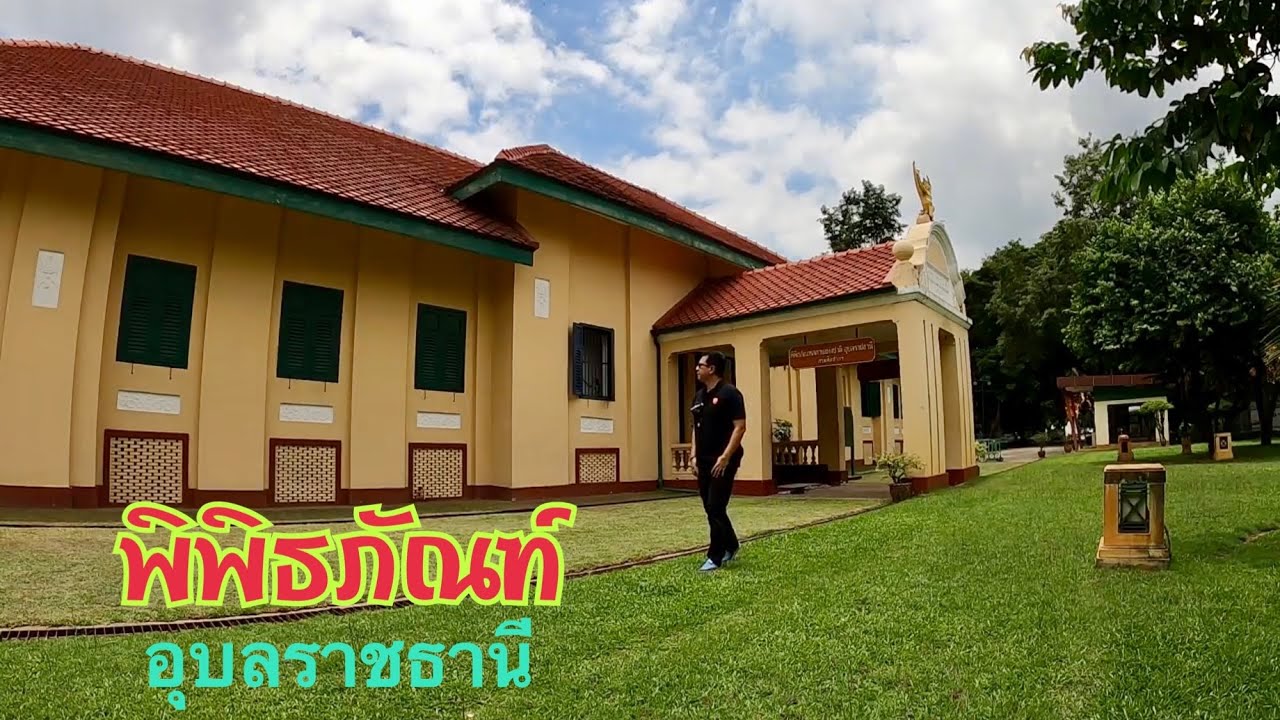
 Click to Access the Navigation Map GPS
Ubon Ratchathani National Museum Map
Recommend

 Historical Sites and Monuments(5)
 Landmarks and Memorials(2)
 Royal Palace(1)
 Art, Craft Centres, Tradition(7)
Museums(3)
Art, Craft Centres, Tradition(7)
Museums(3)
 Places of Worship
 Temple(37)
 Other Sacred Sites(4)
 Research and Development
 Royal Project(2)
 Suburban Living
 Village, Community(2)
 Local Market(4)
 Nature and Wildlife
 National Parks and Marine Reserves(5)
 Mountain (Doi)(6)
 Dam, Reservoir, Lake(8)
 Waterfalls(12)
 Hot Springs(1)
 Caves(2)
 River, Canal(11)
 Bays and Beaches(8)
 Islands(2)
 Other natural attractions(6)
 Entertainment and Agricultural
 Zoos and Aquariums(1)
 Animal camps and shows(1)
 Farms, Parks and Ecotourism(1)


