
lovethailand home >Northeastern Travel Attractions >Si Sa Ket Travel Attractions >Sila Lat >Kung > Lam Nam Siao Riverside
TL;DR: Lam Nam Siao Riverside is located at Sila Lat District, Si Sa Ket Province, flowing through several villages before continuing to Rasi Salai District, open Daily, hours 08.00 – 17.00.
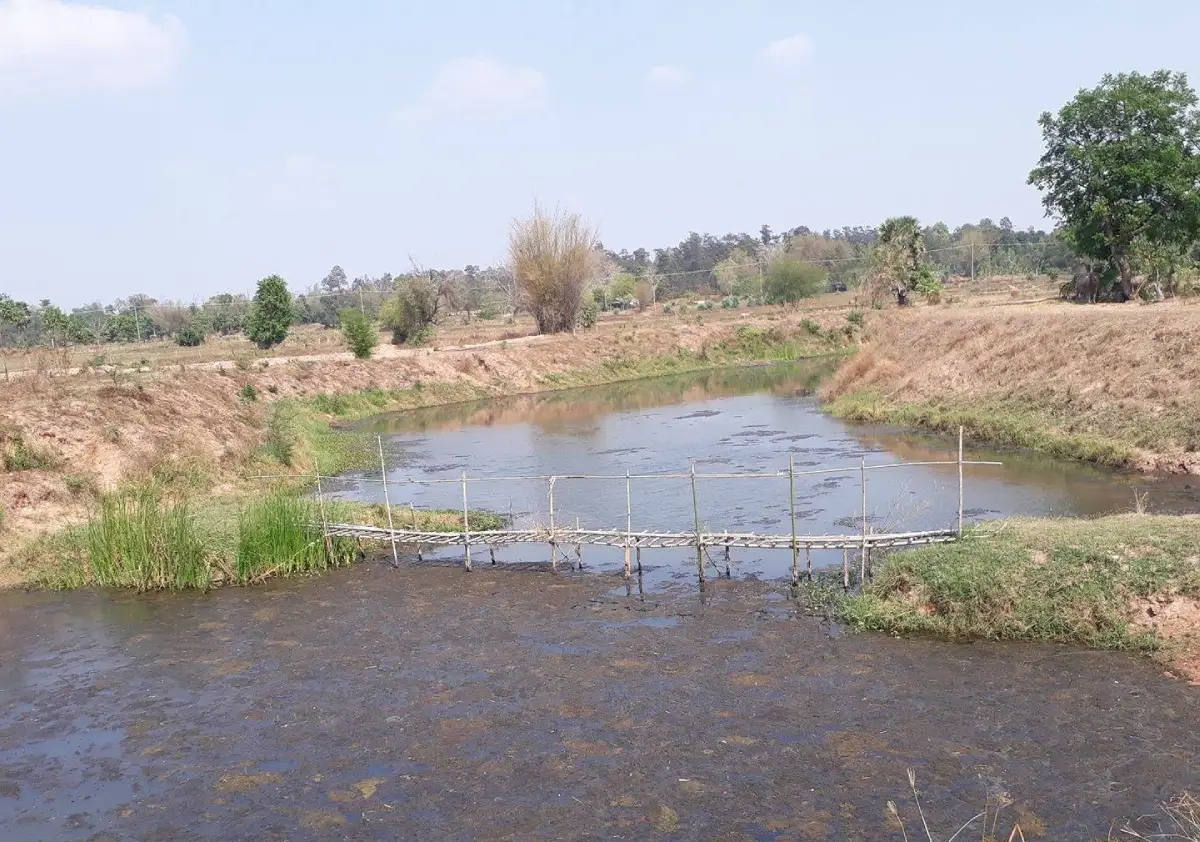
Lam Nam Siao Riverside
Open Days: Daily
Opening Hours: 08.00 – 17.00
Lam Nam Siao Riverside in Si Sa Ket Province is a community-based natural waterway in Sila Lat District, one of the northern districts of Si Sa Ket. Lam Nam Siao is a small river that flows through several villages in Sila Lat before continuing toward Rasi Salai District and joining the Mun River near Phu Din. For local communities, this river is not just a small stream on a map. It is part of a wider water system connected with the Mun River Basin and a living source of food, seasonal forest products, fishing traditions, agriculture, local culture, and community identity.
The character of Lam Nam Siao is quiet and local. It is different from large tourist attractions with heavy infrastructure or commercial activities. Its charm lies in the way it remains part of everyday village life. Along the riverbanks, visitors can see natural scenery, fields, local trees, village paths, fishing areas, and spaces used by residents for seasonal activities. The riverside atmosphere reflects the lower northeastern countryside: calm, meaningful, practical, and closely connected with water.
From a natural perspective, Lam Nam Siao is rich in fish and aquatic life. Local residents in Sila Lat have relied on this river for food and livelihood for generations. Fishing, gathering edible plants, and collecting seasonal forest products along the riverbanks are part of the local way of life. During the rainy season, especially from around May to October, the riverside becomes more fertile. Mushrooms, bamboo shoots, ant eggs, and other seasonal foods become available in the nearby natural areas. This makes the river a living pantry for many households.
The sight of villagers fishing, using traditional tools, collecting vegetables, or gathering food along the river reflects a deep relationship between people and water. Lam Nam Siao functions like a natural kitchen for the community, where water resources and riverside forests work together. Knowledge of water levels, fishing seasons, rainfall, edible plants, and local food resources is passed down through families and community practice. This gives the river cultural value as well as ecological value.
For the people of Sila Lat, Lam Nam Siao is often regarded as an important lifeline. It supports food, income, local livelihoods, recreation, and cultural identity. Since the river passes through several villages, it serves as a shared space for many communities. In the rainy season, it brings abundance and high water. In the cool season, it offers pleasant riverside air. In the dry season, the riverbanks reveal the relationship between water, fields, and local agriculture. The river therefore changes its role with the seasons while remaining central to local life.
Lam Nam Siao is also strongly connected with tradition. The most important cultural event associated with the river is the annual long-boat racing tradition of Sila Lat District. The race is held on Lam Nam Siao during the high-water season, generally from October to December. This is the period when the water level becomes suitable for boat racing. Local communities use this occasion to preserve tradition, strengthen unity, and maintain cultural ties with neighboring districts and villages.
The long-boat racing tradition on Lam Nam Siao reflects the collective strength of the community. Each event requires cooperation from local leaders, residents, boat crews, youth groups, temples, schools, government agencies, and neighboring communities. Boats from nearby villages and districts join the race, creating a lively riverside atmosphere with cheering crowds, drums, announcers, food stalls, and family gatherings. The race is not only a sport. It is a celebration of community memory and local pride.
The beauty of long-boat racing lies in the relationship between water and teamwork. Every paddler must move with the same rhythm, strength, and purpose. Training, boat care, crew preparation, and competition all build discipline and unity. When cheers rise from the riverbank, the audience sees more than boats moving quickly across the water. They see the combined effort of villages and communities that prepared together long before the race day.
Lam Nam Siao helps preserve this tradition through time. In an era when rural lifestyles continue to change, the river remains a stage where older and younger generations meet. Older residents pass on memories of boat racing, fishing, and riverside life, while younger people learn the value of their hometown through a living tradition. The river is therefore not only a natural attraction but also a cultural space that continues to move with the community.
For travelers, Lam Nam Siao is suitable for community-based and nature-focused travel. Visitors can walk along the riverside, observe local life, photograph trees, fields, riverbanks, water reflections, and fishing scenes, or plan a visit during the long-boat racing season to experience one of Sila Lat’s most important local traditions. This is not a dramatic sightseeing landmark. It is a place for travelers who want to understand Si Sa Ket through a real community waterway.
The riverside atmosphere is calm and natural. Morning is suitable for walking, observing local life, and enjoying cool air. Late afternoon is suitable for resting near the river and photographing soft light on the water. During the rainy season, the river feels most alive because water levels rise, plants become greener, and seasonal food resources become more abundant. Travelers who want to experience the river at its most active should visit during the late rainy season and early cool season.
The Lam Nam Siao area in Sila Lat is also connected with Lao and Yoe cultural communities, which form an important part of the district’s identity. Sila Lat has local cultural events, community products, and food traditions that reflect this heritage, including fermented fish products, local pork products, and seasonal food. Visiting Lam Nam Siao can therefore be combined with learning about language, food, traditions, and beliefs of the communities in Sila Lat District.
Geographically, Lam Nam Siao, also known as Lam Siao Yai, originates from the highland divide between the Mun and Chi river basins in Maha Sarakham Province. Its tributaries include Lam Tao, Lam Siao Yai, and Lam Siao Noi, which come together before the river flows through several areas, including Sila Lat and Rasi Salai in Si Sa Ket. It finally joins the Mun River at Phu Din in Rasi Salai District. This shows that Lam Nam Siao is part of a larger water network rather than an isolated local stream.
When considered together with the Mun River, Lam Nam Siao plays an important role as a tributary linking local communities in Si Sa Ket with the lower northeastern river system. The Mun River flows through Rasi Salai and other districts before continuing toward Ubon Ratchathani. The meeting of Lam Nam Siao and the Mun River connects the story of a small river in Sila Lat with the larger landscape, history, and livelihood of the Mun River Basin.
The riverbanks include agricultural areas, riverside forest, villages, and seasonal-use spaces. Riverside vegetation is important because it provides shade, food, habitat for small wildlife, and protection against erosion. Trees along the bank help make the area cooler and more pleasant. For local people, the riverbank is not empty land. It is a living environment where water, soil, plants, fish, and people interact closely.
Travel to Lam Nam Siao can begin from Si Sa Ket city, heading toward Sila Lat District. Once in Sila Lat, visitors can continue to Kung Subdistrict and riverside communities. The area is best reached by private car or motorcycle because travelers can easily combine several nearby local points, including the Kung Subdistrict tourist service area, Phra Phut Sila Lat Mongkhon, the Sila Lat City Pillar Shrine, and community areas along Lam Nam Siao.
Getting There from Si Sa Ket city is straightforward by road. Travel north toward Sila Lat District, then enter Kung Subdistrict and the riverside communities along Lam Nam Siao. The Kung Subdistrict Administrative Organization and the local tourist service point can be used as a starting point for local directions. The route can also continue to Rasi Salai District, where Lam Nam Siao joins the Mun River, making it suitable for a waterway and community-life itinerary.
The standard visiting time from 08.00 to 17.00 is practical because there is enough daylight for riverside walking, photography, and community travel. Morning offers a cooler atmosphere and more local-life scenes, while late afternoon provides softer light. During the rainy season, some riverbank areas may be damp or have higher water levels, so visitors should use regular community paths and avoid unstable bank edges.
The Lam Nam Siao riverside area is free to enter. It is a natural and community-based area where residents continue to use the river in daily life. Visitors can walk, photograph, and rest responsibly. Keeping the area clean, avoiding noise, not disturbing fishing activity, and respecting private land are important because the attraction is part of a living community rather than a fully controlled commercial tourist site.
During the long-boat racing season, the quiet riverside becomes lively and festive. People from many villages gather along the bank to watch races, support boat crews, meet relatives, buy local food, and participate in a shared cultural event. This gives travelers a strong sense of how water-based traditions still bring communities together. The river becomes a public cultural stage where sport, food, music, local identity, and community pride meet.
Food culture is another important part of the Lam Nam Siao story. The river is connected with local fish, fermented fish products, and seasonal ingredients. Mushrooms, bamboo shoots, ant eggs, wild vegetables, and fish dishes all reflect local knowledge of the land and water. A visit to the river can be connected with eating in Sila Lat or Rasi Salai, where local Isan food, fish-based dishes, papaya salad, spicy salads, bamboo shoot curry, and seasonal food are part of the travel experience.
Lam Nam Siao is also suitable for travelers interested in documentary-style photography. Interesting subjects include the river passing through fields, trees along the bank, small fishing boats, traditional fishing tools, local bridges, sky reflections on the water, and long-boat racing scenes during the festival season. The place may not have a towering landmark, but it has details of real life that communicate the identity of Sila Lat clearly.
For families, Lam Nam Siao can be a meaningful place to introduce children to community water sources and local nature. Adults can explain how a river supports fish, plants, seasonal food, agriculture, and tradition. Children should always be watched closely near the water because natural riverbanks are not the same as fenced public parks. Safety and learning should go together when visiting a community waterway.
For travelers from outside the province, Lam Nam Siao works best as part of a Sila Lat and Rasi Salai route rather than a full-day standalone attraction. A useful route can begin at the Kung Subdistrict tourist service point, continue to Phra Phut Sila Lat Mongkhon and the Sila Lat City Pillar Shrine, then move to the Lam Nam Siao riverside. After that, travelers can continue to restaurants and accommodations in Rasi Salai. With more time, the route can extend to Rasi Salai Dam and the Mun River area to see how Lam Nam Siao connects with the larger river system.
In terms of conservation, Lam Nam Siao is a good example of a river that should be protected by both residents and visitors. A river that still has fish, riverside forest, and seasonal food resources remains directly connected with local food security. Keeping the river clean, preventing waste, protecting vegetation, and avoiding activities that harm the water are important for both the ecosystem and community livelihood. Responsible riverside travel supports the future of the river.
Lam Nam Siao is important to the identity of Sila Lat District. It is a familiar name to local people, a shared activity space, and a natural feature that helps tell the story of the district. Sila Lat is not only an agricultural district or a local administrative area. It is also a place where a river shapes food, fishing, seasonal life, long-boat racing, and community relationships. To speak of Lam Nam Siao is to speak of nature, livelihood, and local culture together.
The long-boat racing season shows the river at its most energetic. The banks fill with spectators, paddlers, boats, and local activity. The race is not just entertainment. It is a declaration that the community still values the river and its inherited tradition. Boats from nearby areas strengthen ties between villages and districts, turning Lam Nam Siao into a cultural stage for the region.
On ordinary days, Lam Nam Siao offers another kind of experience: quietness, simplicity, and the honesty of everyday community life. Visitors who come outside festival time can see the river without crowds, walk slowly, rest their eyes, and observe the relationship between homes, temples, fields, and water. Places like this matter because they show that local life does not exist only during festivals. It continues every day through small riverside activities.
Seasonal food is one of the strongest reasons Lam Nam Siao matters. During the rainy season, the riverside environment produces mushrooms, bamboo shoots, ant eggs, and edible plants. These ingredients reflect the wisdom of eating with the season. Local people do not depend only on markets. They use knowledge of nature to find food at the right time and in the right place. The health of the river and its banks is therefore directly connected with household food.
Lam Nam Siao is suitable for travelers who want to see Si Sa Ket beyond the most famous landmarks. It reveals a quieter side of the province: farming communities, waterway culture, boat racing, local food, and a practical relationship with nature. With careful observation, visitors can see how a small river can tell a large story about geography, culture, tradition, and sufficiency in rural Thailand.
A normal visit to Lam Nam Siao may take 1–2 hours for riverside walking, photography, and local observation. A half-day plan works well when combined with nearby attractions in Sila Lat and Rasi Salai. During the long-boat racing festival, visitors should allow a full day because the event atmosphere is lively and crowded. A relaxed schedule allows travelers to experience the river as both a natural place and a cultural space.
Overall, Lam Nam Siao in Si Sa Ket is a valuable community-based natural attraction with ecological, cultural, and livelihood significance. It supports local people through fish, seasonal food, riverside plants, and everyday use, while also serving as the stage for Sila Lat’s annual long-boat racing tradition. Its beauty is not based on scale or spectacle. It lies in the real flow of a river that continues to nourish local life and remain a lifeline of Sila Lat District.
| Name | Lam Nam Siao / Lam Nam Siao Riverside, Si Sa Ket |
| Location | Sila Lat District, Si Sa Ket Province, flowing through several villages before continuing to Rasi Salai District |
| Address | Lam Nam Siao Riverside Area, Kung Subdistrict And Nearby Communities, Sila Lat District, Si Sa Ket 33160, Thailand |
| Highlights | Community river, local fishing life, riverside forest, seasonal food resources, and the annual long-boat racing tradition of Sila Lat District during the high-water season. |
| History | A long-standing river that supports communities in Sila Lat and connects with the Mun River in Rasi Salai District. It has supported fishing, agriculture, seasonal food gathering, and local traditions for generations. |
| Name Origin | Lam Nam Siao is the local name of the river. Geographically, it is also known as Lam Siao Yai and is connected with tributaries including Lam Tao, Lam Siao Yai, and Lam Siao Noi before joining the Mun River. |
| Distinctive Features | A small but culturally important river with fish, seasonal riverside food, shaded natural scenery, and strong ties to the local way of life in Sila Lat. |
| Travel Information | From Si Sa Ket city, travel to Sila Lat District, then enter Kung Subdistrict and the riverside communities along Lam Nam Siao. The Kung Subdistrict Administrative Organization or local tourist service point can be used for local directions. |
| Current Status | Open as a community-based natural attraction and riverside area in Sila Lat District, Si Sa Ket Province. |
| Open Days | Daily |
| Opening Hours | 08.00 – 17.00 |
| Fees | Free Admission |
| Facilities | Local tourist service point in Kung Subdistrict, community access routes, natural riverside resting areas, event areas for local traditions, and basic community services nearby. |
| Main Areas / Zones | Riverside Nature Viewing Zone Traditional Fishing Life Zone Riverside Forest And Seasonal Food Zone Village And Community Riverside Zone Long-Boat Racing Event Zone Connection Route To Rasi Salai And The Mun River |
| Key Tradition | The annual long-boat racing tradition of Sila Lat District, held on Lam Nam Siao during the high-water season from around October to December, with boats from nearby communities and districts joining the race. |
| Caretaker | Kung Subdistrict Administrative Organization, Sila Lat District, and riverside communities along Lam Nam Siao. |
| Main Contact Number | Kung Subdistrict Administrative Organization Tel. 045-826-881-2 Sila Lat District Office Tel. 045-668-119 |
| Official Website / Official Page | Kung Subdistrict Administrative Organization / Sila Lat District / Si Sa Ket Tourism Information |
| Nearby Tourist Attractions | 1. Kung Subdistrict Tourist Service Point, about 2 km 2. Phra Phut Sila Lat Mongkhon And Sila Lat City Pillar Shrine, about 3 km 3. Lao-Yoe Cultural Event Area, Sila Lat District, about 3 km 4. Rasi Salai Dam And Mun River, Rasi Salai District, about 22 km 5. Ku Kaeo Si Thit, Rasi Salai District, about 24 km 6. Wat Pa Si Mongkhon Rattanaram, Uthumphon Phisai District, about 45 km |
| Nearby Restaurants | 1. Kan-Aeng Pad Thai, Kung Subdistrict, Sila Lat District, about 3 km, Tel. 082-831-9241 2. ChaPayom Original @ Rasi Salai, about 21 km, Tel. 093-434-4755 3. Lelawa Cafe Rasi Salai Branch, about 21 km, Tel. 087-452-3233 4. Tam Ka Yum Rasi Salai, about 22 km, Tel. 095-613-2613 5. Komklomcafe, about 22 km, Tel. 097-115-9949 6. Steak59 Rasi Salai, about 23 km, Tel. 045-682-464 7. Ban Kant Steak & Shabu Rasi Salai, about 23 km, Tel. 045-961-384 |
| Nearby Accommodations | 1. Rasi Resort, Rasi Salai District, about 22 km, Tel. 045-681-223 2. The Green Hotel Rasi Salai, about 22 km, Tel. 064-062-9983 3. Sai Kaew Resort, Rasi Salai District, about 23 km, Tel. 045-620-780 4. The Premium Resort, Suwannaphum District, Roi Et, about 35 km, Tel. 043-581-627 5. Ruean Chomphu Resort, Suwannaphum District, Roi Et, about 38 km, Tel. 081-872-4691, 043-580-416 |
Frequently Asked Questions (FAQ)
Q: Where is Lam Nam Siao in Si Sa Ket located?
A: Lam Nam Siao flows through several villages in Sila Lat District, Si Sa Ket Province, then continues to Rasi Salai District and joins the Mun River at Phu Din.
Q: What days and hours is Lam Nam Siao Riverside open?
A: The riverside attraction is open daily from 08.00 to 17.00.
Q: Is there an admission fee for Lam Nam Siao Riverside?
A: No. Admission is free because it is a community-based natural riverside area.
Q: Why is Lam Nam Siao important to Sila Lat communities?
A: It supports local fishing, seasonal food gathering, agriculture, riverside recreation, and the annual long-boat racing tradition of Sila Lat District.
Q: When is the Lam Nam Siao long-boat racing tradition held?
A: The long-boat racing tradition is held during the high-water season, generally from October to December, with boats from nearby communities and districts joining the event.
Q: Who is Lam Nam Siao Riverside suitable for?
A: It is suitable for travelers interested in community life, riverside nature, documentary-style photography, seasonal local food, and lower northeastern long-boat racing culture.
Q: How do travelers get to Lam Nam Siao Riverside?
A: From Si Sa Ket city, travel to Sila Lat District, then continue to Kung Subdistrict and the riverside communities along Lam Nam Siao. The Kung Subdistrict tourist service point or administrative office can be used for local directions.
Q: What nearby attractions can be visited with Lam Nam Siao?
A: Nearby attractions include the Kung Subdistrict Tourist Service Point, Phra Phut Sila Lat Mongkhon, Sila Lat City Pillar Shrine, the Lao-Yoe cultural area, Rasi Salai Dam, Ku Kaeo Si Thit, and Wat Pa Si Mongkhon Rattanaram.
 Category: ●Nature and Wildlife
 Group: ●River, Canal
Last Update : 2 MonthAgo
 Last Update : 2 MonthAgo
 Click to Access the Navigation Map GPS
 Art, Culture and Heritage
 Historical Sites and Monuments(12)
 Landmarks and Memorials(1)
 Art, Craft Centres, Tradition(8)
 Places of Worship
 Temple(13)
 Other Sacred Sites(3)
 Suburban Living
 Village, Community(2)
 National Parks and Marine Reserves(2)
 Dam, Reservoir, Lake(7)
 Waterfalls(5)
River, Canal(5)
Waterfalls(5)
River, Canal(5)
 Bays and Beaches(2)
 Entertainment and Agricultural
 Zoos and Aquariums(1)
 Farms, Parks and Ecotourism(3)


