
lovethailand home >Northeastern Travel Attractions >Si Sa Ket Travel Attractions >Muang Si Sa Ket >Chan > Wat Nong Takhian
TL;DR: Wat Nong Takhian is located at Ban Nong Takhian, Moo 9, Chan Subdistrict, Mueang Si Sa Ket District, Si Sa Ket Province 33000, Thailand, open Daily, hours 08.00 - 17.00.
Wat Nong Takhian
Open Days: Daily
Opening Hours: 08.00 - 17.00
Wat Nong Takhian, Si Sa Ket is an important Buddhist temple located south of Si Sa Ket city, in Ban Nong Takhian, Chan Subdistrict, Mueang Si Sa Ket District, Si Sa Ket Province. The temple is known for its calm rural atmosphere, its white religious architecture, and its historical association with King Taksin the Great. Within the temple grounds stands a royal monument to King Taksin, allowing visitors to pay respect to one of Thailand’s most important monarchs while also experiencing a peaceful Buddhist temple surrounded by rice fields and village life.
The importance of Wat Nong Takhian comes from the way it combines religion, local history, and community memory. Local tradition connects this area with the military route of King Taksin the Great during the period of restoring Siamese independence after the fall of Ayutthaya. For this reason, the temple is not only a place for Buddhist worship but also a place of remembrance. The monument to King Taksin gives the site a strong historical character and makes the temple meaningful for visitors interested in Thai history, royal devotion, and local heritage.
Wat Nong Takhian is located about 17 kilometers from central Si Sa Ket, along the Si Sa Ket–Kantharalak route before turning into Ban Nong Takhian. The surrounding landscape is rural, with rice fields, village roads, open sky, and a quiet atmosphere. This setting gives the temple a different character from city temples. Visitors can come here to make merit, worship, reflect quietly, observe contemporary temple architecture, and learn how local religious life remains connected with agriculture, village identity, and historical memory.
The name “Nong Takhian” is connected with the local landscape. The temple stands near a pond associated with a large takhian tree, and the area became known as Nong Takhian. In Isan communities, place names often preserve memories of water sources, large trees, fields, and settlement history. The name of the temple therefore carries the geography and identity of the village itself. It is a reminder that temples in rural Thailand often grow from the natural and social landscape around them.
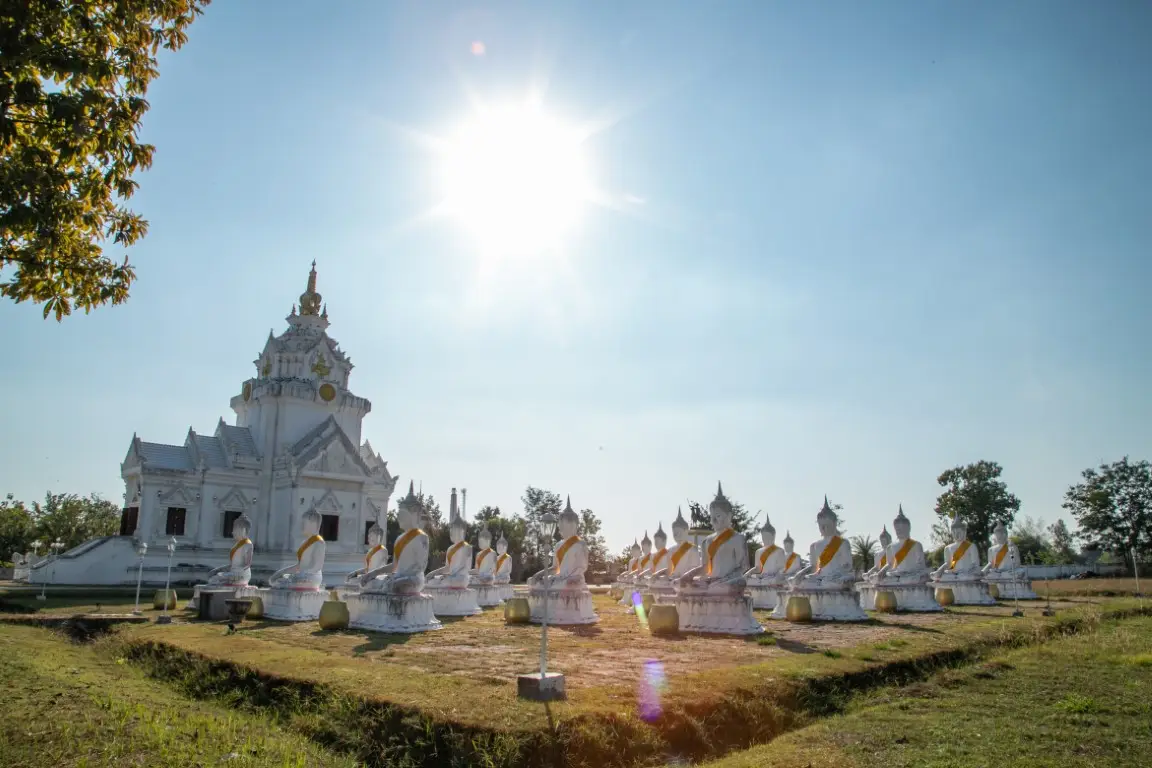
Wat Nong Takhian has both older local historical associations and a more recent period of temple development. Over time, land was offered, monastic buildings were constructed, and the temple was developed into the present sacred complex. The site now includes a white viharn or ordination hall, a shrine to King Taksin the Great, a line of 28 seated Buddha images, the image of Phra Sri Ariya Maitreya or Luang Pho Si Thandon, and a Guanyin statue by the pond. These elements make the temple a rich place for worship and cultural learning.
The monument to King Taksin the Great is the most important historical feature of the temple. Many visitors come to offer garlands, incense, candles, and prayers before the monument. King Taksin is remembered in Thai history for leading the restoration of independence after the collapse of Ayutthaya. At Wat Nong Takhian, this national memory is expressed in a local setting. The monument transforms the temple into a place where Buddhist devotion and respect for national history can be experienced together.
The white viharn or ordination hall is the most visually striking architectural feature. Its bright white structure is accented with gold details and stands out against the green fields and open sky. The building blends Thai Buddhist architectural forms with decorative influences associated with Khmer, Lanna, and contemporary temple design. The result is a distinctive rural temple building that feels both sacred and photogenic. The row of Dharma Wheel pillars in front of the structure creates a strong and memorable approach to the sanctuary.
Inside the building, visitors can pay respect to Phra Sri Ariya Maitreya, also known locally as Luang Pho Si Thandon. In Buddhist belief, Maitreya represents the future Buddha, a symbol of hope, goodness, and the continuation of the Dhamma. The interior is calm and simple, making it suitable for prayer, quiet reflection, and respectful worship. Visitors should remove their shoes before entering, dress modestly, and keep their voices low in order to preserve the peaceful atmosphere of the temple.
The field of 28 seated Buddha images is another major highlight of Wat Nong Takhian. These white Buddha images are arranged in an orderly line in the temple grounds. The number 28 reflects the Buddhist idea of the Buddhas of the past together with the historical Buddha. This area gives visitors a strong visual impression of continuity, faith, and calmness. The image of the white Buddhas standing against the green field and open rural landscape is one of the temple’s most memorable scenes.
The Guanyin statue near the pond adds another layer of devotional meaning. Guanyin is widely respected as a symbol of compassion, mercy, and help for those in suffering. The presence of Guanyin within the temple grounds shows the inclusive nature of Thai Buddhist devotion, where Theravada Buddhist practice may coexist with Mahayana-inspired symbols of compassion. Visitors can therefore pay respect to the Buddha image, King Taksin monument, 28 Buddha images, and Guanyin in a single visit.
Architecturally, Wat Nong Takhian is a good example of a contemporary Isan temple that combines multiple visual traditions. The white surfaces create an atmosphere of purity and calm. Gold details emphasize sacredness. Certain decorative patterns reflect the cultural background of Lower Isan, where Khmer artistic influence has long been important. Other elements suggest northern Thai or Lanna inspiration, while the overall composition remains clearly Buddhist and accessible to modern visitors. This combination creates a temple identity that is both local and contemporary.
Visitors should pay attention to the front pillars, the Dharma Wheel symbols, the staircase, the gold-tipped roofline, the white façade, and the open field around the temple. These elements work together to create a sense of symmetry and spaciousness. Morning and late afternoon are particularly good times to visit because the light brings out the contrast between the white building, golden details, green fields, and blue sky. Photography is appropriate when done respectfully and without disturbing worshippers.
The temple is also connected with an important royal and public ceremony held on 27 October 2007, when sacred objects, medals, and protective cloths associated with King Taksin the Great were consecrated for presentation to officials, police, soldiers, civilians, and teachers working in Thailand’s southern border provinces. This event strengthened the temple’s identity as a place connected with national service, morale, royal patronage, and respect for those serving the country.
The current abbot of Wat Nong Takhian is Phra Khru Wihan Mongkhonkit. He oversees the temple together with resident monks, the local community, Chan Subdistrict Administrative Organization, and related Buddhist agencies in Si Sa Ket. The abbot and the community help maintain the religious activities, sacred spaces, buildings, and visitor areas of the temple. Their work allows Wat Nong Takhian to continue serving both local worshippers and travelers.
For the local community, Wat Nong Takhian functions as a center of Buddhist life and historical memory. Villagers come to make merit, offer food to monks, attend Buddhist ceremonies, and participate in local temple activities. At the same time, the temple preserves the story of King Taksin’s connection with the area. This double role makes the temple meaningful for both faith and identity. It is a place where worship, memory, and community life remain closely connected.
A good visit should begin at the white viharn or ordination hall. Visitors can observe the Dharma Wheel pillars, the architectural details, and the main Buddha image inside. After that, they can continue to the 28 seated Buddha images, the Guanyin statue near the pond, and the monument to King Taksin the Great. This route gives a complete understanding of the temple, moving from Buddhist worship to visual symbolism and finally to the site’s historical significance.
Getting There is most convenient by private car or hired local transport. From Si Sa Ket city, take the Si Sa Ket–Kantharalak route and turn into Ban Nong Takhian near Ban Nong Khu Noi. The temple is located in a rural village area, so public transport is less frequent than in the city center. Travelers should plan the trip in advance, especially if combining the temple with Wat Maha Phuttharam, Si Sa Ket City Pillar Shrine, Khun Amphai Phanit Building, or Si Sa Ket Aquarium on the same day.
The best time to visit is in the morning or late afternoon before the temple closes. Morning offers cooler weather and a quieter atmosphere for worship. Afternoon light enhances the white and gold details of the temple architecture. Because the temple is surrounded by open rural space, visitors should prepare drinking water, a hat, or an umbrella during hot weather. Keeping the temple and surrounding village clean is part of respectful travel.
Visitor etiquette is important. Visitors should dress modestly, remove shoes before entering the viharn or ordination hall, speak quietly, avoid climbing onto the bases of Buddha images or the King Taksin monument, avoid touching sacred objects, and ask before photographing people or ceremonies. Respectful behavior is especially important at the King Taksin monument because it is a place of national remembrance and public reverence.
Wat Nong Takhian does not charge a fixed tourist admission fee. Visitors may enter the temple during opening hours to pay respect, make merit, and explore public areas of the temple grounds. Donations, flowers, garlands, candles, and other offerings are voluntary according to personal faith. This makes the temple accessible to local residents, Thai visitors, and international travelers alike.
As a cultural route, Wat Nong Takhian can be combined with central Si Sa Ket attractions. Travelers may begin at Wat Maha Phuttharam to pay respect to Luang Pho To, continue to the City Pillar Shrine and Khun Amphai Phanit Building, and then travel south to Wat Nong Takhian to see the white viharn, 28 Buddha images, Guanyin statue, and King Taksin monument. This route presents Si Sa Ket through Buddhist faith, city history, local architecture, and rural temple culture.
For international visitors, Wat Nong Takhian is a meaningful place to understand Lower Isan culture. It brings together Buddhism, royal remembrance, contemporary temple architecture, rice-field landscapes, and local village belief. A visit here shows that temples in Si Sa Ket are not only religious buildings. They are also spaces where communities preserve stories, honor historical figures, and continue to express faith through architecture, ritual, and daily practice.
Wat Nong Takhian is therefore a multi-layered destination. It offers the calm of a rural temple, the beauty of a white Buddhist sanctuary, the meaning of Phra Sri Ariya Maitreya, the symbolism of 28 Buddha images, the compassion of Guanyin, and the historical presence of King Taksin the Great. For travelers who want to see Si Sa Ket beyond the city center, the temple provides a clear and memorable view of how faith, landscape, history, and community identity come together in one sacred place.
| Place Name | Wat Nong Takhian, Si Sa Ket |
| Related Names | Wat Nong Takhian, King Taksin The Great Military-Camp Memorial Temple |
| Place Type | Local Buddhist Temple, Faith-Based Cultural Attraction, Historical Learning Site, And Place Of Worship For King Taksin The Great Monument |
| Location | Ban Nong Takhian, Moo 9, Chan Subdistrict, Mueang Si Sa Ket District, Si Sa Ket Province 33000, Thailand |
| Coordinates | 14.986667, 104.417778 |
| Significance | A temple associated with local historical memory of King Taksin the Great, featuring a King Taksin monument, a white Buddhist sanctuary, Phra Sri Ariya Maitreya, 28 seated Buddha images, and Guanyin by the pond |
| Historical Summary | The temple area is connected with the local story of King Taksin the Great’s military movement. In later periods, the site was developed as a Buddhist temple with monastic buildings, a white viharn, Buddha-image areas, and a royal monument for public worship. |
| Name Origin | The name Nong Takhian comes from a local pond associated with a large takhian tree. The name later became the identity of the temple and the surrounding village. |
| Main Sacred And Cultural Highlights | 1. King Taksin The Great Monument 2. White Viharn / Ordination Hall With Khmer-Lanna-Inspired Details 3. Phra Sri Ariya Maitreya / Luang Pho Si Thandon 4. Field Of 28 Seated Buddha Images 5. Guanyin Statue By The Pond 6. Rural Rice-Field Temple Landscape |
| Architectural Character | A bright white Buddhist structure with gold details, applied Thai design, Khmer and Lanna-inspired decorative elements, Dharma Wheel pillars at the front, and a setting beside open rice fields |
| Abbot / Caretaker | Phra Khru Wihan Mongkhonkit, Abbot Of Wat Nong Takhian, together with resident monks, Ban Nong Takhian community, Chan Subdistrict Administrative Organization, and related Buddhist agencies in Si Sa Ket |
| Current Status | Active local Buddhist temple and worship site where visitors can make merit, pay respect to King Taksin the Great, visit the white sanctuary, and explore the temple’s sacred areas |
| Open Days | Daily |
| Opening Hours | 08.00 - 17.00 |
| Admission Fee | Free Admission. Donations, flowers, garlands, and merit-making offerings are voluntary according to personal faith. |
| Main Areas / Zones | 1. White Viharn / Ordination Hall Zone 2. Phra Sri Ariya Maitreya / Luang Pho Si Thandon Zone 3. King Taksin The Great Monument Zone 4. Field Of 28 Seated Buddha Images 5. Guanyin Pond Zone 6. Temple Courtyard And Merit-Making Area 7. Architecture And Rice-Field Photo Area 8. Ban Nong Takhian Community Area |
| Facilities | Parking areas inside or near the temple, temple courtyard, worship areas, walking areas around the white sanctuary, halls, peaceful resting spaces, and a walking route to the Buddha image field and King Taksin monument |
| Related Contact | Chan Subdistrict Administrative Organization, Tel. 045-826540 Si Sa Ket Provincial Office Of Buddhism, Tel. 045-622645 Si Sa Ket Town Municipality, Tel. 045-620211-4 |
| Travel Information | From Si Sa Ket city, take the Si Sa Ket–Kantharalak route for about 17 km and turn into Ban Nong Takhian near Ban Nong Khu Noi. Private car or hired local transport is the most convenient option. |
| Visitor Etiquette | Dress modestly, remove shoes before entering the viharn or ordination hall, keep quiet, do not climb onto sacred bases, do not touch Buddha images or the monument inappropriately, keep the temple clean, and respect the local community. |
| Nearby Tourist Attractions | 1. King Taksin The Great Monument Inside The Temple, about 0 km 2. Ban Nong Takhian Community, Chan Subdistrict, about 0 km 3. Wat Maha Phuttharam / Luang Pho To, about 18 km 4. Si Sa Ket City Pillar Shrine, about 19 km 5. Khun Amphai Phanit Building, about 19 km, Tel. 045-644-375, 087-260-5250 6. Si Sa Ket Aquarium, about 21 km, Tel. 045-612-686 7. Wat Phra That Rueang Rong, about 31 km |
| Nearby Restaurants | 1. The Wine Room Cafe, Mueang Si Sa Ket, about 18 km, Tel. 082-678-7468 2. Jiree Cafe, Mueang Si Sa Ket, about 18 km, Tel. 080-799-1890 3. The Cup Cafe, Mueang Si Sa Ket, about 19 km, Tel. 095-742-6323 4. Sri Surak Restaurant, Mueang Si Sa Ket, about 19 km, Tel. 061-021-7269 5. Dear Cup Coffee Near Si Sa Ket Hospital, about 20 km, Tel. 066-119-6968 6. The Wise Duck Cafe, Mueang Si Sa Ket, about 21 km, Tel. 099-087-5374 |
| Nearby Accommodations | 1. Prompiman Hotel, about 18 km, Tel. 045-612-667, 045-612-696, 045-612-150 2. Boonsiri Boutique Hotel, about 19 km, Tel. 045-622-222 3. B2 Sisaket Boutique & Budget Hotel, about 20 km, Tel. 052-009-161, 088-263-2897 4. The Impress Sisaket, about 21 km, Tel. 045-961-566 5. Tree House Hotel Si Sa Ket, about 22 km, Tel. 045-611-563, 080-477-7854 |
Frequently Asked Questions (FAQ)
Q: Where is Wat Nong Takhian located?
A: Wat Nong Takhian is located in Ban Nong Takhian, Moo 9, Chan Subdistrict, Mueang Si Sa Ket District, Si Sa Ket Province. It is about 17 kilometers from Si Sa Ket city on the route toward Kantharalak.
Q: Why is Wat Nong Takhian important?
A: The temple is important for both Buddhist worship and local history. It is associated with the story of King Taksin the Great’s military movement and contains a King Taksin monument, a white Buddhist sanctuary, Phra Sri Ariya Maitreya, 28 seated Buddha images, and Guanyin by the pond.
Q: What are the opening days and hours?
A: Wat Nong Takhian is open daily from 08.00 to 17.00. Visitors can pay respect, see the white sanctuary, walk around the 28 Buddha images, and worship at the King Taksin monument during these hours.
Q: Is there an admission fee?
A: There is no fixed tourist admission fee. Donations, flowers, garlands, candles, and merit-making offerings are voluntary according to personal faith.
Q: Who is the current abbot of Wat Nong Takhian?
A: The current abbot is Phra Khru Wihan Mongkhonkit, who oversees the temple together with resident monks, the local community, Chan Subdistrict Administrative Organization, and related Buddhist agencies.
Q: What are the main highlights inside the temple?
A: Main highlights include the white viharn or ordination hall, Phra Sri Ariya Maitreya or Luang Pho Si Thandon, the 28 seated Buddha images, the Guanyin statue by the pond, and the monument to King Taksin the Great.
Q: How can visitors get to Wat Nong Takhian?
A: The most convenient way is by private car or hired local transport from Si Sa Ket city. Take the Si Sa Ket–Kantharalak route and turn into Ban Nong Takhian near Ban Nong Khu Noi.
Q: How should visitors behave at the temple?
A: Visitors should dress modestly, remove shoes before entering sacred buildings, keep quiet, avoid climbing onto sacred bases, avoid touching Buddha images or the King Taksin monument inappropriately, and keep the temple and surrounding village area clean.
 Category: ●Places of Worship
 Group: ●Temple
Last Update : 4 WeekAgo
 Last Update : 4 WeekAgo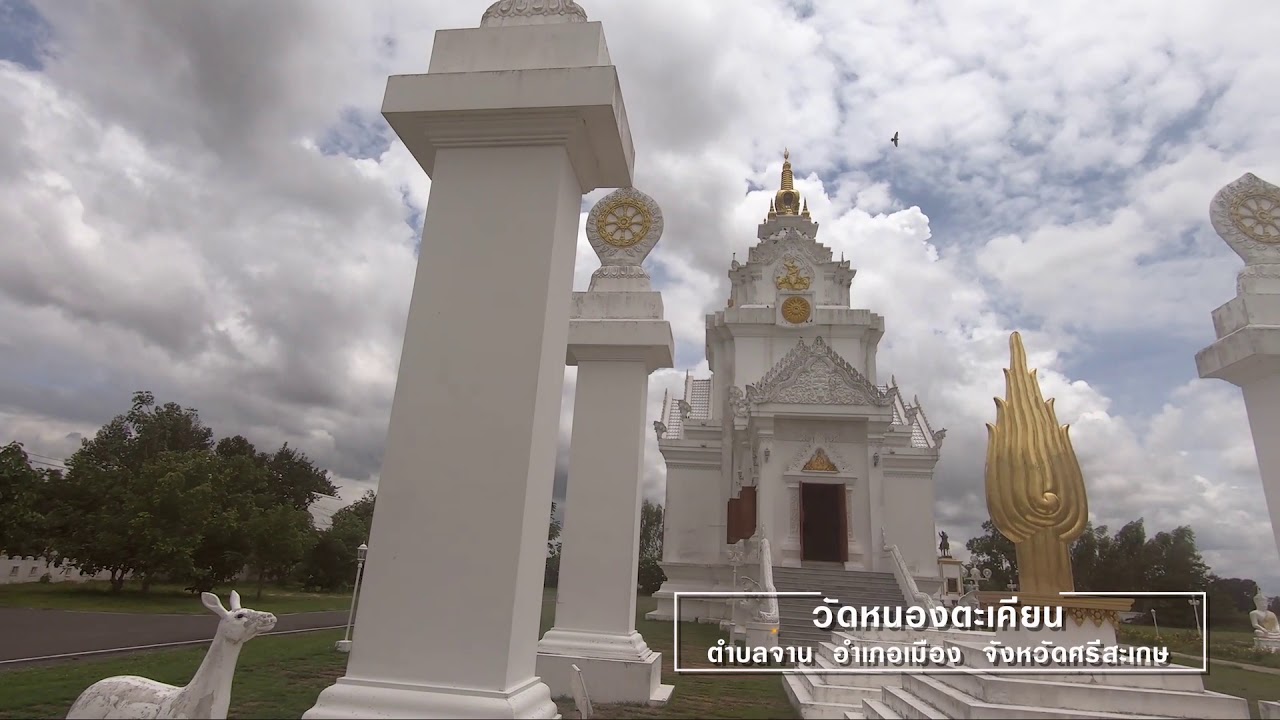
 Click to Access the Navigation Map GPS
 Art, Culture and Heritage
 Historical Sites and Monuments(12)
 Landmarks and Memorials(1)
 Art, Craft Centres, Tradition(8)
Temple(13)
Art, Craft Centres, Tradition(8)
Temple(13)
 Other Sacred Sites(3)
 Suburban Living
 Village, Community(2)
 Nature and Wildlife
 National Parks and Marine Reserves(2)
 Dam, Reservoir, Lake(7)
 Waterfalls(5)
 River, Canal(5)
 Bays and Beaches(2)
 Entertainment and Agricultural
 Zoos and Aquariums(1)
 Farms, Parks and Ecotourism(3)


