
lovethailand home >Northeastern Travel Attractions >Si Sa Ket Travel Attractions >Rasi Sala >Muang Khong > Hat Sai Mun
TL;DR: Hat Sai Mun is located at Mueang Khong Subdistrict, Rasi Salai District, Si Sa Ket Province, open Daily, hours 24 Hours.
Hat Sai Mun
Open Days: Daily
Opening Hours: 24 Hours
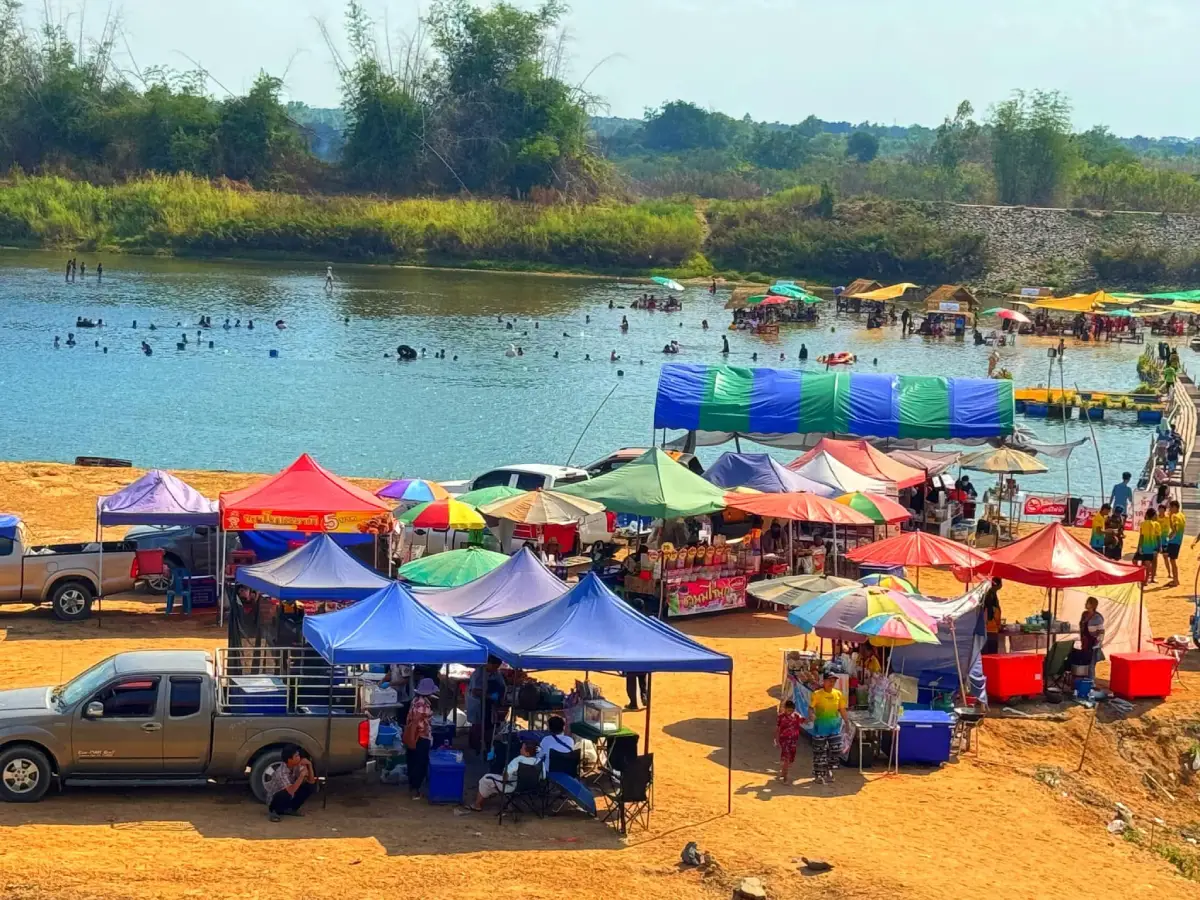
Hat Sai Mun in Si Sa Ket Province is a community-based freshwater beach in Mueang Khong Subdistrict, Rasi Salai District. It is best known as a dry-season riverside beach and a local summer water attraction connected with the Mun River landscape. During the dry season, the water level drops and reveals sandy areas along the river, creating an open beach-like space where local residents and visitors can relax, enjoy the water, take photographs, and join outdoor community activities. Hat Sai Mun is closely tied to the identity of Rasi Salai and is widely recognized as one of the district’s local landmarks.
The appeal of Hat Sai Mun comes from its seasonal character. This is not a sea beach, but a freshwater beach that appears most clearly during the dry season. The sandy riverside area, open sky, water surface, and relaxed local atmosphere create a calm and accessible place for recreation. Its beauty is not based on large buildings or commercial facilities. Instead, it comes from the natural rhythm of the river and the way local people use the riverside as part of everyday life and seasonal celebration.
Hat Sai Mun is located in Mueang Khong Subdistrict, part of Rasi Salai District in Si Sa Ket Province. Rasi Salai is strongly associated with waterways, the Mun River, local fishing life, Bun Bang Fai traditions, and cultural sites such as Ku Kaeo Si Thit. For this reason, Hat Sai Mun should be understood not only as a place to rest by the water, but also as part of a larger cultural and natural landscape shaped by rivers, agriculture, local beliefs, and community gatherings.
During the dry season, Hat Sai Mun becomes a useful summer water area for the community. As the river level recedes, sandy ground becomes available for recreation and outdoor activities. The area feels open and bright, with wide views of the sky and water. This seasonal transformation turns the riverside into a freshwater beach where people can rest, walk, play, and gather. It is one of the clearest examples of how a river landscape can change from season to season and create different types of local use.
For local residents, Hat Sai Mun is more than scenery. It is a social space where people can meet, spend time with family, play sports, and take part in seasonal events. On ordinary days, it offers a simple and quiet riverside atmosphere. During festivals or local activities, the same space becomes lively with movement, sports, music, and community energy. This contrast gives Hat Sai Mun a strong community identity.
Beach sports are one of the important activities associated with Hat Sai Mun. The sandy ground makes it suitable for outdoor sports such as beach volleyball. These activities help turn the riverside into a space for health, recreation, and youth participation. Beach volleyball also fits the hot-season atmosphere because it uses open space, teamwork, and local participation. For visitors, it shows how a seasonal freshwater beach can become a community sports ground.
Hat Sai Mun is also connected with Bun Bang Fai, the northeastern rocket festival associated with rain, fertility, agriculture, and community belief. In Isan culture, Bun Bang Fai is more than entertainment. It expresses hope for seasonal rain and abundant crops. When such a tradition is linked with a riverside area like Hat Sai Mun, the meaning becomes even stronger because water, fields, sky, and community belief all meet in one place.
The Bun Bang Fai tradition adds cultural depth to Hat Sai Mun. The festival brings people together through processions, music, local performance, food, and shared celebration. It allows older and younger generations to meet in the same public space. For Rasi Salai communities, the beach and the river are therefore not only natural features but also cultural stages where seasonal beliefs and local identity are expressed.
Rasi Salai District has a strong water-based identity. The Mun River, Rasi Salai Dam, riverside communities, and local fishing life are all part of the district’s story. Hat Sai Mun adds another dimension to this identity by showing the lighter and more recreational side of the river. It gives travelers a place to experience the Mun River area not only through infrastructure or history, but also through leisure, seasonal landscape, and community activity.
The scenery of Hat Sai Mun is simple but distinctive. In the dry season, the sand contrasts with the water and the open sky. The riverbank creates natural lines and gentle curves, while the water reflects the surrounding landscape. This makes the area suitable for photography, especially in the morning and late afternoon. The atmosphere is calm, local, and different from a heavily developed tourist site.
The best time to visit Hat Sai Mun is during the dry season and hot season, when the sandy beach area is most visible. Morning is suitable for walking and soft-light photography. Late afternoon is good for resting, taking riverside photographs, and enjoying a cooler atmosphere. During local sports activities or Bun Bang Fai events, the beach becomes more energetic and offers visitors a clear view of its role as a community gathering space.
Hat Sai Mun is suitable for travelers who enjoy local places, seasonal nature, and freshwater landscapes. It is not a luxury destination and does not rely on large-scale facilities. Its value lies in authenticity: a river, a sandy bank, local activity, traditional celebration, and the daily relationship between people and water. Travelers who want to see Si Sa Ket beyond major temples and historical sites will find this riverside beach meaningful.
For families, Hat Sai Mun offers a simple outdoor place where children can learn that beaches are not found only by the sea. Inland river communities also have freshwater beaches that appear according to the season. Parents can explain how water levels change, how rivers shape local life, and why riverside spaces matter to communities. Care is still necessary near the water, especially with children and elderly visitors.
For photographers, Hat Sai Mun offers documentary-style local images. Interesting subjects include the dry-season sand, the riverbank, water reflections, beach sports, volleyball activities, Bun Bang Fai scenes, and everyday riverside life. The site may not have a towering landmark, but it has strong storytelling value because it shows both natural change and community use.
Travel to Hat Sai Mun is convenient from Rasi Salai District and Mueang Khong Subdistrict. Visitors can reach the area by private car or motorcycle. From Si Sa Ket city, travel toward Rasi Salai District, then continue into Mueang Khong Subdistrict and the Hat Sai Mun area. The Mueang Khong Subdistrict Administrative Organization can be used as a local reference point for directions and community information.
Getting There from Si Sa Ket city is straightforward by road. Travel to Rasi Salai District, continue into Mueang Khong Subdistrict, and proceed to the Hat Sai Mun riverside area. A private vehicle is the most convenient option because visitors can combine Hat Sai Mun with Rasi Salai Dam, Ku Kaeo Si Thit, the Mun River, Lam Nam Siao, and nearby community attractions in the same route.
Hat Sai Mun works well as part of a wider Mun River Basin itinerary. Visitors can begin with the freshwater beach, continue to Rasi Salai Dam to understand the water-management landscape, and then visit Ku Kaeo Si Thit to explore local heritage at Ban Whan. This route gives travelers a balanced view of Rasi Salai through water, community life, history, and culture.
Ku Kaeo Si Thit, also known as Ku Ban Whan, is one of the important cultural attractions near Hat Sai Mun. It is linked with local history, ancient settlement patterns, Buddhist heritage, and community belief. Including this site in the same trip gives deeper meaning to a Hat Sai Mun visit because travelers can move from a seasonal riverside landscape to an archaeological and cultural setting within the same district.
Rasi Salai Dam and the Mun River are also strongly connected with the Hat Sai Mun experience. The dam represents water management and the broader river system, while Hat Sai Mun represents seasonal recreation and community use of the riverbank. Seeing both places helps visitors understand how water shapes travel, agriculture, public life, and local identity in Rasi Salai District.
Food services are available in Rasi Salai and Mueang Khong. The district has cafes, local restaurants, simple food shops, steak restaurants, and drinks shops that can be combined with a visit to Hat Sai Mun. Travelers can stop for food before or after visiting the beach, making the trip suitable for a half-day local route or a relaxed full-day program.
Accommodation options are available mainly in Rasi Salai town and nearby districts. Small hotels and resorts in Mueang Khong and Rasi Salai are suitable for travelers who want to explore Hat Sai Mun, Rasi Salai Dam, Ku Kaeo Si Thit, and riverside communities. Those continuing toward Sila Lat, Suwannaphum, or other nearby districts can also plan accommodation according to the travel route.
During Bun Bang Fai, Hat Sai Mun becomes more than a quiet riverside attraction. It becomes a place of sound, movement, gathering, and cultural memory. The festival includes community participation, processions, music, and shared celebration. In this setting, the beach becomes part of the local cultural calendar and helps preserve seasonal tradition in a visible and meaningful way.
On ordinary days, the experience is calmer. Visitors can walk slowly, look at the water, rest by the sandy area, and observe the relationship between local roads, the river, and nearby community life. This quieter side of Hat Sai Mun is valuable because it shows that community places are meaningful not only during festivals but also in daily use.
Environmentally, Hat Sai Mun shows how important seasonal water systems are. Water level, sand, riverbank, and local vegetation change across the year. A freshwater beach like this depends on the natural rhythm of the river. Keeping the area clean and respecting the riverbank are essential for maintaining the beauty and usefulness of the site for both residents and visitors.
Every riverside area requires care. Water depth, sand texture, bank stability, and current conditions can vary by season. Visitors should stay within normal community-use areas and choose safe places for resting or water activity. Families with children and elderly visitors should pay close attention near the water. Responsible use helps make the visit relaxing and safe.
For travelers who want to understand Rasi Salai, Hat Sai Mun should not be overlooked. The name is part of the district’s local identity, and the place connects water, dry-season landscape, beach sports, volleyball, Bun Bang Fai, and Mun River life. It tells a story of a river community more clearly than a quick stop at a standard landmark.
A half-day route can begin at Hat Sai Mun and continue to cafes or restaurants in Rasi Salai. A full-day route can include Rasi Salai Dam, Ku Kaeo Si Thit, Ban Whan, Lam Nam Siao, and nearby community attractions in Sila Lat. This gives visitors a richer understanding of northern Si Sa Ket through water, archaeology, traditions, food, and local scenery.
Hat Sai Mun should therefore be presented as the freshwater beach of Rasi Salai, not just a seasonal water play area. Its value comes from the combination of dry-season sand, the Mun River landscape, beach sports, volleyball, Bun Bang Fai, and local memory. A visit with this understanding helps travelers see why a modest riverside beach can hold strong cultural and community meaning.
Overall, Hat Sai Mun in Si Sa Ket is a community-based freshwater beach with clear natural, recreational, and cultural value. Its highlights include the dry-season sandy beach, summer water area, riverside relaxation, beach sports, volleyball, and Bun Bang Fai activities. It is a meaningful stop for travelers who want to experience Rasi Salai through the Mun River, seasonal landscape, local sport, and living community tradition.
| Name | Hat Sai Mun, Si Sa Ket |
| Location | Mueang Khong Subdistrict, Rasi Salai District, Si Sa Ket Province |
| Address | Hat Sai Mun Area, Mueang Khong Subdistrict, Rasi Salai District, Si Sa Ket 33160, Thailand |
| Highlights | A seasonal freshwater beach in the dry season, a summer water area for local recreation, and a community activity space for beach sports, volleyball, and Bun Bang Fai. |
| History | A long-recognized local riverside area of Rasi Salai, closely connected with the Mun River landscape, seasonal recreation, local activity, and community identity. |
| Name Origin | The name Hat Sai Mun refers to the sandy freshwater beach associated with the Mun River and the local identity of Rasi Salai District. |
| Distinctive Features | Dry-season sand, riverside water scenery, open community recreation space, beach volleyball area, Bun Bang Fai activity connection, and local Mun River atmosphere. |
| Travel Information | From Si Sa Ket city, travel to Rasi Salai District, then continue to Mueang Khong Subdistrict and the Hat Sai Mun area. Private car or motorcycle travel is the most convenient option. |
| Current Status | Open as a community-based freshwater beach, summer water attraction, and riverside activity area in Mueang Khong Subdistrict, Rasi Salai District. |
| Open Days | Daily |
| Opening Hours | 24 Hours |
| Facilities | Seasonal sandy beach area, outdoor recreation space, beach sports area, local access route, and basic community services from Mueang Khong Subdistrict. |
| Main Areas / Zones | Dry-Season Sandy Beach Zone Summer Water Recreation Zone Riverside Rest Area Beach Sports And Volleyball Zone Bun Bang Fai Activity Zone Mun River Photography Zone Connection Zone To Mueang Khong Community And Rasi Salai Town |
| Key Activities | Dry-season relaxation, freshwater beach recreation, riverside photography, beach sports, volleyball, and Bun Bang Fai community activities. |
| Caretaker | Mueang Khong Subdistrict Administrative Organization, Rasi Salai District, and Mueang Khong community. |
| Main Contact Number | Mueang Khong Subdistrict Administrative Organization Tel. 0-4568-2491 Fax 0-4568-2491 Chief Executive of Mueang Khong SAO Tel. 086-177-0536 |
| Official Website / Official Page | Mueang Khong Subdistrict Administrative Organization / Si Sa Ket Tourism Information / Rasi Salai Local Tourism Information |
| Nearby Tourist Attractions | 1. Rasi Salai Town And Mueang Khong Community, about 2 km 2. Rasi Salai City Pillar Shrine, about 3 km 3. Mun River And Rasi Salai Riverside Area, about 5 km 4. Rasi Salai Dam, about 12 km 5. Ku Kaeo Si Thit Or Ku Ban Whan, about 13 km 6. Lam Nam Siao, Sila Lat District, about 22 km 7. Rong Nam Dong Kham, Kung Subdistrict, Sila Lat District, about 24 km |
| Nearby Restaurants | 1. ChaPayom Original @ Rasi Salai, about 2 km, Tel. 093-434-4755 2. Lelawa Cafe Rasi Salai Branch, about 2 km, Tel. 087-452-3233 3. Kid Nok Krob Cafe Rasi Salai, about 3 km, Tel. 087-650-9034 4. Steak59 Rasi Salai, about 4 km, Tel. 045-682-464 5. Restaurants Around Rasi Salai Market And Mueang Khong Community, about 3 km 6. Restaurants Along The Rasi Salai-Maha Chana Chai Route, about 3 km |
| Nearby Accommodations | 1. The Green Hotel Rasi Salai, about 3 km, Tel. 064-062-9983 2. The Green Hotel, about 3 km, Tel. 064-062-9983 3. Rasi Resort, Rasi Salai District, about 4 km, Tel. 045-681-223 4. Accommodations In Rasi Salai Town, about 3 km 5. The Premium Resort, Suwannaphum District, Roi Et, about 35 km, Tel. 043-581-627 6. Ruean Chomphu Resort, Suwannaphum District, Roi Et, about 38 km, Tel. 081-872-4691, 043-580-416 |
Frequently Asked Questions (FAQ)
Q: Where is Hat Sai Mun in Si Sa Ket located?
A: Hat Sai Mun is located in Mueang Khong Subdistrict, Rasi Salai District, Si Sa Ket Province. It is a freshwater beach and seasonal riverside recreation area connected with the Mun River landscape.
Q: What days and hours is Hat Sai Mun open?
A: Hat Sai Mun is open daily, 24 hours.
Q: What is special about Hat Sai Mun?
A: Its highlights are the dry-season sandy beach, summer water recreation area, beach sports, volleyball activities, and Bun Bang Fai community tradition.
Q: Is Hat Sai Mun a sea beach?
A: No. Hat Sai Mun is not a sea beach. It is an inland freshwater beach in Rasi Salai District, Si Sa Ket Province, most visible during the dry season.
Q: When is the best time to visit Hat Sai Mun?
A: The dry season and hot season are the best periods because the sandy beach area becomes clearer and more suitable for relaxation, photography, and beach activities.
Q: What activities are available at Hat Sai Mun?
A: Activities include riverside relaxation, seasonal water recreation, photography, beach sports, volleyball, and Bun Bang Fai community activities.
Q: How do travelers get to Hat Sai Mun?
A: From Si Sa Ket city, travel to Rasi Salai District, then continue to Mueang Khong Subdistrict and the Hat Sai Mun area. Private car or motorcycle travel is the most convenient option.
Q: What nearby places can be visited with Hat Sai Mun?
A: Nearby places include Rasi Salai City Pillar Shrine, the Mun River, Rasi Salai Dam, Ku Kaeo Si Thit, Ban Whan, Lam Nam Siao, and Rong Nam Dong Kham in Sila Lat District.
 Category: ●Nature and Wildlife
 Group: ●Bays and Beaches
Last Update : 1 MonthAgo
 Last Update : 1 MonthAgo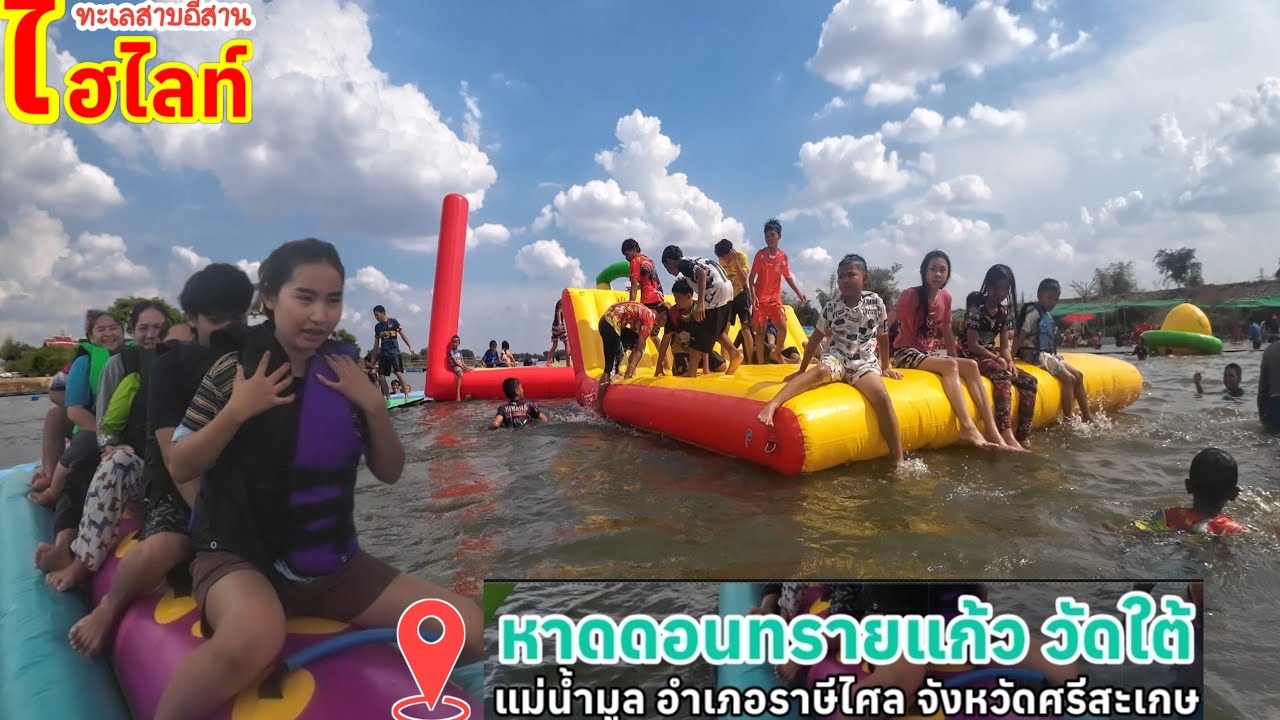
 Click to Access the Navigation Map GPS
 Art, Culture and Heritage
 Historical Sites and Monuments(12)
 Landmarks and Memorials(1)
 Art, Craft Centres, Tradition(8)
 Places of Worship
 Temple(13)
 Other Sacred Sites(3)
 Suburban Living
 Village, Community(2)
 National Parks and Marine Reserves(2)
 Dam, Reservoir, Lake(7)
 Waterfalls(5)
 River, Canal(5)
Bays and Beaches(2)
River, Canal(5)
Bays and Beaches(2)
 Entertainment and Agricultural
 Zoos and Aquariums(1)
 Farms, Parks and Ecotourism(3)


