
lovethailand home >Northeastern Travel Attractions >Si Sa Ket Travel Attractions >Rasi Sala >Muang Khong > Wat Mueang Khong
TL;DR: Wat Mueang Khong is located at Mueang Khong Subdistrict, Rasi Salai District, Si Sa Ket Province 33160, Thailand, open Daily, hours 08.00 - 17.00.
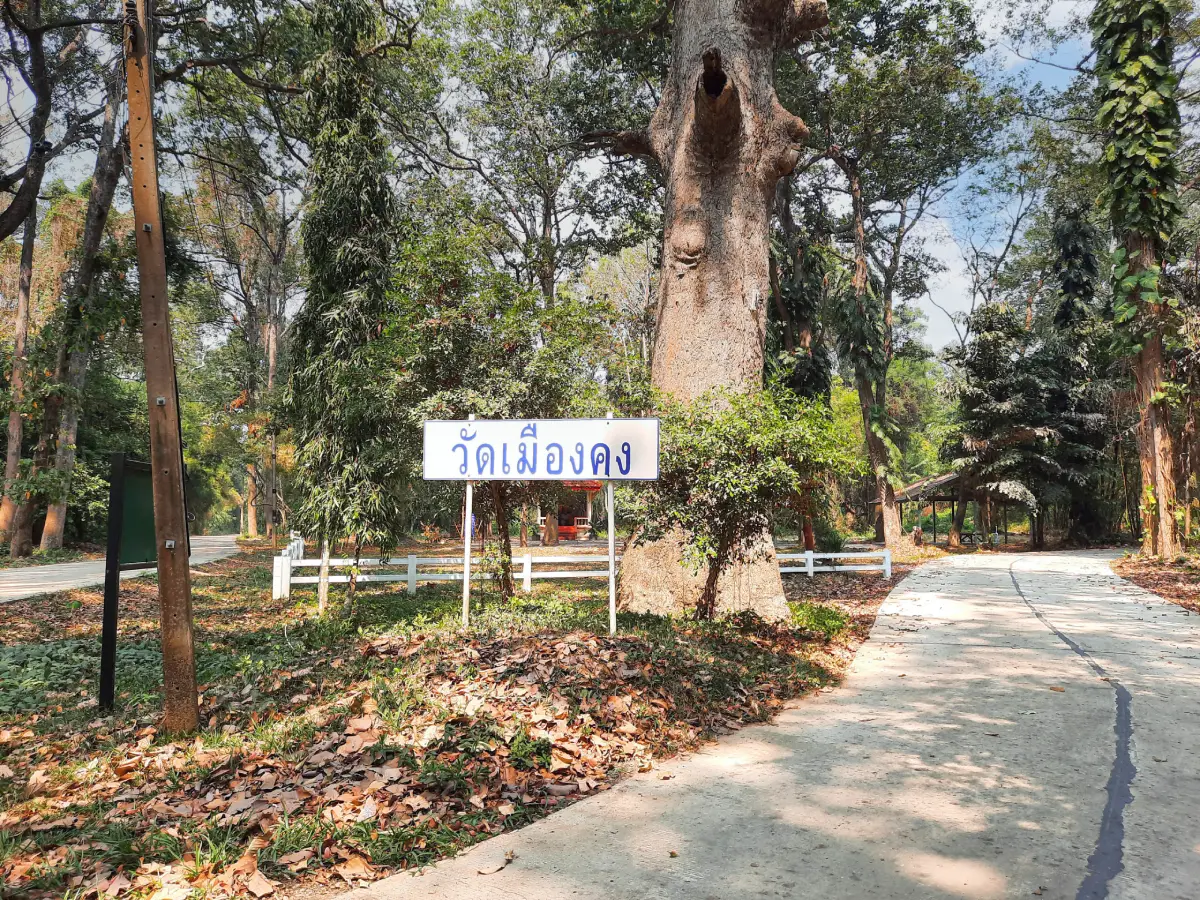
Wat Mueang Khong
Open Days: Daily
Opening Hours: 08.00 - 17.00
Wat Mueang Khong, Si Sa Ket, is a meditation temple and conservation-oriented cultural destination in Mueang Khong Subdistrict, Rasi Salai District, Si Sa Ket Province. Located in an old community connected with the Mun River, Yoe ethnic heritage, local agriculture, and the historical landscape of Rasi Salai, the temple offers a calm setting for Buddhist practice, Dhamma study, meditation, and quiet travel. Wat Mueang Khong is not a temple known mainly for spectacular architecture or crowded tourism. Its value lies in its peaceful atmosphere, its transformation from a neglected temple site into a suitable place for meditation, and its continuing role as a spiritual center for the local community.
Mueang Khong Subdistrict is part of the cultural geography of northern Si Sa Ket. The area is closely connected with the Mun River, one of the most important rivers in Northeastern Thailand. The river has supported farming, fishing, transportation, and settlement for generations. Wat Mueang Khong should therefore be understood together with the surrounding riverine landscape. Its calmness, open spaces, and community role are connected with the rhythm of local life along the Mun River.
Wat Mueang Khong covers about 63 rai, 2 ngan, and 11 square wah. In the past, it was an abandoned and unregistered temple site with no resident monks. Later, villagers from Ban Lup Mok, Ban Nong Wa, and Buddhist supporters in Rasi Salai District came together to restore the area. They invited monks to lead the development of the site and transformed the abandoned temple into a sappaya place suitable for meditation and Buddhist practice. This restoration is a clear example of how faith, community cooperation, and persistent effort can bring a sacred place back to life.
The word “sappaya” is important for understanding Wat Mueang Khong. It does not simply mean physical comfort. In Buddhist practice, sappaya refers to an environment that supports meditation, mindfulness, discipline, and inner calm. A sappaya place is quiet, orderly, simple, and suitable for mental training. Wat Mueang Khong was developed with this quality in mind. The temple’s atmosphere supports chanting, meditation, Dhamma learning, walking meditation, and reflective solitude.
In 1993, Phra Somchai Kulasamo, later known as Phra Khru Kosol Sutakon, came to reside at Wat Mueang Khong with a group of monks. This marked an important stage in the development of the temple. With resident monks, the temple was no longer an abandoned site. It became a living Buddhist center where monastic practice, community devotion, and Dhamma activities could continue. Over time, Wat Mueang Khong became known as a place for meditation, moral training, Buddhist ceremonies, and peaceful community activity.
The current abbot is Phra Khru Kosol Sutakon Kulasamo, also referred to as Phra Khru Kosol Sutakon, Dr.. He oversees the temple together with resident monks, the Mueang Khong community, and Buddhist supporters in Rasi Salai District. The temple has resident monks and continues to support Buddhist activities such as Kathin, merit-making, chanting, meditation, Dhamma instruction, and moral training. Its role is not limited to caring for temple buildings. It also maintains a calm atmosphere where people can study and practice Buddhism.
Wat Mueang Khong is especially meaningful as a meditation temple. It emphasizes simplicity, quietness, and inner practice. Visitors who come here are encouraged to approach the temple differently from ordinary sightseeing. This is a place to slow down, pay respect, sit quietly, listen to Dhamma, and observe one’s own mind. The temple is suitable for both beginners who want to experience meditation for the first time and experienced practitioners who want a calm setting for continuing their practice.
The story of the temple’s restoration also carries a Buddhist meaning. A once-abandoned place was revived through faith and effort. This mirrors the human mind. A mind that has become distracted or neglected can also be restored through mindfulness, discipline, and practice. Wat Mueang Khong therefore teaches through its own history: restoration is possible when people act with intention, patience, and faith.
For Dhamma learners, Wat Mueang Khong is an accessible place. Visitors do not need to begin with complex practice. They may start by paying respect, sitting quietly for a short period, joining chanting, listening to Dhamma, or walking mindfully around the temple. Those who already practice meditation may use the temple as a place for deeper stillness. The temple therefore serves both general visitors and serious practitioners.
The conservation-oriented value of Wat Mueang Khong should be understood broadly. It is not only about conserving nature. It also involves conserving the relationship between temple, community, river, culture, and mental peace. Mueang Khong is close to the Mun River and old local community routes. A visit to the temple can be connected with the community landscape, the local market, the riverside cultural route, and Rasi Salai Dam. This form of travel encourages respect for place, local rhythm, and cultural continuity.
The wider Mueang Khong community has developed ideas such as the Mueang Khong community market and cultural road along the Mun River. The proposed route extends from Don Pu Ta toward the river and follows the riverside for more than two kilometers. This reflects the community’s desire to preserve and express its local identity. Wat Mueang Khong fits well within this cultural landscape because both the temple and the community emphasize rootedness, continuity, and meaningful use of place.
Mueang Khong is also connected with Yoe ethnic heritage and the history of Rasi Salai. The Yoe people are an important ethnic group in northern Si Sa Ket, and their communities have long been associated with the Mun River, rice farming, fishing, and local rituals. Wat Mueang Khong stands within this living cultural background. For visitors, the temple offers not only Buddhist calm but also an entry point into the deeper identity of the Mueang Khong area.
The relationship between temple and rural community is central to Wat Mueang Khong. A local temple is not only a residence for monks. It is a place that villagers build, maintain, and use together. During merit-making events such as Kathin, local people help with food, offerings, ceremony arrangements, reception, cleaning, and support for monks. This collective effort makes the temple a shared space of faith rather than a place belonging only to the monastic community.
The temple’s internal areas can be understood through several main zones: meditation areas, chanting and Dhamma-listening areas, merit-making areas, reception areas for visitors, monks’ residence areas, quiet walking areas, and open natural spaces within the temple grounds. These zones allow the temple to support resident monks, meditation practitioners, community ceremonies, and general visitors. Visitors should use each area respectfully, especially places reserved for meditation or monastic residence.
The chanting and worship areas are important because chanting helps calm the mind and establish discipline. The rhythm of Buddhist chanting allows practitioners and listeners to settle attention and reduce distraction. Daily or communal chanting also reminds people of the Triple Gem and the value of moral conduct. Visitors who join chanting at Wat Mueang Khong can experience Buddhist practice in a simple and direct way.
Meditation areas are central to the temple’s purpose. Visitors who wish to meditate should begin gently: sit comfortably, keep the body still, and observe the breath or inner awareness without forcing results. Beginners may sit for a short period and gradually increase the time. The quiet environment of Wat Mueang Khong helps practitioners notice the movement of their own mind more clearly.
Walking meditation is another suitable practice at the temple. Walking slowly and mindfully through the temple grounds can transform an ordinary walk into Dhamma practice. Visitors may observe each step, the breath, body movement, and thoughts that arise while walking. In this way, walking around Wat Mueang Khong becomes more than sightseeing. It becomes a practice of presence and awareness.
Wat Mueang Khong has also served as a space for Buddhist training and community religious events. Activities such as novice or ordination-related ceremonies, Dhamma training, and collective practice support moral development among youth and adults. Such activities show that the temple is not only a place where people come to make offerings. It is also a place where people are trained, guided, and encouraged to live with greater mindfulness and ethical awareness.
For groups such as families, schools, offices, or meditation communities, Wat Mueang Khong is suitable for calm and meaningful activities. Appropriate group activities include merit-making, Dhamma listening, meditation, walking meditation, temple cleaning, and learning about Mueang Khong community life. Groups should contact the temple or caretakers in advance so that the use of space does not disturb monks or individual practitioners.
Wat Mueang Khong can also be combined with Rasi Salai Dam, an important scenic and water-management site on the Mun River. The dam is a concrete structure with seven water gates and offers wide views of the Mun River. A route combining Wat Mueang Khong and Rasi Salai Dam allows visitors to experience both the spiritual calm of the temple and the broader river landscape that shapes the district. This makes the area suitable for travelers who prefer quiet, educational, and conservation-oriented travel.
The Rasi Salai town area and local market also add value to a visit. After making merit or practicing meditation at the temple, visitors can stop at local cafés, restaurants, or markets in Mueang Khong and Rasi Salai. This helps them see daily life in the district and connect the temple visit with the local economy and community rhythm. Wat Mueang Khong can therefore be planned as part of a half-day or full-day route.
Getting There is most convenient by private car. From Si Sa Ket city, travel toward Rasi Salai District, about 55 to 65 kilometers by road, and continue to Mueang Khong Subdistrict. The temple is located in the Mueang Khong area. Private car, van, or hired local transport is recommended because the route can easily be combined with Rasi Salai Dam, Mueang Khong community areas, and nearby restaurants or accommodations. Travelers using public transport should get off in Rasi Salai town and continue by local vehicle.
The best time to visit is in the morning or late afternoon before closing. Morning is ideal for paying respect, making merit, meditating, and walking quietly around the temple. Late afternoon is suitable for continuing to Rasi Salai Dam or the riverside areas of Mueang Khong. Those who intend to practice meditation should choose a relaxed schedule and allow enough time to settle body and mind.
There is no fixed tourist admission fee at Wat Mueang Khong. Visitors may enter during opening hours to pay respect, make merit, study Dhamma, and use public areas of the temple. Donations and offerings are voluntary according to personal faith. Groups who plan to join meditation activities should contact the temple in advance so that the temple can prepare suitable space and timing.
Proper etiquette is especially important because Wat Mueang Khong is a meditation place. Visitors should dress modestly, speak quietly, mute mobile phones, avoid disturbing those who are meditating or listening to Dhamma, avoid entering monastic residence areas without permission, avoid using the temple as an entertainment space, and help keep the grounds clean. Respectful behavior protects the peaceful atmosphere that makes the temple meaningful.
Visitors who wish to meditate should wear simple and modest clothing suitable for sitting and walking. They should bring only necessary personal items and avoid bringing distractions into the temple. The spirit of practice at Wat Mueang Khong is simplicity. The less one depends on external things, the easier it is to observe the breath, thoughts, and state of mind clearly.
Families with children can use Wat Mueang Khong as a place to teach basic Buddhist manners. Children can learn how to bow, sit quietly, walk mindfully, listen respectfully, and behave gently in shared spaces. These lessons are practical and can be carried into everyday life. The temple is therefore useful not only for adult meditation but also for moral education within families.
For international visitors, Wat Mueang Khong is a good example of a Thai rural meditation temple. It shows that Thai Buddhism is not expressed only through large Buddha images, ornate halls, or famous festivals. It also lives in quiet temples where people come to train the mind, listen to Dhamma, support monks, and preserve community faith. The temple offers insight into the more inward and contemplative side of Buddhist life in Northeastern Thailand.
Wat Mueang Khong has several layers of value. It is a restored temple site, a meditation place, a Dhamma-learning center, a community spiritual space, a quiet conservation-oriented destination, and an entry point into the cultural landscape of Mueang Khong and the Mun River. Its beauty is not dramatic or decorative. Its beauty lies in stillness, simplicity, and the way the temple, community, nature, and Buddhist practice support one another.
A meaningful visit should allow at least one to two hours for worship, merit-making, a quiet walk, and a short period of meditation. Those who intend to practice more seriously should allow more time and contact the temple beforehand. Wat Mueang Khong is best experienced slowly. The value of the temple becomes clearer when visitors give themselves enough time to become quiet, observe the atmosphere, and feel the relationship between the temple and the surrounding community.
In summary, Wat Mueang Khong is one of the important places for understanding northern Si Sa Ket. It reflects the restoration of a neglected temple through faith, the creation of a suitable place for meditation, the continuing role of Buddhism in rural community life, and the connection between Mueang Khong, the Mun River, and Rasi Salai culture. For travelers seeking calm, Dhamma learning, and a deeper view of local Isan life, Wat Mueang Khong is a meaningful destination.
| Place Name | Wat Mueang Khong, Si Sa Ket |
| Related Names | Wat Mueang Khong, Wat Mueang Khong Meditation Center, Mueang Khong Training Center, Mueang Khong Rasi Salai, Mun River Community |
| Place Type | Buddhist Temple / Monastic Center, Meditation Place, Dhamma Learning Site, Conservation-Oriented Cultural Destination, And Sappaya Area Of Mueang Khong Community |
| Location | Mueang Khong Subdistrict, Rasi Salai District, Si Sa Ket Province 33160, Thailand |
| Temple Area | About 63 Rai, 2 Ngan, 11 Square Wah |
| Distance From Key Points | Located in Mueang Khong Subdistrict, Rasi Salai District, about 55 - 65 km from Si Sa Ket city by road and near routes to Rasi Salai Dam and the Mun River community landscape |
| Significance | A meditation and Dhamma-learning temple developed from an abandoned temple site into a peaceful sappaya place for merit-making, meditation, Buddhist training, and conservation-oriented community travel |
| Historical Summary | The site was formerly an abandoned temple with no resident monks. Villagers from Ban Lup Mok, Ban Nong Wa, and Buddhist supporters in Rasi Salai restored the area and invited monks to develop it into a suitable place for meditation. Resident monks have continued the temple’s role since the development period beginning in 1993. |
| Abbot / Caretaker | Phra Khru Kosol Sutakon Kulasamo, also referred to as Phra Khru Kosol Sutakon, Dr., together with resident monks, Mueang Khong community, and Buddhist supporters in Rasi Salai District |
| Resident Monks | 9 Resident Monks |
| Current Status | Open as a meditation temple, Dhamma study place, merit-making site, and conservation-oriented destination where visitors can use public temple areas during opening hours |
| Open Days | Daily |
| Opening Hours | 08.00 - 17.00 |
| Admission Fee | Free Admission. Donations and merit-making offerings are voluntary according to personal faith. |
| Main Areas / Zones | 1. Meditation And Sitting Practice Zone 2. Chanting And Dhamma Listening Zone 3. Buddhist Training And Dhamma Activity Zone 4. Temple Courtyard And Merit-Making Area 5. Quiet Walking Meditation Zone 6. Visitor Reception And Practitioner Support Zone 7. Monks’ Residence And Monastic Area 8. Natural And Open Space Zone Within The Temple 9. Learning Zone On The Restoration Of The Former Abandoned Temple 10. Mueang Khong Community And Mun River Cultural Learning Zone |
| Facilities | Temple courtyard, meditation areas, Dhamma activity buildings, merit-making areas, quiet walking spaces, parking areas arranged by the temple or community, and basic services in Rasi Salai town |
| Related Contact | Wat Mueang Khong / Phra Khru Kosol Sutakon, Tel. 081-318-8258 Mueang Khong Subdistrict Administrative Organization, Tel. 045-826-237 Rasi Salai District Office, Tel. 045-681-053 Rasi Salai Dam, Tel. 045-826-033 |
| Travel Information | From Si Sa Ket city, travel toward Rasi Salai District, about 55 - 65 km by road. Continue to Mueang Khong Subdistrict. Private car, van, or hired local transport is recommended, especially for combining the temple with Rasi Salai Dam and nearby community attractions. |
| Visitor Etiquette | Dress modestly, keep quiet, speak softly, mute mobile phones, avoid disturbing meditation practitioners, do not enter monastic areas without permission, avoid entertainment-style behavior, and keep the temple clean. |
| Nearby Tourist Attractions | 1. Mueang Khong Community / Mueang Khong Market, about 2 km 2. Mun River Riverside Route And Mueang Khong Cultural Road, about 3 km 3. Don Pu Ta Mueang Khong, about 3 km 4. Rasi Salai Dam, about 14 km, Tel. 045-826-033 5. Rasi Salai District Office And Local Market Area, about 5 km 6. Bueng Khong Khok And Mueang Khong Yoe Cultural Area, about 5 km 7. Wat Tai, Mueang Khong Subdistrict, about 6 km 8. Wat Mueang Chan / Phra That Mueang Chan, about 35 km 9. Prasat Wat Sa Kamphaeng Yai, about 42 km 10. Si Sa Ket City, about 60 km |
| Nearby Restaurants | 1. Lelawa Cafe Rasi Salai, about 4 km, Tel. 087-452-3233 2. Kimjikan, Mueang Khong, about 5 km, Tel. 092-318-1455 3. Ton Tamrap Cha Payom @ Rasi Salai, about 5 km, Tel. 093-434-4755 4. Cubes Cafe Rasi Salai, about 9 km, Tel. 081-872-6790 5. Khrua Nai Soi Rasi Salai, about 5 km, Tel. 087-998-1864 6. Ban Kan Steak & Shabu, about 5 km, Tel. 045-961-384 7. Nang Len Rasi Salai, about 5 km, Tel. 090-496-7983 8. Steak 59 Rasi Salai, about 5 km, Tel. 045-682-464 |
| Nearby Accommodations | 1. Rasi Resort, Rasi Salai, about 5 km, Tel. 045-681-223 2. Pensiri Resort, Mueang Khong, about 5 km, Tel. 045-682-374 3. Saikaew Resort, Mueang Khong, about 6 km, Tel. 045-620-780 4. Ban Nong Prae, Mueang Khong, about 6 km, Tel. 087-876-8620 5. Boonsiri Boutique Hotel, Mueang Si Sa Ket, about 60 km, Tel. 045-622-222, 045-622-555 6. B2 Sisaket Boutique & Budget Hotel, Mueang Si Sa Ket, about 60 km, Tel. 052-009-161, 088-263-2897 |
Frequently Asked Questions (FAQ)
Q: Where is Wat Mueang Khong located?
A: Wat Mueang Khong is located in Mueang Khong Subdistrict, Rasi Salai District, Si Sa Ket Province 33160. It is a meditation temple and Dhamma study place connected with the Mueang Khong community and the Mun River landscape.
Q: What are the opening days and hours?
A: Wat Mueang Khong is open daily from 08.00 to 17.00. Visitors can pay respect, make merit, study Dhamma, and use public temple areas during these hours.
Q: Is there an admission fee?
A: There is no fixed tourist admission fee. Donations and merit-making offerings are voluntary according to personal faith.
Q: Who is the current abbot of Wat Mueang Khong?
A: The current abbot is Phra Khru Kosol Sutakon Kulasamo, also referred to as Phra Khru Kosol Sutakon, Dr. He oversees the temple together with resident monks and the Mueang Khong community.
Q: Who is Wat Mueang Khong suitable for?
A: The temple is suitable for visitors who want to make merit, meditate, listen to Dhamma, study Buddhism, rest the mind, and learn about the Mueang Khong community and Mun River cultural landscape.
Q: What is the main highlight of Wat Mueang Khong?
A: Its main highlight is its role as a peaceful meditation place developed from a former abandoned temple site into a sappaya environment for Buddhist practice, chanting, mindfulness, and Dhamma learning.
Q: How can visitors get to Wat Mueang Khong?
A: From Si Sa Ket city, travel toward Rasi Salai District, about 55 - 65 km by road, then continue to Mueang Khong Subdistrict. Private car or hired local transport is the most convenient option.
Q: What nearby places can be visited on the same trip?
A: Nearby places include Mueang Khong community, the Mun River riverside route, Mueang Khong cultural road, Rasi Salai Dam, Bueng Khong Khok, Wat Tai, Wat Mueang Chan, Phra That Mueang Chan, and Si Sa Ket city.
 Category: ●Places of Worship
 Group: ●Temple
Last Update : 2 MonthAgo
 Last Update : 2 MonthAgo
 Click to Access the Navigation Map GPS
 Art, Culture and Heritage
 Historical Sites and Monuments(12)
 Landmarks and Memorials(1)
 Art, Craft Centres, Tradition(8)
Temple(13)
Art, Craft Centres, Tradition(8)
Temple(13)
 Other Sacred Sites(3)
 Suburban Living
 Village, Community(2)
 Nature and Wildlife
 National Parks and Marine Reserves(2)
 Dam, Reservoir, Lake(7)
 Waterfalls(5)
 River, Canal(5)
 Bays and Beaches(2)
 Entertainment and Agricultural
 Zoos and Aquariums(1)
 Farms, Parks and Ecotourism(3)


