
lovethailand home >Northeastern Travel Attractions >Si Sa Ket Travel Attractions >Khun Han >Phu Fai > Phra Phutthabat Phu Fai
TL;DR: Phra Phutthabat Phu Fai is located at Moo 1, Ban Phu Fai, Phu Fai Subdistrict, Khun Han District, Si Sa Ket Province 33150, Thailand, open Daily, hours 08.00 - 17.00.
Phra Phutthabat Phu Fai
Open Days: Daily
Opening Hours: 08.00 - 17.00
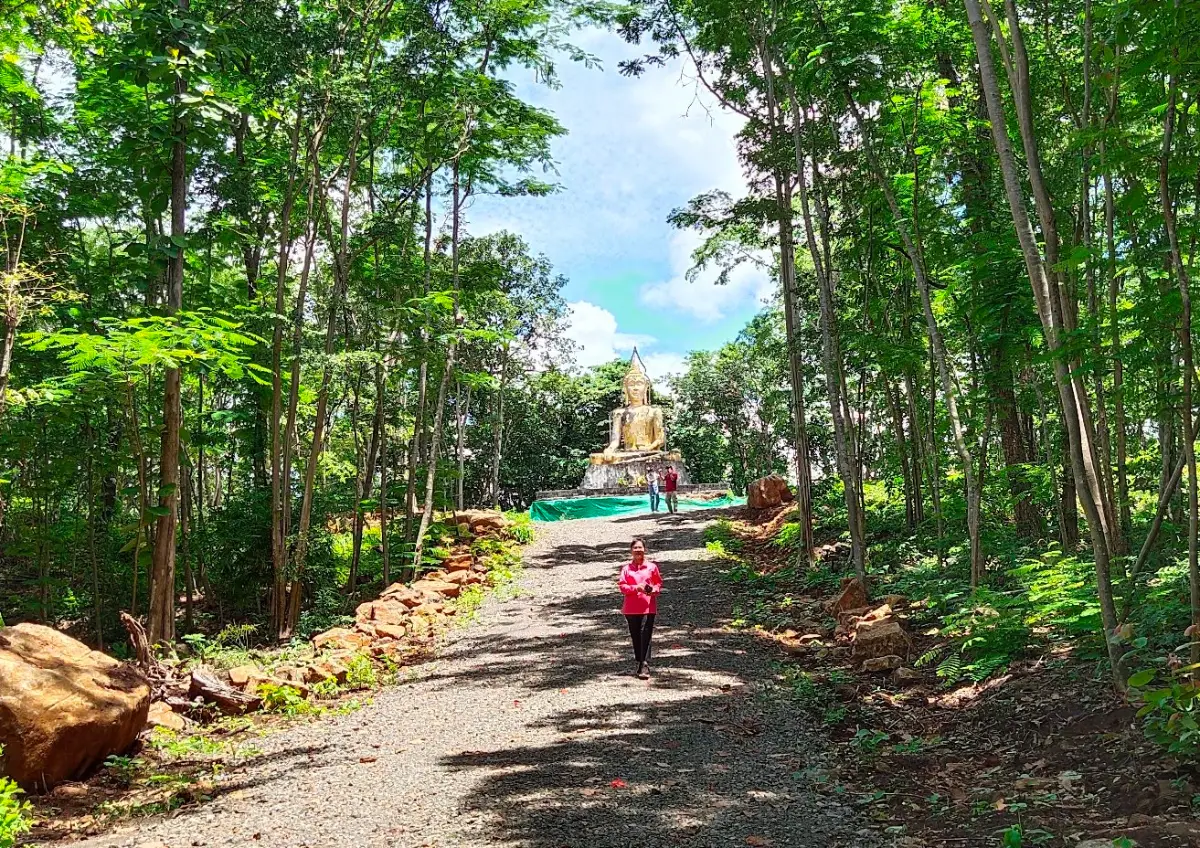
Phra Phutthabat Phu Fai, Si Sa Ket, is located on Phu Fai Hill at Moo 1, Ban Phu Fai, Phu Fai Subdistrict, Khun Han District, Si Sa Ket Province. It is a faith-based mountain destination, Buddhist site, cultural learning area, and historical landscape connected with both the replica Buddha footprint and the ancient Khmer remains of Prasat Phu Fai. The area includes Wat Prasat Phu Fai, a replica Buddha footprint, a large Buddha image, a monastic and meditation area, natural rock surfaces, a natural pond, forested hill scenery, and wildlife such as monkeys. This makes Phu Fai more than a simple hilltop shrine; it is a layered sacred landscape where Buddhism, Khmer heritage, local nature, and community memory meet.
The importance of Phra Phutthabat Phu Fai begins with its location on an isolated hill in Khun Han District. Phu Fai stands in the Lower Isan cultural region not far from the Phanom Dong Rak mountain range, the natural borderland between Thailand and Cambodia. The hill has long been perceived as a sacred place. In the present day, it is associated with the Buddha footprint and Buddhist worship. In the deeper historical layer, it preserves the remains of Prasat Phu Fai, an ancient Khmer religious monument. The sacred meaning of the hill therefore continues across time, even though the forms of worship have changed from the ancient Khmer period to present-day Theravada Buddhist practice.
The name “Phu Fai” is connected with the wild cotton tree that grows naturally in the area. This tree belongs to the same broad botanical group as the rock-silk cotton tree and is locally associated with the hill’s identity. The name gives the place a clear natural character. It connects the mountain, plants, village memory, temple, Buddha footprint, and ancient monument together. For local people, Phu Fai is not only a geographic name but a cultural name that carries a sense of place and belonging.
The replica Buddha footprint on Phu Fai is about 1 meter wide and 2 meters long. Every year, people from surrounding subdistricts come to make merit and pay respect. In Buddhist belief, a Buddha footprint symbolizes the presence of the Buddha’s teaching and the sacred path of Dhamma. Worshippers come not only to ask for blessings but also to express reverence for the Buddha and to remind themselves of the moral path. The footprint is therefore the devotional heart of the Phra Phutthabat Phu Fai area.
Phra Phutthabat Phu Fai has remained important to communities in Khun Han District and nearby areas for generations. During annual merit-making occasions, villagers and devotees travel up the hill to worship, give offerings, and join Buddhist activities. This continuing practice shows that Phu Fai is a living sacred hill. It is not merely a tourist attraction visited once and forgotten, but a place to which local people return through faith, memory, and community connection.
Today, Wat Prasat Phu Fai is the main Buddhist institution on the hill. The temple began as a monastic residence known as “Asom Phu Fai” around 1949 before being formally announced as a temple on 13 June 2017. This development reflects the gradual growth of a hilltop practice site into a Buddhist temple and cultural learning area. Wat Prasat Phu Fai now serves as a place for Buddhist activities, meditation, community worship, historical learning, and conservation-oriented travel.
The current abbot of Wat Prasat Phu Fai is Phra Palat Thoet Phumipalo. He oversees the temple together with resident monks, Ban Phu Fai community, and local agencies in Phu Fai Subdistrict. The temple has resident monks and uses part of the Prasat Phu Fai historic area as a Buddhist park. The purpose of this area is to support Buddhist practice, encourage moral conduct, promote Dhamma learning, and preserve national culture. This makes the site both a religious place and a heritage learning area.
The Buddhist park setting gives Phu Fai a broader function than ordinary sightseeing. Visitors can pay respect to the Buddha footprint, see the large Buddha image, walk around the temple grounds, observe the ancient Khmer remains, rest in a natural setting, and use the hilltop atmosphere for quiet reflection. The area supports faith, history, nature, and meditation at the same time. It is especially suitable for visitors who prefer calm cultural travel rather than crowded tourist routes.
The ancient site of Prasat Phu Fai is one of the most important historical features of the hill. The Fine Arts Department identifies it as an ancient community religious monument located on the northern ridge of Phu Fai. The hill rises about 50 to 120 meters above the surrounding plain and lies about 30 kilometers north of the Phanom Dong Rak range. This prominent position suggests that the hill had sacred importance in the past, similar to other ancient Khmer monuments built on isolated hills in Lower Isan.
Prasat Phu Fai was built with brick and laterite on a natural rock platform. The main sanctuary has an indented square plan, about 7.20 meters on each side. Today, only the supporting base of the sanctuary remains, built from laterite and standing about 1.75 meters above the ground. Although the upper parts of the building have collapsed, the remaining base still reveals the layout and scale of the original monument. Walking around the area allows visitors to see how ancient builders combined natural rock, laterite, brick, and sacred planning on a hilltop site.
The age of Prasat Phu Fai is determined through comparison with other ancient Khmer sanctuaries in the region. Its architectural plan relates to Khmer styles of the mid-15th to mid-16th Buddhist centuries. This makes the site important for understanding the spread of Khmer religious architecture in the Si Sa Ket and Surin borderland region. Even in its ruined state, Prasat Phu Fai preserves valuable evidence of how communities used hilltop sites for ritual and sacred purposes.
One of the key artworks connected with Prasat Phu Fai is the lintel showing Vishnu Anantasayin Padmanabha, commonly known in Thai as the Narayana Reclining On Ananta lintel. The lintel is no longer attached to the sanctuary. It is now preserved at Wat Suphannarat, also known as Wat Ban Phran, in Phran Subdistrict, Khun Han District. This connection makes it possible to understand Phu Fai and Wat Ban Phran together: Phu Fai preserves the original sanctuary site, while Wat Suphannarat preserves one of its most important sculptural elements.
The fact that the lintel is preserved at Wat Suphannarat shows the important role of Buddhist temples in local heritage conservation. In Lower Isan, temples often function not only as places of worship but also as community guardians of ancient objects. Visitors interested in Khmer art can therefore combine Phra Phutthabat Phu Fai with Wat Suphannarat in one cultural route. This gives a more complete understanding of Khun Han’s historical landscape.
The large Buddha image at Ban Phu Fai is another key feature of the hill. It strengthens the present Buddhist identity of the area and creates a strong devotional image on the mountain. Together with the Buddha footprint, Wat Prasat Phu Fai, the Buddhist park, and the ancient Khmer ruins, the large Buddha shows how Buddhist faith has reinterpreted and continued the sacred value of Phu Fai. The hill is therefore a place where ancient sacred geography and contemporary Buddhist devotion coexist.
The natural environment is also part of the experience. Phu Fai is a high hill with natural surroundings, a natural pond, rock surfaces, and forested areas. The presence of a pond on the hill adds ecological and symbolic value. Water sources on high ground often carry strong local meaning because they suggest abundance, sacredness, and continuity of life. The natural pond, temple, Buddha footprint, and ancient monument together make Phu Fai a place where nature and faith are closely connected.
Wildlife such as monkeys can be found in the area. Visitors should observe animals respectfully and should not feed, tease, approach, or leave food waste. This is not a zoo but a natural hill environment where a Buddhist site and an ancient monument exist together with wildlife. Responsible behavior helps protect both the animals and visitors. Keeping the area clean also reduces problems caused by monkeys approaching people for food.
Phra Phutthabat Phu Fai is suitable for several types of visitors. Buddhist visitors can pay respect to the Buddha footprint and the large Buddha image. Cultural travelers can study the ancient Khmer remains of Prasat Phu Fai. Nature lovers can enjoy the hilltop landscape, natural pond, forest atmosphere, and wildlife. Those seeking quiet time can use the Buddhist park and temple area for reflection and mental rest. The site’s value comes from the combination of these experiences.
Visitors should prepare appropriately for a hilltop site. Comfortable walking shoes are recommended. Water, a hat, and sun protection are useful on hot days. Care is needed on slopes, steps, natural rock surfaces, and uneven ground. A visit to Phu Fai should not be rushed. The area includes worship points, historic remains, natural features, and viewpoints. Walking slowly and respectfully allows visitors to experience the sacred and natural qualities of the hill more fully.
From a cultural point of view, Prasat Phu Fai helps explain why mountains and isolated hills were important in ancient Khmer religious geography. A hill rises above the plain, stands apart from ordinary settlement, and creates a symbolic connection between the earth and the sacred realm. Building a sanctuary on Phu Fai turned the hill into a ritual center for the ancient community. Later, the same sacred landscape became a Buddhist place with a temple, Buddha footprint, and large Buddha image.
This layering of ancient Khmer sacred space and present Buddhist practice is typical of Lower Isan. Many places in the region once held Hindu or Mahayana Buddhist monuments before becoming part of Theravada Buddhist community life. Phu Fai clearly shows this process. The ruined sanctuary represents the ancient Khmer past. The footprint, temple, monks, and Buddhist activities represent present faith. Together, they reveal the continuity of sacred meaning across many centuries.
For Ban Phu Fai community, the hill is both a natural landmark and a spiritual center. It is a local mountain, a place of merit-making, a memory of old religious history, and a landscape that identifies the village. Annual worship and community activity help keep the hill alive as a social and religious place. The community’s relationship with the hill gives Phu Fai its living meaning beyond archaeology alone.
Phra Phutthabat Phu Fai can also be connected with nearby attractions in Khun Han and Phu Sing districts. Important nearby places include Wat Suphannarat or Wat Ban Phran, where the Narayana lintel connected with Prasat Phu Fai is preserved; Wat Phrai Phatthana and the Luang Pu Suang Mondop; Pha Phaya Kupri Viewpoint; Suksamran Beach; Wat Pa Maha Chedi Kaew or the Million Bottle Temple; Samrong Kiat Waterfall; and Pha Mo I Daeng. This route combines Khmer art, Buddhist faith, natural scenery, and the borderland landscape of southern Si Sa Ket.
Getting There from Si Sa Ket city is most convenient by private car. Travel south toward Khun Han District, passing through Phayu and Phrai Bueng, then continue to Phu Fai Subdistrict and Ban Phu Fai. The distance from Si Sa Ket city is about 75 kilometers by road. From Khun Han town, the distance to Phra Phutthabat Phu Fai is about 22 kilometers. Visitors should use navigation together with local direction signs or ask local residents when approaching Ban Phu Fai.
From Khun Han town, travel toward Phu Fai Subdistrict and Ban Phu Fai. The route can be combined with Wat Ban Phran, Phran Subdistrict, and other nearby attractions. For a half-day trip, visitors can focus on the Buddha footprint, the temple, the ancient ruins, and the natural hill area. For a full-day trip, the route can continue to Wat Phrai Phatthana, Pha Phaya Kupri Viewpoint, or attractions in Khun Han town.
The best time to visit is in the morning or late afternoon before closing. Morning is comfortable for walking, worship, and exploring the ancient site. Late afternoon is suitable for visitors arriving after other stops in Khun Han District. During rainy periods, extra care is needed because rock surfaces and slopes may be slippery. Families with children and elderly visitors should move slowly and avoid risky edges or uneven ground.
There is no fixed tourist admission fee at Phra Phutthabat Phu Fai. Visitors may enter during opening hours to pay respect, see the Buddha footprint, visit the temple, observe Prasat Phu Fai, and enjoy the natural surroundings. Donations, flowers, candles, incense, garlands, and merit-making offerings are voluntary according to personal faith. The site remains a community religious place open to local people, pilgrims, students, cultural travelers, and international visitors.
Proper etiquette is important because the area is both a temple and an ancient site. Visitors should dress modestly, keep quiet, remove shoes where required, avoid touching the Buddha footprint or ancient objects inappropriately, avoid climbing on the sanctuary base, avoid moving stones or historic fragments, avoid feeding monkeys, avoid littering, and be careful on slopes or natural rock surfaces. Respectful behavior protects both the sacred atmosphere and the historic fabric of Phu Fai.
For photography, good subjects include the Buddha footprint, the large Buddha image, Wat Prasat Phu Fai, the sanctuary base, natural rock platforms, the pond, hill scenery, and forest atmosphere. Photography should be done respectfully. Visitors should not climb on ancient structures or disturb worshippers. The best photographs are those that communicate the quiet relationship between faith, heritage, and nature.
For international visitors, Phra Phutthabat Phu Fai is an excellent introduction to Lower Isan’s layered sacred landscape. In one place, visitors can see a Buddhist footprint shrine, a living temple, a large Buddha image, an ancient Khmer sanctuary site, natural hill scenery, and local wildlife. It shows that Si Sa Ket is not only a province of large temples and well-known historical parks, but also a land of community sacred hills where history and faith continue together.
In summary, Phra Phutthabat Phu Fai is one of the meaningful destinations in Khun Han District. The replica Buddha footprint is its devotional center. Wat Prasat Phu Fai is its living Buddhist institution. Prasat Phu Fai is its historical core. The natural pond, hilltop setting, and wildlife give it ecological value. Ban Phu Fai community gives it living continuity. A visit here offers worship, history, nature, and a deeper understanding of the cultural roots of southern Si Sa Ket.
| Place Name | Phra Phutthabat Phu Fai, Si Sa Ket / Wat Prasat Phu Fai |
| Related Names | Phra Phutthabat Phu Fai, Phu Fai Hill, Wat Prasat Phu Fai, Asom Phu Fai, Prasat Phu Fai, Ban Phu Fai Large Buddha, Phu Fai Buddhist Park |
| Place Type | Hilltop Buddhist Site, Local Temple, Faith-Based Destination, Buddhist Park, Ancient Khmer Monument, And Nature Learning Area In Phu Fai Subdistrict |
| Location | Moo 1, Ban Phu Fai, Phu Fai Subdistrict, Khun Han District, Si Sa Ket Province 33150, Thailand |
| Wat Prasat Phu Fai Address | 130 Moo 1, Ban Phu Fai, Phu Fai Subdistrict, Khun Han District, Si Sa Ket Province |
| Setting | Located on Phu Fai Hill, an isolated hill in Khun Han District within the Lower Isan landscape near the Phanom Dong Rak mountain range |
| Distance From Key Points | About 75 km from Si Sa Ket city, about 22 km from Khun Han town, and located on a route linking Phu Fai, Phran, Khun Han, and Phu Sing borderland attractions |
| Significance | A sacred hilltop destination with a replica Buddha footprint, Wat Prasat Phu Fai, the ancient Khmer remains of Prasat Phu Fai, a Buddhist park, and natural hill scenery |
| Historical Summary | Phu Fai is a sacred hill where Buddhist worship and ancient Khmer religious heritage coexist. Wat Prasat Phu Fai began as a monastic residence known as Asom Phu Fai around 1949, was formally announced as a temple on 13 June 2017, and uses part of the Prasat Phu Fai historic area as a Buddhist park for religious practice and cultural learning. |
| Buddha Footprint | A replica Buddha footprint on Phu Fai Hill, about 1 meter wide and 2 meters long, regularly visited by people from surrounding subdistricts for annual merit-making and worship |
| Main Ancient Monument | Prasat Phu Fai, an ancient Khmer sanctuary on Phu Fai Hill, built with brick and laterite. The main sanctuary has an indented square plan of about 7.20 meters on each side, with the remaining laterite base standing about 1.75 meters high. |
| Archaeological Period | Mid-15th to mid-16th Buddhist centuries, based on comparative Khmer architectural study |
| Related Important Lintel | The Vishnu Anantasayin Padmanabha lintel, also known as the Narayana Reclining On Ananta lintel, formerly associated with Prasat Phu Fai and now preserved at Wat Suphannarat / Wat Ban Phran in Phran Subdistrict, Khun Han District, Si Sa Ket Province |
| Abbot / Caretaker | Phra Palat Thoet Phumipalo, Abbot Of Wat Prasat Phu Fai, together with resident monks, Ban Phu Fai community, and Phu Fai Subdistrict Administrative Organization |
| Resident Monks | 6 Resident Monks |
| Current Status | Open as a temple, Buddhist park, Buddha footprint worship site, ancient monument area, and nature-based cultural destination of Phu Fai Subdistrict |
| Open Days | Daily |
| Opening Hours | 08.00 - 17.00 |
| Admission Fee | Free Admission. Donations, flowers, incense, candles, garlands, and merit-making offerings are voluntary according to personal faith. |
| Main Areas / Zones | 1. Replica Buddha Footprint Zone 2. Ban Phu Fai Large Buddha Zone 3. Wat Prasat Phu Fai Zone 4. Buddhist Park And Meditation Area 5. Prasat Phu Fai Sanctuary Base Zone 6. Natural Rock Platform Zone 7. Natural Pond Zone 8. Hilltop Viewpoint Zone 9. Nature Walking Area 10. Monkey And Wildlife Observation Area 11. Monks’ Residence And Monastic Area 12. Sacred Hill And Khmer Heritage Learning Zone |
| Facilities | Worship areas, temple courtyard, hill walking paths, natural viewing points, merit-making areas, parking arranged by the temple or community, and basic services in Phu Fai Subdistrict |
| Related Contact | Phra Phutthabat Phu Fai, Tel. 045-674-614 Phu Fai Subdistrict Administrative Organization, Tel. 045-826-465, Fax 045-826-464 Phu Fai SAO Mayor Hotline, Tel. 085-024-4481 |
| Travel Information | From Si Sa Ket city, travel toward Khun Han District through Phayu and Phrai Bueng, then continue to Phu Fai Subdistrict and Ban Phu Fai Moo 1. The distance is about 75 km from Si Sa Ket city and about 22 km from Khun Han town. Private car, van, or hired local transport is recommended. |
| Visitor Etiquette | Dress modestly, keep quiet, remove shoes in worship areas, do not touch the Buddha footprint or ancient objects inappropriately, do not climb on the sanctuary base, do not move stones or historic fragments, do not feed monkeys, do not litter, and be careful on slopes and natural rock surfaces. |
| Nearby Tourist Attractions | 1. Prasat Phu Fai, within the same area, about 0 km 2. Ban Phu Fai Large Buddha, within the same area, about 0 km 3. Wat Suphannarat / Wat Ban Phran, about 12 km 4. Ban Phran Community And Narayana Lintel Route, about 12 km 5. Pongsin Resort & Restaurant, Phran Subdistrict, about 14 km, Tel. 088-375-5199 6. Khun Han Town, about 22 km 7. Wat Phrai Phatthana / Luang Pu Suang Mondop, about 35 km, Tel. 099-625-3859 8. Pha Phaya Kupri Viewpoint, about 38 km 9. Wat Pa Maha Chedi Kaew / Million Bottle Temple, about 42 km, Tel. 084-524-3770 10. Samrong Kiat Waterfall / Namtok Pisat, about 45 km, Tel. 063-565-9399 11. Pha Mo I Daeng / Khao Phra Wihan National Park, about 60 km |
| Nearby Restaurants | 1. Pongsin Resort & Restaurant, Phran Subdistrict, about 14 km, Tel. 088-375-5199 2. BJ Coffee House, Khun Han, about 22 km, Tel. 098-214-6024 3. Cho Cher Coffee & Bakery, Khun Han, about 22 km, Tel. 091-014-0622 4. MOMOCHA Taiwanese Bubble Tea Khun Han, about 22 km, Tel. 064-959-0476, 062-441-9235 5. Kan-Aeng Coffee & Tea, Khun Han, about 23 km, Tel. 093-412-3723 6. Baan Nom Sod Khun Han, about 23 km, Tel. 094-287-2058 7. Pornsawan Cafe, Khun Han, about 24 km, Tel. 063-497-7625, 088-192-3166 |
| Nearby Accommodations | 1. Pongsin Resort & Restaurant, Phran Subdistrict, about 14 km, Tel. 088-375-5199 2. Peace Pool Resort, Khun Han, about 23 km, Tel. 081-879-5822 3. Rerawadi Resort & Spa, Khun Han, about 23 km, Tel. 087-128-0095 4. Honeymoon Resort, Phu Sing, about 40 km, Tel. 093-567-1285 5. Pungluang Resort, Phu Sing, about 42 km, Tel. 092-992-9952 6. Cheyenne Resort, Khukhan, about 45 km, Tel. 085-024-4829, 045-966-585 7. B2 Sisaket Boutique & Budget Hotel, Mueang Si Sa Ket, about 78 km, Tel. 052-009-161, 088-263-2897 |
Frequently Asked Questions (FAQ)
Q: Where is Phra Phutthabat Phu Fai located?
A: Phra Phutthabat Phu Fai is located on Phu Fai Hill at Moo 1, Ban Phu Fai, Phu Fai Subdistrict, Khun Han District, Si Sa Ket Province. It is a hilltop worship site with a replica Buddha footprint and the ancient Khmer remains of Prasat Phu Fai in the same area.
Q: What are the opening days and hours?
A: Phra Phutthabat Phu Fai is open daily from 08.00 to 17.00. Visitors can pay respect to the Buddha footprint, worship, see Prasat Phu Fai, and walk around the natural hill area during these hours.
Q: Is there an admission fee?
A: There is no fixed tourist admission fee. Donations, flowers, incense, candles, garlands, and merit-making offerings are voluntary according to personal faith.
Q: Who is the abbot of Wat Prasat Phu Fai?
A: The abbot of Wat Prasat Phu Fai is Phra Palat Thoet Phumipalo, who oversees the temple together with resident monks, Ban Phu Fai community, and Phu Fai Subdistrict Administrative Organization.
Q: What is the Buddha footprint like?
A: The footprint is a replica Buddha footprint on Phu Fai Hill, about 1 meter wide and 2 meters long. People from surrounding subdistricts come to make merit and pay respect every year.
Q: Why is Prasat Phu Fai important?
A: Prasat Phu Fai is an ancient Khmer religious monument on Phu Fai Hill. It was built with brick and laterite, dates to the mid-15th to mid-16th Buddhist centuries, and is connected with the Narayana Reclining On Ananta lintel now preserved at Wat Suphannarat.
Q: What are the main highlights at Phra Phutthabat Phu Fai?
A: Main highlights include the replica Buddha footprint, Ban Phu Fai Large Buddha, Wat Prasat Phu Fai, Prasat Phu Fai sanctuary base, natural rock platform, hilltop pond, natural viewpoint, and Buddhist park area for worship and meditation.
Q: How can visitors get to Phra Phutthabat Phu Fai?
A: From Si Sa Ket city, travel toward Khun Han District through Phayu and Phrai Bueng, then continue to Phu Fai Subdistrict and Ban Phu Fai Moo 1. The distance is about 75 km from Si Sa Ket city and about 22 km from Khun Han town. Private car or hired local transport is recommended.
 Category: ●Places of Worship
 Group: ●Other Sacred Sites
Last Update : 2 MonthAgo
 Last Update : 2 MonthAgo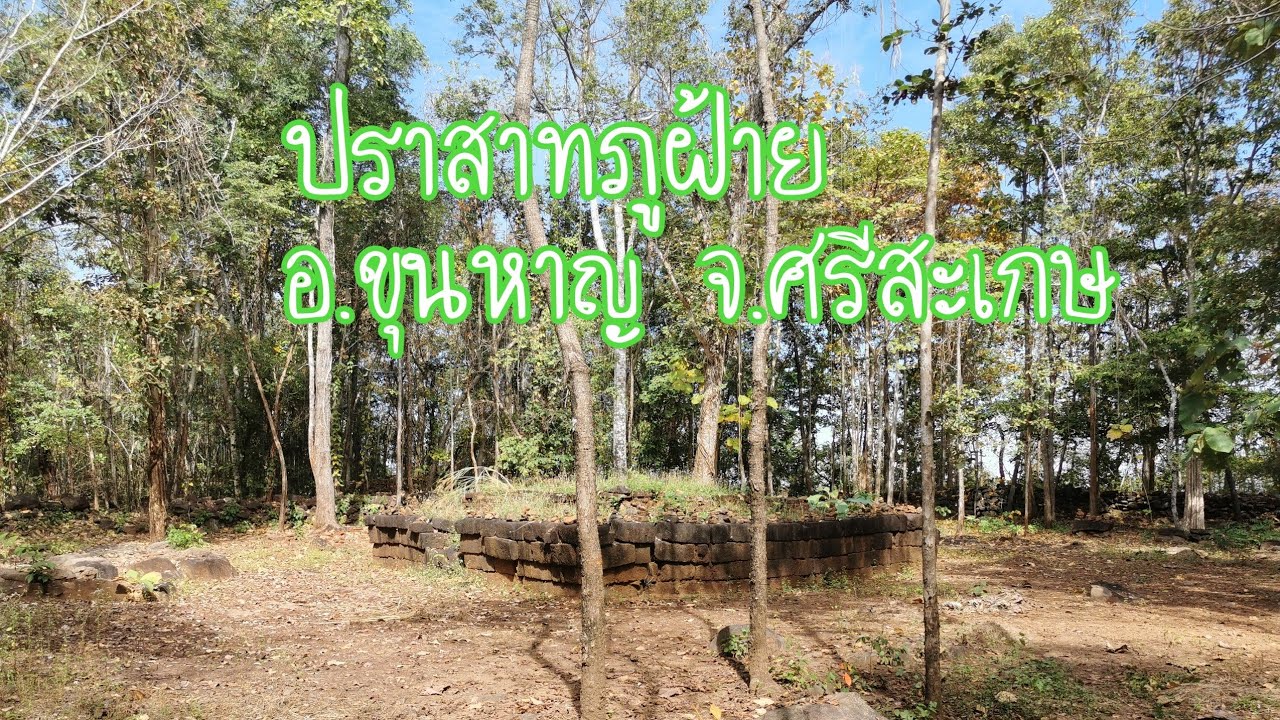
 Click to Access the Navigation Map GPS
Phra Phutthabat Phu Fai Map

 Art, Culture and Heritage
 Historical Sites and Monuments(12)
 Landmarks and Memorials(1)
 Art, Craft Centres, Tradition(8)
 Temple(13)
Other Sacred Sites(3)
Temple(13)
Other Sacred Sites(3)
 Suburban Living
 Village, Community(2)
 Nature and Wildlife
 National Parks and Marine Reserves(2)
 Dam, Reservoir, Lake(7)
 Waterfalls(5)
 River, Canal(5)
 Bays and Beaches(2)
 Entertainment and Agricultural
 Zoos and Aquariums(1)
 Farms, Parks and Ecotourism(3)


