
lovethailand home >Northeastern Travel Attractions >Si Sa Ket Travel Attractions >Phai Bung >Phrai Bueng > Wat Ban Phrai Bueng
TL;DR: Wat Ban Phrai Bueng is located at Phrai Bueng Subdistrict, Phrai Bueng District, Si Sa Ket Province 33180, Thailand, in the northern part of Phrai Bueng Municipality near, open Daily, hours 08.00 - 17.00.
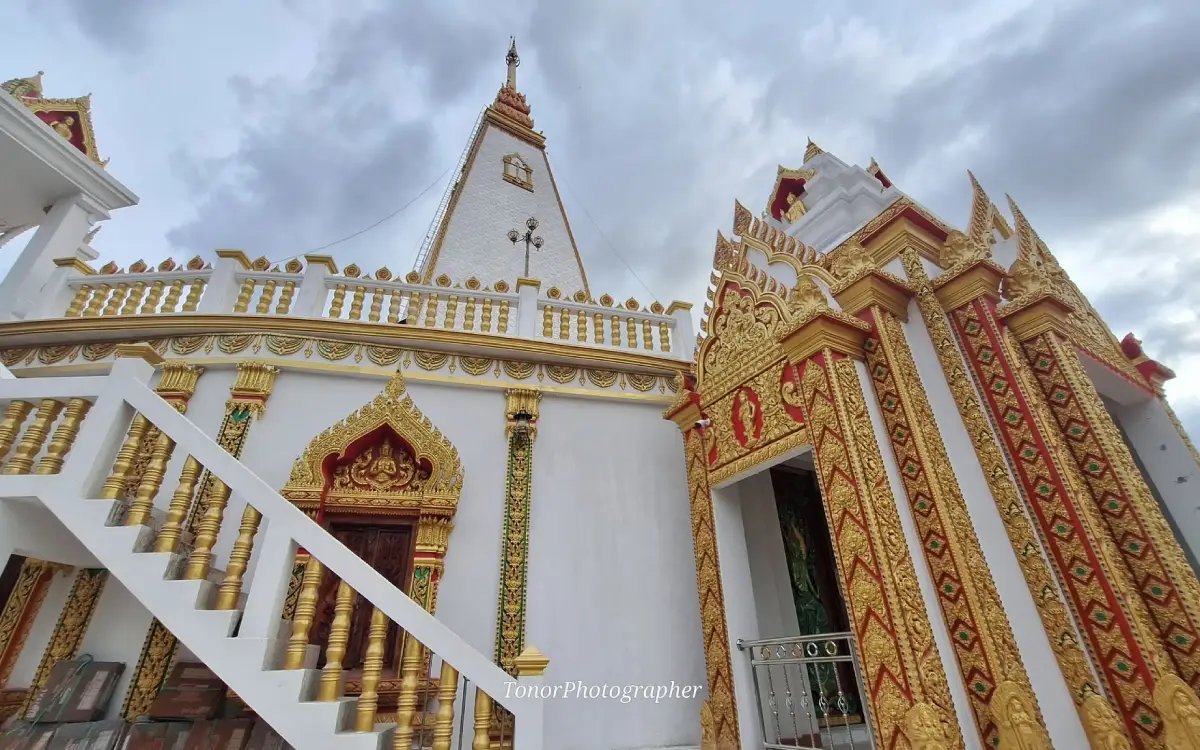
Wat Ban Phrai Bueng
Open Days: Daily
Opening Hours: 08.00 - 17.00
Wat Ban Phrai Bueng, Si Sa Ket, officially known as Wat Phrai Bueng (Wat Champa Suraphi), is one of the most important Buddhist temples in Phrai Bueng District, Si Sa Ket Province. The temple is located in the northern part of Phrai Bueng Municipality, close to Nong Yai or Bueng Nok Pet Nam Phrai Bueng public park. Its most important sacred monument is Phra Phuttha Chedi Phrai Bueng, commonly called Phra That Phrai Bueng, a large Bodh Gaya-style Buddhist stupa that enshrines relics of the Buddha brought from India. For the people of Phrai Bueng and Si Sa Ket, this temple is both a place of worship and a major spiritual landmark of the district.
The temple’s importance comes from the way it brings together Buddhist faith, local history, sacred architecture, and the everyday life of a small Isan town. Wat Ban Phrai Bueng stands near an important natural water source, Bueng Nok Pet Nam Phrai Bueng, which has long supported agriculture, community life, and local recreation. When the temple is viewed together with the nearby wetland, visitors can clearly see how Buddhist temples in rural Thailand are connected with water, settlement, farming, public life, and local identity. The temple is not isolated from the town; it is part of the living landscape of Phrai Bueng.
Wat Phrai Bueng is an old temple with deep local roots. Local information records that the temple has a history dating back to around the 16th Buddhist century of the local era, commonly stated as around B.E. 2100. Its former name was Wat Champa Suraphi, a name connected with local memory, earlier monastic tradition, and the champa tree associated with the temple. Over time, the name Wat Phrai Bueng became widely used because it is tied to the district, the community, and the sacred stupa within the temple grounds. A visit here therefore brings visitors into contact with both the present temple and its older local name.
Phra Phuttha Chedi Phrai Bueng is the heart of the temple. The stupa was built in the style of Bodh Gaya in India, the sacred place associated with the Buddha’s enlightenment. Its tall form, strong base, and upward-rising spire make it the dominant visual landmark of the temple. Standing about 60 meters high from base to top, the stupa has a dignified and powerful presence. From the temple courtyard, visitors can immediately feel the scale of the monument and the faith that local people have placed in it.
The Bodh Gaya-inspired design gives the stupa deep symbolic meaning. Bodh Gaya is one of the most important places in the Buddhist world because it is where the Buddha attained enlightenment. By building a stupa in this style in Phrai Bueng, the local community created a link between Lower Isan and the sacred geography of Buddhism in India. Visitors who worship at Phra That Phrai Bueng are therefore not only paying respect to a local monument; they are also recalling the Buddha’s enlightenment and the global spiritual meaning of Bodh Gaya.
The stupa enshrines relics of the Buddha, making it a highly sacred object in Buddhist belief. Buddhist devotees come to offer flowers, garlands, incense, candles, and donations according to personal faith. The presence of the relics gives the stupa a special spiritual status and makes the temple one of the most revered places in Phrai Bueng District. The area around the stupa is suitable for walking meditation, circumambulation, quiet prayer, and respectful observation of sacred architecture.
Phra That Phrai Bueng is more than a religious structure. It is a symbol of community devotion. The construction, maintenance, and continued use of the stupa reflect the effort of many generations of local people who have helped preserve Buddhism in the district. The stupa gives the community a shared point of faith and memory. It is a place where elders, families, monks, children, travelers, and pilgrims meet through the same act of respect.
In addition to the stupa, Wat Ban Phrai Bueng also contains an old ordination hall or sacred chapel, about 50 years old, built with architectural influence from ancient Khmer craftsmanship. Inside is a stucco Buddha image that local people regard as one of the sacred images of Phrai Bueng District. This old chapel gives the temple another layer of artistic value. Visitors can see both an Indian Bodh Gaya-style stupa and Khmer-influenced local Buddhist architecture within the same temple.
The old chapel reflects the artistic background of Lower Isan, where Khmer cultural influence has long shaped religious architecture, local ornament, and temple design. Si Sa Ket is often associated with Khmer stone sanctuaries, but Wat Ban Phrai Bueng shows that Khmer-related aesthetic memory is also present in later Buddhist temple buildings. The chapel is therefore important because it preserves local craft, sacred atmosphere, and the relationship between Buddhism and regional art.
The stucco Buddha image inside the old chapel is deeply respected by the local community. Visitors should enter the chapel with calm behavior, remove shoes where required, and pay respect with proper temple etiquette. Observing the Buddha image, the interior atmosphere, and the form of the old chapel helps visitors understand the temple more fully. Wat Ban Phrai Bueng is not only about the tall stupa; it is also about the quieter sacred spaces that local people have worshipped over time.
Wat Ban Phrai Bueng remains an active local Buddhist temple. The current abbot is Phra Khru Wapi Khanaphirak, who oversees the temple together with resident monks, the Phrai Bueng community, Phrai Bueng Municipality, and related Buddhist agencies in Si Sa Ket Province. The temple supports merit-making, Buddhist holy-day activities, Kathin, robe-offering ceremonies, Dhamma listening, community activities, and daily acts of worship. Because it is still active, the temple remains a living religious center rather than a static monument.
During important Buddhist days, local people gather at the temple to make merit, offer food to monks, listen to Dhamma, circumambulate the stupa, and take part in community ceremonies. The base of Phra That Phrai Bueng provides an appropriate space for devotional walking around the stupa. This form of worship expresses respect for the Buddha’s relics and helps devotees cultivate mindfulness through movement, prayer, and quiet attention.
The temple’s community role is strong because it is located near the heart of Phrai Bueng town. Local residents can easily come from homes, markets, schools, municipal offices, and nearby neighborhoods. For elderly residents, the temple is a regular place of merit-making. For children and students, it is a place to learn Buddhist manners and local heritage. For families, it is a place to pass on faith. For travelers, it is a clear entry point into the spiritual identity of Phrai Bueng.
Bueng Nok Pet Nam Phrai Bueng, located near the temple, helps complete the cultural landscape of the area. The wetland is an important natural water source and a public space of the municipality. Visiting the temple together with the wetland allows travelers to see the relationship between faith, water, agriculture, and community life. This combination gives Wat Ban Phrai Bueng a calm and local character that differs from large city temples.
For those interested in religious architecture, Phra That Phrai Bueng is especially worth observing. The Bodh Gaya-style structure differs from many Thai stupas. Its form emphasizes height, verticality, and spiritual aspiration. The main body rises above the base toward the top spire, drawing the eye upward. The stupa functions as both a sacred container for relics and a visual symbol of faith for the whole district.
Visitors should walk around the stupa slowly. A good visit begins by observing the full form from the courtyard, then moving closer to see the base, body, surface, and top section. Visitors should remain respectful, avoid climbing onto restricted areas, and follow temple practice when entering sacred zones. This kind of slow observation allows travelers to appreciate both the devotional and artistic value of the stupa.
Getting There is convenient by private car. From Si Sa Ket city, travel toward Phrai Bueng District, about 40 to 45 kilometers by road. Once in Phrai Bueng Municipality, continue to the northern part of the town near Bueng Nok Pet Nam Phrai Bueng. Travelers using public transport should get off in Phrai Bueng town and continue by local transport. The temple can easily be combined with nearby attractions such as Bueng Nok Pet Nam Phrai Bueng, Wat Samrong Phlan, Wat Prasat Yoe Nuea, Wat Prasat Yoe Tai, and cultural routes toward Khukhan District.
The best time to visit is in the morning or late afternoon before closing. Morning is cooler and suitable for worship, quiet reflection, and walking around the stupa. Late afternoon light highlights the form of the Bodh Gaya-style stupa and makes the temple atmosphere softer. Visitors who wish to take photographs should do so respectfully and avoid disturbing worshippers or monks.
Proper etiquette is essential. Visitors should dress modestly, remove shoes where required, keep voices low, avoid climbing on the stupa base, avoid touching sacred images or ritual objects without permission, and keep the temple clean. Respectful behavior is important because Wat Ban Phrai Bueng is an active religious place where local people continue to worship and make merit.
There is no fixed tourist admission-ticket fee at Wat Ban Phrai Bueng. Visitors may enter during opening hours to pay respect to Phra That Phrai Bueng, visit the old chapel, and explore public areas of the temple. Donations, flowers, garlands, candles, and other merit-making offerings are voluntary according to personal faith. This keeps the temple accessible to local residents, pilgrims, students, Thai travelers, and international visitors.
For cultural learning, Wat Ban Phrai Bueng is a strong example of Buddhism in Lower Isan. The stupa connects the district with Bodh Gaya in India. The old chapel reflects Khmer-influenced local craftsmanship. The nearby wetland shows the importance of water and settlement. The active temple community shows how Buddhist faith continues in daily life. These layers make the temple valuable for anyone who wants to understand Si Sa Ket beyond the better-known Khmer stone sanctuaries.
For international visitors, Wat Ban Phrai Bueng offers a clear introduction to the Buddhist culture of a small district town in Si Sa Ket. It presents a sacred relic stupa, Indian Buddhist architectural influence, Khmer-influenced local temple art, a respected stucco Buddha image, and a living community that still uses the temple as a spiritual center. Visitors can see that Buddhism in Thailand is not only preserved in famous national monuments but also in local temples that continue to shape everyday life.
Wat Ban Phrai Bueng is therefore an essential place for understanding Phrai Bueng District. Phra That Phrai Bueng is the spiritual core of the temple. The old chapel preserves local artistic memory. The Buddha relics give the stupa its sacred meaning. Bueng Nok Pet Nam Phrai Bueng gives the area its natural setting. Together, these elements create a temple where faith, architecture, history, water, and community life meet in a distinct Lower Isan landscape.
| Place Name | Wat Ban Phrai Bueng, Si Sa Ket / Wat Phrai Bueng (Wat Champa Suraphi) |
| Related Names | Phra Phuttha Chedi Phrai Bueng, Phra That Phrai Bueng, Wat Champa Suraphi, Bueng Nok Pet Nam Phrai Bueng |
| Place Type | Local Buddhist Temple, Sacred Stupa Site, Buddhist Relic Shrine, Religious Art Site, And Faith-Based Cultural Attraction In Phrai Bueng District |
| Location | Phrai Bueng Subdistrict, Phrai Bueng District, Si Sa Ket Province 33180, Thailand, in the northern part of Phrai Bueng Municipality near Bueng Nok Pet Nam Phrai Bueng public park |
| Phra That Phrai Bueng Coordinates | 14.757303, 104.361939 |
| Distance From Key Points | About 40 - 45 km from Si Sa Ket city by road, located within Phrai Bueng town near the municipal area and Bueng Nok Pet Nam Phrai Bueng |
| Significance | Home to Phra Phuttha Chedi Phrai Bueng or Phra That Phrai Bueng, a Bodh Gaya-style stupa enshrining relics of the Buddha and one of the most revered Buddhist landmarks in Phrai Bueng and Si Sa Ket |
| Historical Summary | Wat Phrai Bueng is an old temple formerly known as Wat Champa Suraphi. It has long served as a Buddhist center of Phrai Bueng District, with Phra That Phrai Bueng as its main sacred landmark. |
| Phra Phuttha Chedi Phrai Bueng | A large stupa about 60 meters high, built in the style of Bodh Gaya in India. The top section enshrines relics of the Buddha brought from India. |
| Old Chapel | An old chapel about 50 years old, with architectural influence from ancient Khmer craftsmanship. Inside is a stucco Buddha image respected as an important sacred image of Phrai Bueng District. |
| Abbot / Caretaker | Phra Khru Wapi Khanaphirak, Abbot Of Wat Phrai Bueng, together with resident monks, Phrai Bueng community, Phrai Bueng Municipality, and related Buddhist agencies in Si Sa Ket Province |
| Current Status | Active Buddhist temple and important sacred site where visitors can pay respect to Phra That Phrai Bueng, make merit, visit the old chapel, and explore public temple areas during opening hours |
| Open Days | Daily |
| Opening Hours | 08.00 - 17.00 |
| Admission Fee | Free Admission. Donations, flowers, garlands, candles, and merit-making offerings are voluntary according to personal faith. |
| Main Areas / Zones | 1. Phra Phuttha Chedi Phrai Bueng / Phra That Phrai Bueng Zone 2. Buddha Relic Worship Courtyard Zone 3. Old Khmer-Influenced Chapel Zone 4. Stucco Buddha Image Zone 5. Temple Courtyard And Merit-Making Zone 6. Ceremony Hall Zone 7. Phrai Bueng Community And Bueng Nok Pet Nam Connection Zone 8. Stupa View And Photo Zone |
| Facilities | Temple courtyard, stupa worship area, halls, merit-making areas, walking spaces around the stupa, parking in permitted areas, and basic services in Phrai Bueng Municipality |
| Related Contact | Phrai Bueng Municipality, Tel. 045-675-112, 093-324-7466 Phrai Bueng District Office, Tel. 045-675-093 Si Sa Ket Provincial Office Of Buddhism, Tel. 045-622645 |
| Travel Information | From Si Sa Ket city, travel toward Phrai Bueng District, about 40 - 45 km by road. Once in Phrai Bueng Municipality, continue to the northern part of town near Bueng Nok Pet Nam Phrai Bueng. Private car or hired local transport is the most convenient option. |
| Visitor Etiquette | Dress modestly, keep quiet, remove shoes where required, do not climb on the stupa base, do not touch Buddha images or sacred objects without permission, avoid disturbing monks and worshippers, and keep the temple clean. |
| Nearby Tourist Attractions | 1. Phra That Phrai Bueng, inside the temple, about 0 km 2. Bueng Nok Pet Nam Phrai Bueng, about 1 km 3. Wat Samrong Phlan, about 4 km 4. Wat Prasat Yoe Nuea / Ban Prasat Yoe, about 8 km 5. Wat Prasat Yoe Tai, about 8 km 6. Wat Siriam Phuttaram, about 13 km 7. Khukhan City Pillar Shrine, about 28 km 8. Wat Khian Burapharam, Khukhan, about 29 km 9. Si Sa Ket City, about 42 km |
| Nearby Restaurants | 1. Mi Mor Shabu & Grill Phrai Bueng, about 1 km, Tel. 088-114-2610 2. Ban Ahan Phrai Bueng, about 1 km, Tel. 082-598-1336 3. Waffle Dessert Shop Phrai Bueng, about 1 km, Tel. 090-245-2614 4. Loft House Café Khukhan, about 29 km, Tel. 086-364-9492 5. El Fante Cafe / Zab Nua Khukhan, about 30 km, Tel. 094-557-0578, 094-268-9666 6. Jeab Taban Tam Khukhan, about 30 km, Tel. 061-034-9564 |
| Nearby Accommodations | 1. Cheyenne Resort Khukhan, about 29 km, Tel. 085-024-4829, 045-966-585 2. Bansuansrisuparb Hotel Khukhan, about 31 km, Tel. 080-240-7090, 045-671-666 3. Rana Resort Khukhan, about 32 km, Tel. 083-798-7353 4. Sawatdee Resort Khukhan, about 34 km, Tel. 086-450-1840 5. B2 Sisaket Boutique & Budget Hotel, about 43 km, Tel. 052-009-161, 088-263-2897 6. Boonsiri Boutique Hotel, Mueang Si Sa Ket, about 42 km, Tel. 045-622-222, 045-622-555 |
Frequently Asked Questions (FAQ)
Q: Where is Wat Ban Phrai Bueng located?
A: Wat Ban Phrai Bueng, officially known as Wat Phrai Bueng or Wat Champa Suraphi, is located in Phrai Bueng Subdistrict, Phrai Bueng District, Si Sa Ket Province. It is in the northern part of Phrai Bueng Municipality near Bueng Nok Pet Nam Phrai Bueng.
Q: What are the opening days and hours?
A: The temple is open daily from 08.00 to 17.00. Visitors can pay respect to Phra That Phrai Bueng, visit the old chapel, and walk around public temple areas during these hours.
Q: Is there an admission fee?
A: There is no fixed tourist admission fee. Donations, flowers, garlands, candles, and other merit-making offerings are voluntary according to personal faith.
Q: Why is Phra Phuttha Chedi Phrai Bueng important?
A: Phra Phuttha Chedi Phrai Bueng, also called Phra That Phrai Bueng, is a Bodh Gaya-style stupa about 60 meters high. It enshrines relics of the Buddha brought from India and is one of the most revered Buddhist landmarks in Phrai Bueng and Si Sa Ket.
Q: Who is the current abbot of Wat Phrai Bueng?
A: The current abbot is Phra Khru Wapi Khanaphirak, who oversees the temple together with resident monks, the Phrai Bueng community, and related local Buddhist agencies.
Q: What are the main highlights inside the temple?
A: Main highlights include Phra Phuttha Chedi Phrai Bueng, the Buddha relic worship area, the old Khmer-influenced chapel, the stucco Buddha image, the temple courtyard, and the atmosphere of a living Buddhist temple near Bueng Nok Pet Nam Phrai Bueng.
Q: How can visitors get to Wat Ban Phrai Bueng?
A: From Si Sa Ket city, travel toward Phrai Bueng District, about 40 - 45 km by road. Once in Phrai Bueng Municipality, continue to the northern part of town near Bueng Nok Pet Nam Phrai Bueng. Private car or hired local transport is the most convenient option.
Q: How should visitors behave at the temple?
A: Visitors should dress modestly, keep quiet, remove shoes where required, avoid climbing on the stupa base, avoid touching sacred objects without permission, respect monks and worshippers, and keep the temple clean.
 Category: ●Places of Worship
 Group: ●Temple
Last Update : 2 MonthAgo
 Last Update : 2 MonthAgo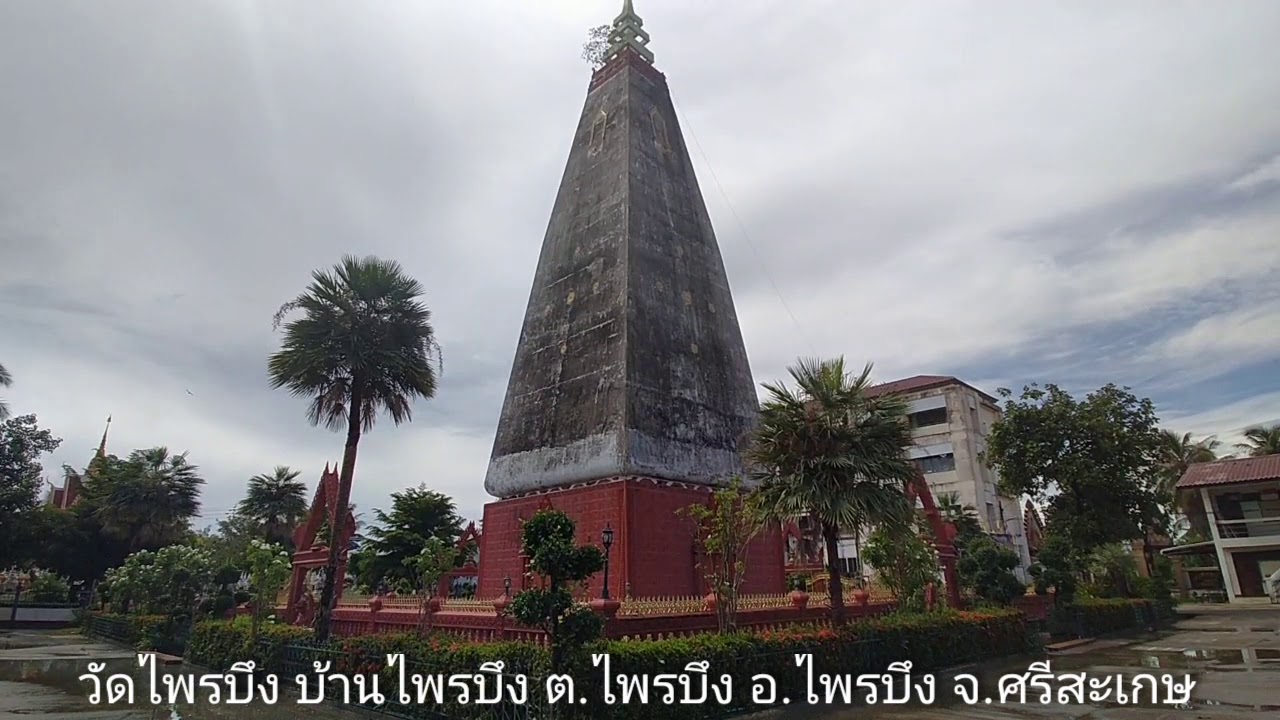
 Click to Access the Navigation Map GPS
Wat Ban Phrai Bueng Map

 Art, Culture and Heritage
 Historical Sites and Monuments(12)
 Landmarks and Memorials(1)
 Art, Craft Centres, Tradition(8)
Temple(13)
Art, Craft Centres, Tradition(8)
Temple(13)
 Other Sacred Sites(3)
 Suburban Living
 Village, Community(2)
 Nature and Wildlife
 National Parks and Marine Reserves(2)
 Dam, Reservoir, Lake(7)
 Waterfalls(5)
 River, Canal(5)
 Bays and Beaches(2)
 Entertainment and Agricultural
 Zoos and Aquariums(1)
 Farms, Parks and Ecotourism(3)


