
lovethailand home >Northeastern Travel Attractions >Si Sa Ket Travel Attractions >Khu Khan >Huai Nuea > Nong Sa-At
TL;DR: Nong Sa-At is located at Moo 12, Ban Sa-Ang, Huai Nuea Subdistrict, Khukhan District, Si Sa Ket Province, open Daily, hours 08.00 – 17.00.

Nong Sa-At
Open Days: Daily
Opening Hours: 08.00 – 17.00
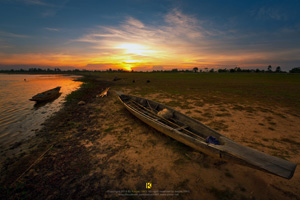
Nong Sa-At in Si Sa Ket Province is a large and long-established community pond located at Moo 12, Ban Sa-Ang, Huai Nuea Subdistrict, Khukhan District. It is a local water body with a close connection to village life, fishing, relaxation, and the natural landscape of the community. Unlike a large commercial attraction with heavy infrastructure, Nong Sa-At is quiet, simple, and deeply local. Its value comes from the way it remains part of daily life for Ban Sa-Ang residents, serving as a fishing area, a shaded resting place, and a natural open space within the village.
The main charm of Nong Sa-At lies in its identity as an old community pond. The surrounding atmosphere is calm and shady, making it suitable for slow walks, local photography, and quiet observation of rural life in southern Isan. Travelers who prefer peaceful places rather than crowded tourist sites will find Nong Sa-At meaningful in a subtle way. It is not an attraction built for spectacle. Instead, it represents water, livelihood, community memory, and the relationship between people and local natural resources.
Ban Sa-Ang is an important village in Huai Nuea Subdistrict and is also the location of the Huai Nuea Subdistrict Administrative Organization. This makes the area significant as a local administrative and community center. Nong Sa-At is therefore not an isolated pond. It is part of a broader village landscape that includes homes, temples, agricultural areas, local roads, and public institutions. A visit to Nong Sa-At gives travelers a clear sense of how water, settlement, religion, and rural livelihood exist together in Khukhan District.
The pond is known as one of the large and old water bodies of Huai Nuea Subdistrict. In rural communities, a pond like this is highly important because it stores water, provides fish, supports small-scale local use, and creates a cooler, greener landscape for the village. Although it is not a major reservoir or a fully developed public park, its community function is significant. Nong Sa-At shows how a simple water body can remain meaningful across generations.
The atmosphere around Nong Sa-At is best experienced slowly. Visitors can walk near the water, observe the local setting of Ban Sa-Ang, rest in shaded areas, or use the pond as a quiet stop before continuing to nearby cultural attractions in Khukhan District. These include Wat Sa-Ang, Wat Khian Burapharam, and Prasat Ta Leng. This makes Nong Sa-At suitable as part of a community and culture route rather than as a standalone attraction for a full-day program.
Nong Sa-At is suitable for travelers who appreciate calm local places. The waterside setting offers a relaxing visual atmosphere, with open sky, tree shade, reflections on the water, and village life nearby. Morning and late afternoon are the best times for photography because the light is softer and the temperature is more comfortable. At midday, the sunlight can be strong, and the area may feel hotter, especially in open sections near the water.
From a livelihood perspective, Nong Sa-At is an important fishing area for the community. This reflects a direct relationship between people and water. Local fishing is not only about food; it also connects with seasonal knowledge, water levels, fish behavior, traditional tools, and balanced resource use. The pond therefore tells a story of local economy and rural knowledge in a way that is simple but authentic.
Visitors should understand that Nong Sa-At is a community space, not a large tourist park. It should be used respectfully. Travelers should avoid making loud noise, leaving trash, disturbing fishing activity, or entering private areas around the village. If local residents are fishing, working, or using the area in their normal daily life, visitors should keep a respectful distance. The real attraction of Nong Sa-At is precisely that it is still a living local place.
The shade and open water of Nong Sa-At help create a pleasant environment for Ban Sa-Ang. A large pond works like a natural open space within the community. It reduces the visual harshness of built areas, adds humidity and coolness, and supports small forms of local biodiversity such as fish, birds, insects, and aquatic plants. Travelers interested in community-level nature can observe these details without needing to travel into a forest or mountain area.
Khukhan District has a strong historical and cultural background. It is associated with old communities, temples, archaeological sites, and southern Isan cultural identity. Nong Sa-At is located in Huai Nuea Subdistrict, where important nearby places include Wat Sa-Ang, Wat Khian Burapharam, and Ban Sa-Ang’s bamboo craft traditions. The pond adds an environmental and lifestyle dimension to this cultural route, giving travelers a more complete view of the area.
Wat Sa-Ang is one of the closest places to Nong Sa-At. It is a local Buddhist temple in Huai Nuea Subdistrict and plays an important role in community religious life. Visitors to Nong Sa-At can easily include Wat Sa-Ang in the same short trip. A visit to the temple helps connect the pond with the spiritual and social life of Ban Sa-Ang, showing how temples and water sources often stand close to the daily rhythm of rural Thai communities.
Wat Khian Burapharam is another important site nearby. It is one of the significant old temples of Khukhan, known for its historic ordination hall and the large Buddha image associated with the old town. Including Wat Khian Burapharam in the same itinerary gives the Nong Sa-At route greater cultural depth. Travelers can begin with the calm waterside atmosphere of the pond, then continue to a temple that reflects the long religious and historical identity of Khukhan.
Prasat Ta Leng, also known as Prasat Lumpuk, is a major archaeological attraction in Khukhan District. It is a small Khmer sanctuary built with sandstone and brick on a laterite base, with carved details that show the artistic heritage of the lower northeastern region. Combining Nong Sa-At with Prasat Ta Leng creates a balanced itinerary that includes nature, local community life, temples, and ancient Khmer heritage in one district.
Ban Sa-Ang also has a local craft identity connected with small bamboo water containers known as khru noi. This craft tradition reflects everyday rural knowledge and the use of natural materials such as bamboo. When viewed together with Nong Sa-At, the community becomes more meaningful: water, fish, bamboo, temple life, and local workmanship all form part of the same cultural landscape.
The best time to visit Nong Sa-At is in the morning or late afternoon. Morning offers cooler air and soft light, while late afternoon is good for resting by the water and watching reflections on the pond surface. Travelers who want photographs should avoid harsh midday light. The setting is most appealing when the sun is low and the atmosphere is quiet.
Getting to Nong Sa-At is straightforward. Travelers should first reach Khukhan District in Si Sa Ket Province, then continue into Huai Nuea Subdistrict and Ban Sa-Ang, Moo 12. The pond is located in a community area near the Huai Nuea Subdistrict Administrative Organization. It is best reached by private car or motorcycle, and it can be combined easily with nearby temples and local restaurants in Khukhan town.
Getting There from Si Sa Ket city is simple by road. Travel toward Khukhan District, then continue to Huai Nuea Subdistrict and Ban Sa-Ang, Moo 12. Nong Sa-At is located within the village area, near the local administrative center. A private vehicle is the most practical option because it allows travelers to continue to Wat Sa-Ang, Wat Khian Burapharam, and Prasat Ta Leng in the same trip.
Nong Sa-At works well as a half-day or short-stop destination. A visit focused only on the pond may take 30 minutes to 1 hour for walking, photography, and quiet rest. If combined with Wat Sa-Ang, Wat Khian Burapharam, and dining in Khukhan town, travelers should allow about 3–4 hours. This pace allows enough time to experience the pond as part of a real community rather than rushing through it as a quick photo stop.
For families, Nong Sa-At can be a simple place to introduce children to local nature and community water sources. Adults should keep children close near the water, as natural pond edges can be uneven, moist, or slippery. Even peaceful water areas require care. Families should choose safe spots for resting and avoid letting children run near the pond edge.
For photographers, Nong Sa-At offers community-style nature images rather than dramatic landmark shots. Good subjects include the water surface, trees around the pond, local paths, reflections, and everyday village activity. The value of the place is in its quietness and real-life details. It is best photographed with patience and respect for the people who live nearby.
Travelers looking for food and accommodation can use Khukhan town and nearby districts as the main service base. Khukhan has cafes, local restaurants, Isan food, family-style dining, and small resorts. Staying in or near Khukhan makes it easier to visit Nong Sa-At, Prasat Ta Leng, Wat Khian Burapharam, and other local attractions without long travel time.
Useful items for a visit include comfortable walking shoes, a hat or umbrella, drinking water, a camera, and a small bag for personal trash. During the rainy season, the ground near the pond may be damp, so footwear with good grip is useful. During the hot season, morning and late afternoon visits are more comfortable than midday visits.
Nong Sa-At is not a loud or heavily promoted destination, but that is part of its character. It is valuable because it remains a working community water source. Places like this show that travel is not limited to grand landmarks. A village pond can also reveal history, livelihood, ecology, food culture, and the quiet relationship between people and the natural environment.
In the broader context of Khukhan District, Nong Sa-At adds a natural and community-based layer to a cultural route. Khukhan is known for old temples, archaeological remains, local crafts, and historic settlement patterns. The pond brings water and everyday life into that picture. It helps visitors see not only monuments and buildings but also the environment that supports community life.
Visitors should use Nong Sa-At respectfully. Do not litter, do not disturb local fishing, do not enter private areas, and avoid loud activities that would disturb the village atmosphere. If photographing local residents, ask for permission first. Responsible behavior helps preserve the dignity of community attractions and keeps the area pleasant for both residents and visitors.
Overall, Nong Sa-At in Si Sa Ket is a meaningful community pond in Ban Sa-Ang, Huai Nuea Subdistrict, Khukhan District. It is a large and old water source, a fishing area, a quiet resting place, and a natural part of local life. Although simple, it offers an authentic view of rural Si Sa Ket and connects well with nearby temples, local craft heritage, and Khmer archaeological sites. For travelers who want to understand Khukhan beyond famous landmarks, Nong Sa-At is a calm and worthwhile stop.
| Name | Nong Sa-At, Si Sa Ket |
| Location | Moo 12, Ban Sa-Ang, Huai Nuea Subdistrict, Khukhan District, Si Sa Ket Province |
| Address | Ban Sa-Ang, Moo 12, Huai Nuea Subdistrict, Khukhan District, Si Sa Ket 33140, Thailand |
| Highlights | A large and old community pond in Huai Nuea Subdistrict, used as a local fishing area and a peaceful waterside place for rest, photography, and observing village life. |
| History | A long-established pond of Ban Sa-Ang and Huai Nuea Subdistrict, serving as a local water source, fishing area, and community resting space in Khukhan District. |
| Name Origin | The name Nong Sa-At is associated with the local pond and community recognition of this water source in Ban Sa-Ang. |
| Distinctive Features | Large community pond, shady surroundings, local fishing activity, quiet rural atmosphere, and a strong connection with the everyday life of Ban Sa-Ang. |
| Travel Information | From Si Sa Ket city, travel toward Khukhan District, then continue into Huai Nuea Subdistrict and Ban Sa-Ang, Moo 12. The pond is located within the village area near the Huai Nuea Subdistrict Administrative Organization. |
| Current Status | Open as a community-based natural attraction and local resting area in Ban Sa-Ang, Huai Nuea Subdistrict, Khukhan District. |
| Open Days | Daily |
| Opening Hours | 08.00 – 17.00 |
| Facilities | Waterside resting areas, local village roads, natural shaded areas, and basic community services around Ban Sa-Ang and Huai Nuea Subdistrict. |
| Main Areas / Zones | Waterside Resting Zone Main Pond Area Community Fishing Area Shaded Tree Zone Around The Pond Village Path And Access Route Zone Connection Zone To Ban Sa-Ang And Huai Nuea Subdistrict Administrative Organization |
| Caretaker | Huai Nuea Subdistrict Administrative Organization and Ban Sa-Ang Community, Moo 12. |
| Main Contact Number | Huai Nuea Subdistrict Administrative Organization Tel. 045-969-849 |
| Official Website / Official Page | Huai Nuea Subdistrict Administrative Organization |
| Nearby Tourist Attractions | 1. Wat Sa-Ang, Ban Sa-Ang, Huai Nuea Subdistrict, about 1 km 2. Ban Sa-Ang Khru Noi Bamboo Craft Area, about 1 km 3. Wat Khian Burapharam, Ban Phran, Huai Nuea Subdistrict, about 5 km 4. Khukhan City Pillar Shrine, about 6 km 5. Prasat Ta Leng, also known as Prasat Lumpuk, about 20 km 6. Wat Pa Maha Chedi Kaew, also known as the Million Bottle Temple, about 35 km |
| Nearby Restaurants | 1. El Fante Cafe Khukhan, about 4 km, Tel. 094-557-0578, 094-268-9666 2. Loft House Café Khukhan, about 5 km, Tel. 086-364-9492 3. Ran Lao @Khukhan, about 5 km, Tel. 082-515-1626 4. Yuka at Khukhan, about 6 km, Tel. 094-681-3075 5. Amarin Restaurant, about 7 km, Tel. 045-630-372 6. Ruean Kaew Pla Chum Pla Phao Ban Ta Ut, about 14 km, Tel. 063-585-9589 |
| Nearby Accommodations | 1. Cheyenne Resort, Huai Nuea Subdistrict, Khukhan District, about 4 km, Tel. 085-024-4829 2. Tang Jai Resort, Huai Tai Subdistrict, Khukhan District, about 8 km, Tel. 089-628-9205 3. Sawatdee Resort, Khukhan District, about 12 km, Tel. 086-450-1840 4. Rana Resort, Dong Kam Met Subdistrict, Khukhan District, about 16 km, Tel. 083-798-7353 5. Pongsin Resort & Restaurant, Khun Han District, about 38 km, Tel. 088-375-5199 6. Kradang Nga Boutique Inn, Khun Han District, about 40 km, Tel. 081-321-4163 |
Frequently Asked Questions (FAQ)
Q: Where is Nong Sa-At in Si Sa Ket located?
A: Nong Sa-At is located at Moo 12, Ban Sa-Ang, Huai Nuea Subdistrict, Khukhan District, Si Sa Ket Province. It is a large and old community pond of the area.
Q: What days and hours is Nong Sa-At open?
A: Nong Sa-At is open daily from 08.00 to 17.00.
Q: What is special about Nong Sa-At?
A: It is a long-established community pond with a shady atmosphere, local fishing activity, and a strong connection with the everyday life of Ban Sa-Ang residents.
Q: Who is Nong Sa-At suitable for?
A: It is suitable for travelers who enjoy quiet community-based places, local nature, photography, and simple rural scenery in Khukhan District.
Q: How do travelers get to Nong Sa-At?
A: From Si Sa Ket city, travel to Khukhan District, then continue to Huai Nuea Subdistrict and Ban Sa-Ang, Moo 12. The pond is located within the village area near the local administrative office.
Q: Is there an admission fee for Nong Sa-At?
A: Nong Sa-At is a community pond and local natural resting area. No confirmed admission fee is listed in the verified local information sources.
Q: What nearby places can be visited with Nong Sa-At?
A: Nearby places include Wat Sa-Ang, Wat Khian Burapharam, Ban Sa-Ang Khru Noi bamboo craft area, Khukhan City Pillar Shrine, Prasat Ta Leng, and Wat Pa Maha Chedi Kaew.
Q: What is the best time of day to visit Nong Sa-At?
A: Morning and late afternoon are the best times because the air is cooler, the light is softer, and the pond atmosphere is more pleasant for walking and photography.
 Category: ●Nature and Wildlife
 Group: ●River, Canal
Last Update : 2 MonthAgo
 Last Update : 2 MonthAgo
 Art, Culture and Heritage
 Historical Sites and Monuments(12)
 Landmarks and Memorials(1)
 Art, Craft Centres, Tradition(8)
 Places of Worship
 Temple(13)
 Other Sacred Sites(3)
 Suburban Living
 Village, Community(2)
 National Parks and Marine Reserves(2)
 Dam, Reservoir, Lake(7)
 Waterfalls(5)
River, Canal(5)
Waterfalls(5)
River, Canal(5)
 Bays and Beaches(2)
 Entertainment and Agricultural
 Zoos and Aquariums(1)
 Farms, Parks and Ecotourism(3)
 Travel Articles, Recipes
 Travel Review, Food Review(1)


