
lovethailand home >Northeastern Travel Attractions >Si Sa Ket Travel Attractions >Khu Khan >Prue Yai > Wat Tham Sa Phong
TL;DR: Wat Tham Sa Phong is located at Ban Na Cha Ria, Moo 13, Thap Thim Siam 06 Project Area, Prue Yai Subdistrict, Khukhan District, Si Sa Ket Province 33140, Thailand, open Daily, hours 08.00 - 17.00.
Wat Tham Sa Phong
Open Days: Daily
Opening Hours: 08.00 - 17.00
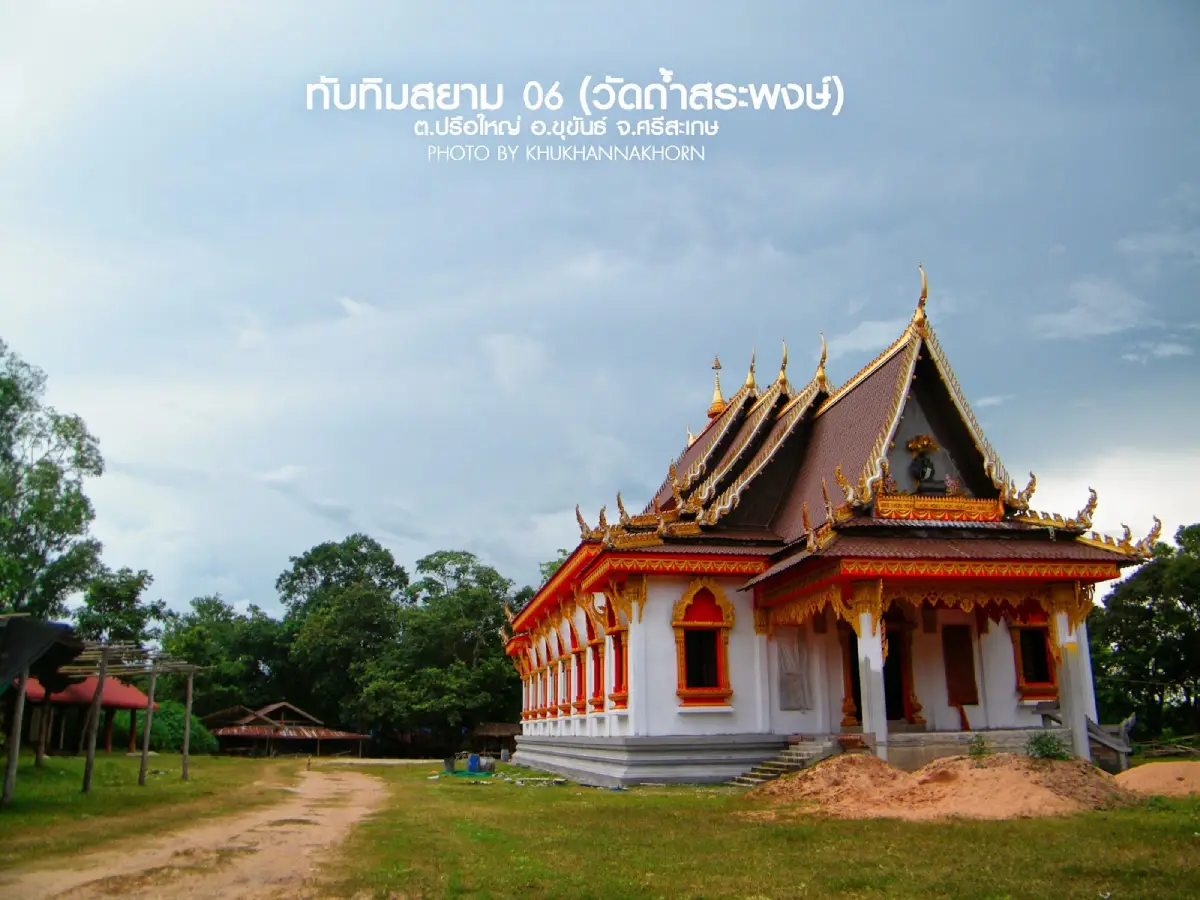
Wat Tham Sa Phong, Si Sa Ket is an important Buddhist temple in Ban Na Cha Ria, Moo 13, within the Thap Thim Siam 06 community project in Prue Yai Subdistrict, Khukhan District, Si Sa Ket Province. The temple is located in a natural mountain-edge landscape near the Phanom Dong Rak range in the southern part of Khukhan. It is known for its peaceful religious atmosphere, rock formations, cave, waterfall, forested surroundings, and strong connection with the local community. Visitors come here to pay respect, make merit, walk through a quiet natural setting, and experience a temple that blends Buddhism with the landscape of a borderland village.
Unlike many city temples, Wat Tham Sa Phong is shaped by its natural terrain. The temple is built along rocky slopes and cliff-like formations, giving the site a distinctive mountain-temple character. Within the temple grounds, visitors will find worship areas, walking paths, a cave zone, a waterfall area, and forested surroundings. The sound of water in the rainy season, the shade of trees, and the quietness of the rock formations create a deeply calm atmosphere. For this reason, the temple feels suitable not only for ordinary merit-making but also for reflection, meditation, and slow cultural travel.
The temple stands inside Ban Na Cha Ria, part of the Thap Thim Siam 06 project area. This community is located near the Thai-Cambodian border and has a history connected with rural development, land settlement, environmental care, and community livelihood support. The Thap Thim Siam 06 area is not only a village. It is a landscape where community life, conservation, agriculture, wildlife work, and tourism are connected. Wat Tham Sa Phong functions as the spiritual anchor of this setting, linking the village with Buddhist faith and the natural world around it.
The name “Tham Sa Phong” reflects the two strongest features of the place: cave and water. “Tham” means cave, suggesting a quiet space within the rock, often associated in Buddhist culture with retreat, reflection, and meditation. “Sa Phong” evokes a water-related natural feature, matching the temple’s waterfall and moist, shaded landscape. The name therefore fits the place clearly. Visitors experience a temple where natural cave, water, rock, and Buddhist devotion exist together.
Wat Tham Sa Phong was developed through the faith of Buddhists in Thap Thim Siam 06, Ban Na Cha Ria, Prue Yai Subdistrict, and surrounding communities. The temple’s structures were built in relation to the natural cliff and slope, rather than completely separate from the landscape. This gives the temple a strong sense of place. The religious buildings, Buddha images, rock walls, cave, and waterfall are part of one environment, making the visit feel like a journey through both sacred space and nature.
The temple can be understood in two main sections separated by the Wat Tham Sa Phong waterfall. One section is the religious area, where visitors can pay respect, make merit, and join temple activities. The other section is the natural area, including the cave, waterfall, rocks, and walking paths. This structure gives the temple a balanced identity: it is both a working local temple and a natural attraction. Visitors can begin with worship and continue to the cave and waterfall without leaving the temple grounds.
The waterfall is one of the temple’s most memorable features, especially during the rainy season. Water flows across rock surfaces and through the natural slope of the temple area, creating a cool and refreshing atmosphere. This is not a large commercial waterfall, but its value lies in its setting inside a Buddhist temple and community landscape. The combination of water, rock, trees, and sacred space gives the place a simple, peaceful beauty. The rainy season and early cool season are the best times to see the waterfall at its liveliest.
The cave area adds another layer of meaning. In Buddhist tradition, caves are often associated with seclusion, silence, and contemplation. At Wat Tham Sa Phong, the cave creates a sheltered and quiet atmosphere within the mountain landscape. Entering the cave area gives visitors a different feeling from the open temple courtyard. The air is cooler, the sound is softer, and the rock walls create a sense of stillness. This makes the cave an important part of the temple’s spiritual character.
A large Buddha image inside the temple is a major focus of devotion. Set against the surrounding mountain and forest landscape, the image gives visitors a strong impression of stability and faith. Many visitors pay respect here before exploring other parts of the temple. The large Buddha image also gives the temple a clear visual identity and serves as a spiritual landmark for Ban Na Cha Ria and Thap Thim Siam 06 community.
Wat Tham Sa Phong is a local Buddhist temple under the Dhammayut order. It was formally established as a temple on 15 August 2008 and received its Wisungkham Sima on 11 February 2009. This status gives the temple a formal role within the Sangha while allowing it to remain strongly rooted in its local mountain community. The temple is therefore not merely a scenic site. It is an active religious place where monks, villagers, and visitors continue to take part in Buddhist practice and community life.
The current abbot identified in recent official activity information is Phra Khru Baidika Kaew. He oversees Wat Tham Sa Phong together with resident monks and the Ban Na Cha Ria community. Maintaining a temple in a cave-and-waterfall landscape requires attention not only to religious activities but also to paths, safety, cleanliness, natural areas, and visitor conduct. The temple also participates in local community and public-service activities with Prue Yai Subdistrict agencies and nearby local institutions.
For the people of Ban Na Cha Ria and Thap Thim Siam 06, Wat Tham Sa Phong is a place of faith and community gathering. Villagers come to make merit, join Buddhist holy-day activities, listen to Dhamma, and take part in local ceremonies. In remote or semi-rural communities, a temple often serves more than a ceremonial role. It is a meeting place, a moral center, a learning space for young people, and a quiet place for elders. Wat Tham Sa Phong continues to serve this role while also welcoming visitors from outside the community.
As a travel destination, Wat Tham Sa Phong is part of the wider Prue Yai and Thap Thim Siam 06 tourism route. Nearby attractions include Na Cha Ria Reservoir, Thap Thim Siam 06 Reservoir, Na Cha Ria Orchid Station, Chulabhorn Wildlife Breeding Station, Pha Prasop Chai or Pha Chaluy, Pha Morakot, and local community routes in Ban Na Cha Ria. This makes the temple suitable for a half-day or full-day trip. Visitors can begin with worship at the temple, explore the cave and waterfall, then continue to nearby natural and conservation sites.
Chulabhorn Wildlife Breeding Station is one of the important nearby learning sites. It forms part of the Thap Thim Siam 06 area and is connected with wildlife breeding, conservation, and ecological education. Visiting the station together with Wat Tham Sa Phong helps travelers understand that this area is not only a temple-and-waterfall route. It is also a conservation landscape where community development and nature protection are closely connected.
Na Cha Ria Reservoir and Thap Thim Siam 06 Reservoir show the importance of water to the community. These water bodies support local life and provide peaceful scenery near the village. They also help explain why water, forest, agriculture, and settlement are closely connected in this borderland region. When combined with Wat Tham Sa Phong, the reservoir area gives visitors a broader view of how local communities live with natural resources.
Pha Morakot and Pha Prasop Chai are natural viewpoints in the wider Prue Yai tourism route. They offer views of mountain, forest, and borderland terrain when weather conditions are clear. These sites are suitable for nature lovers and photographers, but visitors should check local route conditions before traveling, especially during the rainy season. Some natural routes require caution and local guidance.
Getting There is most convenient by private car or hired local transport. From Khukhan town, travel south toward Prue Yai Subdistrict and Ban Na Cha Ria in the Thap Thim Siam 06 project area, about 25 kilometers from Khukhan. From Si Sa Ket city, the distance is approximately 70 to 75 kilometers depending on the road route. Because the temple is located deeper inside a rural mountain-edge community, travelers should allow enough time, check vehicle condition, and drive carefully on community roads.
Travelers starting from Khukhan town can use the route toward Prue Yai and continue into Ban Na Cha Ria. Inside Thap Thim Siam 06, local roads connect the temple with the reservoir, wildlife breeding station, orchid station, and natural viewpoints. Navigation apps are useful, but visitors should also ask local residents when necessary because several roads branch into village and nature routes.
The best time to visit is in the morning or late afternoon before closing. Morning is cooler and suitable for worship, cave exploration, and walking through the temple grounds. Afternoon light highlights the rock formations and natural features, but visitors should avoid slippery rock areas during heavy rain. Comfortable walking shoes are recommended, especially for those who want to explore the cave and waterfall area.
Visitor etiquette is important because Wat Tham Sa Phong is both a temple and a natural site. Visitors should dress modestly, keep quiet in worship areas, avoid climbing on Buddha images or religious structures, avoid littering, avoid writing on rocks, avoid damaging plants, and avoid entering unsafe water or cave areas. Staying on existing walking paths helps protect both visitors and the natural environment.
There is no fixed commercial admission-ticket fee for Wat Tham Sa Phong. Visitors may enter during opening hours to pay respect, make merit, and explore public areas of the temple. Donations, flowers, garlands, candles, and other merit-making offerings are voluntary according to personal faith. This keeps the temple accessible to villagers, pilgrims, Thai travelers, and international visitors.
For photography, the temple offers many atmospheric points: the large Buddha image, rock formations, cave area, waterfall, walking paths, and forested background. The rainy season is especially good for waterfall scenery and greenery. Photography should be done respectfully. Visitors should avoid disturbing worshippers, avoid unsafe positions near wet rocks, and avoid using drones without permission.
For cultural learning, Wat Tham Sa Phong is a strong example of how Buddhism and nature interact in Lower Isan. The temple is located in a royal-initiative community development landscape, shaped by mountain terrain, cave, waterfall, forest, and village life. Visitors can see how a community builds and maintains a place of worship in close relationship with the environment. The temple’s value lies not only in its scenery but in the way faith, landscape, and community life are connected.
For international travelers, Wat Tham Sa Phong provides a clear picture of a rural Thai Buddhist temple in a borderland setting. It combines religious devotion, local community life, mountain nature, cave, waterfall, and nearby conservation routes. The temple shows that Thai temples are not only buildings for worship. They can also be landscapes where people, nature, memory, and spiritual practice meet in daily life.
Wat Tham Sa Phong is therefore an essential place for travelers who want to see Khukhan and Si Sa Ket beyond the usual city route. It offers a peaceful temple atmosphere, a natural cave, a waterfall, mountain scenery, and the living story of Ban Na Cha Ria and Thap Thim Siam 06. A visit here is a journey into a place where Buddhism, nature, and borderland community life come together with distinctive Lower Isan character.
| Place Name | Wat Tham Sa Phong, Si Sa Ket |
| Related Names | Wat Tham Sa Phong Ban Na Cha Ria, Wat Tham Sa Phong Thap Thim Siam 06, Wat Tham Sa Phong Waterfall |
| Place Type | Local Buddhist Temple, Dhammayut Monastery, Faith-Based Natural Attraction, Cave Temple, Waterfall Site, And Community Learning Destination In Thap Thim Siam 06 |
| Location | Ban Na Cha Ria, Moo 13, Thap Thim Siam 06 Project Area, Prue Yai Subdistrict, Khukhan District, Si Sa Ket Province 33140, Thailand |
| Coordinates | 14.54525, 104.26170 |
| Distance From Key Points | About 25 km from Khukhan town and about 70 - 75 km from Si Sa Ket city by road |
| Significance | A temple of Ban Na Cha Ria and Thap Thim Siam 06 community, serving as a spiritual center and a nature-based destination with cave, waterfall, rock formations, forest, and mountain-edge scenery |
| Historical Summary | The temple was developed through the faith of Buddhists in Thap Thim Siam 06 and Prue Yai Subdistrict. It was built in relation to the natural cliff and cave landscape, becoming a sacred place that combines Buddhist worship with waterfall and cave scenery. |
| Temple Establishment | Established on 15 August 2008 and granted Wisungkham Sima on 11 February 2009 |
| Main Highlights | Large Buddha image, temple worship area, Tham Sa Phong cave, Wat Tham Sa Phong waterfall, rock formations, walking paths, forest surroundings, and peaceful mountain scenery |
| Abbot / Caretaker | Phra Khru Baidika Kaew, Abbot Of Wat Tham Sa Phong, together with resident monks, Ban Na Cha Ria community, Prue Yai Subdistrict Administrative Organization, and related local agencies |
| Current Status | Active Buddhist temple and faith-based natural attraction where visitors can pay respect, make merit, see the cave and waterfall, and walk through the temple’s natural areas during opening hours |
| Open Days | Daily |
| Opening Hours | 08.00 - 17.00 |
| Admission Fee | Free Admission. Donations, flowers, garlands, candles, and merit-making offerings are voluntary according to personal faith. |
| Main Areas / Zones | 1. Large Buddha Image Zone 2. Temple Worship And Courtyard Zone 3. Tham Sa Phong Cave Zone 4. Wat Tham Sa Phong Waterfall Zone 5. Rock Formation And Nature Zone 6. Walking Path Zone 7. Merit-Making And Community Activity Zone 8. Ban Na Cha Ria And Mountain View Zone |
| Facilities | Temple courtyard, worship area, walking paths, nature viewpoints, parking in areas arranged by the temple or community, and nearby community services in Thap Thim Siam 06 |
| Related Contact | Wat Tham Sa Phong, Tel. 085-762-9786 Prue Yai Subdistrict Administrative Organization, Tel. 045-826607 Chulabhorn Wildlife Breeding Station, Tel. 045-311677 Khukhan District Community Development Office, Tel. 045-671735 |
| Travel Information | From Khukhan town, travel south to Prue Yai Subdistrict and Ban Na Cha Ria in the Thap Thim Siam 06 area, about 25 km. From Si Sa Ket city, travel to Khukhan and continue to Ban Na Cha Ria, about 70 - 75 km by road. Private car or hired local transport is the most convenient option. |
| Visitor Etiquette | Dress modestly, keep quiet in worship areas, do not climb on Buddha images or religious structures, do not litter in the temple, cave, or waterfall area, do not write on rocks, protect plants and natural features, and be careful near wet rocks during the rainy season |
| Nearby Tourist Attractions | 1. Wat Tham Sa Phong Waterfall Inside The Temple, about 0 km 2. Tham Sa Phong Cave Inside The Temple, about 0 km 3. Ban Na Cha Ria / Thap Thim Siam 06 Village, about 1 km 4. Na Cha Ria Reservoir / Thap Thim Siam 06 Reservoir, about 4 km 5. Na Cha Ria Orchid Station, about 5 km 6. Chulabhorn Wildlife Breeding Station, about 6 km, Tel. 045-311677 7. Pha Prasop Chai / Pha Chaluy, about 8 km 8. Pha Morakot, about 10 km 9. Khukhan City Pillar Shrine, about 26 km |
| Nearby Restaurants | 1. Loft House Café Khukhan, about 26 km, Tel. 086-364-9492 2. El Fante Cafe / Zab Nua Khukhan, about 27 km, Tel. 094-557-0578, 094-268-9666 3. Jeab Taban Tam Khukhan, about 27 km, Tel. 061-034-9564 4. Ran Lao @Khukhan, about 28 km, Tel. 082-515-1626 5. Nakhonchai Air Khukhan, about 26 km, Tel. 085-912-4999 |
| Nearby Accommodations | 1. Thap Thim Siam 06 Homestay, about 1 km, community / village head contact Tel. 080-834-6229 2. Cheyenne Resort Khukhan, about 27 km, Tel. 085-024-4829, 045-966-585 3. Bansuansrisuparb Hotel, about 29 km, Tel. 087-245-9125, 080-240-7090 4. Rana Resort Khukhan, about 30 km, Tel. 083-798-7353 5. Sawasdee Resort Khukhan, about 32 km, Tel. 086-450-1840 |
Frequently Asked Questions (FAQ)
Q: Where is Wat Tham Sa Phong located?
A: Wat Tham Sa Phong is located in Ban Na Cha Ria, Moo 13, Thap Thim Siam 06 Project Area, Prue Yai Subdistrict, Khukhan District, Si Sa Ket Province, in the natural mountain-edge landscape of southern Khukhan.
Q: What are the opening days and hours?
A: Wat Tham Sa Phong is open daily from 08.00 to 17.00. Visitors can pay respect, make merit, see the cave, walk to the waterfall area, and enjoy the natural surroundings during these hours.
Q: Is there an admission fee?
A: There is no fixed tourist admission fee. Donations, flowers, garlands, candles, and merit-making offerings are voluntary according to personal faith.
Q: What are the main highlights of Wat Tham Sa Phong?
A: The main highlights are the large Buddha image, temple worship area, Tham Sa Phong cave, Wat Tham Sa Phong waterfall, rock formations, forest scenery, and peaceful mountain atmosphere.
Q: Who is the current abbot of Wat Tham Sa Phong?
A: The current abbot is Phra Khru Baidika Kaew, who oversees the temple together with resident monks, Ban Na Cha Ria community, and related local agencies in Prue Yai Subdistrict.
Q: When is the best time to visit?
A: The temple can be visited all year, but the rainy season to early cool season is best for seeing the waterfall and green forest scenery. Visitors focused on worship and temple atmosphere can visit in any season.
Q: How can visitors get to Wat Tham Sa Phong?
A: From Khukhan town, travel south to Prue Yai Subdistrict and Ban Na Cha Ria in the Thap Thim Siam 06 area, about 25 km. Private car or hired local transport is the most convenient option because the temple is located in a rural mountain-edge community.
Q: What nearby places can be visited on the same trip?
A: Nearby places include Na Cha Ria Reservoir, Na Cha Ria Orchid Station, Chulabhorn Wildlife Breeding Station, Pha Prasop Chai, Pha Morakot, and the Thap Thim Siam 06 community route.
 Category: ●Places of Worship
 Group: ●Temple
Last Update : 2 MonthAgo
 Last Update : 2 MonthAgo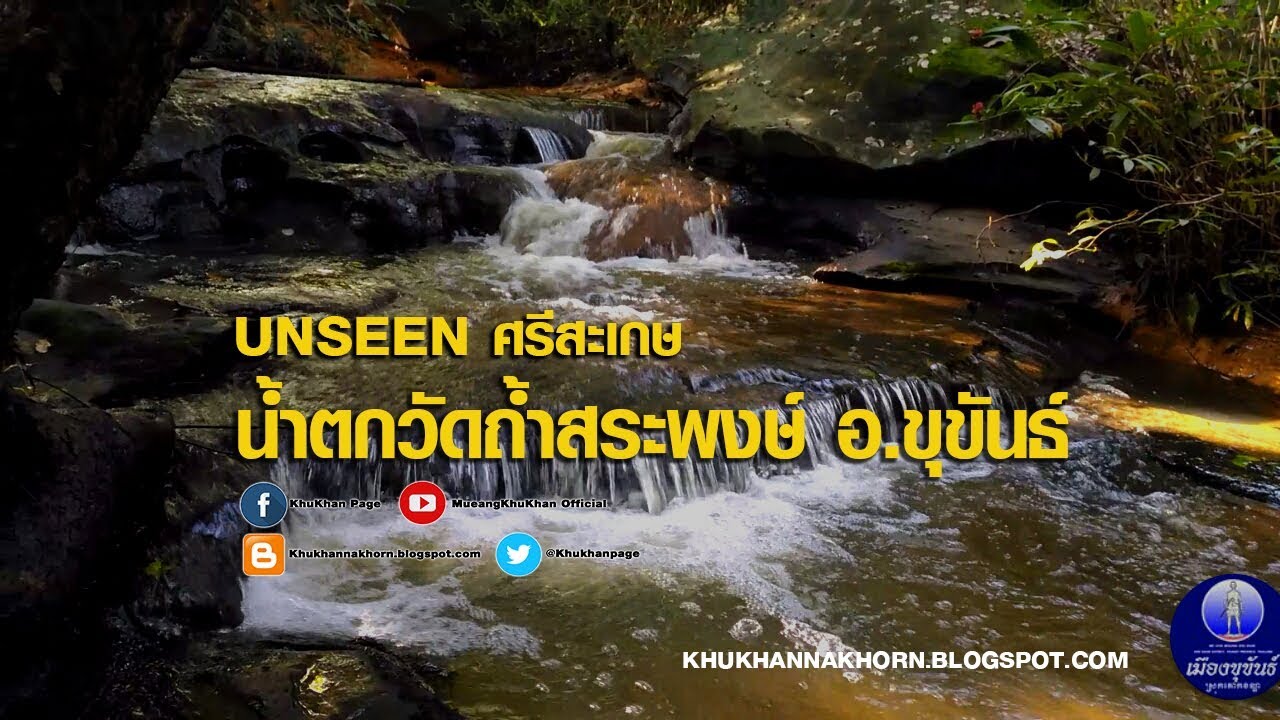
 Click to Access the Navigation Map GPS
 Art, Culture and Heritage
 Historical Sites and Monuments(12)
 Landmarks and Memorials(1)
 Art, Craft Centres, Tradition(8)
Temple(13)
Art, Craft Centres, Tradition(8)
Temple(13)
 Other Sacred Sites(3)
 Suburban Living
 Village, Community(2)
 Nature and Wildlife
 National Parks and Marine Reserves(2)
 Dam, Reservoir, Lake(7)
 Waterfalls(5)
 River, Canal(5)
 Bays and Beaches(2)
 Entertainment and Agricultural
 Zoos and Aquariums(1)
 Farms, Parks and Ecotourism(3)


