
lovethailand home >Northeastern Travel Attractions >Si Sa Ket Travel Attractions >Kan Thora Rak >Sao Thong Chai > Huai Khanun Reservoir
TL;DR: Huai Khanun Reservoir is located at Ban Dan Tai, Moo 2, Phu Pha Mok Subdistrict, Kantharalak District, Si Sa Ket Province, within Khao Phra Wihan National Park, open Seasonal Opening From 1 November – 30 April, hours 08.00 – 17.00.

Huai Khanun Reservoir
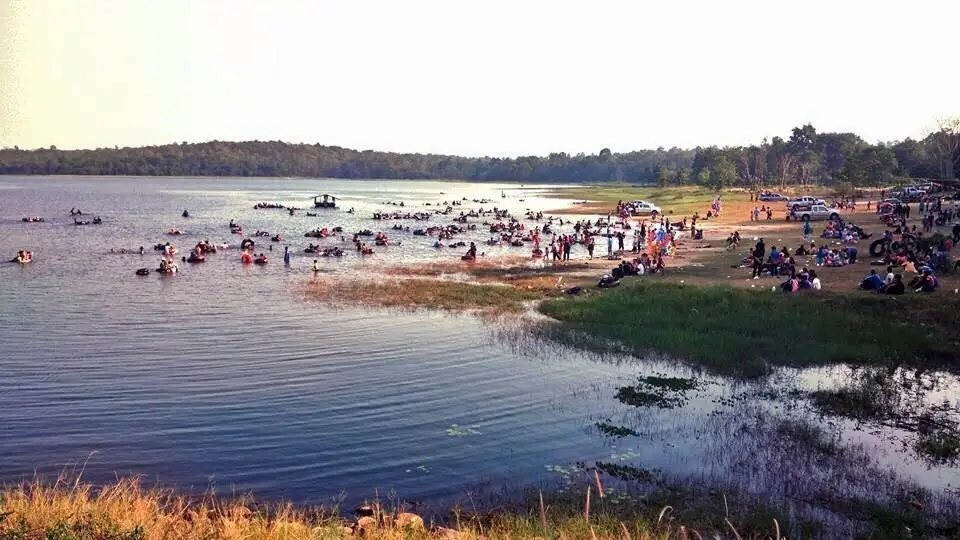
Open Days: Seasonal Opening From 1 November – 30 April
Opening Hours: 08.00 – 17.00
Huai Khanun Reservoir in Si Sa Ket, also known locally as Huai Khanun Dam, is an important nature-based attraction in Phu Pha Mok Subdistrict, Kantharalak District, Si Sa Ket Province. Located around Ban Dan Tai, Moo 2, within Khao Phra Wihan National Park, the reservoir offers a quiet landscape of water, forest, sandstone rock platforms, and surrounding mountain ridges. It has a normal storage capacity of approximately 10.02 million cubic meters and serves both as an irrigation reservoir and a seasonal nature destination. For foreign travelers who want to experience a peaceful side of Si Sa Ket beyond the main temple and viewpoint routes, Huai Khanun Reservoir is a rewarding place to include in a Kantharalak travel plan.
The reservoir is set in a distinctive landscape because it lies inside the forested area of Khao Phra Wihan National Park, close to the Phanom Dong Rak mountain range along the Thai–Cambodian border. Unlike many lowland reservoirs, Huai Khanun Reservoir is surrounded by forest, hills, rocky ground, and natural open views. The scenery combines water, trees, sandstone surfaces, and mountain contours, creating a calm and spacious atmosphere. This makes the reservoir suitable for travelers who prefer quiet natural places rather than commercial tourist sites.
Tourism access to Huai Khanun Reservoir follows a seasonal opening schedule. The reservoir is open to visitors from 1 November to 30 April and closes annually from 1 May to 31 October. This seasonal pattern allows the national park to manage nature recovery, safety, access conditions, and visitor control. The open season is the best period for travel because the weather is cooler, the landscape is easier to enjoy, and the park’s tourism areas are managed for visitor access. For trip planning, this seasonal schedule is the most important point to understand before arranging transportation, food stops, and accommodation.
Although Huai Khanun Reservoir is often described locally as a small reservoir, irrigation data identifies it as a significant water-storage facility with a normal storage capacity of about 10.02 million cubic meters and a maximum storage capacity of about 14.80 million cubic meters. Its role is therefore broader than sightseeing. It supports water management, local irrigation, natural ecosystems, and park-area conservation. Visitors who understand this function will see the reservoir not only as a scenic viewpoint, but also as part of the water and forest landscape that shapes life in this part of Si Sa Ket.
The beauty of Huai Khanun Reservoir comes from the balance of several natural elements. The open water forms the central view, the mountains create the background, the forest frames the landscape, and the sandstone rock platforms add a strong local character. In northeastern Thailand, the term “phlan hin” generally refers to a broad natural rock platform or rocky ground surface. These stone areas are common in parts of the lower Isan landscape and often appear near dry dipterocarp forest, mountain edges, and natural streams. At Huai Khanun Reservoir, the rock platforms help make the scenery more distinctive and visually memorable.
The stone platforms around the reservoir are among the features that give the area its identity. Local descriptions refer to these rocky formations as old natural features that have long been part of the Ban Dan Tai landscape. When visitors walk carefully through safe areas, they can see how the rock, water, forest, and mountains work together to create a landscape that feels rugged but peaceful. The stone platforms also provide attractive perspectives for nature photography, especially when contrasted with green forest and the surface of the reservoir.
The atmosphere at Huai Khanun Reservoir is best suited to slow nature travel. This is not a place designed around entertainment or heavy commercial activity. Its value lies in silence, open space, fresh air, and the sense of being inside a real protected landscape. Visitors can spend time enjoying the view, photographing the reservoir, listening to the wind, observing forest edges, or simply resting in a quiet setting. The experience is different from the more famous viewpoints of Khao Phra Wihan National Park because the reservoir adds the dimension of water and irrigation to the mountain-forest environment.
Morning is one of the most pleasant times to visit. The light is soft, the air is fresh, and the water surface often looks calm. Late afternoon is also attractive because the light becomes warmer and the water reflects the sky more clearly. Around midday, sunlight can be stronger, especially in open areas near the water and rock surfaces. Travelers who enjoy photography should allow enough time to explore the safe viewpoints and wait for good light. The best images usually combine water, forest, rock, and mountain lines in one frame.
Because the reservoir is inside Khao Phra Wihan National Park, all travel activity is connected to park management. This includes seasonal opening and closure, safety measures, access routes, conservation rules, and visitor behavior. Huai Khanun Reservoir should therefore be treated as a protected natural area, not as a general swimming or picnic site. The most suitable activities are sightseeing, nature photography, quiet relaxation, and responsible observation of the surrounding landscape.
Huai Khanun Reservoir also functions as the location of a national park protection unit. This gives the area an additional role in forest protection, patrol operations, natural-resource monitoring, and seasonal visitor support. The reservoir’s importance is therefore tied to conservation management as well as tourism. For foreign travelers interested in Thailand’s national parks, this makes the site a useful example of how water resources, protected forests, and border landscapes are managed together.
For nature lovers, the reservoir clearly shows the diversity of the Khao Phra Wihan landscape. Within the same area, visitors encounter water, forest, rock platforms, and mountains. After the rainy season and during the early part of the tourism season, the surrounding vegetation can appear greener and more vibrant. The combination of water and forest gives the place a restful character. This is one of the reasons Huai Khanun Reservoir is considered an important attraction of Phu Pha Mok Subdistrict.
The reservoir is especially suitable for travelers who want a quiet pause during a broader trip through Kantharalak District. Instead of rushing from one landmark to another, visitors can use the reservoir as a place to slow down and experience the atmosphere of the national park. The sound of wind, the stillness of the water, and the surrounding mountain landscape create a calmer experience than many more crowded tourist stops. This type of slow visit helps travelers notice details such as rock textures, forest edges, light on the water, and the scale of the mountain scenery.
For photography, Huai Khanun Reservoir offers natural compositions rather than staged scenes. Good subjects include the water surface, distant hills, trees reflected in the reservoir, sandstone platforms, park access routes, and the open sky above the forest. The place does not require complicated photography techniques, but it rewards careful observation. Visitors should remain on safe ground, avoid slippery rocks after rain, and avoid stepping too close to steep banks or deep-water areas.
The reservoir is strongly connected to Phu Pha Mok Subdistrict and Ban Dan Tai, a local community in Kantharalak District close to the border zone. The name Phu Pha Mok itself reflects a mountainous atmosphere, and in some seasons the surrounding landscape carries a misty, forested character. Huai Khanun Reservoir fits naturally into this setting. It represents the relationship between water, forest, mountain terrain, and local community life in the lower northeastern region of Thailand.
Huai Khanun Reservoir can also be connected with other attractions in Khao Phra Wihan National Park. Nearby sites include Tat Hai Waterfall, Sa Trao or Huai Trao, Pha Mo E Daeng, the low-relief carvings below Pha Mo E Daeng, the Twin Stupas, and Don Tuan Khmer Ruins. Together, these places show the diversity of the area: water, waterfalls, forest, ancient sandstone landscapes, historical traces, and border viewpoints. The reservoir adds a quiet water-based experience to a route that is often known mainly for cliffs and historical remains.
Pha Mo E Daeng is one of the most famous attractions in the Khao Phra Wihan area. It is known for its wide views across forest and border terrain, as well as nearby ancient features such as low-relief carvings and the Twin Stupas. Visiting Huai Khanun Reservoir as part of the same route gives travelers a more balanced understanding of the national park. The viewpoint shows the open mountain landscape, while the reservoir shows how water and forest form another important part of the park environment.
Sa Trao, also known as Huai Trao, represents another type of water landscape inside the park. It is associated with natural streams and sandstone ground near the foothills of Khao Phra Wihan. When compared with Huai Khanun Reservoir, it shows how different water features can exist within the same protected area. The reservoir is a managed water-storage site, while Sa Trao reflects a more natural stream-and-rock landscape. Travelers interested in geography and natural scenery will find this contrast meaningful.
Tat Hai Waterfall is another natural attraction in the area and is suitable for travelers who enjoy waterfalls and forest scenery. Seasonal access is important for all attractions in the national park, as different sites may have different opening and closing periods. Huai Khanun Reservoir itself follows the 1 November to 30 April open season, while other waterfall or viewpoint areas should be considered within the park’s active seasonal management. This helps visitors travel at the right time and enjoy the sites under appropriate conditions.
The entrance fee for visiting Huai Khanun Reservoir follows the fee system of Khao Phra Wihan National Park. The park is classified under the national park fee group in which Thai adults pay 40 baht and Thai children pay 20 baht, while foreign adults pay 200 baht and foreign children pay 100 baht. Vehicle fees are charged according to national park regulations. These fees support park management, visitor services, conservation work, and the protection of natural resources.
Facilities around Huai Khanun Reservoir are basic and nature-oriented. The area is not a commercial town center, so visitors should plan drinking water, food, transport, and timing in advance. The most practical restaurants, cafés, and accommodations are found in Kantharalak District and along the route back toward town. Travelers who prepare properly will have a smoother trip and can enjoy the reservoir without depending on urban-style facilities at the site.
Food options are best planned before or after the reservoir visit. In Kantharalak town, there are restaurants and cafés with clear contact information, including Ponchai Restaurant, Falangfon Steak House, Jenju Cafe, Anda Patisserie 5, Attalak Coffee, and Cupper Crown Cafe. These are useful for meal stops, coffee breaks, or snacks before entering the park route or after returning from the reservoir. Since the reservoir is far from the town center, having a food plan makes the trip more comfortable.
For accommodation, Kantharalak town is the most practical base. Nearby options include Kantharalak House Resort, Sabaijai Resort Kantharalak, Phulada Resort, Kantharalak Palace Hotel, and S.B. Hotel. Staying in town gives travelers easier access to restaurants, convenience stores, fuel stations, and roads leading to Huai Khanun Reservoir, Pha Mo E Daeng, Don Tuan Khmer Ruins, and other nearby attractions. This is especially useful for visitors who want to start early in the morning.
Safety is important at Huai Khanun Reservoir because it is a real water-storage area with changing water levels and natural ground conditions. Visitors should not swim in areas without supervision, should not walk too close to steep banks, and should be careful on wet or uneven rocks. Children should remain under close adult supervision. The safest way to enjoy the reservoir is through sightseeing, photography, and quiet relaxation in permitted areas.
Responsible behavior is also essential because the reservoir is part of a national park ecosystem. Visitors should not litter, make excessive noise, collect plants, damage rocks, disturb wildlife, or leave waste near the water. The area belongs to a protected landscape that supports forest conservation, water management, and local community value. Respectful travel helps preserve the reservoir for local people, park officers, and future visitors.
Getting There is easiest by private car or rental car. Set the destination to Ban Dan Tai, Moo 2, Phu Pha Mok Subdistrict, Kantharalak District, Si Sa Ket Province, or search for Huai Khanun Reservoir / Huai Khanun Dam in a navigation app. From Si Sa Ket town, drive toward Kantharalak District, then continue toward Phu Pha Mok Subdistrict and the Khao Phra Wihan National Park area. Some sections of the route pass through natural and hilly areas, so careful driving is important, especially in rain or low light.
Travelers starting from Kantharalak District can drive toward the Khao Phra Wihan National Park route and continue to Phu Pha Mok Subdistrict. The trip is suitable as a day excursion during the reservoir’s open season, especially when combined with other park attractions. A private vehicle is strongly recommended because it allows flexibility for viewpoints, meal stops, nearby attractions, and accommodation in Kantharalak town.
For foreign travelers, Huai Khanun Reservoir offers a deeper view of Si Sa Ket beyond the province’s better-known temples, ruins, and cliffs. The site combines a Thai border national park, irrigation reservoir, forest scenery, mountain landscape, and local community setting. It is not only a place to take photos, but also a place to understand how water, forest, and people are connected in the lower Isan region.
Huai Khanun Reservoir is best visited during the official open season of Khao Phra Wihan National Park. Travelers who come at the right time will experience quiet water views, shaded forest edges, sandstone rock platforms, and mountain scenery surrounding the reservoir. Its appeal comes from simplicity, stillness, and a strong sense of place. It is an excellent stop for travelers who appreciate nature without excessive development.
Overall, Huai Khanun Reservoir is a valuable destination in several dimensions: nature, irrigation, protected-area management, forest landscape, geology, and quiet recreation. Its beauty does not come from large buildings or artificial attractions. It comes from the balance of water, trees, rock, and mountains. For travelers who want to explore a calm and authentic side of Kantharalak District, Huai Khanun Reservoir deserves a place in a Si Sa Ket travel route.
| Name | Huai Khanun Reservoir / Huai Khanun Dam |
| Location | Ban Dan Tai, Moo 2, Phu Pha Mok Subdistrict, Kantharalak District, Si Sa Ket Province, within Khao Phra Wihan National Park |
| Address | Phu Pha Mok Subdistrict, Kantharalak District, Si Sa Ket 33110, Thailand |
| Coordinates | 14.441401, 104.829891 |
| Highlights | A natural reservoir surrounded by mountains, forest, diverse trees, old sandstone rock platforms, and a peaceful national park atmosphere |
| History | An irrigation reservoir in Phu Pha Mok Subdistrict and an important nature attraction within Khao Phra Wihan National Park |
| Name Origin | Named after the Huai Khanun watercourse and local area in Phu Pha Mok Subdistrict |
| Distinctive Features | An irrigation reservoir with an earth embankment, forested surroundings, mountain scenery, and natural sandstone rock platforms |
| Normal Storage Capacity | Approximately 10.02 million cubic meters |
| Catchment Area | Approximately 31.90 square kilometers |
| Travel Information | Best reached by private car or rental car from Kantharalak District toward Phu Pha Mok Subdistrict and Ban Dan Tai |
| Current Status | Seasonal opening from 1 November to 30 April; annual seasonal closure from 1 May to 31 October |
| Open Days | Seasonal Opening From 1 November – 30 April |
| Opening Hours | 08.00 – 17.00 |
| Fees | Khao Phra Wihan National Park entrance fee: Thai adults 40 baht, Thai children 20 baht / Foreign adults 200 baht, foreign children 100 baht / Vehicle fees according to national park rates |
| Facilities | National park protection unit, nature access routes, reservoir viewpoints, seasonal relaxation areas, and restaurants/accommodations in Kantharalak District |
| Main Areas / Zones | 1. Dam crest and reservoir zone 2. National park protection unit zone 3. Water and mountain viewpoint zone 4. Sandstone rock platform zone 5. Forest and nature-route zone 6. Irrigation and drainage system zone |
| Caretaker | Si Sa Ket Irrigation Project, Regional Irrigation Office 8, Royal Irrigation Department, and Khao Phra Wihan National Park, Department of National Parks, Wildlife and Plant Conservation |
| Main Contact Number | Khao Phra Wihan National Park, Tel. 045-826-045 |
| Official Website / Official Page | Khao Phra Wihan National Park, Department of National Parks, Wildlife and Plant Conservation / Si Sa Ket Irrigation Project |
| Nearby Tourist Attractions | 1. Tat Hai Waterfall, about 18 km 2. Sa Trao / Huai Trao, about 22 km 3. Pha Mo E Daeng, about 25 km 4. Pha Mo E Daeng Low-Relief Carvings and Twin Stupas, about 25 km 5. Don Tuan Khmer Ruins, about 34 km 6. Kantharalak City Pillar Shrine, about 47 km 7. Nong Kwang Deet Health Park, about 48 km |
| Nearby Restaurants | 1. Ponchai Restaurant, about 46 km, Tel. 045-662-661, 087-868-9788, 064-882-9657 2. Falangfon Steak House Kantharalak, about 46 km, Tel. 087-245-5116 3. Jenju Cafe Kantharalak, about 47 km, Tel. 094-916-4798 4. Anda Patisserie 5 Kantharalak, about 46 km, Tel. 088-159-6424 5. Attalak Coffee Kantharalak, about 45 km, Tel. 094-525-1926 6. Cupper Crown Cafe Kantharalak, about 47 km, Tel. 064-535-6551 |
| Nearby Accommodations | 1. Kantharalak House Resort, about 43 km, Tel. 097-356-7414 2. Sabaijai Resort Kantharalak, about 44 km, Tel. 081-600-3300 3. Phulada Resort, about 43 km, Tel. 087-879-7245 4. Kantharalak Palace Hotel, about 47 km, Tel. 045-635-157 5. S.B. Hotel, about 47 km, Tel. 045-663-103 |
Frequently Asked Questions (FAQ)
Q: Where is Huai Khanun Reservoir located?
A: Huai Khanun Reservoir is located around Ban Dan Tai, Moo 2, Phu Pha Mok Subdistrict, Kantharalak District, Si Sa Ket Province, within Khao Phra Wihan National Park.
Q: When is Huai Khanun Reservoir open to visitors?
A: It is open seasonally from 1 November to 30 April, from 08.00 to 17.00, and closes annually from 1 May to 31 October.
Q: Is there an entrance fee for Huai Khanun Reservoir?
A: Yes. Visitors pay the Khao Phra Wihan National Park entrance fee: Thai adults 40 baht, Thai children 20 baht, foreign adults 200 baht, and foreign children 100 baht, with vehicle fees according to park rates.
Q: What is Huai Khanun Reservoir known for?
A: It is known for its peaceful reservoir scenery, mountain surroundings, diverse trees, old sandstone rock platforms, and natural atmosphere inside Khao Phra Wihan National Park.
Q: Who should visit Huai Khanun Reservoir?
A: It is suitable for nature lovers, photographers, slow travelers, and visitors who want to experience water, forest, rock platforms, and mountain scenery in a quiet national park setting.
Q: How can travelers get to Huai Khanun Reservoir?
A: The easiest way is by private car or rental car from Kantharalak District toward Phu Pha Mok Subdistrict and Ban Dan Tai.
Q: What nearby attractions can travelers visit?
A: Nearby attractions include Tat Hai Waterfall, Sa Trao or Huai Trao, Pha Mo E Daeng, the low-relief carvings, the Twin Stupas, and Don Tuan Khmer Ruins.
Q: What should visitors be careful about at Huai Khanun Reservoir?
A: Visitors should be careful near water edges, slippery rocks, slopes, and unsupervised deep-water areas. They should follow national park rules and keep the area clean.
 Category: ●Nature and Wildlife
 Group: ●Dam, Reservoir, Lake
Last Update : 2 MonthAgo
 Last Update : 2 MonthAgo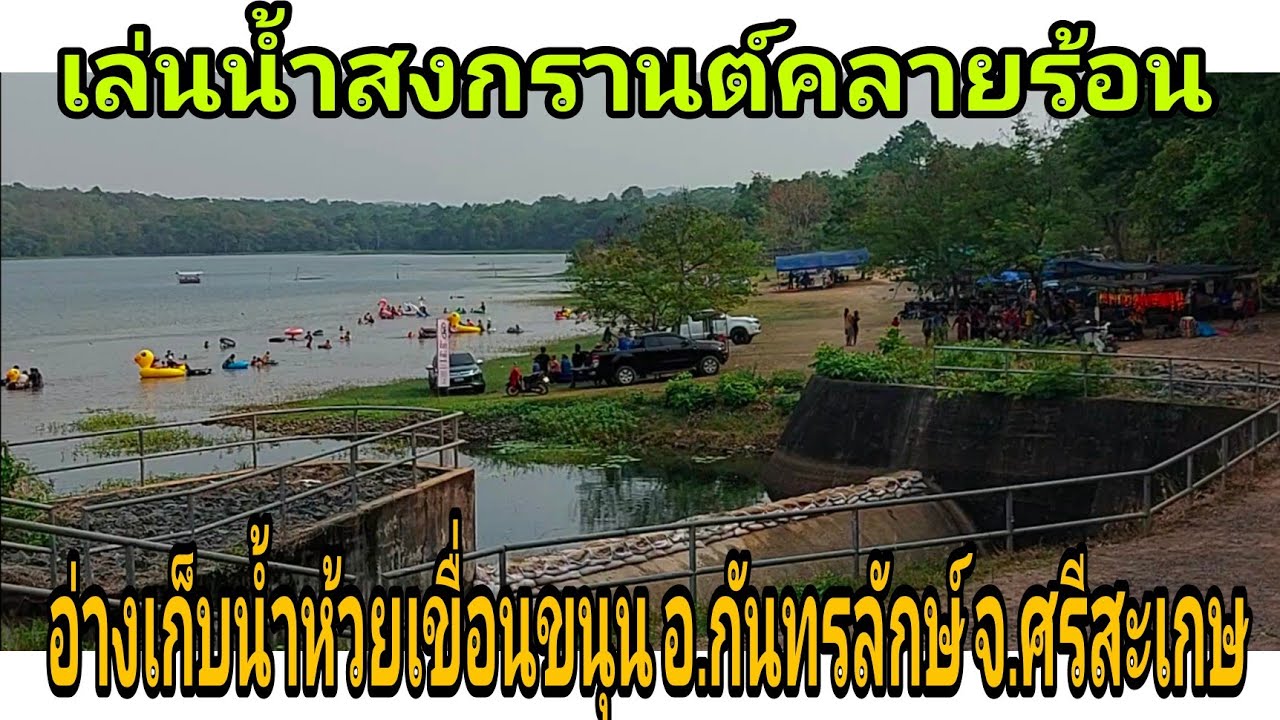
 Click to Access the Navigation Map GPS
Huai Khanun Reservoir Map

 Art, Culture and Heritage
 Historical Sites and Monuments(12)
 Landmarks and Memorials(1)
 Art, Craft Centres, Tradition(8)
 Places of Worship
 Temple(13)
 Other Sacred Sites(3)
 Suburban Living
 Village, Community(2)
 National Parks and Marine Reserves(2)
Dam, Reservoir, Lake(7)
National Parks and Marine Reserves(2)
Dam, Reservoir, Lake(7)
 Waterfalls(5)
 River, Canal(5)
 Bays and Beaches(2)
 Entertainment and Agricultural
 Zoos and Aquariums(1)
 Farms, Parks and Ecotourism(3)


