
lovethailand home >Northeastern Travel Attractions >Si Sa Ket Travel Attractions >Khun Han >Non Sung > Ta Ju Dam
TL;DR: Ta Ju Dam is located at Kanthrom Subdistrict, Khun Han District, Si Sa Ket Province, open Daily, hours 08.00 – 17.00.

Ta Ju Dam
Open Days: Daily
Opening Hours: 08.00 – 17.00
Ta Ju Dam in Si Sa Ket, officially known as Huai Ta Ju Reservoir, is an important water resource in Khun Han District, Si Sa Ket Province. Located in the Kanthrom Subdistrict area, the reservoir plays a major role in supporting agriculture across Kanthrom, Non Sung, and Huai Chan subdistricts. It is also known as a royal-initiative water development project, a freshwater fish breeding area, an irrigation reservoir, and a quiet nature-based attraction for local visitors and travelers. Ta Ju Dam is not only a scenic body of water. It is a working reservoir that supports farming, freshwater fisheries, and daily life in the Khun Han area.
Ta Ju Dam is important as a source of irrigation water for Khun Han District. The royal initiative for the project was granted on 22 September 1986, the project appeared in the royal development project database from 1989, and the Royal Irrigation Department completed construction in 1995. The reservoir has an approximate storage capacity of 22.27 million cubic meters. Its irrigation system helps deliver water for agriculture during both the rainy and dry seasons, covering key farming areas in Kanthrom, Non Sung, and Huai Chan subdistricts. This makes the reservoir a practical and meaningful water-management site for local communities.
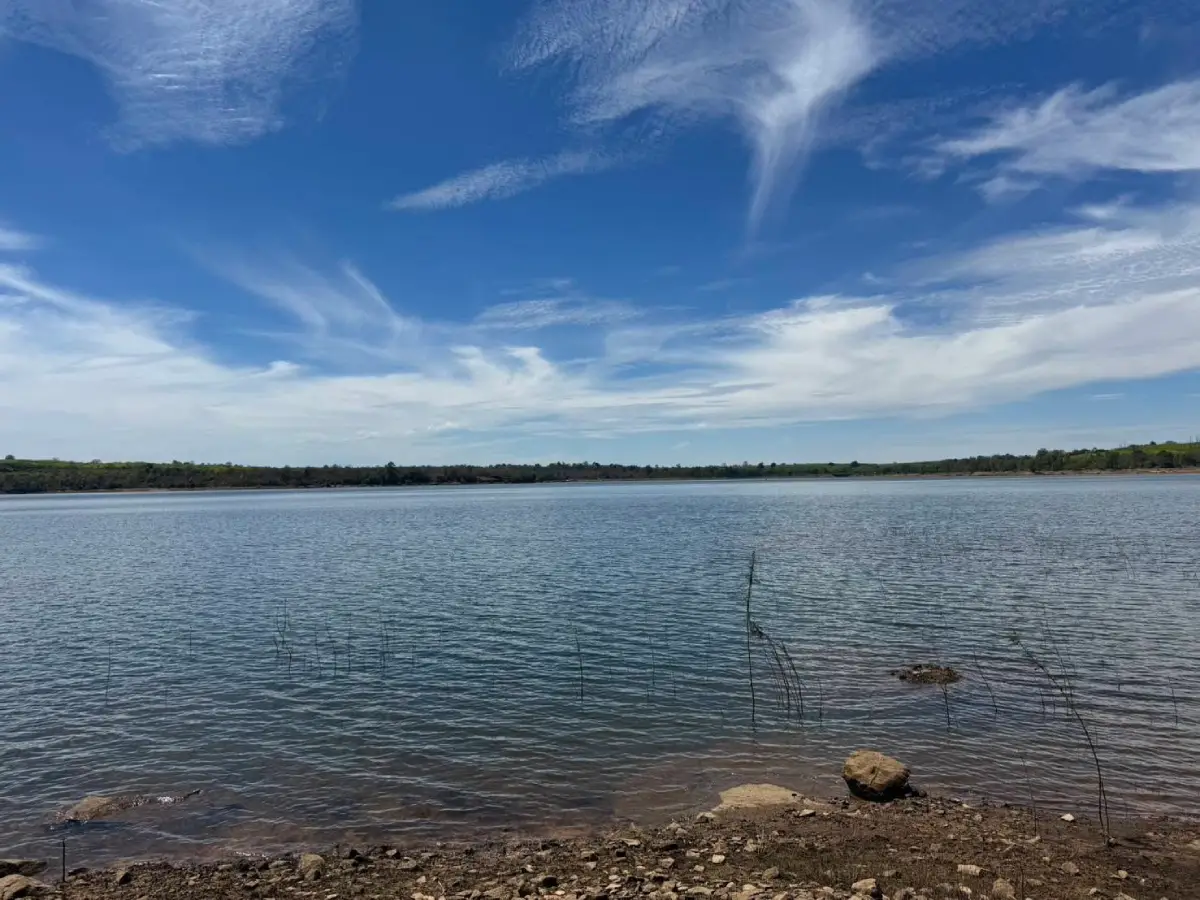
As a travel destination, Ta Ju Dam is suitable for visitors who enjoy quiet natural scenery and want to understand the role of water in rural northeastern Thailand. The landscape includes a wide reservoir surface, an earth embankment, irrigation canals, green agricultural areas, and the calm countryside atmosphere of Khun Han District. Visitors can stop for scenic views, take photos, rest near the reservoir, or include the dam in a wider travel route with Wat Pa Maha Chedi Kaew, Huai Chan Waterfall, and other attractions in the Phanom Dong Rak mountain-region area.
The name Huai Ta Ju reflects the local watercourse and landscape of Kanthrom Subdistrict. In Thai, “huai” means a stream or small natural watercourse, while “Ta Ju” is a local place name. The transformation of a local stream area into a major reservoir shows how a natural water landscape can be developed to serve agriculture, community water supply, freshwater fisheries, and recreation. This connection between local geography and public benefit gives the site a deeper meaning than a normal viewpoint.
The strongest character of Ta Ju Dam is the combination of two roles. On one side, it is an irrigation reservoir with water-control structures, main canals, and water-delivery functions. On the other side, it is a calm scenic place with wide water views and open rural surroundings. Visitors can clearly see that this is a real working site used by local communities, not an artificial tourist attraction. The reservoir, embankment, and surrounding farmland help show the close relationship between water and daily life.
The water-delivery system of Ta Ju Dam is essential to local agriculture. Water from the reservoir supports cultivated areas in Kanthrom, Non Sung, and Huai Chan subdistricts. This helps farmers reduce dependence on seasonal rainfall and provides a more stable source of water for crops. The reservoir therefore supports local economic security, agricultural planning, and the everyday livelihoods of people in the district.
Ta Ju Dam is also an important freshwater fish breeding and expansion area. The reservoir creates habitat for freshwater species and supports fishing-related livelihoods for nearby residents. Fish production adds food value, local income opportunities, and ecological diversity to the reservoir. Because of this, Ta Ju Dam is not a static water body. It is a living freshwater landscape connected with food, work, and community use.
The atmosphere around Ta Ju Dam is simple, open, and peaceful. Visitors can see the broad reservoir reflecting the sky, the long embankment following the shape of the landscape, and the agricultural countryside around Khun Han. Morning is a pleasant time to visit because the light is soft and the weather is more comfortable. Late afternoon is also attractive for resting, photography, and viewing the warm light on the water. The site is best enjoyed slowly, without rushing.
For photography, Ta Ju Dam offers several natural subjects: the wide reservoir, the dam crest, irrigation canals, agricultural fields, water-control structures, and local rural scenery. The visual style is quiet and documentary rather than dramatic. Travelers who enjoy authentic local landscapes will appreciate the balance between water, farmland, and community infrastructure. Early morning and late afternoon usually provide the best light for capturing the shape of the dam and reflections on the water.
Ta Ju Dam is a good example of a travel destination with strong functional value. The water stores support agriculture, the canals distribute water, the embankment controls the reservoir, and the surrounding areas allow people to rest and observe the landscape. The site brings together water management, agriculture, fisheries, recreation, and local life. This makes it a meaningful place for travelers who want to see more than a typical scenic spot.
During the rainy season and after the rains, the reservoir often looks fresh and green, with fuller water levels and surrounding vegetation. This period is attractive for visitors who want to see the reservoir in a more abundant condition. In the dry season, water levels may change according to use and weather conditions, revealing more of the banks and reservoir structure. Both seasons offer different impressions and help visitors understand how reservoirs function throughout the year.
Because Ta Ju Dam is located in Khun Han District, it can be easily combined with other attractions in the area. Khun Han offers reservoirs, temples, waterfalls, local communities, and natural routes. A simple itinerary can begin with Ta Ju Dam in the morning, continue to Wat Pa Maha Chedi Kaew, also known as the Million Bottle Temple, then stop for food or coffee in Khun Han town before continuing to Huai Chan Waterfall or nearby local attractions.
Wat Pa Maha Chedi Kaew is one of the most suitable nearby stops. The temple is famous for its creative use of glass bottles in the construction and decoration of religious buildings. Visiting the temple together with Ta Ju Dam gives travelers a balanced experience of Khun Han District: one place shows water management and rural nature, while the other shows local faith, creativity, and Buddhist architecture.
Other nearby attractions include Phra Borommathat Chedi Si Khun Han, the Khun Han Monument, and Wat Khun Han. These places reflect local history, Buddhist faith, and the identity of the district town. Adding them to a Ta Ju Dam route creates a more complete day trip that includes nature, water, agriculture, religion, and local history.
Huai Chan Waterfall, also known as Kantrom Waterfall, is another natural attraction that can be combined with a visit to Ta Ju Dam. The waterfall offers a more shaded and forested atmosphere, while the reservoir provides an open water landscape. Visiting both sites helps travelers experience different sides of Khun Han’s natural environment: still reservoir water, irrigation landscape, flowing waterfall water, and greenery near the foothills.
For travelers interested in royal-initiative projects, Ta Ju Dam is especially valuable. It was developed to address water needs in communities near the Thai–Cambodian border and to improve the living conditions of people in Khun Han District. Visiting the actual site allows travelers to see the reservoir, irrigation structures, canals, and agricultural areas that form one connected water system. This makes the project easier to understand than through written information alone.
Ta Ju Dam is also a useful outdoor learning site for students and anyone interested in water management. It shows the basic components of a community-level irrigation reservoir, including water storage, embankment control, irrigation canals, agricultural water use, and freshwater fisheries. A visit to the reservoir can help explain how one water project can support multiple aspects of local life at the same time.
The reservoir is open daily from 08.00 to 17.00. Morning and late afternoon are the most comfortable times for sightseeing and photography. Midday is useful for observing the dam structure and canals clearly, but visitors should be prepared for stronger sunlight. Travelers should bring drinking water, a hat, and sun protection, as some areas around the reservoir are open and exposed.
Safety is important when visiting Ta Ju Dam. Visitors should not swim in areas not prepared for water activity, should avoid walking too close to steep banks or deep-water edges, and should supervise children at all times. The reservoir is a real water-management site with changing water levels and underwater conditions. The best way to enjoy the area is through sightseeing, photography, and resting in safe areas.
Good visitor behavior is also important. Visitors should keep the area clean, avoid littering, avoid disturbing officers or local activities, avoid damaging irrigation structures, and stay away from restricted water-control areas unless permitted. Since Ta Ju Dam is a working reservoir under irrigation management, respectful use helps local residents, officers, and travelers share the space safely.
For food, travelers can stop at restaurants and cafés in Khun Han town before or after visiting Ta Ju Dam. Options with clear contact details include Twice&Pastry Cafe’ And Bistro, Coffee Care Na Khun Han, Jae Ae Cafe, Hug Suan Café, BJ Coffee House, and Khun Han Breakfast. These places are practical for families and travelers who plan to visit several attractions in one day.
For accommodation, travelers can stay in Khun Han District. The area has small resorts, hotels, and local accommodation options such as Rerawadi Resort & Spa, Amphai Resort, Sabai Resort, and other lodgings in the Si and Pho Wong subdistrict areas. Staying in Khun Han makes it easier to visit Ta Ju Dam, Wat Pa Maha Chedi Kaew, Huai Chan Waterfall, and nearby attractions without rushing.
Getting There is easiest by private car or rental car. Set the destination to Huai Ta Ju Reservoir, Kanthrom Subdistrict, Khun Han District, Si Sa Ket Province, or search for Ta Ju Dam / Huai Ta Ju Reservoir in a navigation app. From Si Sa Ket town, drive toward Khun Han District, then continue toward Kanthrom or Non Sung following the navigation route. The roads pass through rural and agricultural areas, so careful driving is recommended, especially in the morning, evening, or after rain.
From Khun Han town, Ta Ju Dam works well as a morning or late-afternoon stop. It can be paired with Wat Pa Maha Chedi Kaew and local restaurants for a half-day route. With a full day, travelers can add Huai Chan Waterfall, Phra Borommathat Chedi Si Khun Han, the Khun Han Monument, or other local attractions. This makes the dam a flexible destination for both short visits and broader Khun Han travel itineraries.
For travelers seeking a deeper view of Si Sa Ket, Ta Ju Dam reveals the province as a land of agriculture, community water systems, and border-area livelihoods. The beauty of the place is not luxurious. It comes from the quiet surface of the reservoir and the meaningful role of water in local life. A visit here helps travelers understand how nature-based travel can connect with farming, food security, freshwater fisheries, and resource management.
Ta Ju Dam is therefore suitable for slow travelers, nature lovers, photographers, and visitors who want to see a meaningful local place rather than a purely decorative viewpoint. The reservoir supports water supply, agriculture, fisheries, and recreation. Looking across the water and embankment makes it easier to appreciate the importance of local water projects and their long-term benefits to communities.
Overall, Ta Ju Dam or Huai Ta Ju Reservoir brings together several values in one place: a royal-initiative water development project, an irrigation reservoir, a freshwater fish breeding area, a scenic water landscape, and a local recreation space in Khun Han District. Its appeal lies in calmness, wide water views, and the relationship between water and community life. For travelers who want to experience a quiet but meaningful side of Si Sa Ket, Ta Ju Dam deserves a place in the travel route.
| Name | Ta Ju Dam / Huai Ta Ju Reservoir |
| Location | Kanthrom Subdistrict, Khun Han District, Si Sa Ket Province |
| Address | Kanthrom Subdistrict, Khun Han District, Si Sa Ket 33150, Thailand |
| Highlights | Royal-initiative irrigation reservoir, freshwater fish breeding area, wide reservoir scenery, and a local recreation area in Khun Han District |
| History | Royal initiative granted on 22 September 1986, project started in 1989, and construction completed by the Royal Irrigation Department in 1995 |
| Name Origin | Named after the Huai Ta Ju watercourse and local area in Kanthrom Subdistrict |
| Distinctive Features | Large reservoir, dam embankment, irrigation canal system, freshwater fishery area, and rural Khun Han landscape |
| Storage Capacity | Approximately 22.27 million cubic meters |
| Irrigation Coverage | Supports agricultural areas in Kanthrom, Non Sung, and Huai Chan subdistricts |
| Travel Information | Best reached by private car or rental car from Si Sa Ket town toward Khun Han District, then onward to Kanthrom Subdistrict |
| Current Status | Open as an irrigation reservoir and local scenic recreation area in Khun Han District |
| Open Days | Daily |
| Opening Hours | 08.00 – 17.00 |
| Facilities | Reservoir viewpoints, dam access route, irrigation canal area, restaurants and accommodation in Khun Han District |
| Main Areas / Zones | 1. Main reservoir and water surface zone 2. Dam embankment and dam crest zone 3. Irrigation canal and water-delivery system zone 4. Freshwater fish breeding and fishery area 5. Agricultural water-receiving area 6. Reservoir viewpoint and relaxation zone |
| Caretaker | Royal Irrigation Department, Ministry of Agriculture and Cooperatives, through the Si Sa Ket Irrigation Project, with Kanthrom Subdistrict Municipality as the local administrative area |
| Main Contact Number | Si Sa Ket Irrigation Project, Tel. 045-612-911 / Kanthrom Subdistrict Municipality, Tel. 045-826055 |
| Official Website / Official Page | Royal Irrigation Department / Si Sa Ket Irrigation Project / Kanthrom Subdistrict Municipality |
| Nearby Tourist Attractions | 1. Wat Pa Maha Chedi Kaew or Million Bottle Temple, about 4 km 2. Phra Borommathat Chedi Si Khun Han, about 12 km 3. Khun Han Monument, about 13 km 4. Wat Khun Han, about 13 km 5. Huai Chan Waterfall or Kantrom Waterfall, about 25 km 6. Huai Wang Yai Waterfall, about 35 km 7. Pha Mo E Daeng, about 58 km |
| Nearby Restaurants | 1. Twice&Pastry Cafe’ And Bistro, about 13 km, Tel. 098-783-5670, 086-970-7009 2. Coffee Care Na Khun Han, about 13 km, Tel. 063-975-5766 3. Jae Ae Cafe, about 16 km, Tel. 099-252-9188 4. Hug Suan Café, about 18 km, Tel. 096-795-9695 5. BJ Coffee House, about 13 km, Tel. 098-214-6024 6. Khun Han Breakfast, about 13 km, Tel. 095-605-7004 |
| Nearby Accommodations | 1. Rerawadi Resort & Spa, about 15 km, Tel. 082-203-1926 2. Amphai Resort Khun Han, about 15 km, Tel. 093-712-8215 3. Sabai Resort, about 15 km, Tel. 045-669-278 4. Rerawadi Resort, about 15 km, Tel. 082-207-5980 5. Accommodation in Khun Han town, about 13 km |
Frequently Asked Questions (FAQ)
Q: Where is Ta Ju Dam located?
A: Ta Ju Dam, or Huai Ta Ju Reservoir, is located in Kanthrom Subdistrict, Khun Han District, Si Sa Ket Province, and supports areas in Kanthrom, Non Sung, and Huai Chan subdistricts.
Q: What are the opening hours of Ta Ju Dam?
A: It is open daily from 08.00 to 17.00. Morning and late afternoon are the most suitable times for sightseeing, photography, and relaxation.
Q: Why is Ta Ju Dam important?
A: It is a royal-initiative water development project used for water supply, agriculture, freshwater fisheries, and local recreation.
Q: When was Ta Ju Dam built?
A: The project started in 1989 and was completed by the Royal Irrigation Department in 1995, with an approximate storage capacity of 22.27 million cubic meters.
Q: What activities are suitable at Ta Ju Dam?
A: Visitors can enjoy reservoir views, take photos, rest by the water, learn about irrigation, observe rural agricultural scenery, and include the dam in a Khun Han travel route.
Q: Are there nearby attractions around Ta Ju Dam?
A: Yes. Nearby attractions include Wat Pa Maha Chedi Kaew, Phra Borommathat Chedi Si Khun Han, Khun Han Monument, Wat Khun Han, and Huai Chan Waterfall.
Q: How can travelers get to Ta Ju Dam?
A: The easiest way is by private car or rental car. From Si Sa Ket town, drive toward Khun Han District and continue to Kanthrom Subdistrict, or search for Huai Ta Ju Reservoir in a navigation app.
Q: What should visitors be careful about at Ta Ju Dam?
A: Visitors should be careful near water edges, slopes, dam structures, and water-control areas. Swimming in unsupervised areas is not recommended, and visitors should keep the site clean.
 Category: ●Nature and Wildlife
 Group: ●Dam, Reservoir, Lake
Last Update : 2 MonthAgo
 Last Update : 2 MonthAgo
 Click to Access the Navigation Map GPS
 Art, Culture and Heritage
 Historical Sites and Monuments(12)
 Landmarks and Memorials(1)
 Art, Craft Centres, Tradition(8)
 Places of Worship
 Temple(13)
 Other Sacred Sites(3)
 Suburban Living
 Village, Community(2)
 National Parks and Marine Reserves(2)
Dam, Reservoir, Lake(7)
National Parks and Marine Reserves(2)
Dam, Reservoir, Lake(7)
 Waterfalls(5)
 River, Canal(5)
 Bays and Beaches(2)
 Entertainment and Agricultural
 Zoos and Aquariums(1)
 Farms, Parks and Ecotourism(3)


