
lovethailand home >Northeastern Travel Attractions >Si Sa Ket Travel Attractions >Muang Si Sa Ket >Muang Tai > Khun Amphai Phanit Building
TL;DR: Khun Amphai Phanit Building is located at Ubon Road, Mueang Tai Subdistrict, Mueang Si Sa Ket District, Si Sa Ket Province, open Daily, hours 09.00 – 18.00.

Khun Amphai Phanit Building
Open Days: Daily
Opening Hours: 09.00 – 18.00
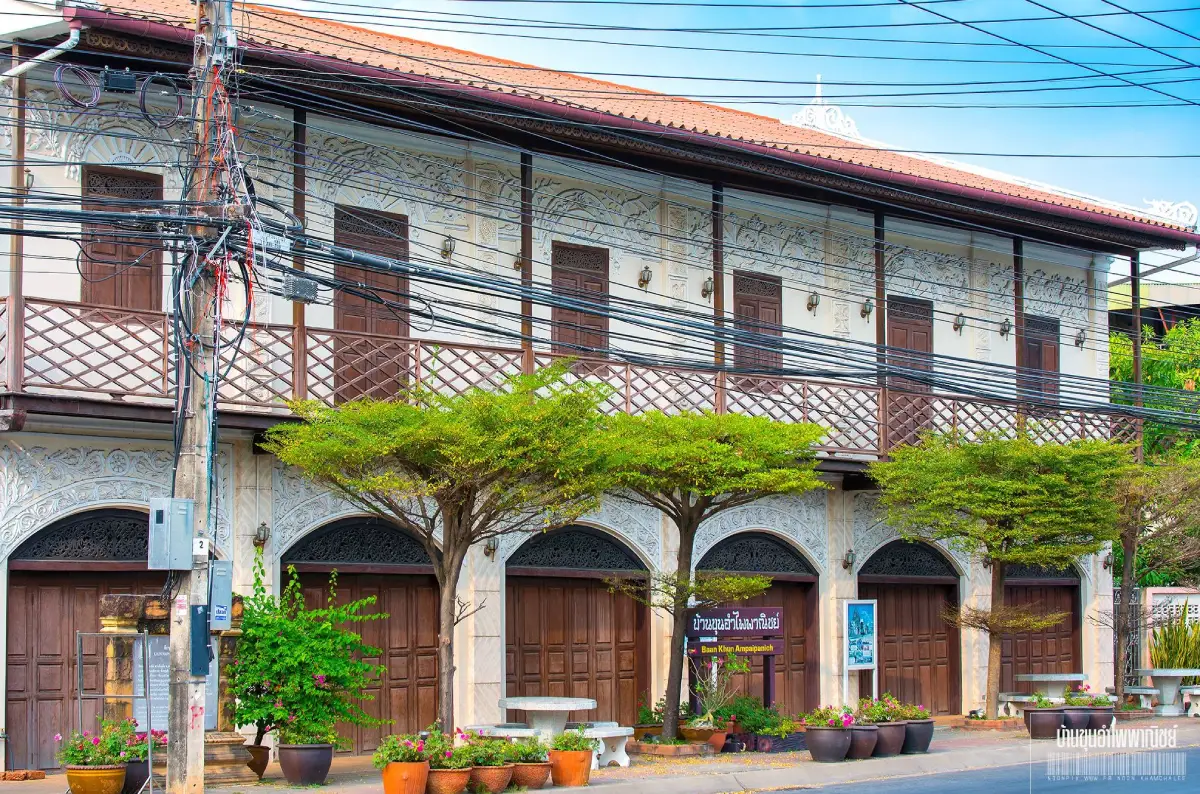
Khun Amphai Phanit Building, also known as Baan Khun Ampaipanich, is one of the most important historic buildings in Si Sa Ket city. Located at 1166 Ubon Road, Mueang Tai Subdistrict, Mueang Si Sa Ket District, Si Sa Ket Province, the building stands in the old urban area of the municipality and preserves the story of early modern commerce, local elite life, and Chinese-Vietnamese craftsmanship in the province. It was built in 1925 by Chinese and Vietnamese artisans for Khun Amphai Phanit, or Thong-in Naksiharat, a prominent local merchant and respected figure of Si Sa Ket. The building is a two-story brick-and-mortar shophouse divided into 6 bays, with arched doorways, wooden doors, an upper wooden balcony, shuttered windows, and elaborate stucco reliefs decorating both the front and rear walls. Today, it is open to visitors as an architectural and local history learning site. The upper floor displays old household objects, portraits, and historical information about the owner, while the ground floor operates as a shop selling OTOP products from Si Sa Ket and nearby provinces.
Khun Amphai Phanit Building is one of the clearest architectural witnesses to the growth of Si Sa Ket in the early 20th century. It was not only the residence of a wealthy merchant but also a physical record of a period when the city was developing as a local commercial center. The building reflects trade, migration, family wealth, and cultural exchange among local Thai, Chinese, Vietnamese, and regional communities. Its location on Ubon Road, one of the important urban roads of Si Sa Ket, connects the building directly with the commercial life of the old town. Visitors can therefore understand Si Sa Ket’s urban history through one building: its economy, merchant families, craftsmanship, local identity, and architectural taste.
The building was constructed during a period when brick-and-mortar commercial houses became more visible in provincial towns of Northeastern Thailand. Its design combines residential and commercial functions in the same structure. The ground floor was suitable for trade, storage, receiving customers, and daily business activity, while the upper floor served as a living area for the family. This relationship between home and shop was common in Southeast Asian trading towns, where family life and commerce often occupied the same architectural space. Khun Amphai Phanit Building preserves this pattern with unusual clarity.
The most striking feature of the building is its decorative stucco work. The facade is covered with motifs influenced by Chinese beliefs and auspicious symbolism, including floral patterns, plum blossoms, chrysanthemums, curling vines, cranes, sunburst motifs, peonies, bats, and ancient coin designs. These decorative elements were not created only for beauty. They were visual expressions of prosperity, longevity, wealth, good fortune, and family success. The building therefore functioned not only as a home and shop but also as a symbolic statement of auspiciousness and status.
The Chinese decorative vocabulary on the building is especially meaningful. Peony and sunburst designs are associated with prosperity and brightness. Chrysanthemum motifs suggest refinement and longevity. Crane imagery represents long life and good fortune. Bats and coin motifs are strongly connected with luck and wealth. When these motifs are seen together, the building becomes an architectural blessing for the owner’s household and business. It communicates the hope for success, continuity, prosperity, and dignity through art on the surface of the house.
The ground floor contains a sequence of arched doorways corresponding to the 6 bays of the building. Large wooden doors provide a strong visual rhythm along the facade, while the arched frames above them are enriched with stucco and woodwork. The lower floor originally supported practical commercial functions, but it was built with enough refinement to express the owner’s social position. The hardwood flooring, interior staircases, door panels, and relationship between shopfront and upper living space make the building an important example of a merchant house in a provincial Thai town.
The upper floor features a wooden balcony projecting about 1 meter from the building. This balcony runs across the front and creates a softer visual layer against the solid brick-and-mortar wall. It allowed the residents to look out toward Ubon Road and observe the movement of the old town. Architecturally, the balcony also reduces the heaviness of the facade and adds warmth through the use of wood. The combination of masonry, timber, and stucco is one of the reasons the building remains visually attractive today.
The building’s architecture combines practical shophouse planning with detailed Chinese-Vietnamese ornament. The brick-and-mortar structure provides durability and urban permanence, while the wooden elements and stucco reliefs give the building personality and elegance. This mixture distinguishes Khun Amphai Phanit Building from ordinary shophouses. It was designed not only for use but also for dignity, auspicious meaning, and public presence in the townscape.
Khun Amphai Phanit, or Thong-in Naksiharat, was an important merchant and local notable of Si Sa Ket. The building is therefore a historical record of a person and family as much as it is an architectural monument. The name of the owner remains inseparable from the building because the house reflects his commercial success, social position, and role in the urban development of Si Sa Ket. The portraits and historical information displayed on the upper floor help visitors understand the human story behind the building’s facade.
The building received first prize in an outstanding urban architectural conservation project in 1987. This recognition is important because it shows that Si Sa Ket’s heritage is not limited to ancient Khmer temples, Buddhist monasteries, or archaeological sites. The province also preserves valuable urban architecture from the early modern period. Khun Amphai Phanit Building expands the meaning of heritage in Si Sa Ket from ancient sacred monuments to civic, commercial, and residential architecture.
The Fine Arts Department later registered and defined the protected boundary of Khun Amphai Phanit Building as a national ancient monument. This status confirms the building’s value in terms of art, architecture, history, and urban memory. A registered historic shophouse in a provincial city is highly significant because it shows that everyday commercial architecture can be part of national heritage. The building is not only old; it is historically meaningful, artistically distinctive, and closely connected with the identity of Si Sa Ket.
Today, Baan Khun Ampaipanich remains open to visitors. The upper floor displays some of Khun Amphai Phanit’s old household items, portraits, and biographical information, while the ground floor functions as a shop selling OTOP products from Si Sa Ket and nearby provinces. This current use gives the building an active role instead of leaving it as a closed monument. Visitors can learn about architecture and history while also seeing local products that continue the commercial spirit of the building.
The upper floor is particularly useful for understanding the domestic life of the original household. Old objects, photographs, and historical information help visitors imagine how a wealthy provincial merchant family lived in the early 20th century. The building becomes more meaningful when viewed from the inside because the decorative facade, wooden doors, balcony, and rooms are connected with the real lives of people who lived and worked there.
The OTOP shop on the ground floor connects the building’s commercial past with its present role. In the past, the ground floor was part of a merchant household’s business activity. Today, it continues to serve a commercial function by supporting local products and community-based income. This continuity is one of the strongest aspects of the site. The building remains alive because its space continues to be used in a way that respects its history.
For travelers, Khun Amphai Phanit Building is ideal for those interested in old towns, historic shophouses, merchant families, local history, and architectural photography. It is located in Si Sa Ket city, within easy reach of the City Pillar Shrine, Si Sa Ket Railway Station, Wat Maha Phuttharam, and local restaurants. A general visit takes around 30–60 minutes. Visitors who want to photograph the facade, read the information panels, view the displays, and browse the OTOP products should allow around 1–1.30 hours.
The best photographic angle is from the opposite side of Ubon Road, where the entire 6-bay facade can be captured. Close-up views are also rewarding because the stucco reliefs, arched doorways, wooden shutters, and balcony details reveal the craftsmanship of the building. Morning and late afternoon light are usually best for photographing the pale stucco and dark wooden elements. Visitors should take photographs carefully without blocking traffic or disturbing the active use of the building.
The main zones of interest include the Ubon Road facade, lower arched doorway zone, old wooden door zone, front and rear stucco decoration zones, upper wooden balcony, portrait and biography display zone, old household object display zone, ground-floor OTOP shop, and the old-town surroundings. Exploring these areas helps visitors understand the building not only as a beautiful facade but as a complete historical structure with material, social, commercial, and cultural meaning.
Getting to Khun Amphai Phanit Building is easy because it is located in the city center of Si Sa Ket. Travelers arriving by private car can enter Ubon Road from the main urban roads. Travelers arriving by train can get off at Si Sa Ket Railway Station and continue by local vehicle to Ubon Road. The building is close enough to combine with other attractions in the city, making it a convenient stop for a half-day cultural route.
Getting There by private vehicle is the most convenient option for travelers who want to combine several city attractions in one day. A practical route can include Si Sa Ket City Pillar Shrine, Khun Amphai Phanit Building, Wat Maha Phuttharam with Luang Pho To, and Si Sa Ket Aquarium. This route is compact and suitable for families, students, photographers, and travelers who want to understand the city’s cultural layers without long-distance driving.
Khun Amphai Phanit Building is a strong example of adaptive conservation. Instead of being abandoned or demolished, the building has been restored and reused as a public learning space and local product shop. This approach keeps the building meaningful in the present. It allows younger generations to see traditional craftsmanship, understand local history, and use the old building in a way that respects its original character.
For Thai travelers, this building reveals a different side of Si Sa Ket. The province is often associated with Khmer ruins, temples, waterfalls, and natural attractions, but Khun Amphai Phanit Building shows the city’s early modern urban heritage. It tells the story of merchants, old roads, Chinese-Vietnamese craftsmanship, and the development of Si Sa Ket as a town with commercial and cultural identity.
For foreign travelers, the building is an excellent place to understand small-town life in Thailand during the early 20th century. The two-story shophouse combines living space and commercial space, a pattern common across Southeast Asian trading towns. The Chinese decorative motifs reveal cultural influence and family values, while the OTOP shop on the ground floor connects the historic building with present-day local economy.
Visitors should behave respectfully because the building is a registered ancient monument. Writing on walls, touching fragile stucco unnecessarily, leaning on old doors or railings, moving display objects, or damaging any part of the building is inappropriate. Proper care helps preserve the building for future generations and supports high-quality cultural tourism in the old town of Si Sa Ket.
Khun Amphai Phanit Building is therefore one of the most worthwhile cultural stops in Si Sa Ket city. It combines local history, merchant-house architecture, Chinese auspicious stucco work, old household displays, OTOP products, and an old-town atmosphere in one place. The building shows that the heritage of Si Sa Ket is not limited to ancient religious monuments. It also includes urban architecture shaped by trade, migration, family life, and artistic craftsmanship.
Leaving Khun Amphai Phanit Building means leaving with a clearer understanding of another layer of Si Sa Ket. The city has Khmer ruins, temples, railway history, local markets, old roads, and conserved historic architecture. This building acts as a doorway into the memory of the old town. Its value lies not only in its age but in the way it still stands, still functions, and still tells the story of people who helped shape Si Sa Ket’s urban identity.
| Name | Khun Amphai Phanit Building / Baan Khun Ampaipanich |
| Location | Ubon Road, Mueang Tai Subdistrict, Mueang Si Sa Ket District, Si Sa Ket Province |
| Address | 1166 Ubon Road, Mueang Tai Subdistrict, Mueang Si Sa Ket District, Si Sa Ket 33000, Thailand |
| Coordinates | 15.114546, 104.332373 |
| Highlights | Two-story historic brick-and-mortar shophouse, 6-bay facade, arched doorways, wooden doors, upper wooden balcony, Chinese auspicious stucco reliefs, old household displays, and OTOP shop on the ground floor |
| History | Built in 1925 by Chinese and Vietnamese artisans as the residence and business premises of Khun Amphai Phanit, or Thong-in Naksiharat, a prominent merchant of Si Sa Ket |
| Name Origin | Named after Khun Amphai Phanit, the original owner and an important merchant of Si Sa Ket. The building is also commonly known as Baan Khun Ampaipanich. |
| Distinctive Features | Two-story historic shophouse with 6 bays, arched ground-floor doors, wooden upper balcony, shuttered openings, and stucco reliefs influenced by Chinese auspicious beliefs |
| Key Evidence | Chinese auspicious stucco motifs, peony, chrysanthemum, plum blossom, crane, bat, ancient coin designs, arched doorways, wooden doors, balcony, old household displays, portraits, and historical information about Khun Amphai Phanit |
| Award / Heritage Status | Winner of an outstanding urban architectural conservation award in 1987 and registered as a national ancient monument by the Fine Arts Department in 1995 |
| Travel Information | Located on Ubon Road in Si Sa Ket city center, easily accessible by private car, local transport, or a short ride from Si Sa Ket Railway Station |
| Current Status | Open to visitors as an architectural and local history learning site. The upper floor displays old objects and historical information, while the ground floor operates as an OTOP product shop. |
| Open Days | Daily |
| Opening Hours | 09.00 – 18.00 |
| Fees | Free Admission |
| Facilities | Building viewing area, upper-floor display area, ground-floor OTOP shop, information signs, facade photography area, and nearby restaurants and city facilities |
| Main Areas / Zones | 1. Ubon Road facade zone 2. Ground-floor arched doorway zone 3. Old wooden door zone 4. Front and rear stucco decoration zone 5. Upper wooden balcony zone 6. Portrait and biography display zone 7. Old household object display zone 8. Ground-floor OTOP shop zone 9. Old-town surroundings zone |
| Caretaker | Fine Arts Department as the authority for the registered ancient monument, together with the local building caretakers who operate Baan Khun Ampaipanich as a learning site and OTOP shop |
| Local Contact | 045-644375, 087-260-52550 |
| Reference Websites | Museum Thailand: museumthailand.com CBT Thailand: cbtthailand.dasta.or.th Cultural Environment Database: culturalenvi.onep.go.th |
| Nearby Tourist Attractions | 1. Si Sa Ket City Pillar Shrine, about 2 km 2. Wat Maha Phuttharam / Luang Pho To, about 2 km 3. Si Sa Ket Railway Station, about 2 km 4. King Rama IX 80th Birthday Anniversary Park / Ko Huai Nam Kham, about 5 km 5. Si Sa Ket Aquarium, about 5 km 6. Wat Phra That Rueang Rong, about 12 km |
| Nearby Restaurants | 1. The Wine Room Cafe, about 1 km, Tel. 082-678-7468 2. Mum Aroi Street Foods, about 1 km, Tel. 087-359-3295 3. Shabu Shabu Nang Nai Sisaket, about 1 km, Tel. 098-269-2694 4. Zapp Gyoza Sisaket, about 2 km, Tel. 085-497-3934 5. Farang Kebab Ubon Best In Town Sisaket Branch, about 2 km, Tel. 061-559-0024 6. Churrería Café Mueang Si Sa Ket, about 2 km, Tel. 093-350-6212 |
| Nearby Accommodations | 1. B2 Sisaket Boutique & Budget Hotel, about 2 km, Tel. 052-009-161 2. Boonsiri Boutique Hotel, about 2 km, Tel. 045-622-222 3. Prompiman Hotel, about 2 km, Tel. 045-612-667, 045-612-696, 045-612-150 4. The Impress Sisaket, about 3 km, Tel. 045-961-566 5. Tree House Hotel Si Sa Ket, about 5 km, Tel. 045-611-563, 080-477-7854 |
Frequently Asked Questions (FAQ)
Q: Where is Khun Amphai Phanit Building located?
A: Khun Amphai Phanit Building is located at 1166 Ubon Road, Mueang Tai Subdistrict, Mueang Si Sa Ket District, Si Sa Ket Province. It stands in the old urban area of Si Sa Ket city, close to the railway station, City Pillar Shrine, and central city attractions.
Q: What are the opening hours of Khun Amphai Phanit Building?
A: The building is open daily from 09.00 to 18.00. Morning and late afternoon are the best times for viewing and photographing the facade.
Q: Is there an admission fee for Khun Amphai Phanit Building?
A: No. Admission is free. Visitors can view the building and browse the OTOP product area on the ground floor.
Q: Why is Khun Amphai Phanit Building important?
A: It is a two-story historic shophouse built in 1925 for Khun Amphai Phanit, a prominent merchant of Si Sa Ket. The building is nationally registered as an ancient monument by the Fine Arts Department.
Q: What should visitors not miss at Khun Amphai Phanit Building?
A: Key highlights include the arched doorways, wooden doors, upper wooden balcony, Chinese auspicious stucco reliefs, old household displays, portraits and historical information about the owner, and the OTOP shop on the ground floor.
Q: Who built Khun Amphai Phanit Building?
A: The building was built in 1925 by Chinese and Vietnamese artisans for Khun Amphai Phanit, or Thong-in Naksiharat, a wealthy merchant and important local figure in Si Sa Ket.
Q: How long should travelers spend at Khun Amphai Phanit Building?
A: A general visit takes around 30–60 minutes. Travelers who want to photograph the facade, read information panels, view the displays, and browse OTOP products should allow around 1–1.30 hours.
Q: What nearby places can be visited with Khun Amphai Phanit Building?
A: Nearby places include Si Sa Ket City Pillar Shrine, Wat Maha Phuttharam / Luang Pho To, Si Sa Ket Railway Station, Ko Huai Nam Kham Park, Si Sa Ket Aquarium, and Wat Phra That Rueang Rong.
 Category: ●Art, Culture and Heritage
 Group: ●Landmarks and Memorials
Last Update : 2 MonthAgo
 Last Update : 2 MonthAgo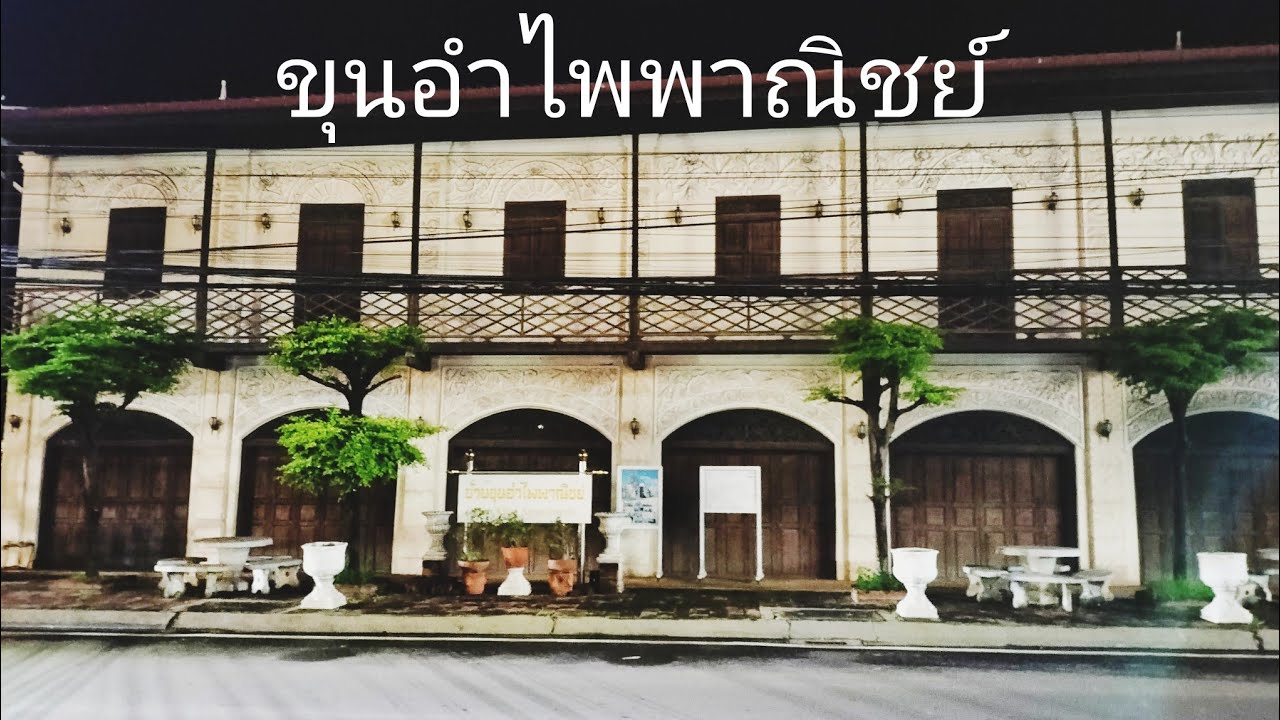
 Click to Access the Navigation Map GPS
Khun Amphai Phanit Building Map

 Historical Sites and Monuments(12)
Landmarks and Memorials(1)
Historical Sites and Monuments(12)
Landmarks and Memorials(1)
 Art, Craft Centres, Tradition(8)
 Places of Worship
 Temple(13)
 Other Sacred Sites(3)
 Suburban Living
 Village, Community(2)
 Nature and Wildlife
 National Parks and Marine Reserves(2)
 Dam, Reservoir, Lake(7)
 Waterfalls(5)
 River, Canal(5)
 Bays and Beaches(2)
 Entertainment and Agricultural
 Zoos and Aquariums(1)
 Farms, Parks and Ecotourism(3)


