
lovethailand home >Northeastern Travel Attractions >Si Sa Ket Travel Attractions >Muang Si Sa Ket >Muang Nuea > Khao Pun Tradition
TL;DR: Khao Pun Tradition, open Held according to family occasions, community merit-making events, food, hours Determined by the host family, community, or event organizer. Traditional Khao.

Khao Pun Tradition
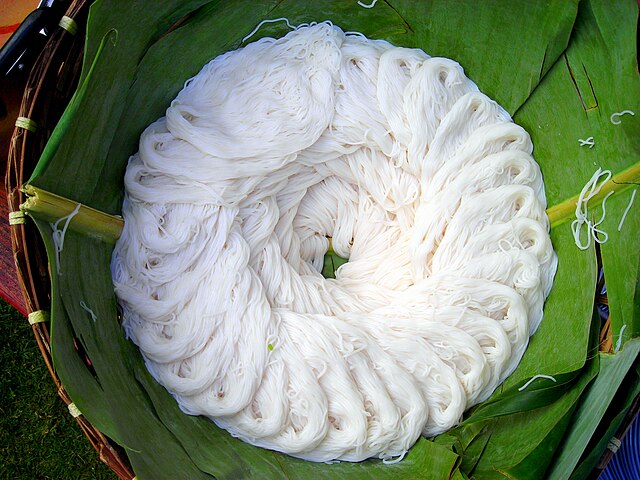
Open Days: Held according to family occasions, community merit-making events, food heritage demonstrations, cultural programs, temple events, welcoming ceremonies, and local festivals; there is no fixed daily opening schedule like a permanent tourist attraction
Opening Hours: Determined by the host family, community, or event organizer. Traditional Khao Pun making takes several stages, including soaking rice, fermenting, grinding, kneading, partially cooking the dough, pressing noodles, rinsing, arranging the noodles, and preparing curry or fermented-fish sauces for serving.
Khao Pun Making In The Isan Way Of Life, Si Sa Ket is an important food heritage tradition that reflects the deep relationship between rice, water, family labor, merit-making, hospitality, and community life in Northeastern Thailand. In the Isan language, “Khao Pun” means khanom chin or rice noodles. It is a savory noodle food made from rice flour, traditionally produced through the processes of soaking rice, fermenting, grinding, kneading, pressing the dough through a noodle mold into boiling water, rinsing the cooked noodles, and arranging them into small portions before serving. Khao Pun is eaten with many kinds of sauce, including fermented fish sauce, jungle-style fish curry, coconut curry, chili fish sauce, and local broths prepared according to each family’s taste. It is therefore not just a dish. It is a food of merit-making, hospitality, kinship, and shared memory.
In Si Sa Ket and the Lower Northeastern region, Khao Pun appears in households, temples, merit-making events, local markets, and cultural activities. Its importance does not come from expensive ingredients. It comes from time, skill, cooperation, and the willingness of people to prepare food for others. In the past, whenever a village held a wedding, ordination, housewarming, temple merit-making event, homecoming, or family gathering, people often worked together to make fresh Khao Pun for guests. The soft rice noodles, rich local sauces, fresh vegetables, and large communal serving trays became a symbol of abundance, generosity, and Isan hospitality.
Khao Pun should be understood correctly as rice noodles made from rice flour, not as sweet sticky rice wrapped in banana leaves. Traditional Khao Pun begins with good-quality rice. The rice is washed, soaked, and fermented until the texture and aroma are suitable. It is then ground or pounded into fine flour, pressed or drained into a dough, and mixed with a cooked portion of dough to create the right elasticity. The dough is then kneaded until smooth and pressed through a mold into boiling water. When the noodles float and cook, they are lifted out, rinsed in cool water, and arranged by hand into neat portions. This process gives Khao Pun its distinctive texture and meaning.
The charm of Isan Khao Pun lies in its soft texture, gentle fermented aroma, and ability to absorb bold local flavors. It may be eaten with nam ya pla ra, nam ya pa, coconut curry, jaew-style sauce, chili fish sauce, or Khao Pun Sao-style fermented fish dressing. In Si Sa Ket, where Thai-Lao, Khmer, Kui or Suai, and Yeu cultures meet, Khao Pun recipes can differ from one household to another. Some families emphasize the deep umami of pla ra, some use roasted fish and herbs, some prefer a spicy jungle-style broth, and others add local vegetables and aromatic ingredients that reflect the taste of the community.
Khao Pun is closely connected with rice, the foundation of Isan life. Rice is grown for daily food, merit-making, guest hospitality, and household security. When rice is transformed into Khao Pun, it changes from grain into a food that can feed many people at once. This makes it ideal for merit-making events and village gatherings. A large amount of noodles can be prepared in advance, the sauce can be cooked in big pots, and fresh vegetables can be served on shared trays. Khao Pun therefore represents the wisdom of turning rice into a communal food.
At Isan merit-making events, Khao Pun often functions as a practical and meaningful dish. Temple events are not only religious gatherings; they are social gatherings where relatives, neighbors, elders, children, and guests from other villages meet. When visitors arrive, the host family or community offers food as a form of welcome. Khao Pun fits this setting well because it is easy to serve, easy to share, filling, and strongly associated with village hospitality. People can take noodles, choose vegetables, add sauce, and eat together in a relaxed and warm atmosphere.
Khao Pun appears in many kinds of Isan events, including village merit-making, Buddhist Lent events, end-of-Lent gatherings, Bun Phawet, Bun Bang Fai, ordinations, weddings, housewarmings, and ancestor-related merit-making. The exact form differs by community, but the central meaning remains the same: food is prepared for monks, relatives, guests, and neighbors. In this context, the merit does not come from the noodles alone. It comes from the intention to feed others, to welcome people, and to create shared participation in the event.
In the past, making fresh Khao Pun was a major community task. It required several days of preparation and many pairs of hands. One group cleaned and soaked the rice. Another group handled fermentation. Skilled elders checked the dough. Stronger helpers ground or pounded the rice. A specialist pressed the noodles into boiling water. Others rinsed and arranged the noodles. Children helped wash vegetables, carry water, and prepare serving trays. The whole process became a living classroom in which knowledge passed naturally from elders to younger generations.
The most important skill in Khao Pun making is knowing the dough. It must not be too firm, too thin, too dry, or too sticky. When pressed through the mold, the noodles must hold their shape, cook properly, and remain soft without breaking apart. This knowledge cannot be learned from measurements alone. It comes from repeated practice, touch, smell, and observation. When an elder touches the dough and says it is ready, younger people learn through experience. This is the oral and practical transmission of food heritage.
Fermentation gives Khao Pun its identity. A well-fermented dough has a gentle sour aroma, not a spoiled smell. It helps create the soft, slightly springy texture of the noodles. Fermentation depends on cleanliness, water, time, and weather. Hot weather speeds the process. Rainy weather requires care with moisture. Cool weather may lengthen the fermentation time. Local cooks learn these differences from experience. This knowledge shows how Isan food wisdom responds to nature and season.
The sauce is the other heart of Khao Pun. Pla ra-based sauce and jungle-style fish curry express the flavor of the Isan kitchen clearly. Common ingredients include fermented fish, boiled or grilled fish, chili, lemongrass, galangal, shallots, garlic, kaffir lime leaves, and local herbs. Some families use snakehead fish, catfish, tilapia, or fish from nearby water sources. Some pound their curry paste by hand. Some simmer pla ra until it becomes richly aromatic. Each pot of sauce is a family signature.
Khao Pun is also inseparable from local vegetables. Common accompaniments include yardlong beans, cabbage, cucumber, blanched morning glory, bean sprouts, Thai basil, lemon basil, dill, Vietnamese coriander, young acacia shoots, hog plum leaves, and other seasonal greens. Vegetables balance the spicy, salty, and fermented flavors of the sauce. Preparing vegetables for a large event is also community work: gathering, washing, slicing, blanching, and arranging them for many guests.
Khao Pun Sao is a well-known Isan style. The word “sao” suggests the action of lifting or rinsing the noodles from water, and in eating practice it refers to rice noodles mixed with seasoned fermented-fish liquid, chili powder, vegetables, and simple condiments. Unlike thick curry-style khanom chin, Khao Pun Sao emphasizes the direct flavor of pla ra, chili, herbs, and fresh noodles. It is simple, bold, and deeply connected with everyday Isan taste.
In Si Sa Ket, Khao Pun helps explain the food identity of the Lower Northeast. The province contains Thai-Lao, Khmer, Kui or Suai, and Yeu cultural influences, and this diversity appears in local food. Si Sa Ket cooking may combine the umami of pla ra, the aroma of herbs, the sharpness of chili, and the use of local produce. A bowl of Khao Pun in one village may taste different from another, yet the core remains the same: rice noodles as a shared food, sauce as family identity, and vegetables as the flavor of place.
In ritual and social life, Khao Pun is not always a formal offering by itself, but it is an important food of merit-making and hospitality. When villagers prepare large quantities of Khao Pun to offer monks or feed guests, the food becomes part of the merit-making act. The value lies in labor, intention, and generosity. Food becomes a language of faith. A person who cooks, serves, or shares Khao Pun participates in the merit of feeding others.
The tradition also reveals the role of women in community food knowledge. Elder women often know how to check the dough, prepare the sauce, balance flavors, arrange vegetables, and manage the kitchen for a large event. Mothers, grandmothers, aunts, and women’s groups are key holders of Isan food wisdom. At the same time, men and younger people help with heavy work, water, firewood, large pots, and serving. Khao Pun making is therefore shared community work organized by experience and skill.
Traditional tools are part of the heritage. Stone grinders, wooden mortars, cloth strainers, large boiling pots, firewood stoves, noodle molds, baskets, trays, and water containers all shaped the old process. Pressing the noodles required strength and rhythm. The water had to boil correctly. Cooked noodles had to be lifted and rinsed at the right moment. The final noodle portions had to be arranged neatly. The tools and the hands of the maker worked together as one system of local technology.
As society changed, household production of fresh Khao Pun became less common because fresh and packaged khanom chin became widely available in markets. This change did not remove Khao Pun from Isan life, but it shifted its role. Many families now buy noodles and prepare only the sauce and vegetables. Restaurants and markets also make Khao Pun more accessible in daily life. Still, communities that continue to make the noodles themselves for merit-making preserve the deeper value of the tradition: the process, the cooperation, and the memory of shared labor.
Preserving Khao Pun making means preserving the process, not only the finished dish. Young people should be able to see rice being soaked, fermented, ground, kneaded, pressed into noodles, rinsed, and arranged. Food demonstrations at cultural centers, schools, temples, village events, and community-based tourism activities can help keep this knowledge alive. When people understand the work behind the noodles, the food becomes more meaningful.
Khao Pun also has economic value for local communities. It can support small restaurants, Khao Pun Sao stalls, khanom chin shops, pla ra sauce makers, vegetable growers, herb producers, and noodle makers. Local families can turn their recipes into income while maintaining community identity. In this way, Khao Pun is not only a nostalgic food. It is also a living local economy connected with rice, vegetables, fish, fermented ingredients, and culinary skill.
From a food balance perspective, Khao Pun can be a varied meal when served with plenty of vegetables and appropriately seasoned sauce. The rice noodles provide energy. The fish or protein in the sauce provides substance. Herbs add aroma. Fresh and blanched vegetables add texture and fiber. The traditional eating style combines noodles, sauce, vegetables, and condiments in one plate or bowl, showing the practical wisdom of Isan food culture.
For cultural hospitality, Khao Pun is one of the dishes that immediately communicates Isan identity. When guests eat fresh noodles with local sauce, vegetables, and the atmosphere of a village gathering, they experience the culture through taste. A good cultural presentation should explain where the rice comes from, how the noodles are made, which vegetables are local, whose family recipe the sauce follows, and which merit-making events traditionally serve Khao Pun. When the story is told, the dish becomes a cultural lesson.
The difference between market-bought noodles and community-made noodles lies not only in texture but also in meaning. Market noodles are convenient and suitable for modern life. Community-made Khao Pun carries the memory of relatives working together, boiling pots, rinsing noodles, arranging trays, tasting sauce, and preparing food for guests. For many Isan people, eating Khao Pun at a merit-making event means eating the memory of home.
Those who want to learn about Khao Pun in Si Sa Ket should look beyond a single restaurant. This tradition lives in households, temple events, community kitchens, markets, and cultural learning spaces. Provincial cultural centers, local schools, temples, women’s groups, and community-based tourism groups can help explain the heritage side, while markets and restaurants show the modern life of the dish. Both aspects are important for understanding Khao Pun as living culture.
Visitors who join a Khao Pun-making activity or merit-making event should respect the host and kitchen space. They should wash their hands before helping, avoid touching food unnecessarily, follow the instructions of elders, keep the cooking area clean, and avoid disrespectful comments about flavor or local ingredients. A community kitchen is a shared social space. Helping properly is part of respecting the food and the people who prepare it.
Khao Pun is also tied to the memory of Isan people living away from home. Many people who work in other provinces or abroad feel connected to home when they return and eat Khao Pun made by their mother or grandmother. The taste of pla ra, the smell of herbs, the texture of noodles, the voices of relatives, and the sight of shared serving trays all bring back the feeling of home. Food becomes a bridge between people and birthplace.
In the Si Sa Ket context, Khao Pun helps show another side of the province. Many visitors know Si Sa Ket for Khmer sanctuaries, temples, forests, and borderland scenery. Khao Pun shows the everyday life of people: rice, vegetables, fish, fermented fish, herbs, kitchens, markets, temple events, and family gatherings. Through this dish, visitors understand that local culture is not found only in monuments. It is also found in meals prepared with care.
The future of Khao Pun depends on preserving both accuracy and living practice. Accuracy means understanding that Khao Pun is Isan khanom chin made from rice flour, not sweet sticky rice wrapped in banana leaves. Living practice means allowing young people to taste it, watch it being made, help prepare it, and hear stories from elders. When knowledge and taste move together, the tradition remains alive in kitchens, temples, village events, markets, and memories.
Khao Pun making in the Isan way of life in Si Sa Ket is therefore a valuable food heritage tradition. It carries nutrition, social meaning, religious context, local economy, and cultural identity in one dish. The small white rice noodles hold stories of rice, fermentation, family labor, temple merit-making, local sauces, fresh vegetables, hospitality, and the memory of home. Preserving Khao Pun is not merely preserving a dish; it is preserving the Isan way of sharing, helping one another, and turning rice—the heart of life—into a food that brings people together.
| Tradition Name | Khao Pun Making In The Isan Way Of Life, Si Sa Ket |
| Other Names | Khao Pun, Isan Khanom Chin, Khao Pun Sao, Fermented Rice Noodles, Isan Rice Noodles, Merit-Making Rice Noodles |
| Cultural Area | Northeastern Thailand, especially households, temples, merit-making events, local markets, and Lower Northeastern communities such as Si Sa Ket Province |
| Cultural Learning Route Base | Si Sa Ket Provincial Cultural Center at Sisaketwittayalai School and local food routes in Mueang Si Sa Ket |
| Cultural Type | Intangible Cultural Heritage Related To Local Food, Merit-Making, Community Life, Rice-Based Food Wisdom, And Traditional Culinary Knowledge |
| Main Meaning | A merit-making and hospitality food that reflects rice culture, sharing, family labor, community cooperation, and the transformation of rice into Isan-style rice noodles |
| Main Ingredients | Rice, clean water, pla ra-based sauce, jungle-style fish curry, coconut curry, herbs, fish, fermented fish, chili, fresh vegetables, blanched vegetables, and seasonal local greens |
| Noodle-Making Process | 1. Select and wash rice 2. Soak and ferment the rice 3. Grind or pound the rice into fine flour 4. Drain or press the dough 5. Partially cook some dough as a binding portion 6. Knead cooked and uncooked dough together until smooth 7. Press the dough through a mold into boiling water 8. Lift cooked noodles, rinse in cool water, and arrange them into portions |
| Sauces And Accompaniments | Pla ra sauce, jungle-style fish curry, coconut curry, jaew-style sauce, seasoned fermented fish liquid, chili powder, yardlong beans, cabbage, cucumber, bean sprouts, morning glory, Thai basil, lemon basil, dill, Vietnamese coriander, and seasonal local greens |
| Common Occasions | 1. Village merit-making events 2. Weddings 3. Ordination ceremonies 4. Housewarming ceremonies 5. Buddhist Lent and end-of-Lent events 6. Ancestor merit-making events 7. Guest welcoming events 8. Local food heritage demonstrations |
| Caretakers / Knowledge Holders | Local cooks, family elders, women’s groups, temples, host families, community cultural centers, schools, local food entrepreneurs, and communities that continue to preserve Isan Khao Pun making |
| Current Status | Still active in Isan food culture through households, merit-making events, restaurants, local markets, and cultural demonstrations, although full household noodle-making has declined because ready-made noodles are now widely available |
| Open Days | No fixed daily opening schedule. Activities are held according to family occasions, temple events, community programs, or cultural demonstrations. |
| Opening Hours | Depends on the host schedule. Traditional Khao Pun making may involve preparation in advance, followed by noodle pressing, sauce cooking, and food service on the event day. |
| Fees | No fixed tourist admission fee. Participation depends on the host family, community, or event organizer. Costs for ingredients and food service depend on the size of the event. |
| Main Areas / Activity Zones | 1. Rice washing and soaking zone 2. Fermentation zone 3. Grinding or pounding zone 4. Dough kneading zone 5. Dough cooking and noodle pressing zone 6. Noodle rinsing and arranging zone 7. Sauce cooking zone 8. Vegetable preparation zone 9. Monk offering or guest serving zone 10. Demonstration and knowledge-transfer zone |
| Visitor Etiquette | Wash hands before helping, dress respectfully when joining temple events, respect the kitchen area, avoid touching food unnecessarily, follow elders’ instructions, keep the space clean, and respect the host and local cooks |
| Related Learning Sources | Si Sa Ket Provincial Cultural Center, Sisaketwittayalai School, local temples, village merit-making events, fresh markets, Khao Pun restaurants, local women’s groups, and community-based tourism activities in Si Sa Ket Province |
| Nearby Cultural Attractions In A Si Sa Ket Route | 1. Si Sa Ket Provincial Cultural Center, about 0 km 2. Si Sa Ket City Pillar Shrine, about 2 km 3. Khun Amphai Phanit Building, about 2 km 4. Wat Maha Phuttharam / Luang Pho To, about 2 km 5. Si Sa Ket Railway Station, about 2 km 6. Si Sa Ket Aquarium, about 5 km 7. Wat Phra That Rueang Rong, about 12 km |
| Nearby Restaurants In Si Sa Ket City | 1. The Wine Room Cafe, about 1 km, Tel. 082-678-7468 2. The Cup Cafe, about 2 km, Tel. 095-742-6323 3. Jiree Cafe, about 2 km, Tel. 080-799-1890 4. Sri Surak Restaurant, about 2 km, Tel. 061-021-7269 5. Dear Cup Coffee Near Si Sa Ket Hospital, about 3 km, Tel. 066-119-6968 |
| Nearby Accommodations In Si Sa Ket City | 1. B2 Sisaket Boutique & Budget Hotel, about 2 km, Tel. 052-009-161, 088-263-2897 2. Boonsiri Boutique Hotel, about 2 km, Tel. 045-622-222 3. Prompiman Hotel, about 2 km, Tel. 045-612-667, 045-612-696, 045-612-150 4. The Impress Sisaket, about 3 km, Tel. 045-961-566 5. Tree House Hotel Si Sa Ket, about 5 km, Tel. 045-611-563, 080-477-7854 |
Frequently Asked Questions (FAQ)
Q: What is Khao Pun?
A: Khao Pun is the Isan word for khanom chin, or rice noodles. It is a savory noodle food made from rice flour through soaking, fermenting, grinding, kneading, pressing into boiling water, rinsing, and arranging the noodles before serving with local sauces.
Q: How is Khao Pun connected with Isan life?
A: Khao Pun is a food of merit-making, hospitality, and family gatherings. It reflects rice culture, community labor, sharing, and the Isan practice of preparing food for monks, guests, relatives, and neighbors.
Q: Is Khao Pun made from sticky rice or regular rice?
A: Khao Pun is made from rice flour, traditionally using rice that is soaked, fermented, ground, kneaded, and pressed into noodles. It is not a sweet sticky rice dessert wrapped in banana leaves.
Q: When is Khao Pun commonly made?
A: It is commonly made or served at village merit-making events, ordinations, weddings, housewarmings, Buddhist Lent events, end-of-Lent gatherings, ancestor merit-making events, welcoming ceremonies, and local food heritage demonstrations.
Q: What are the main steps in traditional Khao Pun making?
A: The main steps are selecting rice, soaking and fermenting it, grinding it into flour, draining the dough, partially cooking some dough, kneading it smooth, pressing it into boiling water, rinsing the cooked noodles, and arranging the noodles into portions.
Q: What is Khao Pun Sao?
A: Khao Pun Sao is an Isan style of eating rice noodles with seasoned fermented-fish liquid, chili powder, fresh vegetables, blanched vegetables, and simple local condiments. Its flavor is bold, savory, spicy, and deeply connected with everyday Isan food.
Q: Is there an admission fee for Khao Pun-making activities?
A: There is no fixed admission fee because this is a food heritage practice rather than a permanent tourist attraction. Participation depends on the host family, community, temple, or cultural activity organizer.
Q: Why should Khao Pun-making wisdom be preserved?
A: It preserves knowledge of rice, fermentation, food preparation, merit-making, local taste, family cooperation, and the Isan culture of sharing food with others.
 Category: ●Art, Culture and Heritage
 Group: ●Art, Craft Centres, Tradition
Last Update : 2 MonthAgo
 Last Update : 2 MonthAgo
 Historical Sites and Monuments(12)
 Landmarks and Memorials(1)
Art, Craft Centres, Tradition(8)
Landmarks and Memorials(1)
Art, Craft Centres, Tradition(8)
 Places of Worship
 Temple(13)
 Other Sacred Sites(3)
 Suburban Living
 Village, Community(2)
 Nature and Wildlife
 National Parks and Marine Reserves(2)
 Dam, Reservoir, Lake(7)
 Waterfalls(5)
 River, Canal(5)
 Bays and Beaches(2)
 Entertainment and Agricultural
 Zoos and Aquariums(1)
 Farms, Parks and Ecotourism(3)


