
lovethailand home >Northeastern Travel Attractions >Si Sa Ket Travel Attractions >Muang Si Sa Ket >Muang Nuea > Bun Khao Kam Tradition
TL;DR: Bun Khao Kam Tradition, open Held according to the schedule of the host temple, Sangha community, and local, hours Determined by the host temple’s Parivasa schedule, usually covering several.
Bun Khao Kam Tradition
Open Days: Held according to the schedule of the host temple, Sangha community, and local villagers during the first lunar month of the Isan calendar; there is no fixed daily opening schedule like a permanent tourist attraction
Opening Hours: Determined by the host temple’s Parivasa schedule, usually covering several days with morning alms offerings, midday meal offerings, chanting, Dhamma listening, and merit-making activities according to the temple program
Bun Khao Kam, or the Isan merit-making tradition of entering Parivasa, is one of the most important traditions in the Heet Sip Song cycle of Northeastern Thailand. It belongs to the first lunar month, known in Isan as Duean Ai or Duean Chiang. The central meaning of the tradition is connected with Buddhist monastic discipline. Monks who need to undergo the formal process of Parivasa enter a period of disciplined practice, restraint, and purification according to the Vinaya. Laypeople support the process by offering food, drinking water, medicine, monastic requisites, and other necessities throughout the period. Bun Khao Kam is therefore not a personal fortune-cleansing ritual. It is a religious tradition that combines monastic discipline, ethical responsibility, community support, generosity, and the shared duty of preserving Buddhism.
The word “Khao Kam” in this tradition refers to the monastic act of entering Parivasa or staying under a disciplinary observance. It does not mean that laypeople enter the ritual to erase all past karma. The heart of the tradition is the recognition that Buddhist discipline requires responsibility. When a monk commits a serious disciplinary offense that requires correction, there is a formal path for confession, restraint, rehabilitation, and return to the Sangha under proper procedure. At the same time, lay supporters participate by providing the four requisites and maintaining a respectful environment. This cooperation between monks and villagers makes Bun Khao Kam one of the clearest examples of how Isan communities support Buddhist ethical life.
In the Isan Heet Sip Song calendar, Bun Khao Kam is the merit-making tradition of the first month. It is often held after the harvest season, when villagers have rice, food, and time to participate more fully in temple life. The first month becomes a period of reflection, renewal, and merit-making. Beginning the annual cultural cycle with a tradition centered on monastic discipline shows the importance Isan communities place on moral order. Monks practice restraint, laypeople make offerings, and the community begins the year with generosity and respect for the Vinaya.
The ritual is closely tied to the Buddhist Vinaya, especially the category of Sanghadisesa offenses, which are serious offenses requiring a formal process before a monk can be fully restored within the Sangha. A monk undergoing Parivasa stays under prescribed conditions, observes restraint, reduces social contact, and follows the disciplinary procedure directed by the Sangha. The process may include confession, a period of Parivasa, the practice of Manatta, and the final Sangha act of Abbhana. These stages reflect an organized Buddhist system of accountability and rehabilitation.
A traditional story often associated with Bun Khao Kam teaches the danger of ignoring even a small offense. The story tells of a monk who committed what seemed to be a minor fault and did not confess it. That unconfessed fault became a heavy burden. The lesson is clear: no wrongdoing should be treated carelessly. For Isan people, this story supports the moral value of the tradition. Bun Khao Kam teaches monks and laypeople alike to be mindful of conduct, to admit mistakes, and to return to the right path through proper practice.
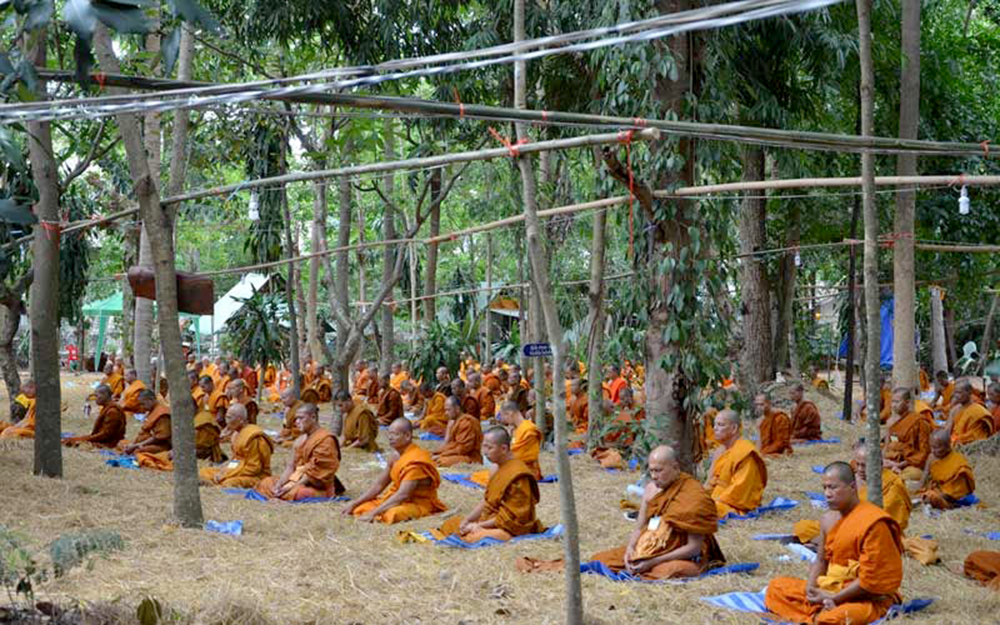
For monks, Bun Khao Kam is a period of serious self-discipline. The monk entering Parivasa stays in a quiet place, avoids unnecessary social contact, and performs the required observances with humility and mindfulness. Some temples prepare simple temporary huts or a quiet area in the temple grounds. Other temples use forest-like spaces or peaceful monastic areas suitable for contemplation. The period of staying under discipline is therefore both a formal Vinaya process and a practical training in humility, restraint, and inner purification.
For laypeople, the tradition is a major opportunity to make merit by supporting monks who are practicing according to the Vinaya. Villagers prepare rice, curry, local dishes, desserts, fruit, drinking water, medicine, robes, candles, flowers, and other requisites. They may take turns by household, village section, or kinship group to provide morning and midday meals. This participation makes Bun Khao Kam a community merit-making event. The merit comes not only from giving material objects but also from supporting the preservation of monastic discipline.
Preparation begins when the host temple and Sangha announce the schedule. The temple prepares the area where monks will stay, arranges the hall for Dhamma listening, and coordinates offerings with the village. Villagers clean the temple grounds, prepare cooking areas, arrange water, set up utensils, and organize groups to bring food. Larger events may include a community kitchen or merit-making pavilion where villagers work together. This preparation strengthens cooperation in the village and confirms the temple’s role as the moral center of community life.
The offerings used in Bun Khao Kam are practical and devotional. The most important items include morning and midday meals, drinking water, medicine, robes, monastic requisites, candles, flowers, and donations according to faith. Some communities also prepare sticky rice, traditional desserts, seasonal fruit, and local dishes. The value of these offerings lies in sincerity and usefulness. They support monks during a period when the monks are observing restraint and discipline, allowing the religious process to proceed properly.
A general sequence begins with the temple announcing the Parivasa period. Monks who enter the process perform the required confession and Sangha procedures. They then stay in the assigned place under the conditions of the Vinaya. During this time, lay supporters offer food, listen to Dhamma, observe precepts, and join merit-making activities. When the period is complete, the Sangha performs the final act of restoration according to the monastic rules. The event closes with offerings, blessings, and the sharing of merit among participants.
One of the most important values of Bun Khao Kam is that the community does not respond to wrongdoing with rejection alone. The tradition emphasizes correction, responsibility, and rehabilitation. The monk acknowledges the offense and follows the Vinaya process. The Sangha supervises the formal discipline. Laypeople provide support without interfering in the monastic procedure. This creates a balanced model of moral accountability and compassionate restoration. It is one reason scholars often describe the tradition as socially meaningful, not merely ceremonial.
Isan people believe that supporting Bun Khao Kam brings great merit because the merit is connected directly with the preservation of Buddhist discipline. Laypeople are not merely feeding monks; they are helping create the conditions for monks to practice correctly. The lesson for laypeople is also clear: wrongdoing should not be hidden, and ethical correction requires honesty. Through giving, listening to Dhamma, and observing the process, laypeople learn the value of moral responsibility in their own lives.
At the family level, Bun Khao Kam is a chance for parents, grandparents, children, and relatives to make merit together. Young people learn how to prepare offerings, enter the temple respectfully, offer food to monks, listen to elders, and understand the Isan calendar of merit-making. This cultural education happens through participation. Children see their elders work together, give together, and respect the temple together. The tradition therefore passes from generation to generation through lived experience.
At the community level, the tradition strengthens cooperation. A successful Bun Khao Kam event requires the work of the temple committee, villagers, elders, women’s groups, youth groups, donors, cooks, and local supporters. Some people contribute food, others money, labor, equipment, or time. These shared responsibilities make the village more united. A merit-making tradition becomes a social structure through which people meet, work, and reaffirm their ties to one another.
On a personal level, Bun Khao Kam teaches mindfulness about karma and conduct. The tradition reminds people not to dismiss small wrongdoings. It teaches that mistakes should be recognized and corrected. This message applies to lay life as much as monastic life: family relationships, community responsibilities, work ethics, speech, and personal morality all require awareness. Bun Khao Kam therefore functions as a yearly moral lesson for the wider community.
In many Isan areas, Bun Khao Kam is linked with forest temples or peaceful temple settings because the practice requires quietness and restraint. The atmosphere of the event is usually more subdued than some other Isan festivals. Even when many villagers participate, the core of the tradition remains calm and disciplined. Chanting, Dhamma listening, food offerings, and quiet service define the event more than entertainment. This gives Bun Khao Kam a distinctive spiritual tone within the Heet Sip Song cycle.
Bun Khao Kam differs from other Isan monthly merit-making traditions. Bun Khao Chi centers on food offerings and local rice culture. Bun Phawet focuses on the Vessantara Jataka and long-form preaching. Bun Bang Fai is connected with rain and agricultural fertility. Bun Khao Pradap Din and Bun Khao Sak are associated with merit for the dead. Bun Khao Kam stands out because it centers on monastic discipline and the community’s support for monks undergoing formal correction. Its main theme is not entertainment or seasonal celebration but ethical restoration.
The idea of “releasing old karma” should be understood carefully. Bun Khao Kam does not erase karma through ritual alone. In Buddhist understanding, wholesome action, generosity, moral conduct, and wisdom create new merit and support a better direction of life. The tradition teaches that faults must be acknowledged and corrected. For laypeople, participating in the merit-making helps cultivate generosity, respect, and mindfulness. This accurate understanding gives the tradition deeper meaning and prevents it from being reduced to a ritual for luck alone.
Today, Bun Khao Kam continues in Isan temples and communities that preserve the Heet Sip Song tradition. The form varies from temple to temple. Some events are small and quiet, while others involve many villagers from nearby communities. The schedule depends on the host temple, the number of participating monks, and local readiness. What remains constant is the religious meaning: support for monks who practice according to the Vinaya and merit-making that strengthens the bond between temple and community.
Visitors who wish to join Bun Khao Kam should behave with restraint. Because the event relates directly to monastic discipline, visitors should dress modestly, keep quiet, bring offerings at the appropriate time, avoid entering restricted Parivasa areas, and follow the instructions of the host temple. Photography should be done carefully and only where it does not disturb the monks or the ceremony. Respect for the ritual space is part of the merit-making itself.
Those who want to learn about the tradition in Si Sa Ket or the Lower Northeast can begin with provincial cultural centers, temples that preserve the Heet Sip Song cycle, and local community events held during the first lunar month. Si Sa Ket is culturally rich, with Thai-Lao, Khmer, Kui or Suai, and Yeu communities, and the temple remains a central institution in social and spiritual life. Learning about Bun Khao Kam in this setting helps visitors understand the relationship between Buddhism, village cooperation, and Isan cultural continuity.
In cultural tourism, Bun Khao Kam should be presented as a religious tradition requiring respect. It should not be treated as entertainment. The important elements are supporting monks, listening to Dhamma, observing proper conduct, and learning the moral lesson of responsibility. If a temple welcomes outside participants, visitors may join merit-making according to the temple’s rules. The most important principle is to preserve the quiet and disciplined atmosphere of the Parivasa period.
The value of Bun Khao Kam lies in the way it brings the Sangha and lay community together under the guidance of the Vinaya. Monks practice discipline, the Sangha supervises the process, villagers provide material support, and everyone receives a moral lesson about accountability. The tradition does not ignore wrongdoing, but it also does not deny the possibility of restoration. When a person follows the proper path of correction, the community supports the return to moral order.
Bun Khao Kam also reveals the importance of temples in Isan life. A temple is not only a place for occasional worship. It is a school of ethics, a gathering place, a center of cooperation, and a space where people learn generosity, restraint, and responsibility. The first-month merit-making tradition opens the year by inviting monks and laypeople to begin with sincerity, discipline, and shared merit.
At a deeper level, Bun Khao Kam is a yearly reminder of non-negligence. Isan communities continue this tradition not merely because it is old, but because it carries moral value. It teaches monks to preserve the Vinaya. It teaches laypeople to support Buddhism. It teaches children the rhythm of community merit-making. It teaches everyone that goodness requires both personal intention and communal support.
Bun Khao Kam is therefore more than a first-month festival. It is a cultural system that brings together monastic discipline, lay faith, generosity, ethical responsibility, compassion, and community unity. Participants see monks practicing restraint, villagers preparing offerings, elders teaching younger generations, and the temple serving as the center of shared merit. This makes Bun Khao Kam one of the most meaningful Isan traditions for understanding the relationship between Buddhism and village life.
| Tradition Name | Bun Khao Kam Of The Isan People |
| Other Names | Bun Khao Parivasa Kam, Heet Duean Ai, First-Month Isan Merit-Making, Parivasa Merit-Making, Khao Kam, Yu Kam |
| Cultural Area | Northeastern Thailand or Isan, especially temples and communities that preserve the Heet Sip Song tradition, including Lower Northeastern provinces such as Si Sa Ket |
| Cultural Type | Intangible Cultural Heritage Related To Buddhism, Monastic Discipline, Ritual, Community Merit-Making, Heet Sip Song, And Isan Village Life |
| Main Meaning | A first-month Isan merit-making tradition centered on Parivasa practice, monastic discipline, ethical correction, lay support for monks, generosity, and cooperation between temple and community |
| Ritual Period | Held in Duean Ai or Duean Chiang, the first lunar month of the Isan calendar. The exact date depends on the host temple, Sangha schedule, and community readiness. |
| Duration | Usually held for several days according to the Parivasa schedule of the host temple. Some communities follow a 6–9 day pattern or the period determined by the Sangha. |
| Related Participants | Monks entering Parivasa, the Sangha supervising the procedure, the abbot of the host temple, temple committee, lay supporters, elders, women’s groups, youth groups, and villagers who support the event |
| Ritual Caretakers | The Sangha and abbot of the host temple supervise the ritual according to the Vinaya, while temple committees and villagers support the venue, food offerings, kitchen, and lay participation. |
| Note On Abbot Name | This tradition is not tied to one permanent temple. The abbot’s name depends on the host temple that organizes the event in each community and year. |
| Main Components | 1. Parivasa practice area for monks 2. Monks entering the disciplinary observance 3. Sangha members supervising the procedure 4. Morning and midday food offerings 5. Monastic requisites and donations 6. Chanting and Dhamma listening 7. Community kitchen or merit-making pavilion 8. Final Sangha act of restoration according to the Vinaya |
| General Ritual Sequence | 1. The host temple announces the schedule 2. A peaceful space is prepared for Parivasa practice 3. Monks entering the process inform the Sangha according to the Vinaya 4. The monks stay under the required observance 5. Laypeople offer food and requisites 6. Chanting, Dhamma listening, and merit-making take place 7. The Sangha performs the final act of restoration 8. Villagers offer food, receive blessings, and close the merit-making event |
| Current Status | Still practiced in Isan temples and communities that preserve the Heet Sip Song tradition. It is organized according to the host temple’s schedule rather than as a daily tourist attraction. |
| Open Days | No fixed daily opening schedule. The event is held according to the host temple during the first lunar month. |
| Opening Hours | Depends on the host temple schedule, usually including morning offerings, midday offerings, chanting, Dhamma listening, and merit-making activities announced by the temple. |
| Fees | No fixed tourist admission fee. Participation is based on voluntary merit-making. Costs for food offerings, requisites, donations, and community kitchen support depend on the host temple and lay supporters. |
| Main Areas / Zones | 1. Parivasa practice area for monks 2. Temporary huts or monastic resting area 3. Temple hall or Dhamma listening area 4. Morning and midday food offering area 5. Community kitchen or food pavilion 6. Monastic requisites and donation area 7. Lay visitor and merit-making area 8. Final restoration and blessing area |
| Visitor Etiquette | Dress modestly, keep quiet, offer food at the proper time, do not enter restricted Parivasa areas, avoid disturbing monks, and follow the instructions of the host temple. |
| Related Learning Sources | Provincial cultural centers, Sirindhorn Isan Information Center, temples organizing Parivasa practice, Heet Sip Song communities, provincial cultural offices, and Isan cultural learning sources |
| Nearby Cultural Attractions In A Si Sa Ket Cultural Route | 1. Si Sa Ket Cultural Center, about 0 km 2. Si Sa Ket City Pillar Shrine, about 2 km 3. Khun Amphai Phanit Building, about 2 km 4. Wat Maha Phuttharam / Luang Pho To, about 2 km 5. Si Sa Ket Railway Station, about 2 km 6. Si Sa Ket Aquarium, about 5 km 7. Wat Phra That Rueang Rong, about 12 km |
| Nearby Restaurants In Si Sa Ket City | 1. The Wine Room Cafe, about 1 km, Tel. 082-678-7468 2. The Cup Cafe, about 2 km, Tel. 095-742-6323 3. Jiree Cafe, about 2 km, Tel. 080-799-1890 4. Sri Surak Restaurant, about 2 km, Tel. 061-021-7269 5. Dear Cup Coffee Near Si Sa Ket Hospital, about 3 km, Tel. 066-119-6968 |
| Nearby Accommodations In Si Sa Ket City | 1. B2 Sisaket Boutique & Budget Hotel, about 2 km, Tel. 052-009-161, 088-263-2897 2. Boonsiri Boutique Hotel, about 2 km, Tel. 045-622-222 3. Prompiman Hotel, about 2 km, Tel. 045-612-667, 045-612-696, 045-612-150 4. The Impress Sisaket, about 3 km, Tel. 045-961-566 5. Tree House Hotel Si Sa Ket, about 5 km, Tel. 045-611-563, 080-477-7854 |
Frequently Asked Questions (FAQ)
Q: What is Bun Khao Kam in Isan culture?
A: Bun Khao Kam is the first-month merit-making tradition in the Isan Heet Sip Song cycle. Its main focus is the Parivasa practice of monks according to the Buddhist Vinaya, supported by laypeople through food offerings, requisites, Dhamma listening, and temple merit-making.
Q: When is Bun Khao Kam held?
A: It is held during Duean Ai or Duean Chiang, the first lunar month of the Isan calendar. The exact dates depend on the host temple, the Sangha schedule, and the readiness of the local community.
Q: Does Khao Kam mean erasing laypeople’s old karma?
A: No. In this tradition, Khao Kam refers to monks entering Parivasa according to the Vinaya. Laypeople participate by making merit, offering food, observing moral conduct, and listening to Dhamma.
Q: Why do monks enter Parivasa?
A: Monks enter Parivasa as part of the formal Vinaya process when a disciplinary offense requires correction. The process emphasizes confession, restraint, accountability, and return to proper monastic conduct.
Q: What role do villagers play in Bun Khao Kam?
A: Villagers support monks during the observance by offering morning and midday meals, drinking water, medicine, monastic requisites, donations, and community kitchen support. They also listen to Dhamma and take part in temple merit-making.
Q: Is there an admission fee for Bun Khao Kam?
A: No. It is not a tourist attraction with an admission fee. Participation is based on voluntary merit-making, donations, and support according to each person’s faith and the host temple’s guidelines.
Q: How should visitors dress and behave at Bun Khao Kam?
A: Visitors should dress modestly, remain quiet, offer food at the appropriate time, avoid entering restricted Parivasa areas, and follow the instructions of the host temple respectfully.
Q: Is Bun Khao Kam still important today?
A: Yes. It remains important because it preserves Buddhist discipline, strengthens the relationship between temple and community, transmits the Heet Sip Song tradition, and teaches moral responsibility to younger generations.
 Category: ●Art, Culture and Heritage
 Group: ●Art, Craft Centres, Tradition
Last Update : 2 MonthAgo
 Last Update : 2 MonthAgo
 Historical Sites and Monuments(12)
 Landmarks and Memorials(1)
Art, Craft Centres, Tradition(8)
Landmarks and Memorials(1)
Art, Craft Centres, Tradition(8)
 Places of Worship
 Temple(13)
 Other Sacred Sites(3)
 Suburban Living
 Village, Community(2)
 Nature and Wildlife
 National Parks and Marine Reserves(2)
 Dam, Reservoir, Lake(7)
 Waterfalls(5)
 River, Canal(5)
 Bays and Beaches(2)
 Entertainment and Agricultural
 Zoos and Aquariums(1)
 Farms, Parks and Ecotourism(3)


