
lovethailand home >Northeastern Travel Attractions >Si Sa Ket Travel Attractions >Muang Si Sa Ket >Muang Nuea > Isan Wrist-Tying Tradition
TL;DR: Isan Wrist-Tying Tradition, open Held according to family, community, merit-making, wedding, housewarming, hours Determined by the ritual timing, host family, blessing master, elders, and.
Isan Wrist-Tying Tradition
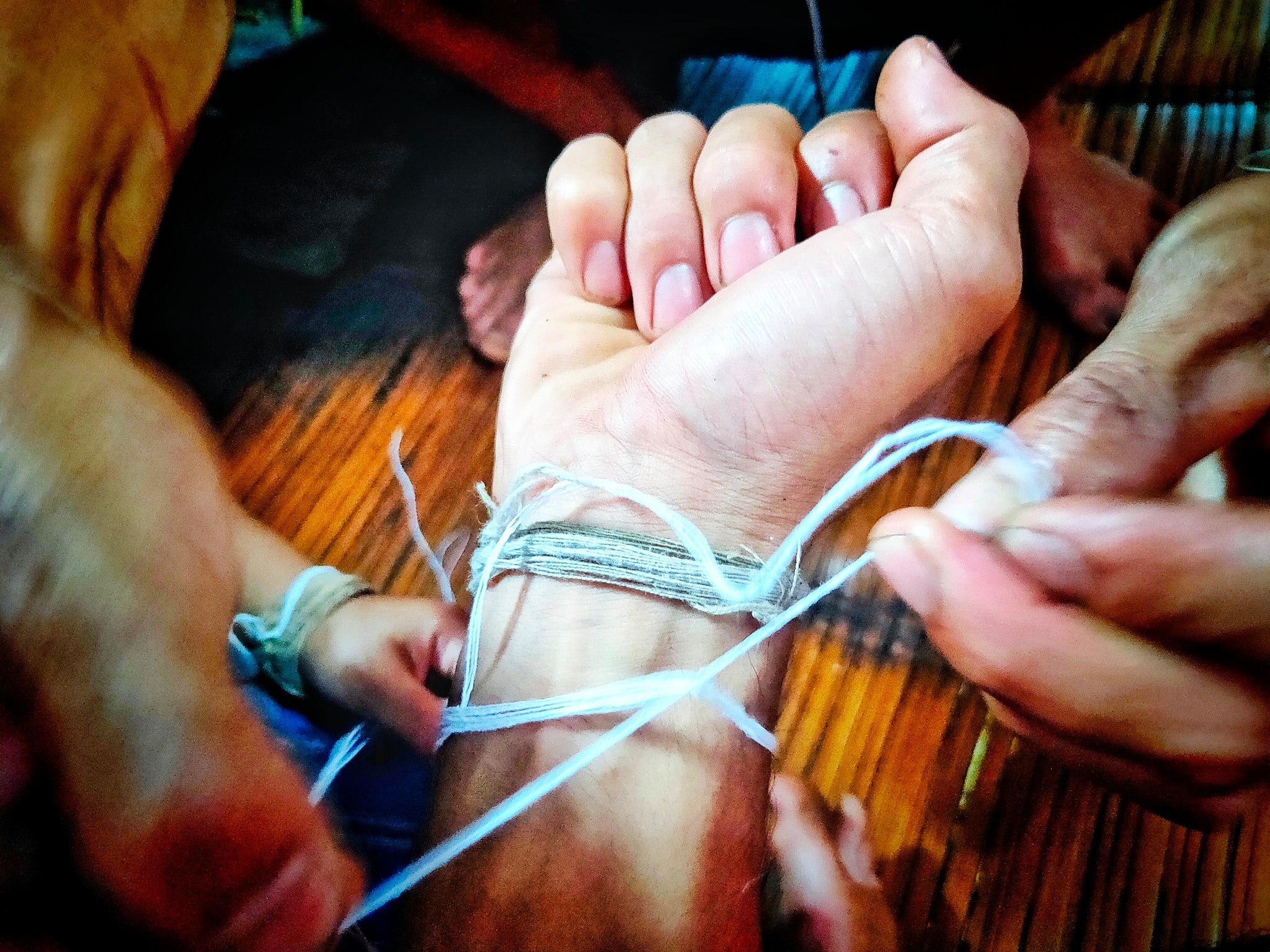
Open Days: Held according to family, community, merit-making, wedding, housewarming, welcoming, blessing, or cultural occasions; there is no fixed daily opening schedule like a permanent tourist attraction
Opening Hours: Determined by the ritual timing, host family, blessing master, elders, and participants; the ceremony may last from a short blessing session to several hours
The Isan Wrist-Tying Tradition, widely known in Thai as Phuk Khaen, Phuk Kho Mue, or the wrist-tying part of Bai Sri Su Khwan, is one of the most meaningful blessing customs in Northeastern Thailand. It is not simply the act of tying a cotton thread around someone’s wrist. It is a ritual of blessing, soul-calling, respect, welcome, emotional support, and relationship-building. The tradition appears in many important moments of life, including weddings, housewarming ceremonies, merit-making events, ordination ceremonies, homecomings, recovery from illness, welcoming guests, and community cultural events. A small white thread on the wrist becomes a powerful sign of goodwill, protection, and social connection.
At the heart of the tradition is the Isan concept of khwan, often translated as vital spirit, life essence, or personal morale. In local belief, every person lives with khwan, an unseen force that supports the body, mind, courage, awareness, and emotional stability. When a person experiences illness, shock, travel, marriage, relocation, danger, or major life change, the khwan may be understood as weakened, frightened, or wandering away. A Su Khwan or Bai Sri Su Khwan ceremony is performed to call the khwan back, restore inner strength, and place the person under blessing and protection. The wrist-tying act gives this invisible blessing a visible form.
The word Bai Sri is associated with auspicious rice, blessing arrangements, sacred offering trays, and ritual objects used to invite the khwan. In an Isan ceremony, the Bai Sri tray is usually made from folded banana leaves arranged in tiers and decorated with flowers, candles, boiled eggs, sticky rice, banana-leaf rice bundles, and other ritual items according to local custom. A blessing master, Brahmin ritual leader, elder, or respected community figure chants the soul-calling words and blessings. The person receiving the blessing may touch the Bai Sri tray or hold the connected sacred thread. After the invocation, elders and relatives tie white cotton threads around the wrists while speaking blessings for health, safety, prosperity, happiness, and long life.
The wrist-tying tradition in Isan developed from a long blending of Brahmanical belief, local spirit belief, the concept of khwan, and Buddhism. In the past, when a person was ill, frightened, had survived an accident, was about to travel, or was entering a new stage of life, family members would perform a soul-calling ceremony and tie the wrist to restore confidence and spiritual stability. The ritual therefore works on more than one level. It is a religious and cultural act, but it is also a deeply human expression of care, comfort, and moral support.
Traditional Isan wrist-tying uses white raw cotton thread. White represents purity, calmness, sincerity, and auspiciousness. The thread is usually prepared as a loop long enough to circle the wrist and is then separated into smaller strands. In older belief, ordinary people may receive 3 strands, while elders or persons of higher ritual status may receive 5 strands in some contexts. The cotton should be pulled or snapped apart by hand rather than cut with a knife. Using a knife to cut the thread is avoided in auspicious ceremonies because cutting is symbolically linked with separation and funerary contexts. This small detail shows that every part of the ritual carries meaning.
The person who begins the wrist-tying is usually a respected elder, blessing master, Brahmin ritual leader, monk in some contexts, or a person known for moral conduct and community respect. At important ceremonies, the senior elder ties the thread first, followed by parents, relatives, honored guests, and other participants. This order expresses respect for age, experience, family hierarchy, and social harmony. The recipient does not receive only a thread. They receive blessing, recognition, and emotional support from the people around them.
In Isan weddings, wrist-tying is one of the most memorable moments. After the Bai Sri Su Khwan ceremony for the bride and groom, elders tie threads around the couple’s wrists while blessing them for a stable marriage, patience, mutual respect, prosperity, good children, and a peaceful household. The thread becomes a symbol of the couple’s union, the approval of both families, and the creation of a new kinship bond. It is therefore not a decorative detail but a social and spiritual confirmation of married life.
In housewarming ceremonies, wrist-tying blesses both the household and the people who will live there. In Isan culture, a house is not only a building. It is a living space, family center, place of livelihood, and moral space connected with ancestors, guardian spirits, and neighbors. A Su Khwan and wrist-tying ceremony for a new home blesses the owners with peace, safety, prosperity, family harmony, and good relations with the community. The act of guests tying the hosts’ wrists also confirms that the household is welcomed into the social network of the village.
At merit-making events, the wrist-tying tradition works as both blessing and social connection. Isan merit-making gatherings often involve collective effort: preparing food, arranging the space, welcoming guests, listening to Buddhist teachings, and supporting the host family. Wrist-tying during or after such events allows participants to express goodwill and gratitude. It may be offered to the host, elders, visitors, returning family members, or honored guests. In this setting, the thread represents shared merit, friendliness, and the warmth of community life.
For people recovering from illness or hardship, wrist-tying has strong emotional meaning. A Su Khwan for a sick person or someone who has recovered from a difficult event helps restore morale. Elders bless the person to regain strength, eat well, sleep well, live long, and be free from fear. The ceremony assures the person that they are not alone. Family, relatives, and the community gather around them with care. In this sense, the tradition is a form of social healing as much as a spiritual blessing.
The wrist-tying ceremony is also common in welcoming guests. Visitors to an Isan community may receive a white cotton thread from a village elder or host as a sign of hospitality. The blessing may ask for safe travel, happiness, good fortune, and a lasting friendship with the community. This practice is often seen in cultural tourism, homestay communities, educational visits, and local festivals. For outsiders, it is one of the most immediate and heartfelt ways to experience Isan hospitality.
The tradition also connects with agricultural life. Isan people perform Su Khwan not only for people but also for rice, buffaloes, carts, granaries, and other things central to livelihood. There are ceremonies such as Su Khwan Khao for rice, Su Khwan Khwai for buffaloes, and Su Khwan for tools or spaces connected with farming. This shows an Isan worldview in which human life is tied to nature, animals, tools, crops, and the moral order of the community. Wrist-tying belongs to this wider system of restoring balance and strengthening life.
A typical ceremony begins with the preparation of the Bai Sri tray and ritual space. A cloth may be laid down, offerings are arranged, incense and candles are prepared, and the recipient sits in the proper position. The blessing master then chants words of invitation, calls the khwan, and gives blessings. The recipient may hold the Bai Sri tray or a connected sacred thread. Elders then tie white cotton around the wrist one by one while speaking personal blessings. The ceremony may end with shared food, conversation, and family gathering, depending on the occasion.
The spoken blessing is the heart of the ritual. As the thread is tied, the giver may bless the recipient with health, long life, happiness, prosperity, safe travel, a stable marriage, successful work, or recovery from illness. The language may be Isan, Thai, or another local language, but the meaning remains the same: sincere goodwill. The thread becomes powerful because it carries words, intention, and relationship. Without the blessing, the thread would be only cotton. With the blessing, it becomes a symbol of care.
After receiving the thread, many communities believe it should remain on the wrist for a certain period, such as 3 days, 7 days, or until it falls off naturally. It should not be cut off immediately because doing so may be seen as cutting away the blessing or rejecting the khwan. When the thread eventually comes off, some people place it respectfully rather than throwing it into an unclean place. These practices vary by family and village, but all express the same idea: the thread has passed through blessing and deserves respect.
Today, the tradition remains common across Isan, although some forms have adapted to modern life. Ceremonies may be shorter, simplified, or included in school activities, cultural events, government welcomes, tourism programs, or family gatherings. Even when the form becomes shorter, the core meaning remains: blessing, respect, welcome, and emotional support. This is why the tradition continues to survive. It is simple, inexpensive, and deeply meaningful.
Children and young people often learn the tradition not through textbooks but through participation. They see elders preparing banana leaves, arranging the Bai Sri tray, preparing white threads, chanting blessings, and tying wrists. They may help prepare the ceremony, receive blessings, and later become givers of blessings themselves. In this way, the tradition serves as a living cultural classroom. It teaches respect for elders, gratitude, gentle speech, community cooperation, and the value of blessing others.
The ceremony also shows the way Isan culture blends Buddhism, Brahmanical ritual, and local belief. A Bai Sri Su Khwan may be performed together with Buddhist chanting, holy water sprinkling, and merit-making. After the Buddhist part, a Brahmin-style or local soul-calling ceremony may follow. This combination does not create contradiction in the local worldview. It reflects a practical religious culture in which different systems of belief work together to support real life, family, and community harmony.
From a social perspective, wrist-tying makes relationships visible. When an elder holds the recipient’s hand, ties the cotton thread, and speaks a blessing, the relationship is publicly affirmed. It may be the relationship between parents and children, elders and newlyweds, hosts and guests, teachers and students, or community members and visitors. The small white thread becomes a visible bond of affection, respect, and moral support. This is one reason the ritual remains emotionally powerful even in modern settings.
The tradition also preserves the status of elders in Isan society. Elders are not only older people; they are keepers of memory, custom, moral wisdom, and proper speech. When they begin the wrist-tying, they transmit blessing and guidance from one generation to the next. The ritual gives elders an honored role and reminds younger people that blessings are connected with experience, virtue, and family continuity.
Although colored threads are sometimes used today, especially in temple contexts or specific belief practices, the traditional Isan form emphasizes white cotton. White thread keeps the ceremony simple and sincere. Its value does not come from decoration but from intention. This quiet beauty is one of the strengths of the tradition: a humble material becomes meaningful through words, hands, and shared belief.
In cultural tourism, the wrist-tying tradition should be presented with respect. It should not be reduced to a photo opportunity or a decorative welcome activity. Visitors should understand the meaning of khwan, the Bai Sri tray, the white thread, the blessing words, and the role of elders. When a visitor receives a thread, they are receiving goodwill from the community. Understanding this meaning helps outsiders appreciate the ritual without turning it into a shallow performance.
Those who want to learn about the tradition can begin with provincial cultural centers, local learning centers, Buddhist temples, village merit-making events, Isan weddings, housewarming ceremonies, and community-based tourism activities that explain Bai Sri Su Khwan properly. In Si Sa Ket and the wider Lower Northeast, learning this tradition also opens the door to understanding the cultural diversity of Lao, Khmer, Kui, and Yeu communities, all of which maintain their own forms of blessing, hospitality, respect, and local ritual.
The wrist-tying tradition remains a living cultural heritage because it does not need a large stage or formal festival to exist. It can take place in a home, temple, community hall, village courtyard, wedding, merit-making event, or quiet family gathering. Its beauty lies in closeness: the hands of an elder, the white cotton thread, the spoken blessing, and the feeling of being cared for. These elements allow the tradition to remain meaningful across generations.
The depth of the tradition lies in its ability to give visible form to love and goodwill. A white thread is small, but it carries the meaning of khwan, blessing, family, ancestors, community, and auspicious life. When the recipient sees the thread on their wrist, they remember the people who blessed them and stood beside them. This is the power of the ritual: it turns care into something that can be seen and carried.
The future of the tradition depends on preserving its meaning while allowing its form to remain useful in contemporary life. Whether practiced in families, schools, temples, or community activities, the ceremony should not be reduced to the quick tying of thread. It should preserve the blessing words, respect for elders, the meaning of khwan, and the sincerity of the host community. As long as these elements remain, the Isan wrist-tying tradition will continue to be a symbol of respect, blessing, and social harmony.
The Isan wrist-tying tradition is therefore more than a small ritual act. It expresses a complete way of thinking: life needs khwan, blessing, elders, community, and good relationships. Auspiciousness is not created by expensive objects but by sincere intention, kind words, and human connection. The white thread on the wrist is a simple symbol, yet it carries the beauty of Isan culture with remarkable depth and clarity.
| Tradition Name | Isan Wrist-Tying Tradition |
| Other Names | Phuk Khaen, Phuk Kho Mue, Bai Sri Su Khwan, Su Khwan, Rap Khwan, Tham Khwan, Sut Khwan |
| Cultural Area | Northeastern Thailand or Isan, practiced in families, communities, temples, merit-making events, weddings, housewarming ceremonies, welcoming rituals, and cultural tourism activities, including Lower Northeastern provinces such as Si Sa Ket |
| Cultural Type | Intangible Cultural Heritage Related To Ritual, Belief, Family Life, Community Values, Blessing Customs, And Local Wisdom |
| Main Meaning | Blessing, soul-calling, welcoming, restoring morale, removing misfortune, showing respect, and strengthening relationships among family members, relatives, guests, elders, and the community |
| Common Occasions | 1. Weddings 2. Housewarming Ceremonies 3. Village Merit-Making Events 4. Ordination And Nak Blessing Ceremonies 5. Newborn Or Child Blessings 6. Blessings For Sick Or Recovered Persons 7. Welcoming Guests And Returning Family Members 8. Agricultural Blessings Such As Rice, Buffalo, Cart, Or Granary Blessings |
| Main Components | Bai Sri tray, white wrist-tying cotton thread, incense, candles, flowers, boiled eggs, banana-leaf rice bundles, rice, betel, areca nut, ritual offerings, blessing master, elders, the recipient, and participants who give blessings |
| Traditional Cotton Thread | Traditionally white raw cotton is used as a symbol of purity and auspiciousness. Ordinary recipients may receive 3 strands, while elders or higher-status persons may receive 5 strands in some contexts. The thread is pulled apart by hand rather than cut with a knife in auspicious rituals. |
| Ritual Leaders / Caretakers | Blessing masters, Brahmin ritual leaders, respected elders, morally respected community members, monks in some contexts, host families, relatives, and communities that preserve the custom |
| General Ritual Sequence | 1. Prepare the ritual space and Bai Sri tray 2. Prepare cotton threads and offerings 3. Seat the recipient in the proper place 4. The blessing master chants and calls the khwan 5. The recipient touches the Bai Sri tray or sacred thread 6. Elders begin tying the wrist and speaking blessings 7. Relatives and participants continue in order 8. The ritual closes with blessings and shared food according to local custom |
| Current Status | Still actively practiced in families, communities, temples, merit-making events, weddings, cultural events, schools, and community-based tourism activities across Isan, with adapted forms that preserve the core meaning of blessing and soul-calling |
| Open Days | No fixed daily opening schedule. The ritual is held according to the host family, community occasion, merit-making event, or cultural program. |
| Opening Hours | Determined by ritual timing, family readiness, the blessing master, and participants. It is often held in the morning, daytime, or before the main auspicious event. |
| Fees | There is no fixed tourist admission fee. Attendance at a real family ritual depends on invitation or permission from the host. Costs for the Bai Sri tray, offerings, and cotton threads are arranged by the host according to the scale of the ceremony. |
| Main Areas / Ritual Zones | 1. Bai Sri tray or blessing tray zone 2. Recipient zone 3. Blessing master or Brahmin ritual leader zone 4. Elder and relative blessing zone 5. Cotton thread and offering zone 6. Buddhist monk zone when Buddhist chanting is included 7. Guest reception and shared meal zone 8. Cultural activity or folk performance zone in community events |
| Visitor Etiquette | Dress respectfully, follow the host’s order of ceremony, respect the Bai Sri tray, do not play with the cotton threads, do not mock the blessing words, do not cut the thread immediately after the ceremony, and ask permission before photographing private family rituals |
| Related Learning Sources | Provincial cultural centers, local learning centers, Buddhist temples, community-based tourism groups, schools, provincial cultural offices, and families or villages that continue to practice Bai Sri Su Khwan and Isan wrist-tying traditions |
| Nearby Cultural Attractions In A Si Sa Ket Cultural Route | 1. Si Sa Ket Cultural Center, about 0 km 2. Si Sa Ket City Pillar Shrine, about 2 km 3. Khun Amphai Phanit Building, about 2 km 4. Wat Maha Phuttharam / Luang Pho To, about 2 km 5. Si Sa Ket Railway Station, about 2 km 6. Si Sa Ket Aquarium, about 5 km 7. Wat Phra That Rueang Rong, about 12 km |
| Nearby Restaurants In Si Sa Ket City | 1. The Wine Room Cafe, about 1 km, Tel. 082-678-7468 2. The Cup Cafe, about 2 km, Tel. 095-742-6323 3. Jiree Cafe, about 2 km, Tel. 080-799-1890 4. The Kap Cup (Bus Stop), about 2 km, Tel. 088-367-1836 5. Dear Cup Coffee Near Si Sa Ket Hospital, about 3 km, Tel. 066-119-6968 |
| Nearby Accommodations In Si Sa Ket City | 1. B2 Sisaket Boutique & Budget Hotel, about 2 km, Tel. 052-009-161, 088-263-2897 2. Boonsiri Boutique Hotel, about 2 km, Tel. 045-622-222 3. Prompiman Hotel, about 2 km, Tel. 045-612-667, 045-612-696, 045-612-150 4. The Impress Sisaket, about 3 km 5. Tree House Hotel Si Sa Ket, about 5 km |
Frequently Asked Questions (FAQ)
Q: What is the Isan wrist-tying tradition?
A: It is a blessing and soul-calling ritual in which white cotton thread is tied around a person’s wrist while elders or respected figures speak blessings for good fortune, protection, health, and emotional strength.
Q: How is wrist-tying connected with Bai Sri Su Khwan?
A: Wrist-tying is usually the important final stage of a Bai Sri Su Khwan ceremony. After the blessing master calls the khwan and gives blessings, elders tie cotton threads on the recipient’s wrists to make the blessing visible and personal.
Q: What color should the thread be?
A: Traditional Isan practice uses white raw cotton thread because white represents purity, calmness, sincerity, and auspiciousness. Some modern contexts use colored threads, but white remains the classic form.
Q: When is the ceremony usually held?
A: It is commonly held at weddings, housewarming ceremonies, ordinations, child blessings, recovery-from-illness ceremonies, merit-making events, welcoming ceremonies, and agricultural rituals such as rice or buffalo blessings.
Q: Who ties the wrist in the ceremony?
A: The first person is usually a blessing master, Brahmin ritual leader, respected elder, monk in some contexts, or someone highly respected by the community. Relatives and participants may then tie threads in order.
Q: What should the recipient do after receiving the thread?
A: Many families keep the thread on the wrist for 3 days, 7 days, or until it falls off naturally. It should not be cut off immediately because it has already received blessing words and ritual meaning.
Q: Is the tradition still important today?
A: Yes. It remains important because it preserves family bonds, respect for elders, community goodwill, emotional support, and the Isan cultural practice of giving blessings during important moments of life.
Q: Can visitors join a wrist-tying ceremony?
A: Visitors may join when the ceremony is part of a welcoming activity or public cultural event. For private family rituals, permission from the host is required, and visitors should follow the ceremony respectfully.
 Category: ●Art, Culture and Heritage
 Group: ●Art, Craft Centres, Tradition
Last Update : 2 MonthAgo
 Last Update : 2 MonthAgo
 Historical Sites and Monuments(12)
 Landmarks and Memorials(1)
Art, Craft Centres, Tradition(8)
Landmarks and Memorials(1)
Art, Craft Centres, Tradition(8)
 Places of Worship
 Temple(13)
 Other Sacred Sites(3)
 Suburban Living
 Village, Community(2)
 Nature and Wildlife
 National Parks and Marine Reserves(2)
 Dam, Reservoir, Lake(7)
 Waterfalls(5)
 River, Canal(5)
 Bays and Beaches(2)
 Entertainment and Agricultural
 Zoos and Aquariums(1)
 Farms, Parks and Ecotourism(3)


