
lovethailand home >Northeastern Travel Attractions >Sakon Nakhon Travel Attractions >Kham Ta Kla >Nong Bua Sim > Wat Pho Chai
TL;DR: Wat Pho Chai is located at Ban Pho Chai, Village No. 10, Nong Bua Sim Subdistrict, Kham Ta Kla District, Sakon Nakhon Province, open Daily, hours 08.00 – 17.00.
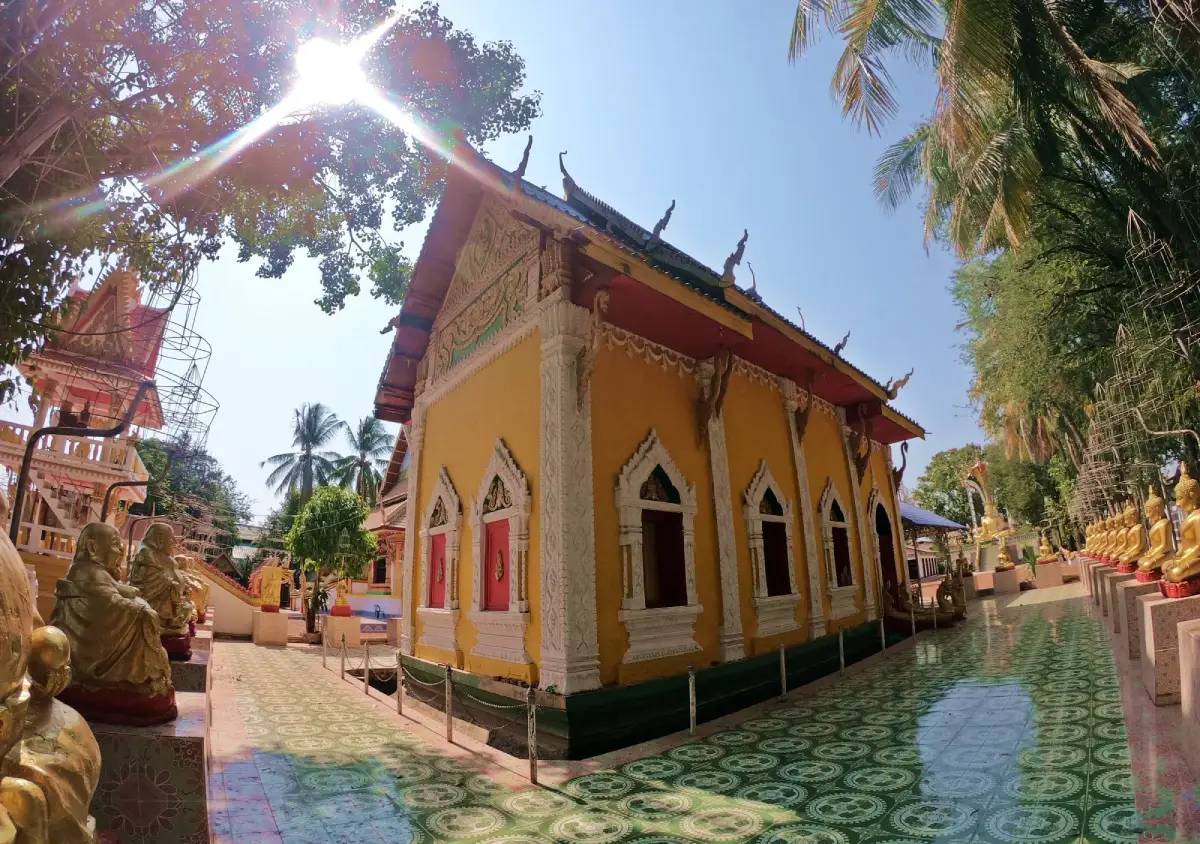
Wat Pho Chai
Open Days: Daily
Opening Hours: 08.00 – 17.00
Wat Pho Chai Sakon Nakhon is a community temple located at Ban Pho Chai, Village No. 10, Nong Bua Sim Subdistrict, Kham Ta Kla District, Sakon Nakhon Province. The temple is known for a local belief surrounding a large python that villagers regard as the sacred “Chao Pu Ta” guardian spirit protecting the community. Today, the temple remains a living place of worship with 4 resident monks and is open daily from 08.00 to 17.00 for merit-making, worship, and respectful visits.
Wat Pho Chai Sakon Nakhon is a village temple in Ban Pho Chai, Village No. 10, Nong Bua Sim Subdistrict, Kham Ta Kla District, Sakon Nakhon Province. It stands in a rural community in the northern part of Sakon Nakhon, where local life, Buddhism, agriculture, and village beliefs remain closely connected. The temple serves as a spiritual center for the people of Ban Pho Chai and nearby communities. Local residents come here to make merit, pay respect to the Buddha, participate in Buddhist activities, and honor sacred beliefs that have been passed down within the village.
The most distinctive story associated with Wat Pho Chai is the presence of a large python living within the temple area. Villagers believe that this python is connected with Chao Pu Ta, a guardian spirit who protects the community and helps keep local families safe and peaceful. In rural Isan culture, Chao Pu Ta beliefs are deeply rooted in community life. They are connected with ancestors, local guardian spirits, sacred spaces, and the shared identity of a village. At Wat Pho Chai, this belief exists alongside Buddhism, creating a local sacred landscape where temple life and folk belief remain closely intertwined.
The name Wat Pho Chai carries a Buddhist and auspicious meaning. The word “Pho” refers to the Bodhi tree, the tree associated with the Buddha’s enlightenment. The word “Chai” means victory, success, and auspiciousness. Together, the name suggests a place of spiritual clarity and inner victory. This meaning fits the role of the temple as a place where people come to make merit, calm the mind, ask for blessings, and reconnect with moral values that guide everyday life.
Wat Pho Chai is located in Nong Bua Sim Subdistrict, Kham Ta Kla District. Nong Bua Sim is a rural area connected with streams, agricultural land, and local settlement patterns. The subdistrict is about 100 km from Sakon Nakhon city and about 12 km from Kham Ta Kla town. For travelers, the most convenient way to reach the temple is by private car or rental car. The route from Sakon Nakhon city leads toward Kham Ta Kla District, then continues to Nong Bua Sim Subdistrict and Ban Pho Chai. The journey offers a view of rural Sakon Nakhon that is quiet, spacious, and closely tied to local village life.
In terms of religious status, Wat Pho Chai belongs to the Mahanikaya order of Thai Buddhism. The temple land covers about 4 rai. As a community temple, it supports Buddhist ceremonies, merit-making, monastic residence, village gatherings, and religious activities throughout the year. Public information also identifies 4 resident monks at the temple. This confirms that Wat Pho Chai remains an active place of worship and continues to serve the Buddhist and social life of the local community.
The story of the large python is important because it reveals how local people understand the relationship between humans, animals, nature, and sacred protection. Villagers do not see the python merely as a wild animal. Through local belief, it becomes a symbol of guardianship, blessing, and the presence of Chao Pu Ta. Visitors should understand this belief with respect. They should not disturb, touch, chase, feed, or approach the animal. Respectful distance protects both visitors and the animal while preserving the dignity of the temple’s local sacred tradition.
Many local devotees believe that paying respect at Wat Pho Chai brings auspiciousness and good fortune. This belief has made the temple known beyond its role as a normal village temple. However, the deeper value of the visit remains rooted in Buddhist practice: making merit, paying respect, calming the mind, and honoring the sacred traditions of the community. For visitors, the temple is best approached as a place of faith, local culture, and spiritual reflection rather than simply as a place connected with fortune-seeking.
Wat Pho Chai has a different character from large temples in the city of Sakon Nakhon. It is not known for monumental architecture, large stupas, or major tourist crowds. Its value comes from being a real village temple with a living local belief. Visitors can see how rural people relate to a temple not only as a place of worship, but also as a community center, a memory space, and a place where stories of protection and sacred presence are kept alive. This makes Wat Pho Chai meaningful for travelers who want to understand Sakon Nakhon through local culture rather than only through major landmarks.
Inside the temple area are spaces for Buddhist worship, monastic residence, community religious activities, and paying respect to sacred local beliefs. The publicly available details do not list every building in full, but the temple functions as a typical rural Buddhist temple with facilities for merit-making, ceremonies, and community religious life. For local residents, this temple supports important moments in life, including Buddhist holy days, annual merit-making, family ceremonies, and village gatherings.
The Sakon Nakhon Provincial Office of Buddhism organized a Dhamma outreach activity at Wat Pho Chai in 2025. The event brought together monks, local officials, community leaders, students, and Buddhist devotees. This reflects the temple’s active role as a place for Buddhist teaching and community participation. Wat Pho Chai is therefore not only known for the python guardian belief, but also remains part of the wider Buddhist activity network in Sakon Nakhon Province.
The role of Wat Pho Chai can be understood in several layers. First, it is a Buddhist temple where monks reside and religious activities take place. Second, it is a place connected with local guardian-spirit belief through the story of the Chao Pu Ta python. Third, it is a community space where villagers gather for merit-making and important occasions. Fourth, it is a small cultural destination for travelers who want to understand the living relationship between Buddhism and local Isan belief.
Visitors should dress modestly and behave respectfully. Since Wat Pho Chai is an active temple with resident monks, voices should be kept low and monastic areas should be respected. Around areas connected with the Chao Pu Ta belief, visitors should remain calm and polite. The python or any animal in the temple should not be approached or disturbed. A careful and respectful attitude is essential when visiting a sacred place that is also part of a living village environment.
For cultural travelers, Wat Pho Chai is suitable for those interested in local temples, Isan folk belief, guardian-spirit traditions, and village Buddhism. The temple shows that Buddhism in rural northeastern Thailand is not separated from community memory or local sacred stories. The presence of Chao Pu Ta belief within a Buddhist temple setting demonstrates how local traditions continue to live alongside formal religious practice.
Travel from Sakon Nakhon city to Wat Pho Chai requires planning because Nong Bua Sim Subdistrict is about 100 km from the provincial city. The route goes toward Kham Ta Kla District, then continues to Nong Bua Sim and Ban Pho Chai. From Kham Ta Kla town, the distance is about 12 km. Daytime travel is recommended, especially for visitors who are not familiar with rural roads. During the rainy season, travelers should allow extra time because some areas in Nong Bua Sim are connected with streams and lowland agricultural zones.
A half-day route can begin in Kham Ta Kla town, continue to Wat Pho Chai for worship and cultural learning, and then connect with nearby places such as Nong Sam Kha Public Park, Wat Sena Naruemit, or Pha Sak, also known as Sakon Nakhon Grand Canyon. This route is suitable for travelers who want to explore a quieter district of Sakon Nakhon and experience a combination of temple, local community, nature, and scenic landscape.
Nong Sam Kha Public Park is a community recreation area suitable for a short stop after visiting the temple. Wat Sena Naruemit is another temple in Kham Ta Kla District that can be included in the same itinerary. Pha Sak, or Sakon Nakhon Grand Canyon, offers a different landscape experience and adds a natural viewpoint to the route. Connecting these places with Wat Pho Chai creates a fuller journey through faith, local life, and rural scenery.
Dining options are mostly located in Kham Ta Kla town, about 12–15 km from the temple. Visitors can find local restaurants, cafés, Thai food, and simple casual dining in the district center. Publicly listed options include Kochun Restaurant, Jungle Cafe Kham Ta Kla, Hug Na Kham Ta Kla, German Restaurant Kham Ta Kla, and KFC Big C Kham Ta Kla. Planning meals in town is more convenient than expecting many commercial food services directly around the temple area.
Accommodation is also easier to find in or around Kham Ta Kla town. Publicly listed options include Sakthong Resort, Kham Ta Kla Resort VIP, Phromphan Grand Resort, Onlamun Resort, and other local accommodations. Staying in Kham Ta Kla is suitable for travelers who want to explore Wat Pho Chai and nearby district attractions at a slower pace. Travelers who prefer broader transport connections may stay in Sakon Nakhon city and visit the temple as a day trip.
The best time to visit Wat Pho Chai is in the morning or early afternoon during the opening hours from 08.00 to 17.00. Morning visits offer cooler weather and a calmer atmosphere. Early afternoon visits are convenient for travelers connecting from other places in Kham Ta Kla District. Visiting during daylight also makes travel along rural roads easier and safer.
Families traveling with children should supervise them closely, especially around natural areas or places where animals may be present. A temple associated with a python guardian belief should be visited with care and awareness. Children should be taught not to approach animals, not to make loud noises, and not to disturb sacred areas. This kind of visit can help young travelers learn about respect, local belief, Buddhist places, and coexistence with nature.
Wat Pho Chai also provides an example of how Buddhism and local belief coexist in rural Isan. In many northeastern Thai communities, the temple is not only a place for monks. It is also a community center, a space for ceremonies, a place for local memory, and a setting where stories of guardianship are preserved. The Chao Pu Ta python belief is part of this cultural landscape and gives Wat Pho Chai a distinct identity among temples with the same name elsewhere.
For travelers interested in local culture, Wat Pho Chai should be understood through the life of the village. The temple tells a story of trust between the community and its sacred guardian, respect for living beings, and the continuing role of Buddhism in daily life. This context makes the visit more meaningful than simply viewing the temple as an unusual place with a python story. It is a real community temple where local people continue to practice faith in their own way.
The charm of Wat Pho Chai lies in its authenticity. Many small rural temples in Thailand have stories that are not widely known in mainstream tourism but are deeply meaningful to local people. Wat Pho Chai is one of those places. The belief in the Chao Pu Ta python, the presence of resident monks, and the temple’s role in village religious life all show that the temple remains active, respected, and connected to the community.
A visit to Wat Pho Chai is therefore suitable for travelers who want to see Sakon Nakhon beyond major stupas, famous forest temples, and popular natural attractions. This temple reveals another side of the province: a village-level sacred place where Buddhism, local guardian belief, animals, and community identity are woven together. It gives visitors a closer understanding of how faith is lived in rural northeastern Thailand.
Wat Pho Chai Sakon Nakhon is a meaningful destination for faith-based travel and local cultural learning in Kham Ta Kla District. Visitors can pay respect at a village temple, learn about the Chao Pu Ta python belief, understand the role of a temple in Ban Pho Chai, and experience the quiet religious life of Nong Bua Sim Subdistrict. The temple offers a simple but memorable journey into the local spiritual world of Sakon Nakhon.
| Name | Wat Pho Chai |
| Location | Ban Pho Chai, Village No. 10, Nong Bua Sim Subdistrict, Kham Ta Kla District, Sakon Nakhon Province |
| Place Type | Community Temple / Buddhist Religious Site / Faith-Based Cultural Destination |
| Buddhist Affiliation | Mahanikaya Order |
| Temple Area | About 4 rai |
| Highlight | A large python believed by villagers to be the sacred Chao Pu Ta guardian protecting the local community |
| Significance | A village temple and spiritual center of Ban Pho Chai, combining Buddhist worship, local merit-making, and Chao Pu Ta guardian-spirit belief |
| Resident Monks / Religious Care | 4 resident monks |
| Current Status | Open for worship, merit-making, and respectful visits during temple hours |
| Open Days | Daily |
| Opening Hours | 08.00 – 17.00 |
| Admission Fee | No admission fee is listed |
| Main Areas / Zones | Monastic area, religious hall or multipurpose hall, merit-making area, sacred worship area, and area connected with the Chao Pu Ta python belief |
| Facilities | Temple grounds for worship, religious activity areas, parking space within or near the temple, and basic facilities of a rural community temple |
| Travel Information | From Sakon Nakhon city, travel to Kham Ta Kla District, then continue to Nong Bua Sim Subdistrict and Ban Pho Chai, Village No. 10. The temple is about 100 km from the provincial city and about 12 km from Kham Ta Kla town |
| Visitor Guidelines | Dress modestly, keep noise low, respect temple areas, avoid disturbing monks, do not approach or touch the python or animals in the temple, and keep the area clean |
| Nearby Tourist Attractions | 1. Nong Sam Kha Public Park, about 12 km 2. Kham Ta Kla town and local market area, about 12 km 3. Wat Sena Naruemit, about 15 km 4. Pha Sak / Sakon Nakhon Grand Canyon, about 20 km 5. Wat Pho Chai and Ban Pho Chai Community, about 0 km |
| Nearby Restaurants | 1. Kochun Restaurant Kham Ta Kla, about 12 km, Tel. 089-218-2160 2. Jungle Cafe Kham Ta Kla, about 12 km, Tel. 081-923-2218 3. Hug Na Kham Ta Kla, about 12 km, Tel. 063-414-6592 4. German Restaurant Kham Ta Kla, about 12 km, Tel. 082-118-1598 5. KFC Big C Kham Ta Kla, about 12 km, Tel. 065-510-5017 |
| Nearby Accommodations | 1. Sakthong Resort, about 12 km, Tel. 042-796-610, 081-797-4990 2. Kham Ta Kla Resort VIP, about 12 km, Tel. 042-796-262 3. Phromphan Grand Resort, about 12 km, Tel. 087-864-3320 4. Onlamun Resort Kham Ta Kla, about 12 km, Tel. 090-858-3385 5. Sakthong Resort Kham Ta Kla, about 12 km, Tel. 042-796-610 |
Frequently Asked Questions (FAQ)
Q: Where Is Wat Pho Chai Located?
A: Wat Pho Chai is located at Ban Pho Chai, Village No. 10, Nong Bua Sim Subdistrict, Kham Ta Kla District, Sakon Nakhon Province.
Q: What Are The Opening Days And Hours?
A: Wat Pho Chai is open daily from 08.00 to 17.00.
Q: Is There An Admission Fee?
A: No admission fee is listed. Visitors may enter for worship and make merit according to personal faith.
Q: What Is The Main Highlight Of Wat Pho Chai?
A: The temple is known for a large python believed by villagers to be the sacred Chao Pu Ta guardian protecting the Ban Pho Chai community.
Q: How Many Resident Monks Are At Wat Pho Chai?
A: Wat Pho Chai has 4 resident monks.
Q: How Should Visitors Behave At Wat Pho Chai?
A: Visitors should dress modestly, keep their voices low, respect temple areas, avoid disturbing monks, avoid approaching or touching the python, and keep the temple clean.
Q: How Can Travelers Get There From Sakon Nakhon City?
A: Travel from Sakon Nakhon city to Kham Ta Kla District, then continue to Nong Bua Sim Subdistrict and Ban Pho Chai, Village No. 10. The distance from the provincial city is about 100 km.
Q: What Nearby Places Can Be Visited On The Same Trip?
A: Nearby places include Nong Sam Kha Public Park, Kham Ta Kla town, Wat Sena Naruemit, and Pha Sak, also known as Sakon Nakhon Grand Canyon.
 Category: ●Places of Worship
 Group: ●Temple
Last Update : 2 MonthAgo
 Last Update : 2 MonthAgo
 Click to Access the Navigation Map GPS
 Art, Culture and Heritage
 Historical Sites and Monuments(9)
 Landmarks and Memorials(2)
 Royal Palace(1)
 Art, Craft Centres, Tradition(8)
 Museums(3)
 Educational Places
 Educational Gardens, Farm(2)
Temple(18)
Educational Gardens, Farm(2)
Temple(18)
 Church(2)
 Other Sacred Sites(4)
 Research and Development
 Royal Project(3)
 Suburban Living
 Village, Community(7)
 Nature and Wildlife
 National Parks and Marine Reserves(4)
 Mountain (Doi)(3)
 Dam, Reservoir, Lake(14)
 Waterfalls(4)
 Caves(4)
 River, Canal(9)
 Bays and Beaches(1)
 Islands(1)
 Other natural attractions(5)
 Entertainment and Agricultural
 Zoos and Aquariums(1)
 Farms, Parks and Ecotourism(4)
 Outdoor and Adventure Activities(1)


